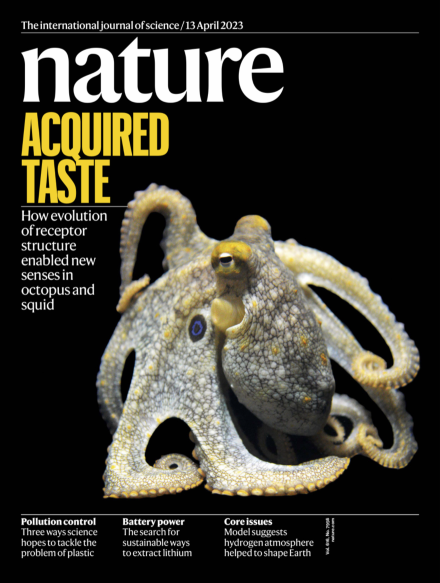
nature Magazine – April 13, 2023 issue: Octopuses use chemotactile receptors (CRs) in the suckers on their arms to ‘taste by touch’ as they explore their sea-floor environment. These proteins evolved from neurotransmitter receptors to allow octopuses to detect poorly soluble natural products on contact.
Psychotherapy has never been more available and yet, with so many options, it can be hard to know where to start. Thankfully, researchers are getting to grips with what really works and why
Scripps Research (April 11, 2023) – From smartwatches and fitness bands to glucose monitors and in-home ultrasounds, the proliferation of digital devices is igniting a revolution in healthcare and medical research.
Patients can now collect thousands of data points about themselves and share that information with their healthcare providers. At the Scripps Research Translational Institute, researchers are taking advantage of new technology to study disease in novel ways.
Their projects include a platform for early detection of disease outbreaks, a sleep quality study, and even a way to predict and individual’s risk of certain disease based on their genetics. In this video, hear directly from the team about this exciting new frontier.
Sotheby’s (April 11, 2023) – This collection was put together by a couple of passionate collectors who favored avant-garde works from the 1930s and 1940s, thus creating an extremely harmonious whole that perfectly reflects the taste of an era and the artistic revolutions that went through it.
The works have remained preserved in a Parisian apartment for almost sixty years, and their appearance on the market constitutes an unprecedented opportunity for collectors today”. Says Aurélie Vandevoorde, Director of the Impressionist and Modern Art Department.
Unveiling an unprecedented group of 12 works by some of the greatest masters of the 20th century, which include artists such as Pablo Picasso, Fernand Léger, Nicolas de Staël & Georges Braque, “Le Souffle Moderne” Collections presents an exceptional ensemble embodying the artistic avant-gardes of the 1930s and 1940s.
April 10, 2023: A selection of three essential articles read aloud from the latest issue of The Economist. This week, the case for hugging pylons, not trees. Also, the transatlantic divide on gender-medicine (10:30) and why do Democrats keep helping Donald Trump? (17:55)
Economic growth should help, not hinder, the fight against climate change
The sheer majesty of a five-megawatt wind turbine, its central support the height of a skyscraper, its airliner-wingspan rotors tilling the sky, is hard to deny.
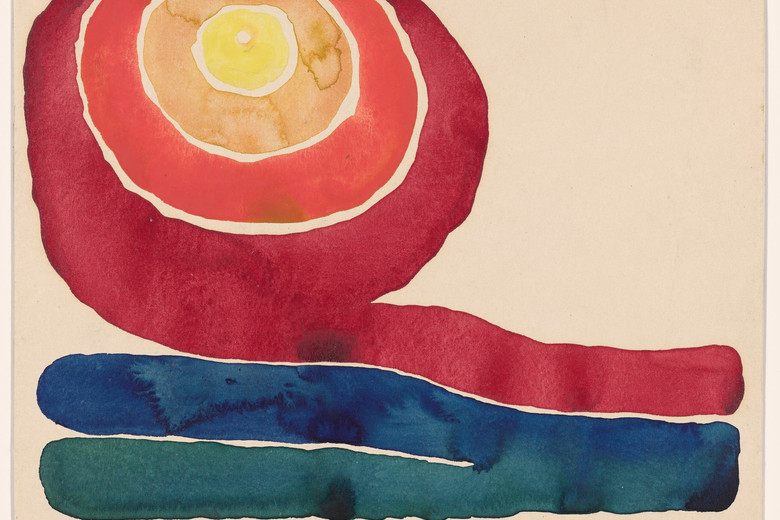
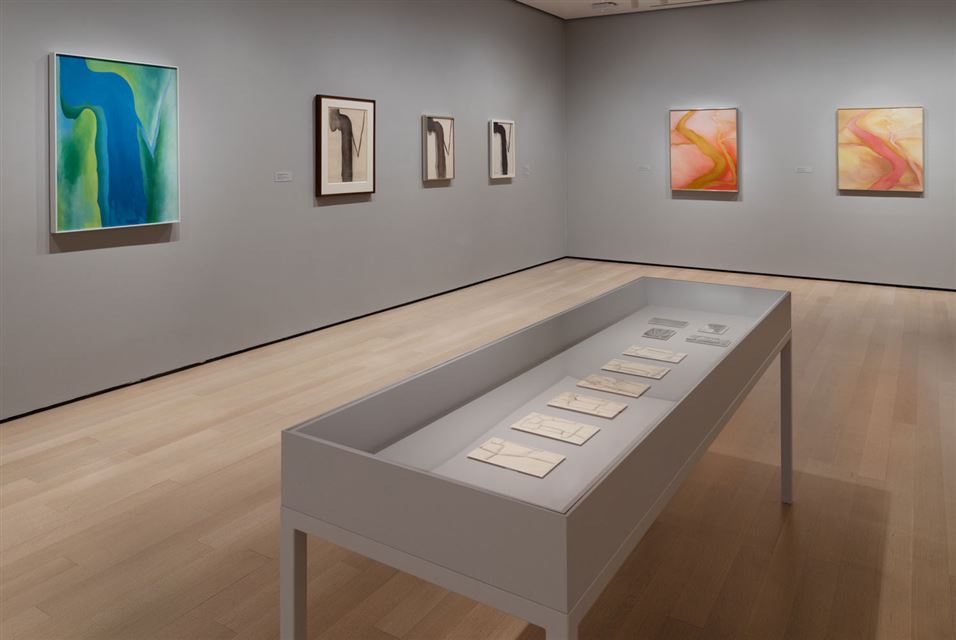
The Museum of Modern Art (April 10, 2023) – “To see takes time,” Georgia O’Keeffe once wrote. Best known for her flower paintings, O’Keeffe (1887-1986) also made extraordinary series of works in charcoal, pencil, watercolor, and pastel.
Reuniting works on paper that are often seen individually, along with key paintings, this exhibition offers a rare glimpse of the artist’s working methods and invites us to take time to look.
Installation view of Georgia O’Keeffe: To See Takes Time, on view at The Museum of Modern Art, New York from April 9 through August 12, 2023. Photo by Jonathan Dorado.
Over her long career, O’Keeffe revisited and reworked the same subjects, developing, repeating, and transforming motifs that lie between observation and abstraction. Between 1915 and 1918, a breakthrough period of experimentation, she made as many works on paper as she would during the next four decades, producing progressions of bold lines, organic landscapes, and frank nudes, as well as the radically abstract charcoals she called “specials.”
Even as she turned increasingly to painting, important series—including flowers in the 1930s, portraits in the ’40s, and aerial views in the ’50s—reaffirmed her commitment to working on paper. Drawing in this way enabled O’Keeffe to capture not only nature’s forms but its rhythms: tracing the sun’s spiraling descent in vividly hued pigment, or committing to velvety black the shifting perspective as seen from an airplane window.
Discover the important role working on paper played in Georgia O’Keeffe’s life and career.
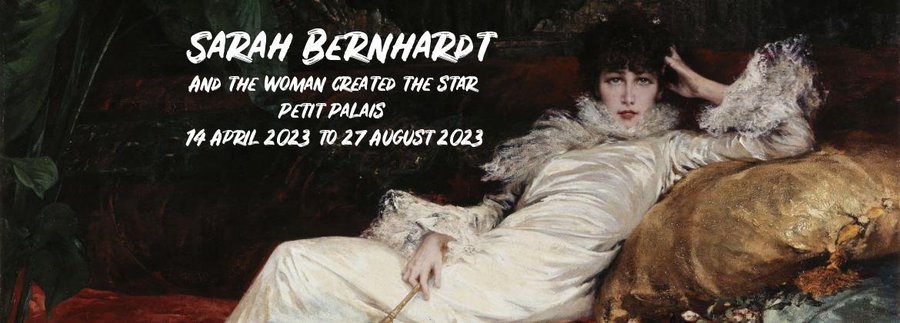
Sarah Bernhardt, (1844-1923), was an emblematic figure who spanned the 19th and 20th centuries. The “Divine Sarah”, who was an artist as well as an actress, takes center stage at the Petit Palais in an exceptional exhibition to mark the centenary of her death.
The museum holds important collections of works linked to the actress, including the spectacular portrait of her that was painted in 1876 by her friend Georges Clairin and donated by her son Maurice.
With over four hundred works, the exhibition traces the life and theatrical career of this “sacred monster”, as Jean Cocteau dubbed her. A legendary performer of the greatest roles from Racine, Shakespeare, Edmond Rostand and Alexandre Dumas fils, among others, Sarah Bernhardt went from triumph to triumph in theaters all over the world.
The exhibition evokes her greatest roles through the costumes she wore on stage, photographs, paintings, posters and other memorabilia. Her “golden voice” and her tall, slender figure – unusual in those days – held the public in thrall, as well as the artistic and literary world, who simply venerated her. She was the friend of painters such as Gustave Doré, Georges Clairin, Louise Abbéma, and Alphonse Mucha, but also of writers like Victor Hugo, Victorien Sardou and Sacha Guitry, as well as musicians and composers like Reynaldo Hahn. She was an artist herself, and an entire section of the exhibition focuses on this lesser-known aspect of her life.
World Economic Forum (April 8, 2023) – This week’s top stories of the week include:
0:15 Vanuatu takes the World to Court – The island state pushed through a historic UN motion which calls on the International Court of Justice, the world’s highest court to establish countries’ legal duties to address the climate crisis. The ICJ will provide an ‘opinion’ on what countries can do to cut emissions and protect people and protect climate-vulnerable people. Although the opinion won’t be legally binding, it will carry huge weight and could be used in climate negotiations and future climate lawsuits.
1:43 Japanese workers just got a historic payrise – Every year, unions of major companies negotiate wages in Spring, for shorter hours and better pay. This year, the parties agreed to a 3.8% wage rise, the biggest raise since 1993. For part-time and contract workers, the raise was even larger, 5.91% per hour. A rise in the cost of living drove the agreements. Consumer prices in Japan have risen 4.2% in a year, The sharpest rise for 40 years. And the real value of wages fell 4.1% in January for the tenth consecutive month.
3:03 Latvia has the most female inventors in Europe – A new study charted the gender gap in European inventors from 1978 to today by counting the women named in patent applications. From 2010-2019, 30.6% of Latvia’s inventors were women. Portugal took second place with 26.8% and third was Croatia, where 25.8% of inventors were women. 4:39 Friends are key to reducing inequality – Researchers wanted to know why some people climb the economic ladder faster than others. So they looked at the Facebook friendships of 72 million people. Here’s what they found.
_____________________________________________
The World Economic Forum is the International Organization for Public-Private Cooperation. The Forum engages the foremost political, business, cultural and other leaders of society to shape global, regional and industry agendas. We believe that progress happens by bringing together people from all walks of life who have the drive and the influence to make positive change.
Fort Wayne Museum of Art (April 6, 2023) – Curators take you on a new gallery tour each month, offering unique perspectives on all FWMoA exhibits. For April 2023, we explore the exhibit Art Deco Glass from the David Huchthausen Collection, on view from April 1 – August 6, 2023.
The Art Deco period (c. 1910-1940), with its focus on simplified forms and captivating repeating surface treatments, was revolutionary. Inspired by other burgeoning modern art movements of the time including Cubism and Fauvism, the philosophy behind this style aimed to introduce high quality design to a broader market.
The lasting influence of this period can still be seen in today’s Studio Glass movement in style and technique. For many decades, glass artist and collector David Huchthausen has collected with a keen and practiced eye. The quality and depth of his collection would be difficult, if not impossible, to replicate. His collecting history begins with the first pieces acquired while working as a graduate assistant to Harvey Littleton and continues today.
The FWMoA is proud to display his remarkable collection of over 120 Art Deco glass works, which includes many major studios and artists of the period (René Lalique, Steuben Glass Works, Daum Nancy, and Pierre D’Avesn) concurrent with our permanent collection of contemporary glass. This exhibition is organized by the Museum of Glass in Tacoma, WA.
News, Views and Reviews For The Intellectually Curious

















 Boomers Daily