
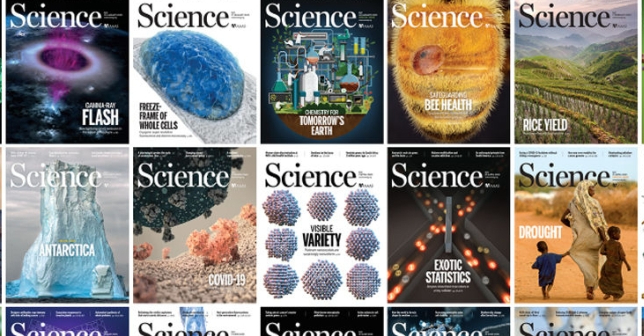
A whole-genome analysis of more than 12,000 cancers, investigating the impacts of traffic safety messages, and revealing new insights into how tumor cells escape death.
— Science Magazine (@ScienceMagazine) April 21, 2022
Check out what's new this week in Science. ➡ https://t.co/fUC4iNggTp pic.twitter.com/RqTOAeZ2kG
Category Archives: Research
Science: Global Warming Pledges, Energy Storage, Leeches And Biodiversity
What COP26 promises will do for climate
At COP26 countries made a host of promises and commitments to tackle global warming. Now, a new analysis suggests these pledges could limit warming to below 2˚C — if countries stick to them.
03:48 Efficiency boost for energy storage solution
Storing excess energy is a key obstacle preventing wider adoption of renewable power. One potential solution has been to store this energy as heat before converting it back into electricity, but to date this process has been inefficient. Last week, a team reported the development of a new type of ‘photothermovoltaic’ that increases the efficiency of converting stored heat back into electricity, potentially making the process economically viable.
Science: ‘Thermal batteries’ could efficiently store wind and solar power in a renewable grid
07:56 Leeches’ lunches help ecologists count wildlife
Blood ingested by leeches may be a way to track wildlife, suggests new research. Using DNA from the blood, researchers were able to detect 86 different species in China’s Ailaoshan Nature Reserve. Their results also suggest that biodiversity was highest in the high-altitude interior of the reserve, suggesting that human activity had pushed wildlife away from other areas.
ScienceNews: Leeches expose wildlife’s whereabouts and may aid conservation efforts
11:05 How communication evolved in underground cave fish
Research has revealed that Mexican tetra fish are very chatty, and capable of making six distinct sounds. They also showed that fish populations living in underground caves in north-eastern Mexico have distinct accents.
New Scientist: Blind Mexican cave fish are developing cave-specific accents
14:36 Declassified data hints at interstellar meteorite strike
In 2014 a meteorite hit the Earth’s atmosphere that may have come from far outside the solar system, making it the first interstellar object to be detected. However, as some of the data needed to confirm this was classified by the US Government, the study wasn never published. Now the United States Space Command have confirmed the researchers’ findings, although the work has yet to be peer reviewed.
LiveScience: An interstellar object exploded over Earth in 2014, declassified government data reveal
Vice:

Cover Preview: Nature Magazine – April 21, 2022
Life speed
Cells acquire mutations throughout life, a process that is known to give rise to cancer and has been proposed to contribute to ageing. There is little knowledge, however, about the rate at which mutations accumulate in species other than humans, and whether this rate is influenced by biological traits such as lifespan or body size. In this week’s issue, Alex Cagan, Adrian Baez-Ortega and colleagues address these questions. The researchers studied the speed at which mutations accumulate during life in 16 mammalian species and found that the number of mutations increases by a roughly constant amount each year. They also observed that the molecular processes causing mutations are broadly similar across species. Crucially, the team identified a strong anticorrelation between lifespan and mutation rate: longer-lived species accrue mutations at a slower pace than shorter-lived ones, such that different species have roughly the same number of mutations by the end of their respective lifespans.
Research: How Africa Keeps The Amazon Green
Jet streams sprinkle North African dust over the Amazon, providing the rain forest with much needed nutrients. Changing wind patterns and increasing smoke may shift the system.
Cover Preview: Science Magazine – March 25, 2022

Cover Previews: Nature Magazine – March 24, 2022
Volume 603 Issue 7902, 24 March 2022

Star dater’s guide to the Galaxy
The cover image shows a view of the Milky Way captured at Nambung National Park in Western Australia. To understand how the Galaxy formed requires precision age dating of the stars that it contains. In this week’s issue, Maosheng Xiang and Hans-Walter Rix of the Max Planck Institute for Astronomy in Heidelberg, Germany, present an analysis of the birth dates for nearly 250,000 stars in their subgiant evolutionary phase, when they can serve as precise stellar clocks. The researchers found that the individual ages of the stars ranged from about 1.5 billion to more than 13 billion years old. Tripling the age-dating precision for such a large stellar sample allowed the researchers to infer the sequence of events that initiated our Galaxy’s formation. Using this information, Xiang and Rix were able to determine that the oldest part of our Galaxy’s disk had already begun to form about 13 billion years ago, just 800 million years after the Big Bang, and that the formation of the inner Galactic halo was completed some 2 billion years later.
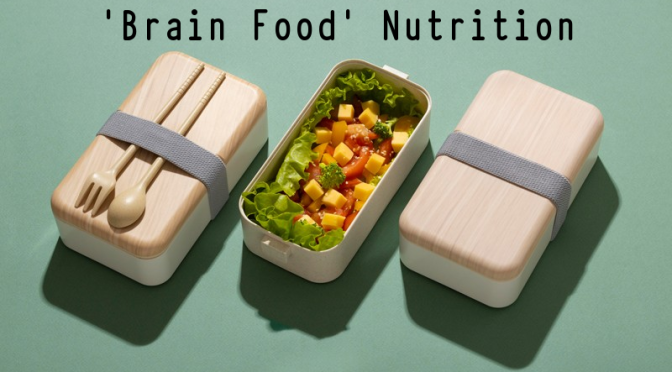
Diet & Nutrition: Nine Tips For A Healthier Brain
• Find time to snack healthily. Take short food breaks to help keep your blood-sugar level reasonably high without surging. Eating a piece of fruit every three hours or so, for example, could prevent hunger and overconsumption of calories. And when you eat, relax. Try not to think about your research. If you routinely stand in the lab, sit down. If your role is more sedentary, get up and take a quick stroll — perhaps to see a colleague on the next floor.
• Put food on your agenda. Schedule regular mealtimes in your work diary — because if you don’t, someone else will fill the gap for you by inviting you to a meeting. Choose a slot that aligns with your ‘biological clock’ and alterations in hormones such as insulin to optimize metabolic health, including microbiota diversity and composition. In other words, follow your gut and eat at times of the day when you feel that your body needs it, but generally try to avoid taking lunch too late in the afternoon. Eating earlier in the day can improve your energy balance, weight regulation, glycaemic control and sleep satisfaction6. Your brain consumes about 20% of the total energy used by your body, so maintaining consistent energy levels is important for optimal functioning. Use the time you’ve booked. Focus on what you eat and take your time. Do not grab a sandwich and munch it down in front of a screen. Your body deserves a rest.
• Enjoy your food. Transform your meal break into a pleasant event by sharing it with colleagues. Propose that everyone take turns preparing a dish from their home country or area so that you can all enjoy the cuisines of different cultures. Eating in a group and discussing the day’s events can help you to relax, to laugh and to share useful information and experiences.
• Plan your meals. If you are feeling particularly hungry, your eyes and hypothalamus (a small region in the brain that controls many bodily functions including hunger and thirst) will not help you to make healthy food choices; instead, they will prompt you to go for sugary, salty or fatty options. Try to organize your meals in advance. Increase your intake of low-calorie items, such as soups, salads, vegetables and minimally processed foods that are rich in dietary fibre. Among these are wholegrains, cereals, fruits, pulses, whole rice and wholemeal pasta. These foods are also rich in micronutrients and antioxidants such as potassium, magnesium, vitamin C, vitamin E, B-vitamins and healthy lipids — especially unsaturated omega-3 ones — that can help to prevent chronic disease. Neurotransmitters such as serotonin, dopamine, epinephrine and norepinephrine — all important for good brain function, mood and emotional regulation — require food-derived precursors, as well as vitamins and minerals, to be synthesized7.
• Diversify your diet. Stimulate your appetite by altering your food choices, preferably by incorporating more fruit and vegetables into your diet and reducing consumption of red meat and meat products. Each new day merits a new meal experience. But this doesn’t mean being a fully fledged connoisseur: overthinking what you eat will lead to compromises with your time and will make further compromises in what you eat more tempting. A saying from the Japanese Okinawa islands, where people have one of the lowest rates of chronic diseases in the world, and where many centenarians live, points the way: “Eat until you are 80% full”8. In practice, this means you should eat slowly and avoid ‘stuffing’ yourself.
• Avoid the insulin roller coaster. As well as contributing to chronic disease, excessive sugar intake might harm cognitive performance9. Sugared drinks, such as sodas, smoothies and even fruit juices, have a very low satiety value. After the sugar surge, glucagon — a hormone produced when sugar levels are low — as well as ghrelin, an appetitive hormone, and others kick back in and you’ll be hypoglycaemic and feel hungry again. Artificially sweetened beverages might not work much better — there is scientific debate about their perceived health benefits, because they might stimulate appetite centrally in the hypothalamus, rather than by modulating insulin levels10. Go for water, coffee, teas (including fruit teas), low-fat milk — or, if you’re desperate for sugar, a homemade fruit juice.
• Drink loads of water. Working inside, where the air is often dry (owing to heating in winter and artificial cooling in summer) can hasten water loss through respiration. Two litres a day of fluid intake is recommended by many health agencies. Pay attention to signs of dehydration. Drinking plenty will increase your blood volume and brain tissue fluid and thus boost your circulation and concentration levels. You will also become more tolerant of heat and cold — which is helpful when working in warm offices and cooled labs. Water is the essential carrier for all life functions in your body. It can also increase daily energy expenditure and feelings of satiety. Drinking water half an hour before your meal is an especially good option because it improves satiety11.
• Use healthy leftovers. Pre-packaged sandwiches and processed foods often have high quantities of fat, sugar, salt and additives that trigger the brain’s dopamine reward system, among other neuronal systems, inducing compulsive eating behaviour12. If you have time, prepare a healthy dish from scratch at home, perhaps making more than is needed for an evening meal and using leftovers for lunch the following day. Among homemade foods, well-balanced traditional dishes can improve your performance and health: for instance, the classic Mediterranean diet has long been linked with improved cognitive function and a decreased likelihood of both cognitive impairment and Alzheimer’s disease3. A Tupperware lunch made with leftovers from even the most indulgent dinner could often make a healthier lunch than a standard pre-packaged sandwich.
• Scrap the salt. Excessive use of salt is among the major killers worldwide, leading to increased blood pressure, stroke and other cardiovascular diseases. Some salt is essential to the taste of most foods, as well as for life, however, so don’t attempt to cut it out of your diet entirely. Try pepper, curcuma, nutmeg or other spices to add flavour. Some spices, including curcuma and pepper, also help to lower the risk of cardiovascular disease and can even decrease total mortality rates13.
Cover Preview: Science Magazine – March 11
Cover Preview: Nature Magazine – March 10

2021 Heart Research: Top Findings Of Cardiologists
Coronary artery bypass graft (CABG) was supported as superior to fractional flow reserve (FFR)–guided percutaneous coronary intervention (PCI) for three-vessel coronary artery disease (CAD). PCI failed to meet noninferiority criteria at 1-year follow-up in a study comparing outcomes between FFR-guided PCI using contemporary stents and CABG. This adds to existing evidence showing superior outcomes with CABG in patients with the most-complex CAD.
The sodium–glucose transporter-2 (SGLT-2) inhibitor empagliflozin was found to be beneficial in heart failure with preserved ejection fraction. Empagliflozin is the first medication shown to improve outcomes in this population. It’s unknown if this is a class effect of all SGLT-2 inhibitors, but this could be a game changer.
Poor-quality carbohydrates were linked to cardiovascular mortality, around the world. Consumption of higher-glycemic-index carbohydrates was associated with higher rates of cardiovascular disease and mortality in countries all around the world. These data are particularly important because lower-income countries often have diets high in refined carbohydrates, which may worsen cardiovascular disparities.
New guidelines for managing valvular heart disease were released. These new guidelines add or elevate several recommendations for transcatheter therapy, and they lower thresholds for intervention in some conditions.
The editors of Circulation: Cardiovascular Quality and Outcomes addressed racial-ethnic disparities. The editors affirmed that structural racism is a public health crisis and that the scientific publishing community can play a role in addressing it.
Tricuspid annuloplasty for moderate regurgitation during mitral-valve surgery was of unclear benefit. Annuloplasty was associated with less progression of moderate tricuspid regurgitation but more pacemakers at 2 years. Unfortunately, this mixed outcome does not clearly inform the decision on performing annuloplasty at the time of surgery, and longer-term follow-up is needed.
Immediate angiography was not beneficial in out-of-hospital cardiac arrest without ST elevation. Patients with out-of-hospital cardiac arrest who did not have ST elevation on their initial ECG did not benefit from immediate angiography. Although a potential coronary culprit was identified in about 40% of patients, neurologic injury was by far the most frequent cause of death, negating any benefit from coronary revascularization.
Many statin side effects are related to the “nocebo” effect. A creative study enrolled 60 people with statin intolerance and gave them 12 randomly ordered 1-month treatment periods: 4 periods of no medication, 4 of placebo, and 4 of statin. Symptom intensity did not differ between placebo and statin periods and, interestingly, some even had more symptoms on placebo. This demonstrates that some cases of “statin intolerance” may be related to the “nocebo” effect.
Shorter duration of dual antiplatelet therapy following PCI/stent placement was found to be acceptable in patients with high bleeding risk. A large, randomized trial found that 1 month of dual antiplatelet therapy provided similar clinical outcomes and a lower bleeding risk than 3-to-6-month regimens for this challenging patient subset.
“De-escalation” of dual antiplatelet therapy for patients undergoing PCI for acute myocardial infarction (MI). This industry-funded study evaluated patients who had received 1 month of aspirin plus ticagrelor after acute MI and stent placement and “de-escalated” half to aspirin plus clopidogrel. At 1 year, there was significantly less bleeding in the de-escalation group and a nonsignificant trend toward fewer ischemic events as well.
 Boomers Daily