
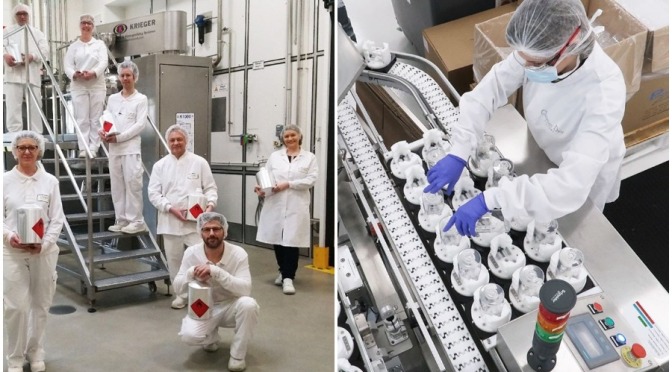
 Jamie Waters explains how the fashion industry emerged as a vital contributor in the fight against the pandemic. Many brands, big and small, have pivoted to make masks and other protective equipment.
Category Archives: News
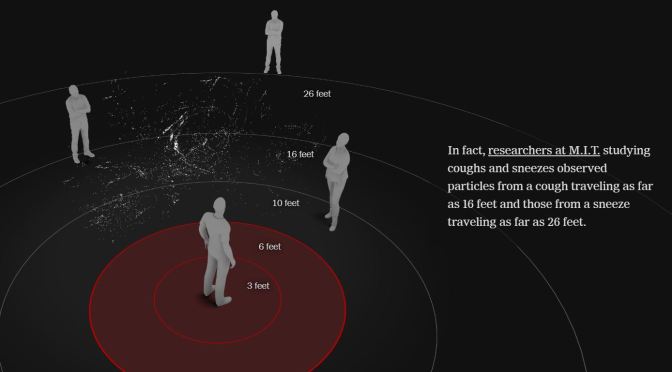
Social Distancing: 3-D Simulation Of How Respiratory Droplets Spread Coronavirus
From The New York Times (April 14, 2020):
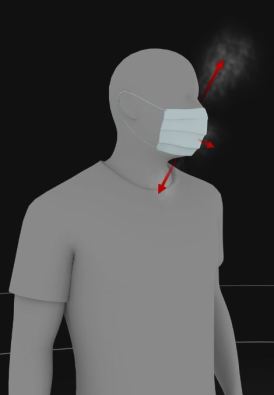
But as this simulation suggests, and scientists have argued, droplets can travel farther than six feet. And small droplets known as aerosols can remain suspended or travel through the air before they eventually settle on surfaces. This is how they could disperse over the next 20 minutes.
The Centers for Disease Control and Prevention encourages people to stay home. If you must venture out, you should stay at least six feet away from others. The World Health Organization recommends a minimum of three feet of separation.
Scientists are learning about the novel coronavirus in real time, and those who study similar respiratory illnesses say that until it is better understood, no guideline is likely to offer perfect safety. Instead, understanding the possible transmission routes for the virus can help us see why keeping our distance is so important.
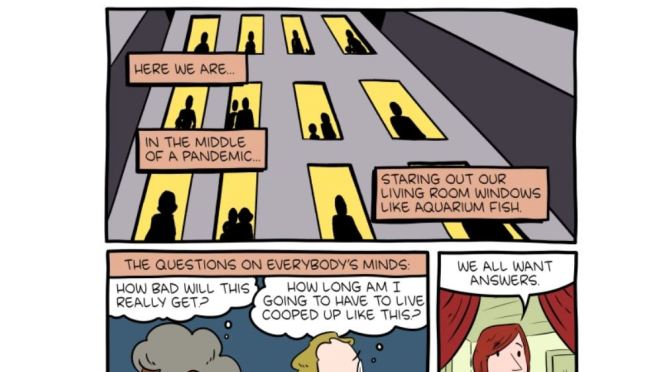
Statistics: The Difficulty In Predicting The Future Of The Covid-19 Pandemic


Coronavirus/Covid-19: “Face Shields” Are Best In Preventing Transmission Says Epidemiologist
From web post by Michael B. Edmond (April 11, 2020):
Our goal should be to have a face shield for every person in the country. It should be worn anytime a person leaves their home, while in any public place, and even at work. From news reports, it appears that face shields are already being more commonly worn in other nations, particularly in some Asian countries.
The advantages of face shields are their durability allowing them to be worn an indefinite number of times, the ability to easily clean them after use, their comfort, and they prevent the wearer from touching their face. Importantly, they cover all the portals of entry for this virus–the eyes, the nose, and the mouth. Moreover, the supply chain is significantly more diversified than that of face masks, so availability is much greater.
Some are critical of any strategy that isn’t perfect. But let’s think about the influenza vaccine. Although the effectiveness varies from year to year, on average it’s 40%. We push this vaccine hard in the hospital and in the community. Could we expect that face shields are at least 40% effective in reducing the transmission of COVID-19? I think so. Universal shielding would bend the curve more quickly and accelerate the ability to reduce social distancing and restrictions on movement.
.
Face shields are a simple solution that if implemented universally would have a major impact on public health. Until we have a vaccine, this may be our best intervention for preventing transmission in the community.
.
.
Michael B. Edmond, MD, MPH, MPA, MBA is the Chief Quality Officer and Associate Chief Medical Officer for University of Iowa Health Care and Clinical Professor of Infectious Diseases at the University of Iowa Carver College of Medicine. He previously served as the Richard P. Wenzel Professor of Internal Medicine, Chair of the Division of Infectious Diseases, and Hospital Epidemiologist at Virginia Commonwealth University in Richmond.
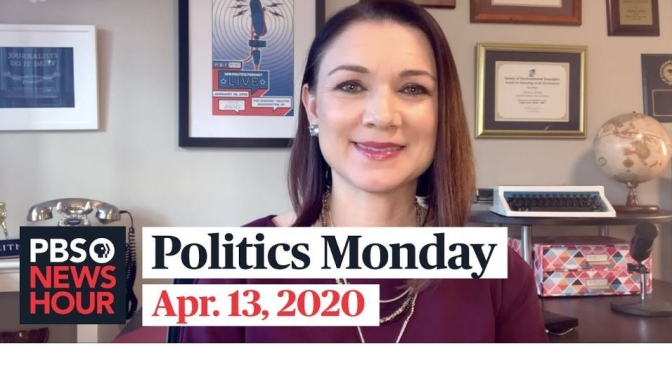
Politics Monday: Tamara Keith And Amy Walter On Joe Biden, Covid-19 (PBS)
NPR’s Tamara Keith and Amy Walter of the Cook Political Report join Judy Woodruff to discuss the latest political news, including Sen. Bernie Sanders’ endorsement of former Vice President Joe Biden for the 2020 Democratic presidential nomination, how Sanders’ politics might influence his former rival and political fallout from the Trump administration’s reaction to COVID-19.
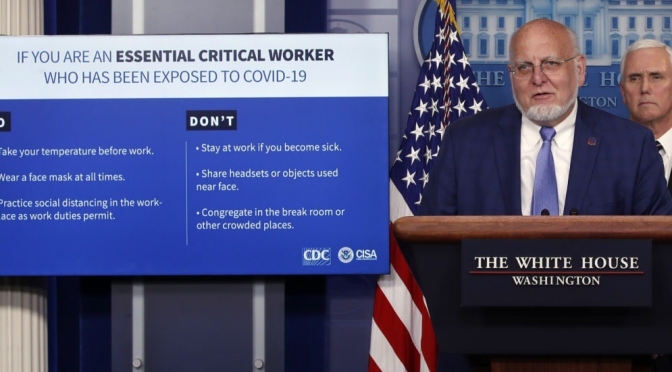
Coronavirus Policies: A Look At The Early Missteps By The CDC (Bloomberg)
 Historically, the U.S. Centers for Disease control and Prevention has been the agency in charge of predicting, and containing outbreaks of disease. But as Covid 19 ravaged the country, the agency took a backseat to the White House.
Michelle Fay Cortez and John Tozzi discuss how the agency has handled the pandemic response, its early missteps, and how its role is likely to change in the future.
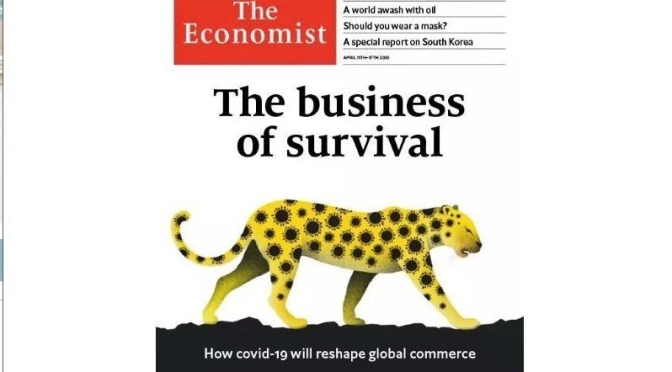
Post-Pandemic: Reopening Companies Into The New Reality (The Economist)
 A selection of three essential articles read aloud from the latest issue of The Economist. This week, the business of survival—those companies that survive the coronavirus crisis will need to master a new environment. Plus, how to reopen factories after covid-19 (9:23) and Venezuela’s navy battles a cruise ship, and loses (17:41).

News: “Shields & Brooks” On Washington Politics And The Pandemic (PBS)
Syndicated columnist Mark Shields and New York Times columnist David Brooks join Judy Woodruff to discuss the week in political news, including how Americans are holding up amid the public health and economic pain caused by the coronavirus pandemic, where leadership is emerging, the outlook for President Trump’s management of the crisis and the end of Sen. Bernie Sanders’ presidential campaign.
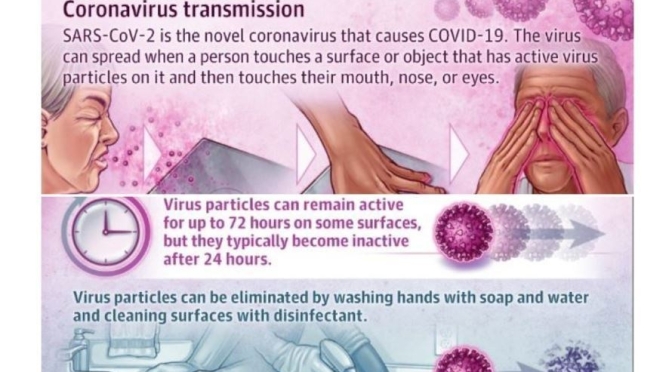
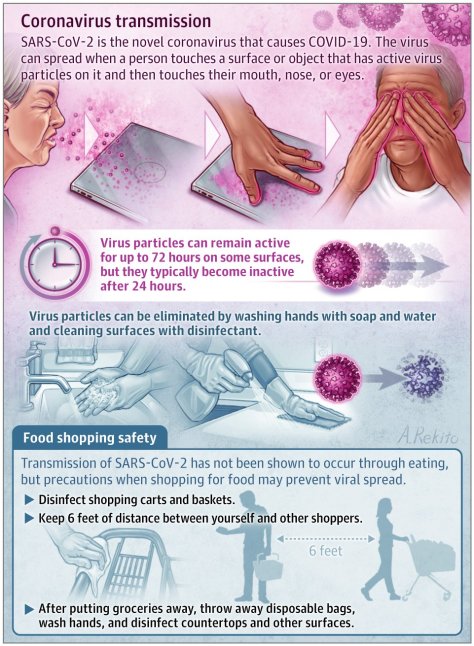
Coronavirus Infographic: Virus Particles Are Active 24-72 Hours – Wash Your Hands, Disinfect Surfaces

 Boomers Daily