Category Archives: Medicine

New Survey: 58% Of Older Adults Are ‘Likely’ To Get A Covid-19 Vaccine (Nov ’20)

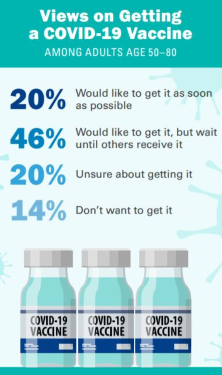
When asked how likely they would be to get a COVID-19 vaccine when available and if no cost to them, 58% of older adults indicated they would be likely to get a COVID-19 vaccine (33% very likely, 25% somewhat likely), 28% said they were unlikely (11% somewhat unlikely, 17% very unlikely), and 14% were unsure or did not know.
About two in three older adults (63%) indicated they received a flu shot last flu season. Seven in ten either received one since August 2020 (34%) or intended to get one this flu season (38%). Nearly half of adults age 50–80 (49%) believed that getting a flu vaccine is more important this year compared to other years, 44% said it is just as important, and 7% said it was less important.

Interest in getting a COVID-19 vaccine was more common among those age 65–80 compared with those 50–64 (63% vs. 54%), men compared with women (64% vs. 52%), and Whites compared with Hispanics and Blacks (63% vs. 51% vs. 40%). Individuals who lived with others, had higher household incomes, or had more education were also more likely to report they would get a COVID vaccine.

Half of adults age 50–80 (52%) said they personally knew someone who had COVID-19, and 2% reported having had it themselves. One in five older adults (19%) indicated they personally knew someone who died from COVID-19. The likelihood of getting a COVID-19 vaccine did not differ based on whether respondents knew someone who had COVID-19 or who died from it.

In deciding whether to get a COVID-19 vaccine, older adults rated the following as very important: how well it works (80%), their own research (56%), and if it was recommended by their doctor (52%), public health officials (42%), or family and friends (13%). Cost was rated as very important by 30% of older adults.
Website

Covid-19 Podcast: Death Rates Are Falling – What This Means For Pandemic

The COVID-19 mortality rate is falling around the world. We discuss the reasons behind this – the role of new drugs, the treatment strategies the have been learned, or re-learned, and the ever-present worry that these hard won victories could be undone by rising infection rates.

In this episode:

00:44 An increase in survival rates

The COVID-19 mortality rate is falling around the world. We discuss the reasons behind this – the role of new drugs, the treatment strategies the have been learned, or re-learned, and the ever-present worry that these hard won victories could be undone by rising infection rates.

News Feature: Why do COVID death rates seem to be falling?

10:53 More vaccine good news

This week, Moderna released preliminary results for its COVID-19 vaccine candidate, the third positive indication from a string of vaccine announcements. Although the full data are yet to be published, do these results give us more reasons to feel hopeful?

News: COVID vaccine excitement builds as Moderna reports third positive result

Health: Covid-19 Vaccine Threatened By Mistrust Of Science & Politicians

A vaccine for covid-19 could be rolled out before the end of the year. But a worrying rise in mistrust of vaccines threatens its effectiveness. Now & Next is a series from The Economist Films: https://films.economist.com/nowandnext/

Covid-19 News: How ‘Moderna’s mRNA-1273 Vaccine’ Works (Video)

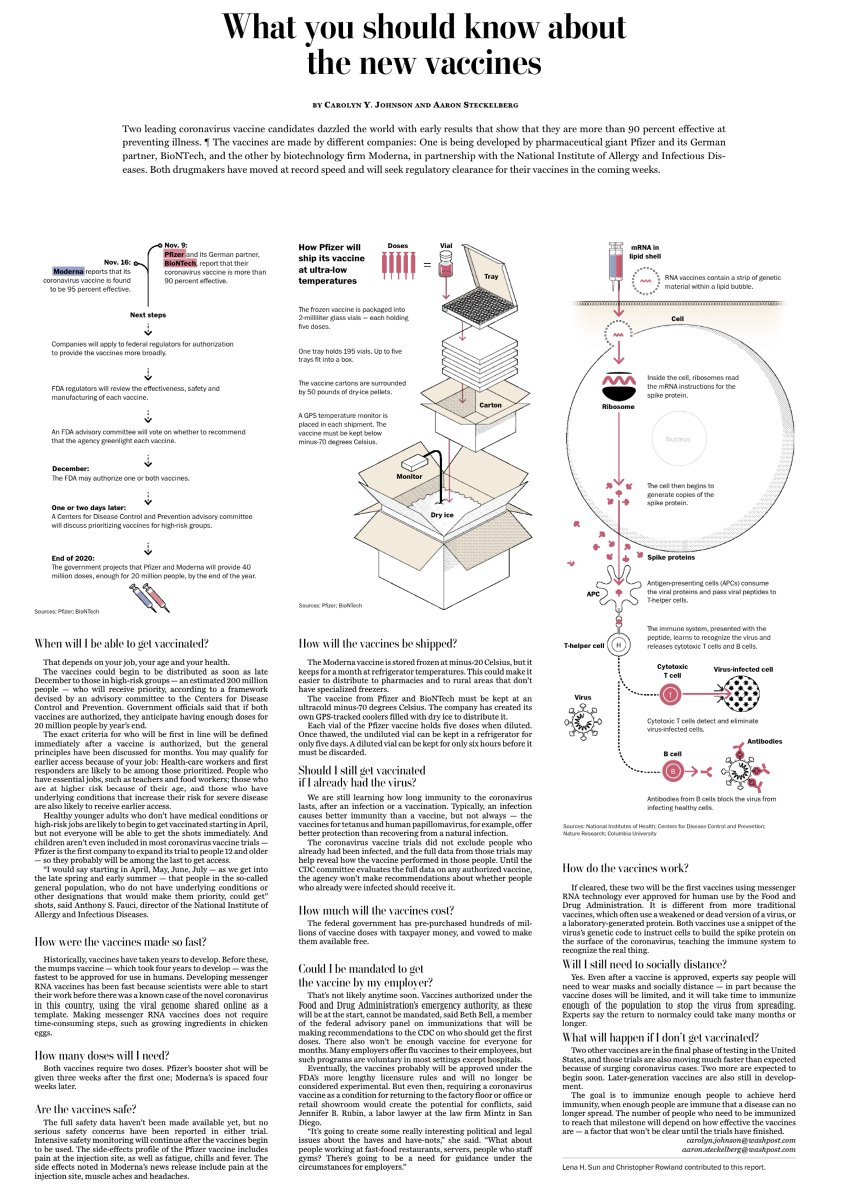
Early data from US biotech Moderna has revealed that its Covid-19 vaccine candidate is 94.5 per cent effective, raising hopes that a range of immunisations will be available to help end the pandemic. The interim analysis of the vaccine, currently known as mRNA-1273, comes after 95 trial participants contracted Covid-19, including just five who were given the coronavirus jab. While the data was published via a press release, it includes significant details that remain unclear around the Pfizer-BioNTech vaccine – which uses the same mRNA technology to target the coronavirus spike protein and an immune response.

Health: ‘A Changing Climate, Changes Disease’

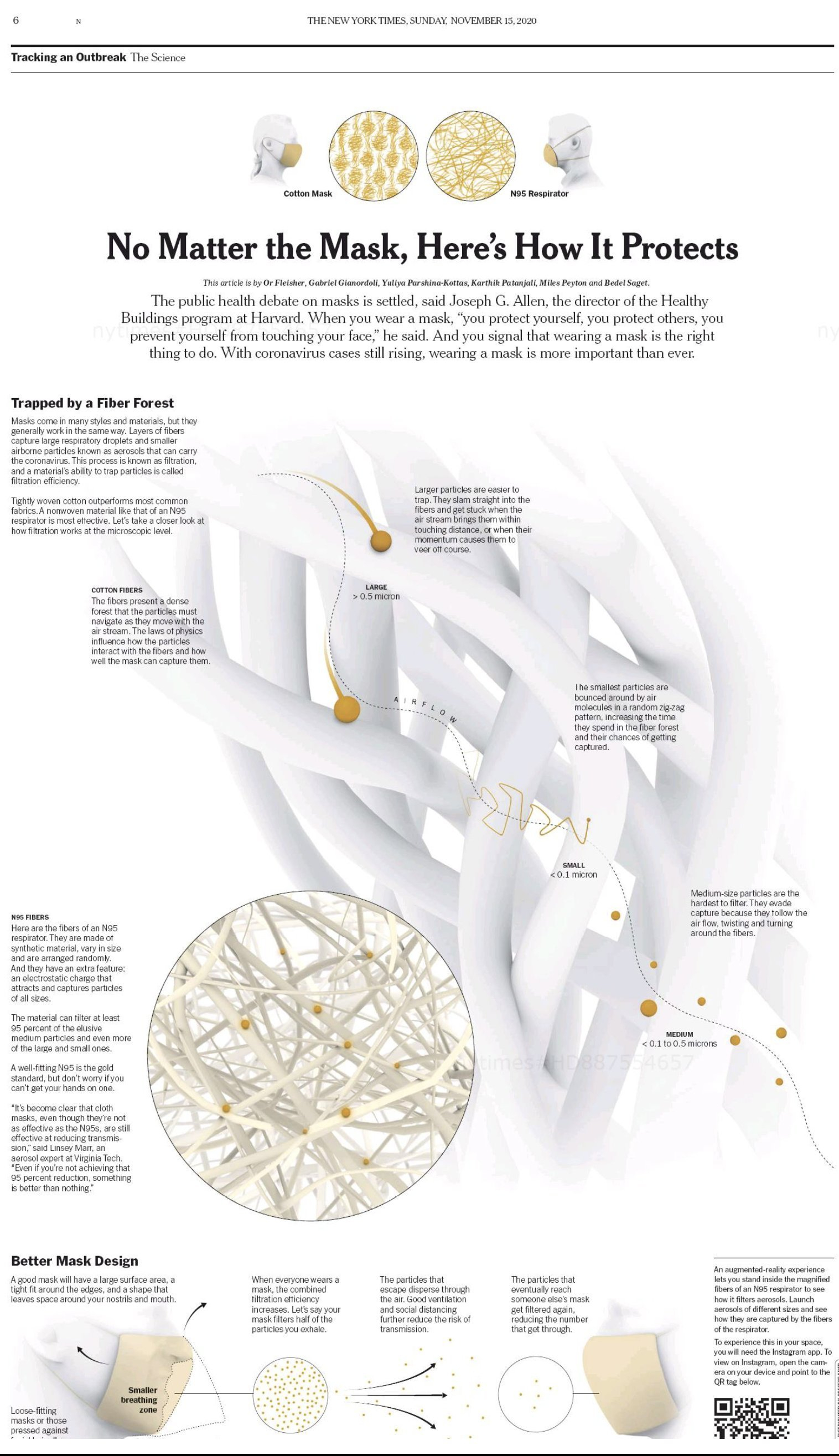
In recent decades, the worldwide burden of infectious disease has fallen, thanks to sanitation, hygiene, and prevention and control efforts. But the covid-19 pandemic shows how great a threat to global health remains – particularly as the climate crisis continues to affect disease spread and our response in myriad ways. Increasing temperatures are expanding the areas where diseases such as malaria and dengue thrive. More flooding and drought increases disease risk. Hygiene requires access to clean water. Further urbanization and migration related to climate change will also complicate prevention and control. The BMJ has published “The time is now” collection, calling for the strengthening of the global response to climate change and communicable disease. https://www.bmj.com/communicable-dise…