The dystopian nightmare of 2026 continued apace this week with Donald Trump seemingly hell-bent on taking over Greenland, either by purchase or military force if necessary, while potentially collapsing the entire western security alliance in the process.
Updates were delivered by the US president to European leaders in a trademark stream of social media insults and invective. As ever with Trump, it’s hard to tell if it all should be read as maximalist positioning ahead of a negotiation, or a genuine precursor to a military attack. But as Patrick Wintour and Jennifer Rankin write in this week’s Big Story, the damage among fellow Nato members already looks to have been done.
Melting sea ice has much to do with Greenland’s increasing strategic desirability. With the help of some great graphics, visuals editor Ashley Kirk explains what’s changing in the Arctic and who lays claim to what.
Spotlight | The man who trusted Trump – and paid with his life Many Iranian protesters believed a US president would – for the first time – rescue them, but now people can only despair after mass arrests and brutality. Deepa ParentandWilliam Christou report
Environment | Where have all Thailand’s dugongs gone?
The Andaman coast was one of few places in the world with a viable population of the marine mammals, but then dead ones began washing up. Now half have gone. Gloria Dickie reports from Phuket
Feature | Cuba edges closer to collapse Disillusioned with the revolution after 68 years of US sanctions and a shattered economy, one in four Cubans have left in recent years. Can the regime, and country, survive? ByAndrei Netto in Havana
Opinion | Take a lesson from the past, and light the way forward As Martin Kettle writes his last regular column for the Guardian, his thoughts turn to the examples and hope we can take from history
Culture | Michael Sheen on launching Welsh National Theatre As the newly founded national company’s first show comes to the stage, the proudly Welsh actor tells Kate Wyver about his plan to bring big productions back to his homeland
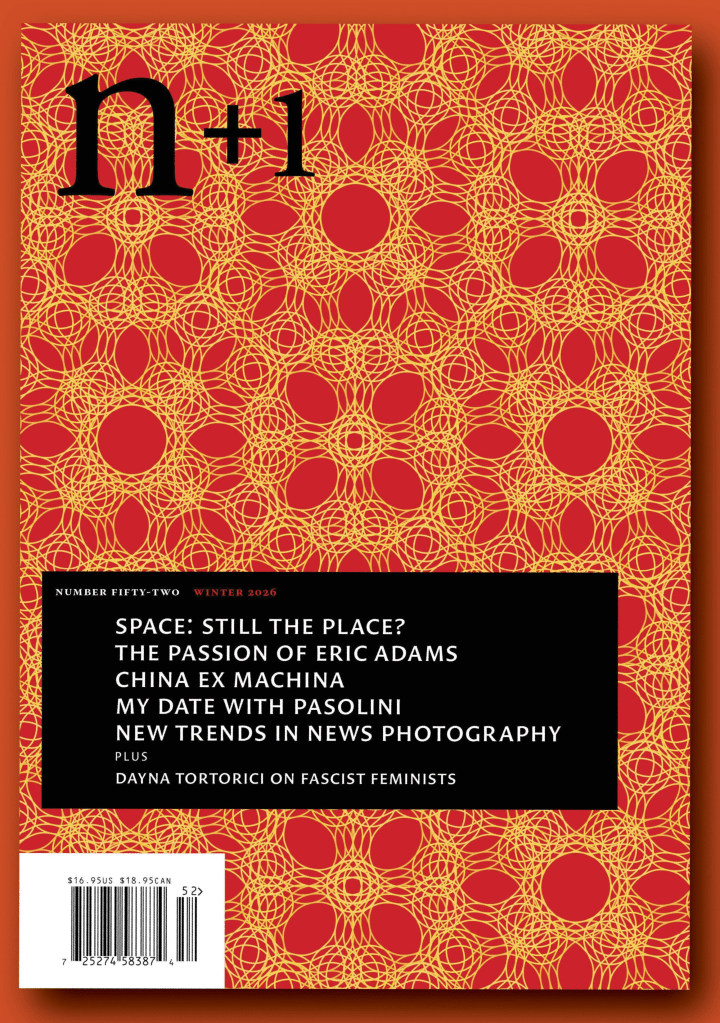
In the contemporary Chinese context, the idea that crucial parts of the central government could simply cease to operate for more than a month, as part of a procedural standoff between rival governing factions, would beggar belief. And in turn, to an American observer, the thought that miles of new high-speed rail lines could simply materialize by bureaucratic fiat, unencumbered by years of legislative horse-trading, environmental review, suburban backlash, and budgetary overshoot, is no less astonishing.
Adams will be remembered for his petty corruption, his self-mythologizing, and his ignominious dealmaking with the Trump White House; but he should also be remembered as the mayor who got New Yorkers to stop tossing giant bags of trash onto city sidewalks as if there were no alternative. You can laugh at a New York mayor who walks into a press conference wheeling out a trash can, beaming as if he invented the contraption, while “Empire State of Mind” blares triumphantly in the background. But truly, Adams’s proclaimed “trash revolution” represented a tremendous advance over abysmal past practice.
“Men make their own history,” Marx wrote, “but they do not make it as they please; they do not make it under self-selected circumstances, but under circumstances existing already, given and transmitted from the past.” That may be broadly true, but Dick Cheney got to make history under the exact circumstances he would have chosen.
THE NEW YORK TIMES MAGAZINE:The 1.18.26 Issue features Robert Draper on Marjorie Taylor Greene; Ferris Jabr on a science experiment to help make the oceans less acidic; Jonathan Mahler on Christian Zionism and MAGA; and more.
Imagine yourself on an isolated mountain pass. The wind is whipping, the air is thin, there is nothing around you except the sky and the sound of your feet hitting the craggy ground. Many of us have experienced the wonder and exertion that comes with a great hike in a wild landscape. These are places we may love to visit, but for Kílian Jornet, this is where he is most at home.











 Boomers Daily