Category Archives: Housing

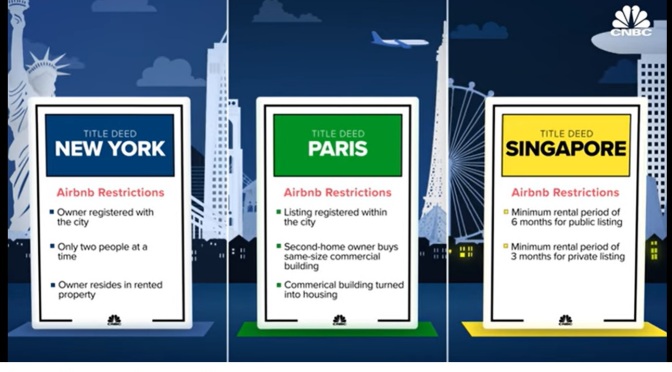
Analysis: How Airbnb Is Rattling Housing Markets

CNBC International (August 15, 2023) – In the Italian city of Venice, the number of beds dedicated to tourists is now almost on par with the number of beds allocated to residents.

An electronic counter installed by activists in the city tracking this number illustrates the ever-growing demand for short-term rentals, popularized by the home-sharing platform Airbnb, which is now as popular as hotels. The short-term rental market is projected to be worth $228.9 billion in 2030, boosted by the rise of commercial operators.

But as the housing crisis deepens worldwide due to land and labor shortages, residents are questioning the impact of Airbnbs and second homes locally. “We have more than 7,000 apartments involved in this kind of system of short-term tourist rentals.

And now it’s very difficult for a young guy or a new family to find an affordable house to rent,” Dario Nardella, Florence city mayor, told CNBC. So what is the economic impact of Airbnb and short-term rentals? And can restrictions ease the crisis? Watch the video to find out.

#CNBC #Airbnb #Housingmarket

Design & Construction: ‘Stockholm Wood City’

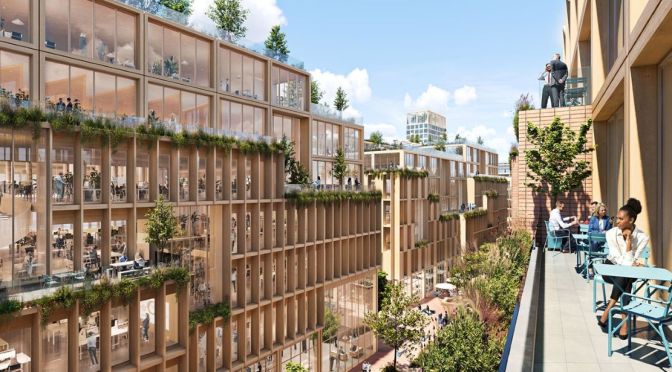
Dezeen Films (June 22, 2023) – Scandinavian studios Henning Larsen and White Arkitekter are designing Stockholm Wood City, which will become the world’s largest wooden construction project and have the “serenity of a forest”.

The project, set to be built in Sickla in southern Stockholm, was dubbed the “world’s largest wooden city” by developer Atrium Ljungberg, which also said it is the world’s largest known construction project in wood.

Stockholm Wood City, which will have 7,000 office spaces and 2,000 homes, is being designed by Danish studio Henning Larsen and Swedish firm White Arkitekter. It will feature nature-informed elements and was designed to have the feel of a forest.

Sustainable Design: ‘Rapid Assembly Housing’ (2023)

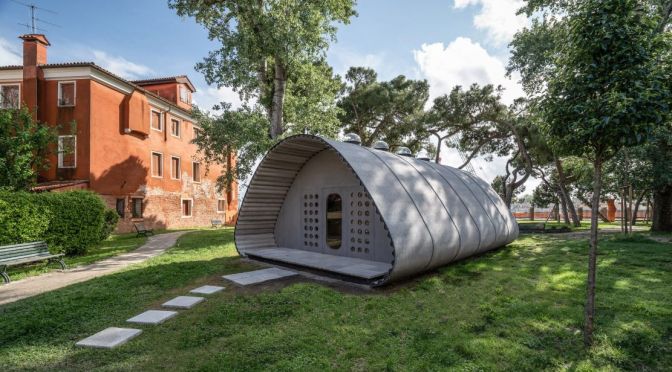
Dezeen Films (May 17, 2023) – In this video produced by Dezeen for Holcim, Norman Foster introduces a housing prototype for displaced people that the Norman Foster Foundation developed with the building materials company and unveiled in Venice during the launch of the Architecture Biennale.

The Essential Homes Research Project is a housing concept designed to sustainably provide rapidly assembled housing for people displaced by natural and manmade disasters. The prototype was designed by the Norman Foster Foundation and realised by Holcim using its materials. The homes have been designed to offer a durable alternative to tent shelters in order to withstand the elements.

They can be built on-site in order to expedite construction during emergencies. The project responds to the fact that displaced people often end up living in temporary accommodation for more than a decade, and require homes that offer safety and dignity. “Disasters lead to the need for instant accommodation and camps – mostly tented – offering scant protection from the elements,” Foster said in an exclusive video interview with Dezeen.

“What if there would be something that would be more permanent, more durable, offering greater protection from the elements, but which could be realised very quickly?”

Read more on Dezeen: https://www.dezeen.com/tag/holcim/

Rent Inflation: The Rise Of New ‘Luxury’ Apartments

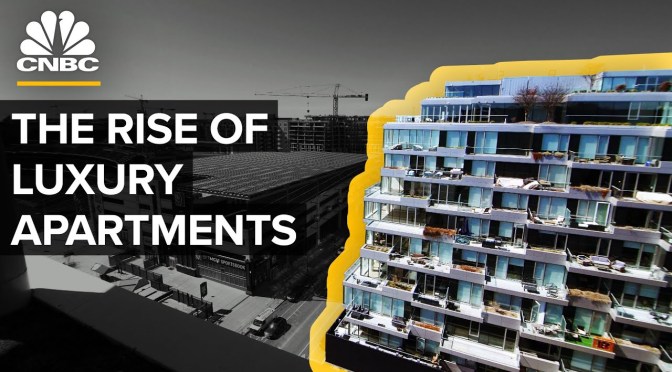
CNBC (April 2, 2023) – An apartment building boom is unfolding in cities across the U.S. Many of the new units come with “luxury” amenities, like pools and fast-access to transportation. Experts say the uptick in supply is welcome news, but won’t ease rent inflation anytime soon.

Chapters: 0:00 — Introduction 1:09 — Chapter 1: “Luxury” 5:42 — Chapter 2: Policy 9:55 — Chapter 3: Increasing supply

As a result, many cities remain stuck in a price-elevating housing shortage. Washington lawmakers are now scrutinizing regulations that slow the pace of homebuilding, in an attempt to slow rent inflation.

AI & Design: ‘Synthetic Architectural Dreams’

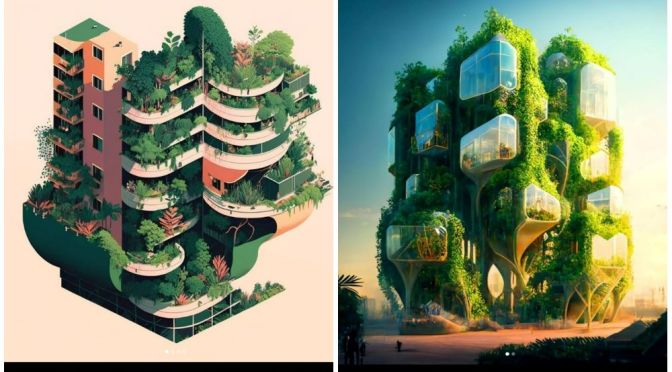
'synthetic architectural dreams' explores the revolutionary future of AI-generated design

designboom – Over the past year, the field of design has seen a dramatic shift with artists and architects alike increasingly adapting innovative technologies to explore and expand the bounds of their creative practices.

'synthetic architectural dreams' explores the revolutionary future of AI-generated designillustrative capabilities of AI-powered design programs

Perhaps the most sensational innovation has been the wave of AI-powered design programs, kicking off with DALL-E which quickly consolidated its place in the framework of popular culture, taken further by Midjourney from which a blurred but exciting reality emerged, to Stable Diffusion which moreover has made this work open source.

Read more:

syntheticarchitecture

Urban Views: World’s Best Public Housing In Vienna

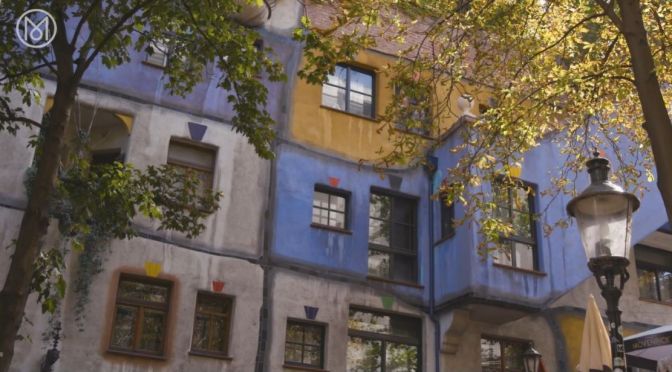
Monocle Films (December 14, 2022) – The world is urbanising fast. But how do you accommodate people in cities in a way that offers dignity, affordability and a sense of community? Vienna may have a solution. Explore the enduring legacy of the city’s ‘Gemeindebau’ apartment blocks in the latest episode of our Design Tours series.

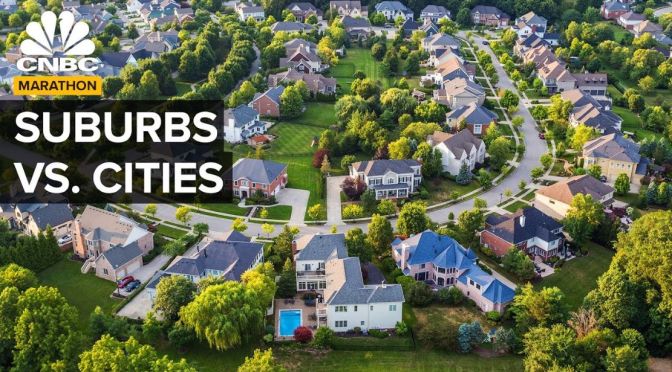
Economic Analysis: Are Cities Or Suburbs Better?

CNBC Marathon reviews why a cost-of-living crisis is unfolding across America’s housing infrastructure. CNBC explores what that means for apartments in the cities and houses in the suburbs. Inflation data shows that costs for items such as rent and groceries are increasing quickly across the Sun Belt and coastal cities.

Chapters: 00:00 Introduction 00:39 How to make the suburbs more affordable (Published April. 2022) 13:22 How suburban sprawl shapes the U.S. economy (Published Feb. 2022) 26:34 Are major cities still worth it? (Published May 2022)

Now years removed from the darkest days of the pandemic, people are asking: Is a return to the city worth it? Metropolitan regions have sprawled in recent years, raising budget concerns and quality-of-life issues for the people who remain downtown. Meanwhile the absence of commuters is slowing the recovery in leisure and hospitality. About 46% of renters in the U.S. are struggling to make ends meet, according to Harvard University researchers.

Builders say conditions for renters will get worse before they get better. A snarled supply chain, a labor shortage, and rising interest rates are worsening what some call a “throwaway” development pattern. Several real estate industry experts have ideas about how to make housing more attainable. Some of the most popular ideas include mixed-use districts and master-planned communities.

America’s suburbs are sprawling again. Over the 20th century, real estate developers built large tracts of single-family homes outside of major cities. The builders were following mortgage underwriting standards first introduced by the Federal Housing Administration in the 1930s. Over the century, those guidelines created housing market conditions that explicitly shut out many minorities. Experts say it is possible to update these old building codes to create equity while fixing some, but not all of the problems of American suburbia. CNBC Marathon brings together the best of CNBC’s coverage on the U.S. housing crisis and how life in the suburbs impacts city living.

U.S. Lifestyle Rankings: The Best Places To Live In 2022

The 10 Best Places to Live in the U.S. in 2022-2023:

1. Huntsville, Alabama
2. Colorado Springs, Colorado
3. Green Bay, Wisconsin
4. Boulder, Colorado
5. San Jose, California
6. Raleigh and Durham, North Carolina
7. Fayetteville, Arkansas
8. Portland, Maine
9. Sarasota, Florida
10. San Francisco

Housing costs are rising fast and there aren’t enough homes on the market nationwide to meet demand, and anyone looking to move is acutely aware of the competition and high cost to buy or rent a home. The Best Places to Live rankings factor in how the cost of living compares to the area’s median household income, but U.S. News & World Report also broke out the data into its own ranking.

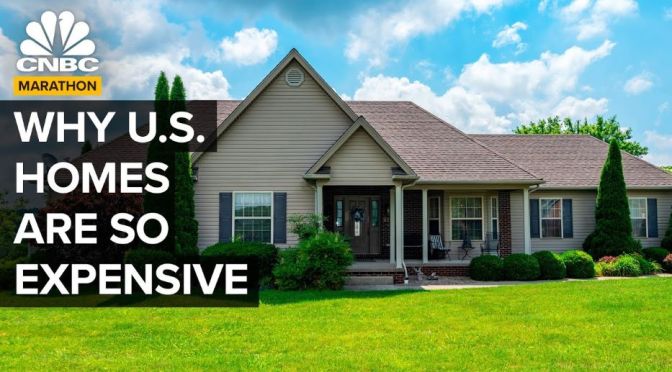
Housing: Why U.S. Homes Are So Expensive (CNBC)

Prices for the American dream home have skyrocketed. The U.S. housing market has been an unlikely beneficiary from Covid-19. The pandemic encouraged city dwellers to move to the suburbs as families looked for home offices and bigger yards.

Segments: 00:00 – Why the U.S. is facing a housing shortage (May 2021) 12:37 – How suburban sprawl shapes the U.S. economy (February 2022) 25:49 – How did rent become so unaffordable in the U.S. (December 2021) 34:46 – Is the U.S. in a housing bubble? (September 2021)

“Everybody expected housing to really sort of dry up with the rest of the economy,” said National Association of Home Builders CEO Jerry Howard. “And in fact, the opposite has happened. People who have been sort of scared out of the cities by the pandemic.”

With homeowners unwilling to sell, a record low supply of homes for sale has forced buyers into intense bidding wars. According to the National Association of Realtors, the U.S. has under built its housing needs by at least 5.5 million units over the past 20 years. That’s a stark comparison to the previous housing bubble in 2008 when overbuilding was the issue. Higher costs for land, labor and building materials including lumber have also impacted homebuilders.

However, according to most experts, the market is shaping up to look more like a boom rather than a bubble. “We say bubble because we can’t believe how much prices have gone up,” CNBC real estate correspondent Diana Olick said. “A bubble tends to be something that’s inflated that could burst at any minute and change and that’s not really the case here.” And America’s suburbs are sprawling again.

Over the 20th century, real estate developers built large tracts of single-family homes outside of major cities. The builders were following mortgage underwriting standards first introduced by the Federal Housing Administration in the 1930s. Over the century, those guidelines created housing market conditions that explicitly shut out many minorities. Experts say it is possible to update these old building codes to create equity while fixing some, but not all of the problems of American suburbia.

In 2021, single family housing starts rose to 1.123 million, the highest since 2006, according to the National Association of Home Builders, however, options for prospective homebuyers remain lean. Experts say the problems of America’s housing market relate to past policy decisions. In particular, they say restrictive zoning codes are limiting housing supply.

Previews: Architectural Review – April 2022

Ibavi | AAU Anastas | Taller Mauricio Rocha | Grafton | Building Beyond Borders + BC Architects and Studies | Sebastián Arquitectos | Fernand Pouillon | Dimitris Pikionis

If you have purchased an issue and are having trouble with your order, please contact our customer services team on customerservicesteam@emap.com

If you are a subscriber, digital editions of the magazine are available to read – just sign in for full access. Not a subscriber? Find out more and support the AR here

AR April 2022

‘A great deal of human history is told in stone alone’ writes Arianne Shahvisi, ’what is carved in stone is a hard, enduring message to the future’. Messages etched onto stone walls and tablets tell us of a past literally writ in stone, but the rocks we plunder from the Earth’s crust can also help us build a liveable future. The April issue of the AR examines stone as an architectural and urban material, digs into the political landscape it is extracted from and explores the weight of cultural and social meanings it holds. This issue features projects by IBAVI, Building Beyond Borders, Mauricio Rocha, Grafton Architects, Fernand Pouillon, Demetris Pikionis, and contributions by Steve Webb, Tomoki Kato, Nami Ogura, Nadi Abusaada, Perdita Phillips, Pierre Bidaud, and many, many more.

The front cover of the issue features Tito Mouraz’s Open Space Office series, where the lithic violence of stone creation is frozen and silent in the quarry, the detritus of human extraction feeble and tiny in comparison.

Stone

Keynote: Stone age, Steve Webb
Social housing, Mallorca, Spain, IBAVI, Rafael Gómez-Moriana
Foundations of empire, Arianne Shahvisi
City portrait: Jerusalem, Israel-Palestine, Nadi Abusaada
Case study: Analogy pavilion, AAU Anastas
Case study: St Mary of the Resurrection Abbey extension, AAU Anastas
Lithic love, Perdita Phillips
Museo Anahuacalli extension, Mexico City, Mexico, Taller Mauricio Rocha, Juan Carlos Cano
Rock-hewn churches in Ethiopia, Tarn Philipp
Town House, Kingston, and Marshall Building, LSE, London, United Kingdom, Grafton Architects, Stephen Parnell
Outrage: Colonial legacies of concrete, Mohamed Ismail and Caitlin Mueller
Revisit: Climat de France, Algiers, Algeria, Fernand Pouillon, Brittany Utting and Daniel Jacobs
Women’s house, Ouled Merzoug, Morocco, Building Beyond Borders + BC Architects and Studies, Lina Meskine and Anouar Ahdaf
In the Japanese rock garden, Tomoki Kato and Nami Ogura
Reputations: Dimitris Pikionis, Freddie Phillipson
Village and chapel renovations, Ruesta, Spain, Sebastián Arquitectos, Elena Lacilla Larrodé
The stonemason, Pierre Bidaud