‘Soaring ceilings, original timber beams and wooden flooring, flooded with light from floor-to-ceiling sash windows at both aspects’
This slideshow requires JavaScript.
THE MODERN HOUSE: Brilliantly located in Hoxton, this 19th-century former print house is now a three-bedroom house of exceptional character, scale and versatility. It is arranged across five floors with over 3,700 sq ft of internal living space, including a cinema and artists’ studio, and has two large south-facing terraces.
The house is accessed via a gated front courtyard and entered through an intimate cloakroom. The ground floor is predominantly open plan with the living room and kitchen separated by a wonderful wall of timber-framed stained glass. Painted-brick walls and original timber beams unite the two spaces with wooden floors in the reception becoming concrete in the kitchen. The latter is an enormous space arranged around a large island unit, with a dining area and, beneath a series of pitched roof lights, a six-oven Aga.

From the reception, a concealed door leads to the lower-ground level; a flowing warren of spatial ingenuity comprising steam room, office, utility room, guest WC, and a beautifully finished cinema with seating for seven.
A staircase with timber-panelled walls ascends to the first floor. Here, a dramatic library with soaring ceilings, original timber beams and wooden flooring is flooded with light from floor-to-ceiling sash windows at both aspects. A gas stove and its chimney stack are the only interruption to a towering wall of custom-made bookshelves. Incorporated into the cabinetry, a tropical fish tank offers a distorted glimpse into the room beyond; an elegant guest bedroom with painted-panel walls, a free-standing bath and an excellent walk-in shower with mosaic-tiled flooring and exposed-brick walls.
Reached via an elegant open-tread staircase from the library and occupying the entire second floor, is the master bedroom, with dressing room and en-suite bathroom. An exposed-brick patina on one wall is matched with painted brick on another, all set against dark wooden floors and punctuated with a sculptural free-standing copper bath. With a south-facing window and French doors that lead onto a wonderfully large terrace, this is one of the brightest rooms in the house.
The third floor is a recent addition to the house and is similarly bathed in natural light from walls of Crittall at both aspects; from the north-facing balcony of the artists’ studio, a south-facing landing and a bedroom with gas stove, currently used a room for reading. Steps lead from the studio through an electric roof light and onto an excellent roof terrace, with far-reaching views in every direction.
Read full article

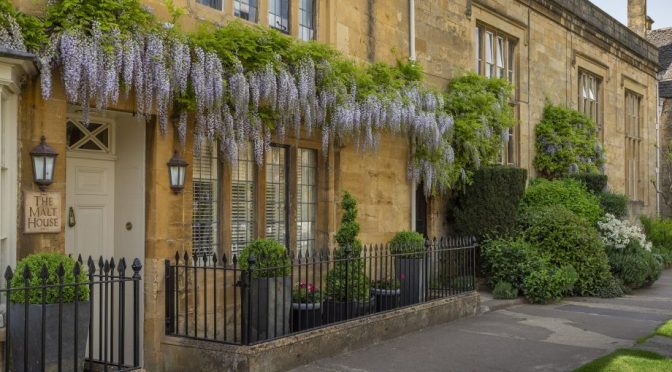
 Chipping Campden is a town charmed by limestone. Its walls dance by the light of the dying day… Chipping Campden’s High Street is best viewed from the covered market of 1627, looking up towards the church tower. The houses are of a creamy local limestone. Walls are offset by grey-brown roof tiles and white woodwork, fronted by foxgloves, hydrangeas and a skirt of lawn.’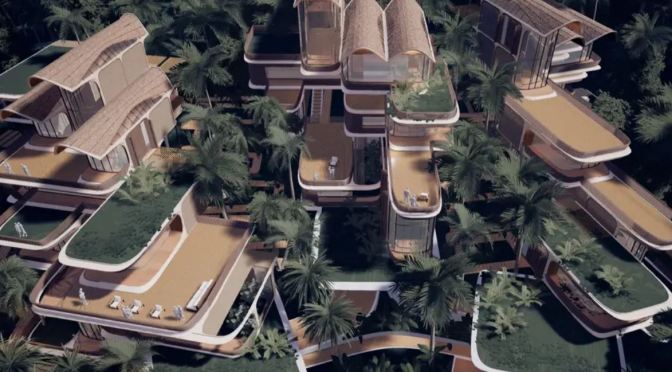
 The first residential units on Roatán Próspera are a case study in local sustainability and global integration. Combining the most advanced modular construction techniques with sustainably-sourced local materials, the design and planning for the first dwellings in Próspera is a tangible example of the dramatic shift in development methodologies taking place around the world.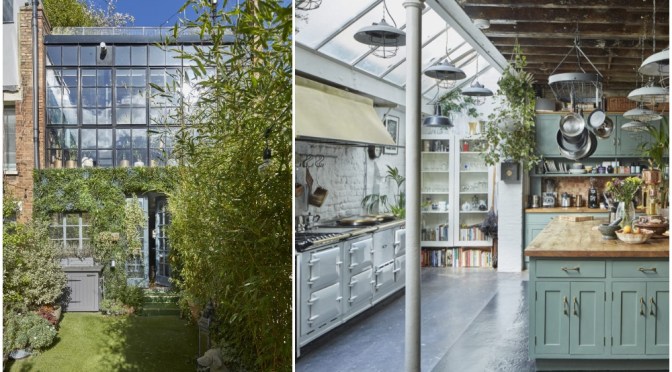

 The brief: A bed amidst the trees; a shower amongst the rocks, the site sits in a nature conservation in rural South Africa; where trees and shrubs and rocks create the architectural backdrop for any home.

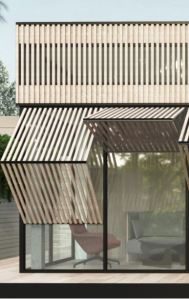 When governor Jerry Brown signed a law that made Accessory Dwelling Units (ADUs) legal in California, it started a revolution in the ways that homeowners, builders and city planners think of small living. Homeowners’ applications for these small backyard buildings have skyrocketed after this regulatory reform in 2018.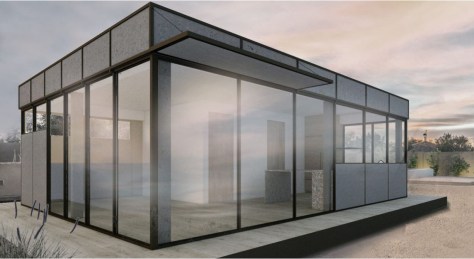
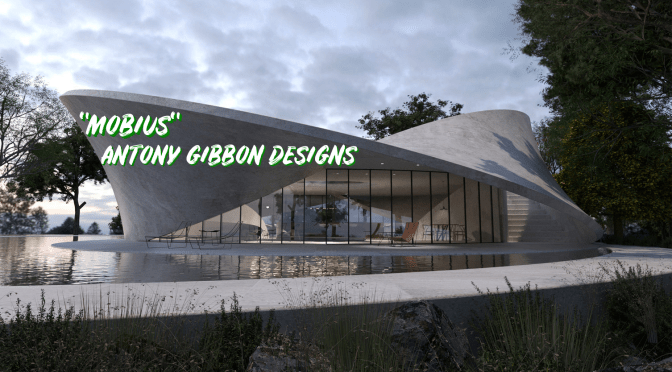
 Embracing nature’s forms as a source of inspiration and pushing the boundaries of architectural design, Antony’s body of work has gained world-wide recognition and been featured in Vanity Fair, New York Times, Huffington Post, Dezeen, Dwell, Designboom and the Secret Homes Television series.
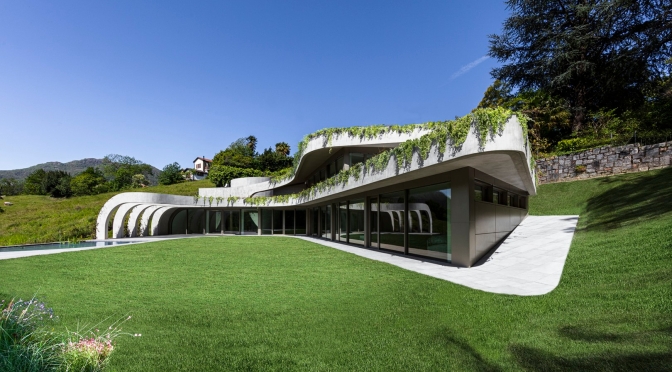
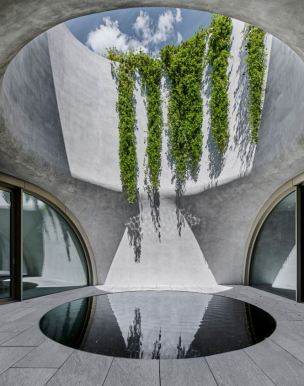 Atelier Alice Trepp, located in Origlio, a small and stunning village, is an atelier designed for Alice Trepp, an Ecuadorian sculptress. The site is characterized by a gentle descending slope, the view of the pastures and of Monte Tamaro, and the coolness given by the lake.
  The shape develops from the analysis of the contour lines and the folding of two of them upwards, under which the building is inserted by cutting out sinuous spaces and movements. The volumes take shape like leaves lifted from the ground, so that the architecture actually seems to be a part of Earth itself.
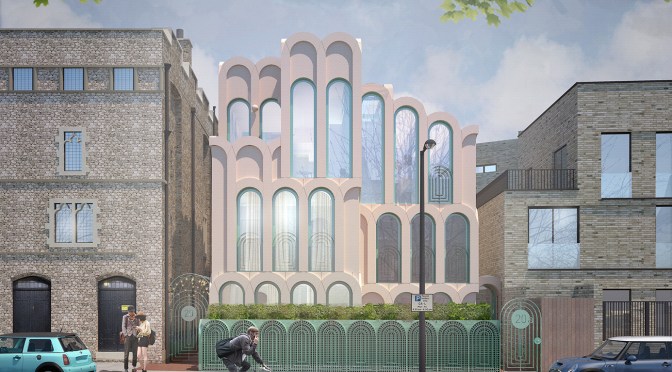
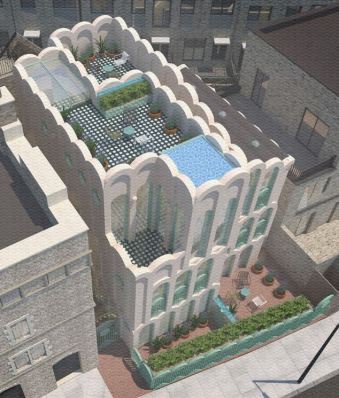
 Coated in a buff render, with a pale pink tone and duck egg blue metalwork, it brings some gentle colour to the street. As one neighbour has kindly put it: ‘The Cloud House introduces a valuable ‘softer’ element to the street’s dressing, with its hoops and curves and decorations. It is just what Vicars Road needs and will lighten and humanise the street’.

 ‘Monocle On Design’ discusses the origins of tessellations in Islamic art and ask how architecture affects our work-life balance. Plus: author Shelley Klein recounts her childhood in a mid-century house in Scotland and we preview Monocle’s city-themed July/August issue.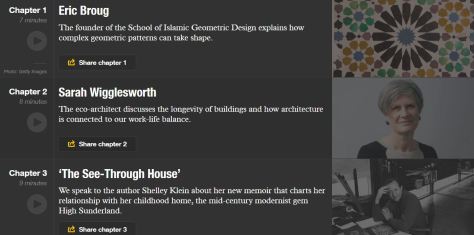
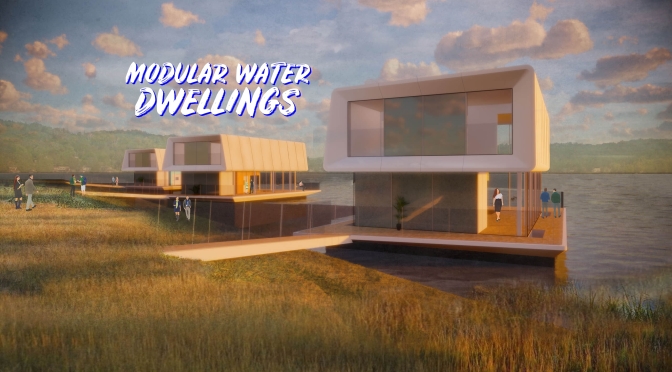


 The Modular Water Dwellings incorporate standardised components that provide efficiency in manufacturing, while still allowing a variety of internal layouts for occupants’ individual requirements. The Dwellings can be orientated and spaced in different ways, responding to varying site contexts, local conditions, light sources and primary views. They also maximise the use of durable and non-corroding materials, such as concrete and glass, ensuring a long design life that anticipates multiple occupants.
 Boomers Daily