Category Archives: Health

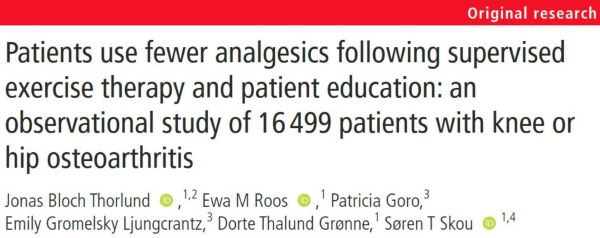
Studies: Osteoarthritis Patients Using Exercise Therapy Have Less Pain, Cut Opioid & Analgesic Use

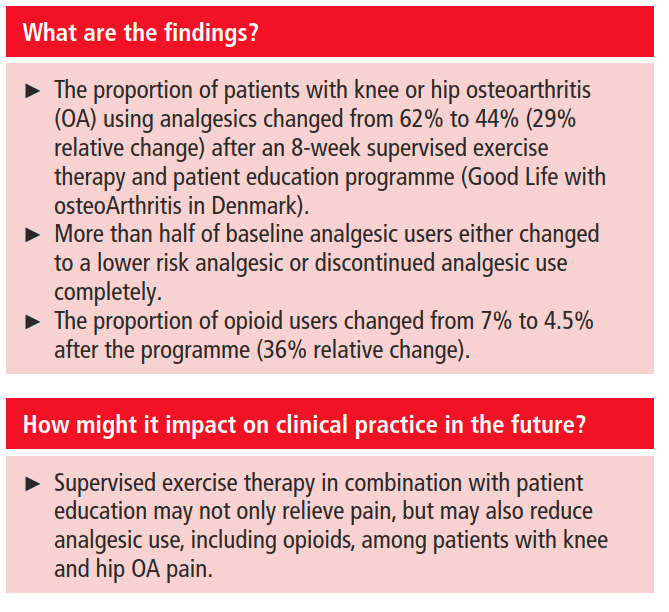
Conclusion Among patients with knee or hip OA using analgesics, more than half either discontinued analgesic use or shifted to lower risk analgesics following an 8-week structured exercise therapy and patient education programme (GLA:D). These data encourage randomised controlled trial evaluation of whether supervised exercise therapy, combined with patient education, can reduce analgesic use, including opioids, among patients with knee and hip OA pain.

Read study

Health: “The Science Of The Sun And Skin Cancer”

Melanoma may account for a small percentage of skin cancers, yet it causes an estimated 75 to 80 percent of skin cancer deaths. Caught early, it has a 99 percent five-year survival rate, but if it slips patients’ and clinicians’ notice, digs deeper into the skin and spreads beyond the lymph nodes, that rate can drop to 25 percent, according to the National Cancer Institute. The ACS predicts there will be 6,850 deaths in the United States from melanoma this year.

Although more skin pigment provides more protection, melanin itself has a sun protection factor, or SPF, of less than 5, says Fisher, suggesting that it functions physiologically as more than mere sunblock. He and others have clarified how different types of melanin raise or lower melanoma risk, and they’ve shown that any minimal benefit provided by tanning, such as the production of vitamin D, doesn’t outweigh the DNA damage caused by UV exposure.

Skin cancers are far and away the most common cancers in the United States. Basal and squamous cell carcinomas make up the vast majority, with somewhere between 1 million and 5.4 million new instances diagnosed each year. However, because these two malignancies don’t have to be reported to cancer registries, precise numbers aren’t known: The cancer officially ranked as the most common in this country is breast cancer, with 270,000 new cases each year. Melanoma is ranked fifth, with about 100,000 new diagnoses expected in 2020, reports the American Cancer Society (ACS).

Read more

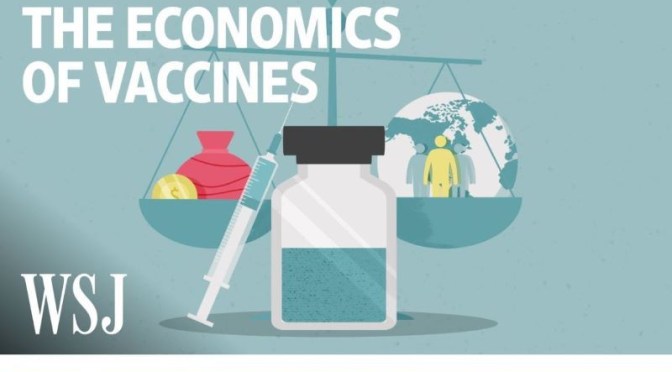
Research:”The Costs Of A Covid-19 Vaccine” (Video)

As government and private money pour into the global race for a Covid-19 vaccine, drugmakers are under great pressure to keep the shot affordable while also keeping investors happy. WSJ explains what this means for the final price tag of the jabs.

Illustration: Crystal Tai

Health: “Smart Hospitals” Using AI & Sensors Could Reduce Thousands Of Deaths Yearly (Stanford)

SEPTEMBER 9, 2020

As many as 400,000 Americans die each year because of medical errors, but many of these deaths could be prevented by using electronic sensors and artificial intelligence to help medical professionals monitor and treat vulnerable patients in ways that improve outcomes while respecting privacy.

The Fix: Invisible light guided by AI?

Haque, who compiled the 170 scientific papers cited in the Nature article, said the field is based largely on the convergence of two technological trends: the availability of infrared sensors that are inexpensive enough to build into high-risk care-giving environments, and the rise of machine learning systems as a way to use sensor input to train specialized AI applications in health care.

These alert systems are being tested to see if they can reduce the number of ICU patients who get nosocomial infections — potentially deadly illnesses contracted by patients due to failure of other people in the hospital to fully adhere to infection prevention protocols.

Constant monitoring by ambient intelligence systems in a home environment could also be used to detect clues of serious illness or potential accidents, and alert caregivers to make timely interventions. For instance, when frail seniors start moving more slowly or stop eating regularly, such behaviors can presage depression, a greater likelihood of a fall or the rapid onset of a dangerous health crisis. Researchers are developing activity recognition algorithms that can sift through infrared sensing data to detect changes in habitual behaviors, and help caregivers get a more holistic view of patient well-being.

Read more