When the coronavirus hit, why were countless Americans left unprotected amid a desperate shortage of PPE and other critical medical equipment?
FRONTLINE, The Associated Press and the Global Reporting Centre investigate.
In the wake of President Donald Trump’s COVID-positive diagnosis, and as cases spike in parts of the country, “America’s Medical Supply Crisis” examines why the United States was left vulnerable to key equipment shortages — and why problems persist, months into the coronavirus crisis.
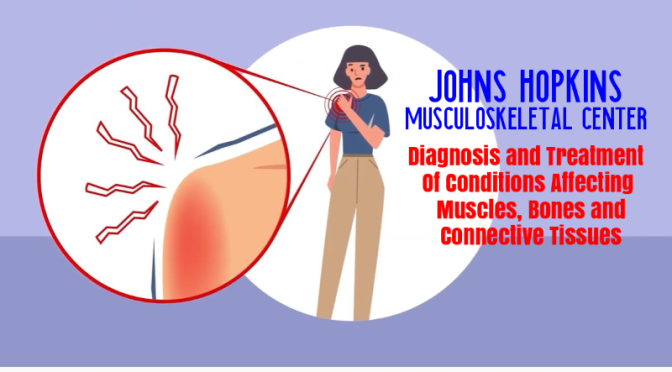
The Johns Hopkins Musculoskeletal Center aims to streamline and improve access for diagnosis and treatment of conditions affecting muscles, bones and connective tissues. Each of the center’s locations feature a diverse group of physicians, therapists, and advanced practitioners who work together to bring you the right treatment at the right time.
President Trump’s schedule in the week before he was diagnosed with Covid-19 included a Rose Garden event, a presidential debate, and visits to three states.
As the world waits for a potential COVID-19 vaccine, we delve into how vaccines actually work. What are the different types of vaccine? How do they trigger and train the immune system, and what is the role of herd immunity?
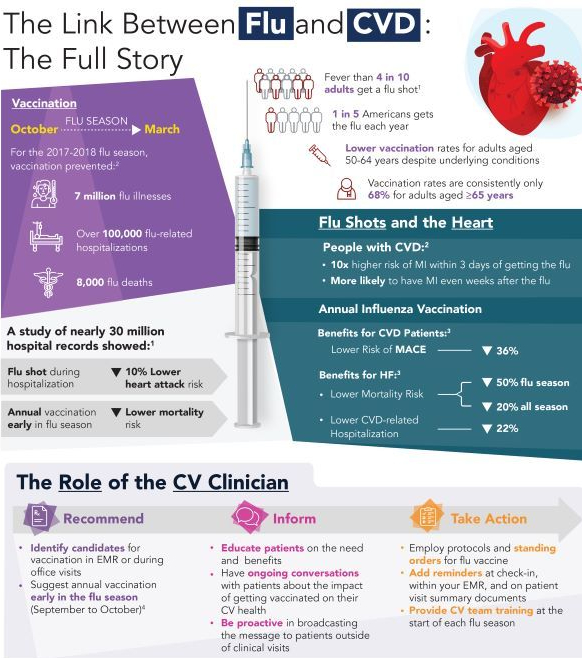
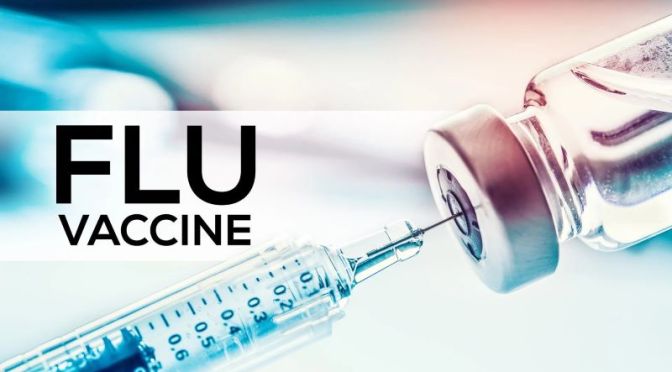
With the annual flu season looming, GPs are anticipating a frenzy of vaccinations, perhaps more so than ever this year. As so many ‘flu and respiratory viruses circulate every year, and as the ‘flu vaccine is for one strain of influenza only, is the vaccine worth getting, and what are the risks associated with vaccinating vs. not vaccinating?
In this week’s episode, we discuss the high vaccine uptake in New Zealand, and the role that social distancing for COVID-19 may have played in their low numbers of seasonal flu. We also talk about whether or not the message we give to patients about the benefits and risks of vaccination is transparent enough, and how we might communicate better with them to allow them to make an informed decision. We feel pressure to increase vaccination rates, because we believe we are protecting people, but does the evidence support that?
Our guests: Nikki Turner is the director of the Immunisation Advisory Centre (IMAC) at the university of Auckland. She is an academic general practitioner, and a professor at the university. Jeff Kwong is a professor at the University of Toronto, and the interim director of the Centre for Vaccine Preventable Diseases at the university’s Dalla Lana School of Public Health. Newest Oldest Longest Shortest Random
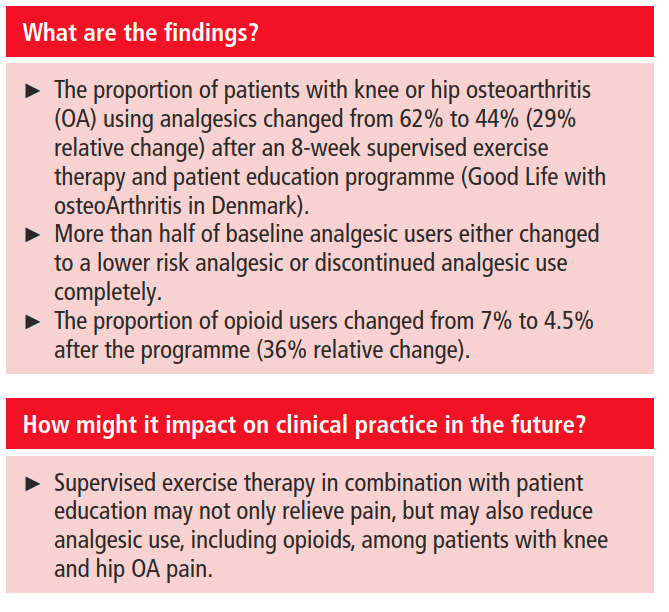
Conclusion Among patients with knee or hip OA using analgesics, more than half either discontinued analgesic use or shifted to lower risk analgesics following an 8-week structured exercise therapy and patient education programme (GLA:D). These data encourage randomised controlled trial evaluation of whether supervised exercise therapy, combined with patient education, can reduce analgesic use, including opioids, among patients with knee and hip OA pain.









 Boomers Daily