Tomorrow’s Build (November 7, 2023) – The city of Seville in Spain is implementing measures to mitigate the scorching heat. Called the CartujaQanat, it is a €5 million pilot project that aims to reduce average temperatures by around 10°C in a region of the city.
These systems, developed over 1,000 years ago, consist of the construction of underground channels that transport water across a large area that needs to be cooled. Vertical shafts drilled along the channel bring underground air to the surface, lowering above-ground temperatures.
In summer, people don’t leave their house until 8pm and festivals usually start at 10pm. Built on the banks of the Guadalquivir River during the Middle Ages, the Spanish city regularly records temperatures above 40 degrees Celsius (104 degrees Fahrenheit) during July and August. And scientists expecting temperatures above 50°C in the near future.
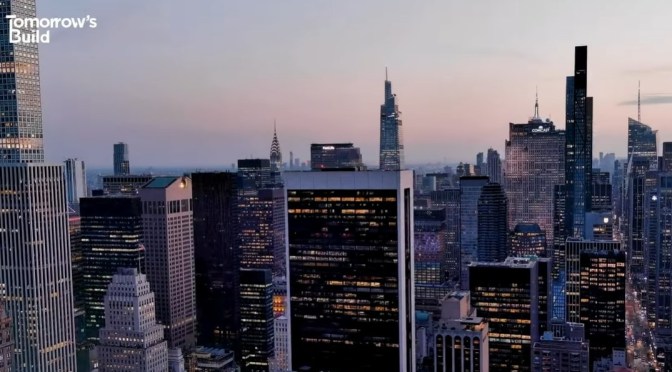
Buildings account for approximately two-thirds of greenhouse gas emissions in New York City and Mayor de Blasio has pledged to address these emissions as part of his plan to make the city carbon neutral by 2050.
Local Law 97 is one of the most ambitious plans for reducing emissions in the nation. Local Law 97 was included in the Climate Mobilization Act, passed by the City Council in April 2019 as part of the Mayor’s New York City Green New Deal.
Under this groundbreaking law, most buildings over 25,000 square feet will be required to meet new energy efficiency and greenhouse gas emissions limits by 2024, with stricter limits coming into effect in 2030. The goal is to reduce the emissions produced by the city’s largest buildings 40 percent by 2030 and 80 percent by 2050. The law also established the Local Law 97 Advisory Board and Climate Working Groups to advise the city on how best to meet these aggressive sustainability goals.
Local Law 97 generally covers, with some exceptions:
Buildings that exceed 25,000 gross square feet;
Two or more buildings on the same tax lot that together exceed 50,000 square feet;
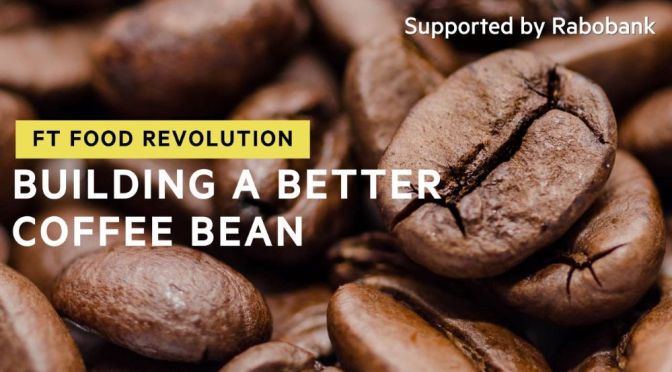
Financial Times – One of world’s favorite drinks is under threat from global warming. The world’s top coffee producing nations all lie at similar tropical latitudes, where even small rises in temperature are forecast to have severe consequences for people and agriculture. But as the FT’s Nic Fildes reports, in Australia, scientists are tackling the problem by trying to develop a better, hardier coffee bean.
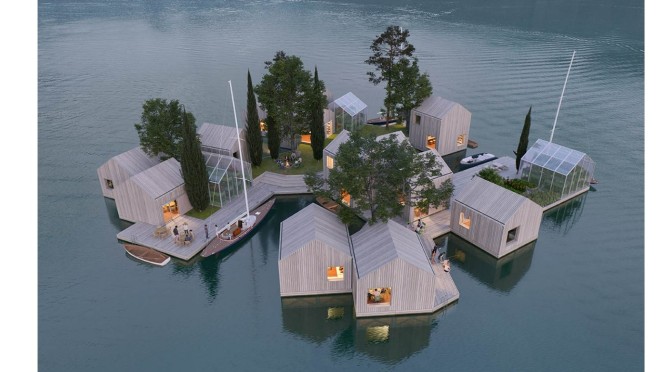
The system is based on simple flat pack modules made from recycled reinforced polymer. These are extremely strong and resilient and can be easily transported and assembled on location
The modules can be assembled in different configurations to provide floating foundations for floating infrastructure, public spaces or housing.
A growing acknowledgement of sea level rise and an increased risk of urban flooding has contributed to a sharp increase in interest in building on water, but current solutions, including polystyrene filled concrete foundations and plastic pontoons are inflexible, difficult to transport and highly unsustainable.
MAST has envisioned a new system of simple of flat-packed modules made from recycled reinforced plastic, that can be easily transported around the globe and assembled into countless configurations, providing a secure floating foundation. The system offers a sustainable and highly flexible solution for building almost anything on the water; from floating houses in Seattle, to floating campsites on Oslo fjord, to saunas on Hobart’s riverfront.
The system was inspired by gabion construction, an ancient technology which utilises mesh cages filled with rubble to create extremely sturdy, low cost foundations. In this case the concept is inverted; and the modular ‘cages’ are filled with locally sourced, up-cycled floatation supporting the weight of any structure built on top. they are also much more adaptable than existing solutions since floatation can be added or adjusted at any time if weight is added or shifted around above.
Land on water will provide a climate resilient and adaptable solution for the construction of new floating buildings worldwide but could also lead to an entirely new type of dynamic and organic off-grid floating community and an alternative to the large master-planned floating cities currently under development which repeat many of the mistakes made by urban planners in the middle of the 20th century.
Frozen Planet II (2022): This six-part series – narrated by Sir David Attenborough – explores the wildlife found in the world’s coldest regions: the Arctic and Antarctic, high mountains, frozen deserts, snowbound forests, and ice-cold oceans. From polar bears to penguins, and from snow monkeys to Siberian tigers, each species must overcome a unique set of challenges to endure its extreme environment.
Phoenix, Arizona is coming up with innovative ways to beat the heat.
Phoenix, the capital of Arizona, is accustomed to a hot desert climate, but day and night temperatures have been rising due to global heating and the city’s unchecked development, which has created a sprawling urban heat island.
Scorching temperatures have made summers increasingly perilous for the city’s 1.4 million people, with mortality and morbidity rates creeping up over the past two decades, but 2020 was a gamechanger when heat related deaths jumped by about 60%.
News, Views and Reviews For The Intellectually Curious






 Boomers Daily