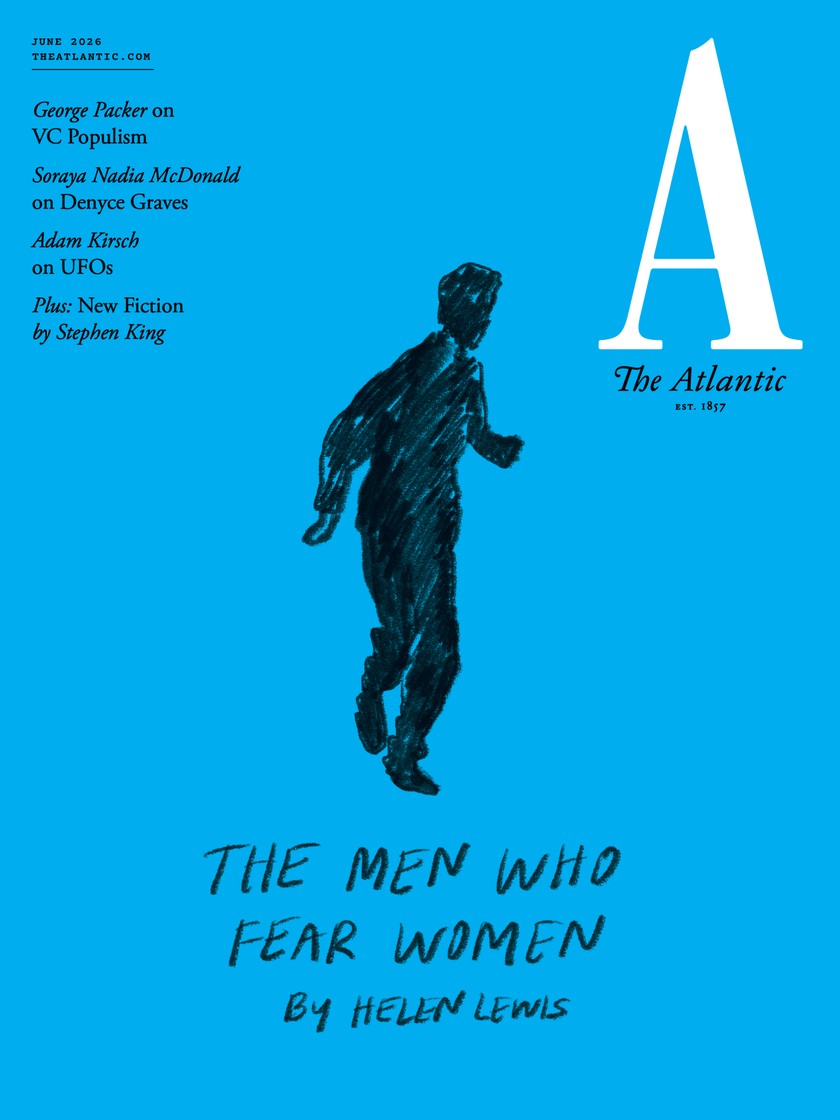

Why read historical fiction? A new novel by the author of “Hamnet” offers one answer: because it’s fun. By Katy Waldman
Why the American Novel Refused to Grow Up
For the critic Leslie Fiedler, the country’s best and worst fiction was shaped by visions of escape from society—and therefore from maturity. By Becca Rothfeld
The World Cup According to Gianni Infantino
FIFA’s powerful president is remaking global soccer in his own image. Can the sport survive him? By Sam Knight
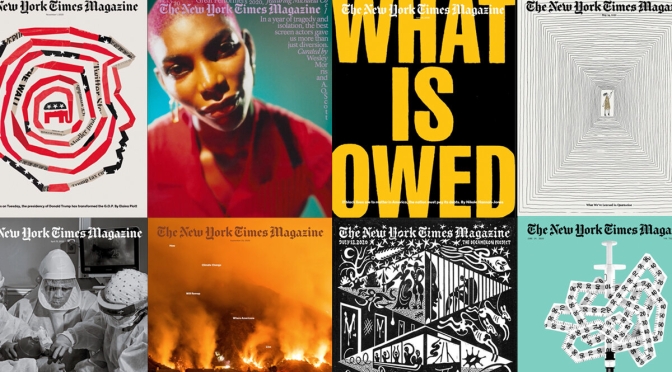
THE NEW YORK TIMES MAGAZINE:The 5.31.26 Issue features Taffy Brodesser-Akner on the A.I. actress Tilly Norwood; Daniel Waite Perry on sperm racing; Jeffrey Toobin on how to get a pardon in Trump’s Washington; and more.
One reason I love my partner is his sharp mind and critical thinking. Using A.I. for every decision is something I don’t understand. By Kwame Anthony Appiah
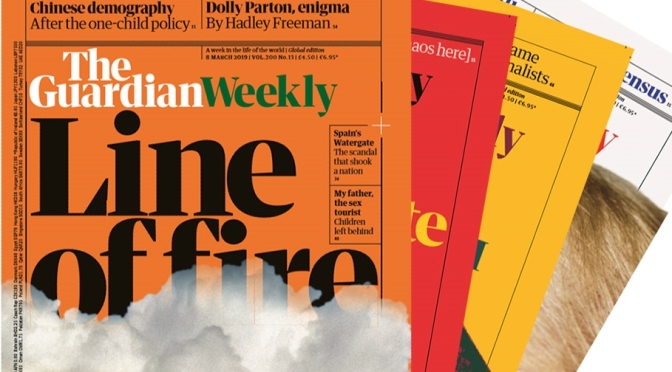
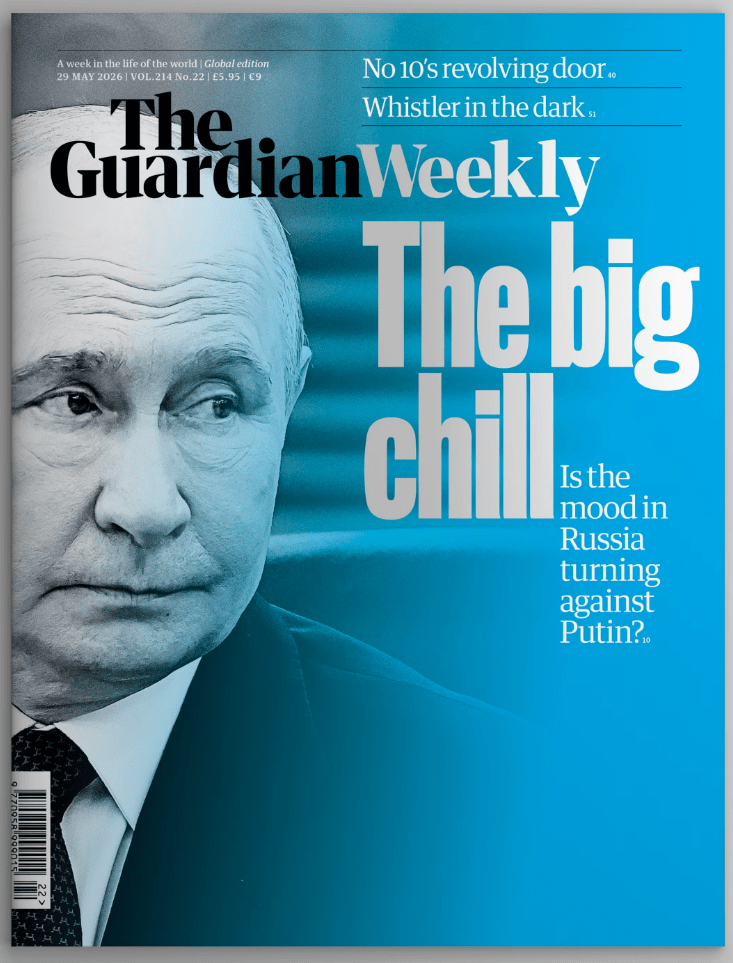
Like the majority of western news organisations, the Guardian has had no correspondent or reporter in Moscow since the invasion of Ukraine. But the Kremlin’s efforts to shut down outside media coverage has not stopped us from taking the political temperature of Russia. Indeed, as Pjotr Sauer and Shaun Walker report, attempts to close off the country have lost Vladimir Putin support among both the elites and ordinary citizens.
Talking to contacts made from many years working inside Russia, Pjotr and Shaun detail a shifting mood as the invasion drags on into its fourth summer with the economic and personal costs being increasingly felt at home. As one insider explains, “there is profound disappointment in Putin”, accompanied by “a growing sense that some kind of catastrophe is looming”.
The narrative of a bunkered ruler surrounded by underlings too scared to tell them the truth historically leads to putsch or revolution but our analysis shows that at present, though the winds may be chilling at home, Putin is far from being frozen out of power.
Spotlight | Ebola: ‘Out of control’ A new strain of virus, aid cuts and conflict in parts of the Democratic Republic of the Congo have hampered efforts to halt the spread of the virus, report Prosper Heri Ngorora in Goma and Carlos Mureithi
Science | Here be monsters An exhibition, Jurassic Oceans, at London’s Natural History Museum, showcases the fearsome creatures that once lurked below the surface – and offers a stark warning about the impact of warming waters on marine ecosystems today. Matthew Pearce dives in
Feature | When the lights went out in Berlin Earlier this year power was cut to a swathe of the German capital. A shadowy organisation, Volcano Group, claimed responsibility. But in the absence of any leads, theories of eco-terrorism, Russian meddling and far-right activity have flourished, discovers Ben Knight
Opinion | Victory doesn’t happen overnight Arsenal’s careful planning to regain the Premier League title is a lesson in long-term thinking that the Labour party, and Arsenal fan Keir Starmer, should pay attention to, argues Jonathan Freedland
Culture | Back to black with Whistler What does restoring Arrangement in Grey and Black No 1, or Whistler’s Mother, teach you about the artist who heralded a century of great American artists and about the craft of painting colour? Sarah Walden uncovers it all
The outbreaks of hantavirus and Ebola expose the shortsightedness of America’s retreat, under the Trump Administration, from its role as a global-health leader. By Dhruv Khullar
The Trump-Epstein Files: Look but Don’t Touch
The Donald J. Trump and Jeffrey Epstein Memorial Reading Room, in Tribeca, housed three and a half million bound files, along with a handy time line charting the ickiness. By Charlotte Goddu
How Problematic Is Patriotism?
National pride in America has plummeted in the Trump era. Is it worth trying to salvage? By Arthur Krystal
THE NEW YORK TIMES MAGAZINE:The 5.24.26 Issue features Azeen Ghorayshi on testosterone and a new male ideal; Avraham Z. Cooper on the interstitium; M.H. Miller on the Venice Biennale; and more.
THE NEW REPUBLIC MAGAZINE: The latest issue features a cover story analyzing the president’s mental fitness alongside reporting on administration impacts on higher education, energy, and agriculture. The issue also explores social issues, including the anti-abortion movement, the rise of digital misogyny, and cultural critiques of television and literature.
His recent tirades confirmed what more than half of America now believes: The president is mentally unfit. How will we survive two and a half more years of this? And what’s he got in store for us?
The president has long been operating under the assumption that he is immune from prosecution. His latest scheme, however, may be a step too far.
Losing It
Seriously – 2 1/2 more years of this?
The Election Fraudsters Who Will Follow in Tina Peters’s Footsteps
We can debate all day whether Colorado Governor Jared Polis should have commuted her sentence. Meanwhile, state and local officials are openly preparing to meddle in the midterm elections.
Why Trump Is So Afraid of Stephen Colbert, Jimmy Kimmel, and The View
Political scientist Meredith Conroy says that late-night shows are still politically relevant in as their audiences shrink.
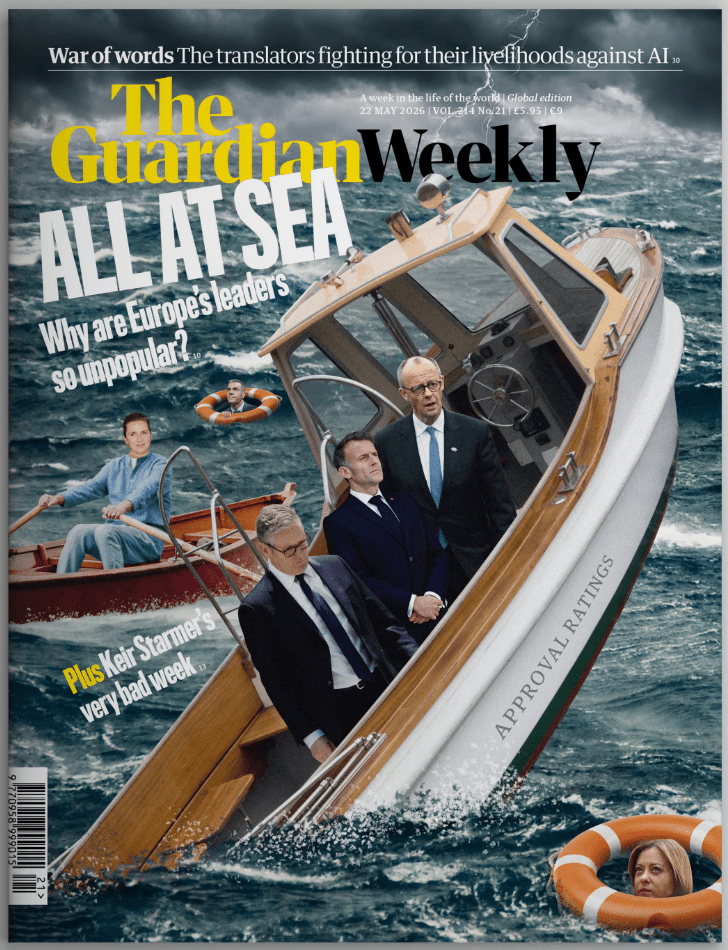
After a week like Keir Starmer just had, what could one possibly do to cheer up the beleaguered UK prime minister? (Aside from his beloved Arsenal winning the Premier League title, that is.)
Perhaps remind him he’s not Friedrich Merz or Emmanuel Macron. Starmer may not be flavour of the month with UK voters or his own Labour MPs right now, but both the German and French leaders have barrel-scraping approval ratings that make the British PM look popular in comparison.
Even among the less-disliked European leaders, Giorgia Meloni of Italy and Pedro Sánchez of Spain are only marginally more liked than Donald Trump is in the US – and neither of them have started a war in Iran.
What’s behind this widespread disaffection for Europe’s leaders? Are they a generationally bad crop of politicians or have they been dealt an impossible hand of social and economic circumstances – or is it a mixture of both?
For our cover story this week, Daniel Boffey asks what Europe’s embattled leaders can do to reverse that sinking feeling. Then, from our UK political team, Pippa Crerar and Peter Walker look back on a week when Starmer was left looking increasingly like an interim PM.
Spotlight | Xi rolled out the red carpet for Trump, but that was all There was no swift end to the Iran war, uncertainty over Taiwan and only vague outlines of commercial deals – but the US president at least got to bask in the company of his Chinese counterpart, reports David Smith
Technology | Despite rise of AI, is there still hope for Europe’s translators? A booming tech sector has disrupted translation jobs in publishing – but they could be needed for a while longer yet, writes Philip Oltermann
Feature | The sinister spread of France’s killer seaweed After a series of deaths on the beaches of Brittany, one bereaved family set out to prove the foul-smelling bloom was to blame. Marta Zaraska investigates
Opinion | Normalising Reform UK’s ideas turns neighbour against neighbour “Concern” about immigration has now morphed into policing how ethnic minorities exist in our communities, argues Nesrine Malik
Culture | How Backrooms upended the horror movie It started off just as a creepy picture on the internet. Now it’s the year’s freakiest film. Steve Rose meets its auteur, Kane Parsons, and stars Chiwetel Ejiofor and Renate Reinsve
What else we’ve been reading
The Guardian’s new list of the 100 best novels of all time provoked extensive discussion in my household. How many have you read? I won’t embarrass myself by divulging my own total, except to admit there is considerable catching up to be done. Graham Snowdon, editor
Politidex is a Pokémon-like mobile phone game where players can build their own political party by “catching” local councillors and MPs. Having started life as an April Fools’ Day joke, the game’s mission is now to humanise both politics and politicians, says its creator in this interesting piece. Bowie Qiu, Marketing manager
Parts of the MAGA movement are unhappy with President Trump’s migration strategy. The administration has softened its policy on deportations following a public uproar over the ICE killings in January, it is said. The focus has been on removing only the most violent offenders. “The truth is the first year was not a year of mass deportation,” says Mike Howell of the Mass Deportation Coalition. “A conscious
Donald Trump has had a career-long love-hate relationship with the press. On one hand, he popularized the phrase “fake news” and branded the press “the enemy of the people.” On the other, the President takes phone calls from virtually every reporter with his personal cell and is fixated on cable news and his print media coverage. Trump views journalists as friends, foes…
Donald Trump flew to Beijing this week and wants three things when he sits down with China’s President Xi Jinping: a tariff truce that survives his own courts, Chinese pressure on Iran to end the war that never seems to end and a photograph that makes him look victorious. Xi has problems of his own. But he has watched four American presidencies from Zhongnanhai, the walled compound beside the Forbidden City where the Communist party leadership rules, and he knows the value of silence when his counterpart is talking himself into trouble. Trump’s approval rating is the lowest of his second term. What Xi wants from this meeting with Trump is recognition: two great powers, two systems, meeting as equals Trump has obliged Xi noisily.
News, Views and Reviews For The Intellectually Curious