
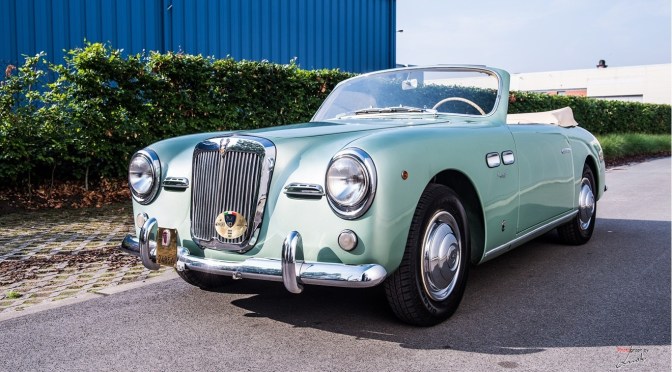
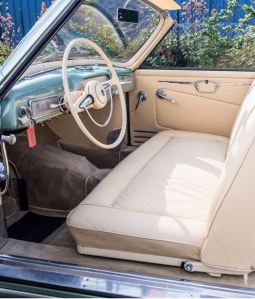
 The Siata Daina is an Italian car produced by Siata from 1950-1958. The Daina was available as a coupé or a convertible and had custom bodies by Stabilimenti Farina, Bertone and other coach builders.
From 1950 to 1958 there were approximately 50 Daina Series cars produced. However, only a few of the Series were produced after 1953. About 20 Daina Sport (coupes) are thought to have been built, only six are known to exist today. A cabriolet version called the Gran Sport comprised most of the Daina Series cars. The Gran Sport had a steel body with an aluminum hood designed by Stabilimenti Farina (3 all aluminum bodied Gran Sports 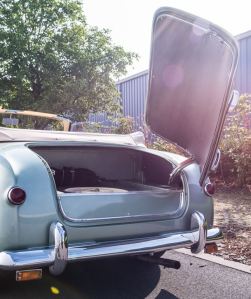 were made as well) but when they closed in 1953, Bertone took over production with a coupe model of their own design called the “Sport”.
The most well known Dainas were the Gran Sport (convertible) versions used in racing, with many calling it the “little Ferrari”. The car was built to take part in the International Grand Prix and the Mille Miglia. The Daina’s most notable finish was at the 12 Hours of Sebring in 1952 when Dick Irish and Bob Fergus piloted a 1,500 cc Daina Gran Sport to first in class and third overall.
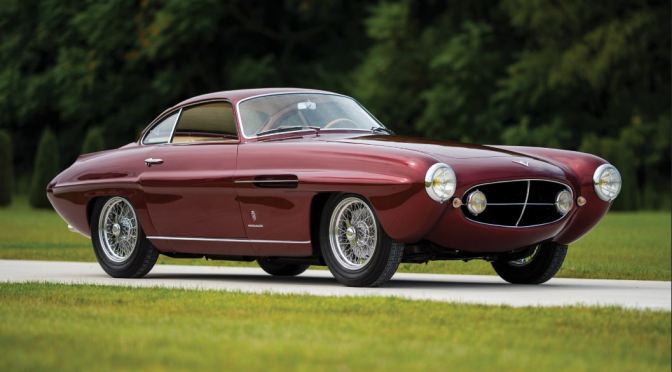
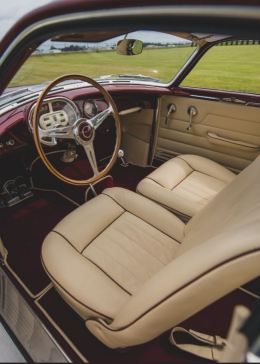 The Fiat 8V (or “Otto Vu”) is a V8-engined sports car produced by the Italian car manufacturer Fiat from 1952 to 1954. The car was introduced at the 1952 Geneva Motor Show. The Fiat 8V got its name because at the time of its making, Fiat believed Ford had a copyright on “V8”. With 114 made, the 8V wasn’t a commercial success, but did well in racing. Apart from the differential the car did not share any parts with the other Fiats (but many parts were made by Siata and they used them for their cars). The 8V was developed by Dante Giacosa and the stylist Luigi Rapi. The engine was a V8 originally designed for a luxury sedan, but that project was stopped.
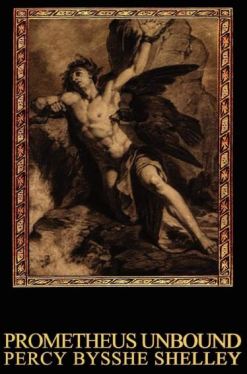 Prometheus Unbound is a four-act lyrical drama by Percy Bysshe Shelley, first published in 1820. It is concerned with the torments of the Greek mythological figure Prometheus, who defies the gods and gives fire to humanity, for which he is subjected to eternal punishment and suffering at the hands of Zeus. It is inspired by the classical Prometheia, a trilogy of plays attributed to Aeschylus. Shelley’s play concerns Prometheus’ release from captivity, but unlike Aeschylus’ version, there is no reconciliation between Prometheus and Jupiter (Zeus). Instead, Jupiter is abandoned by his supportive elements and falls from power, which allows Prometheus to be released.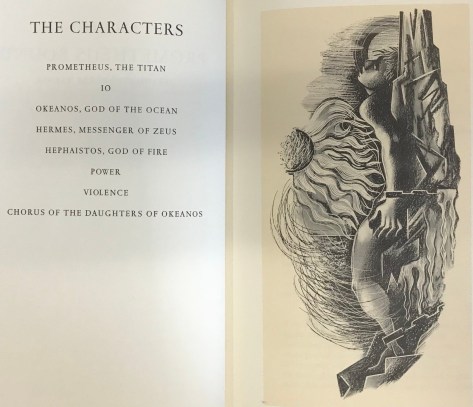
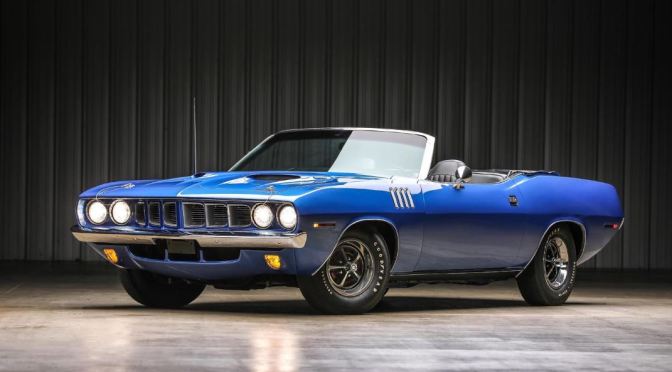
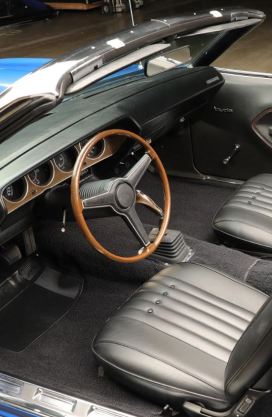 The Plymouth Barracuda is a two-door
  The redesign for the 1970 Barracuda removed all its previous commonality with the Valiant. The original fastback design was deleted from the line and the Barracuda now consisted of coupe and convertible models. The all-new model, styled by John E. Herlitz, was built on a shorter, wider version of Chrysler’s existing B platform, called the E-body. Sharing this platform was the newly launched Dodge Challenger; however no exterior sheet metal interchanged between the two cars, and the Challenger, at 110 inches (2,794 mm), had a wheelbase that was 2 inches (51 mm) longer than the Barracuda.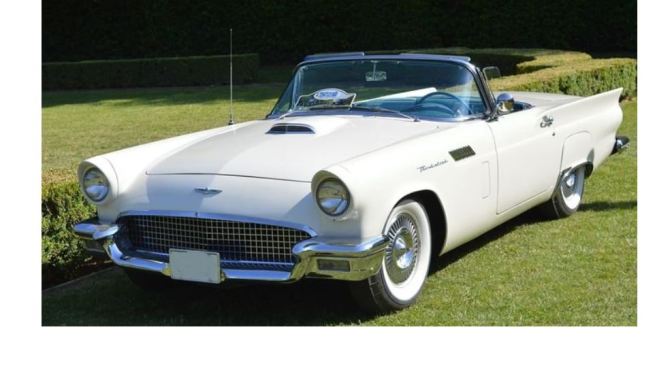
 Ford Thunderbird (colloquially called the T-Bird) is a nameplate that was used by Ford from model years 1955 to 1997 and 2002 to 2005 over eleven model generations. Introduced as a two-seat convertible, the Thunderbird was produced in a number of body configurations through its production life, including four-seat hardtop coupe, four-seat convertible, five-seat convertible and hardtop, four-door pillared hardtop sedan, six-passenger hardtop coupe, and five passenger pillared coupe, with the final generation produced as a two-seat convertible.
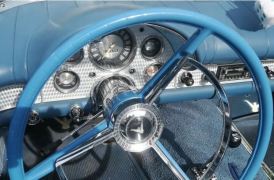
 The Thunderbird was revised for 1957 with a reshaped front bumper, a larger grille and tailfins, and larger tail lamps. The instrument panel was heavily re-styled with round gauges in a single pod, and the rear of the car was lengthened, allowing the spare tire to be positioned back in the trunk. The 312 cu in (5.1 L) V8 became the Thunderbird’s standard engine, and now produced 245 horsepower (183 kW). Other, even more powerful versions of the 312 cu in (5.1 L) V8 were available including one with two four-barrel Holley carburetors and another with a Paxton supercharger delivering 300 horsepower (220 kW). Though Ford was pleased to see sales of the Thunderbird rise to a record-breaking 21,380 units for 1957, company executives felt the car could do even better, leading to a substantial redesign of the car for 1958.


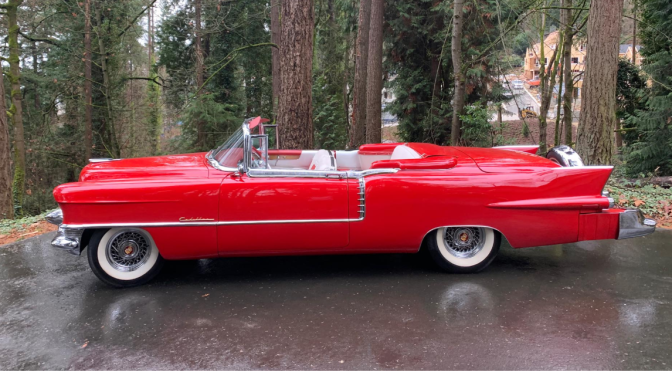
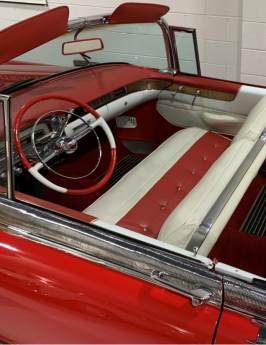 The Cadillac Eldorado is a premium luxury car that was manufactured and marketed by Cadillac from 1952 to 2002 over twelve generations. Competitors and similar vehicles included the Continental Mark series, Buick Riviera, Oldsmobile Toronado and Chrysler’s Imperial Coupe.
 For 1955, the Eldorado’s body gained its own rear end styling with high, slender, pointed tailfins. These contrasted with the rather thick, bulbous fins which were common at the time and were an example of the Eldorado once again pointing the way forward. The Eldorado sport convertible featured extras such as wide chrome body belt moldings and twin round taillights halfway up the fenders. Sales nearly doubled to 3,950.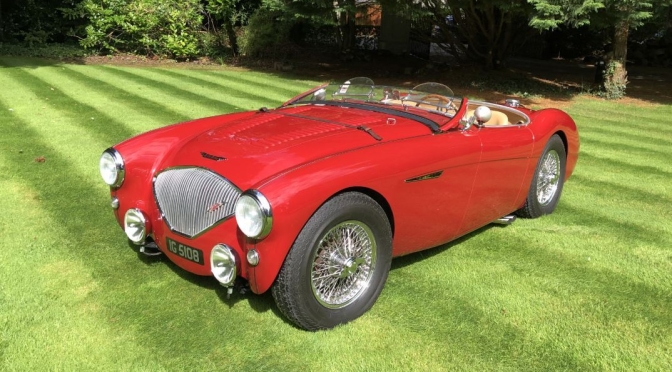
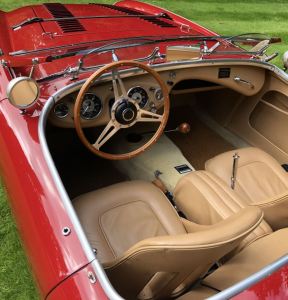 The Austin-Healey 100 is a sports car that was built by
  Lord struck a deal with Healey to build it in quantity; bodies made by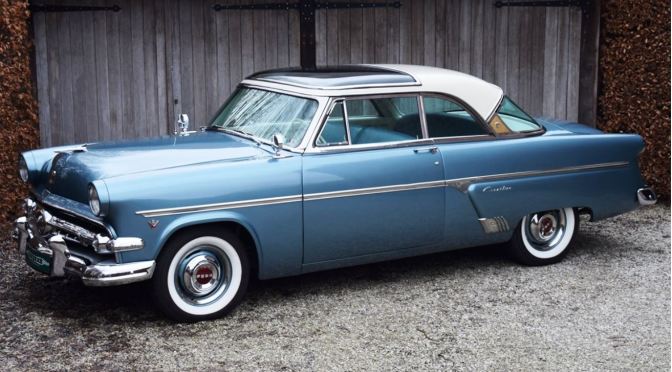
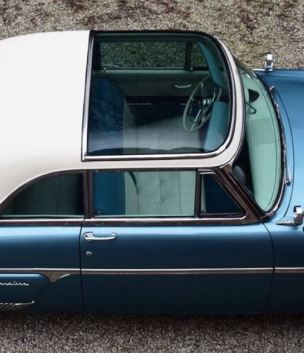 In 1954, Ford added a new niche model to the top-of-the-line Crestline series : the Skyliner. The car had a glass roof section over the front seats, made of blue-green tinted acrylic and letting a diffused yet filtered light through. Ford claimed that 60% of the sunrays were filtered out.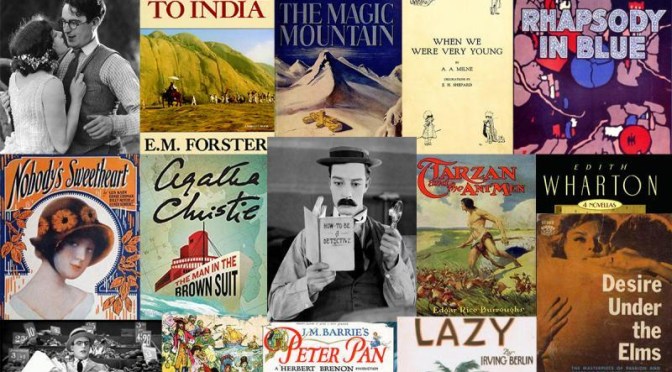
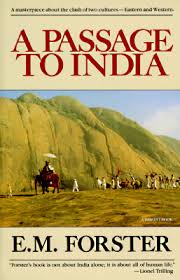
 On January 1, 2020, works from 1924 will enter the US public domain, where they will be free for all to use and build upon, without permission or fee. These works include George Gershwin’s Rhapsody in Blue, silent films by Buster Keaton and Harold Lloyd, and books such as Thomas Mann’s The Magic Mountain, E. M. Forster’s A Passage to India, and A. A. Milne’s When We Were Very Young. These works were supposed to go into the public domain in 2000, after being copyrighted for 75 years. But before this could happen, Congress hit a 20-year pause button and extended their copyright term to 95 years.
 Thomas Mann,
  Boomers Daily