Category Archives: Books

Previews: Best Books On Foreign Affairs For 2024

2024-books-2-1

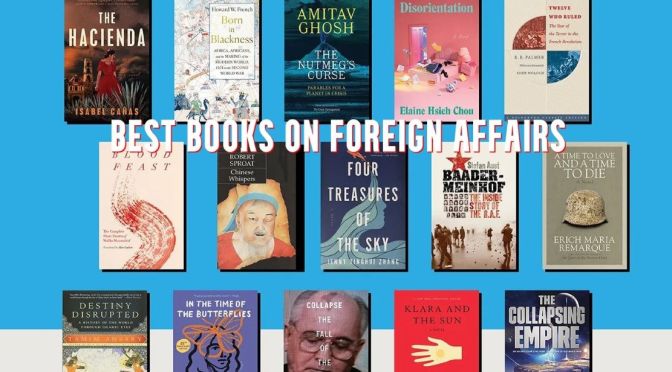
Foreign Policy Magazine (December 31, 2023): The Best of Books 2024 Here are 30 major nonfiction titles coming out this year on Foreign Policy’s radar, from economic manifestos to histories of forgotten eras to new assessments of great-power competition in the 21st century. New titles include:

The Everything War: Amazon’s Ruthless Quest to Own the World and Remake Corporate Power 

The Everything War: Amazon's Ruthless Quest to Own the World and Remake  Corporate Power: 9780316269773: Mattioli, Dana: Books - Amazon.com

by Dana Mattioli (April 23, 2024)

From veteran Amazon reporter for The Wall Street Journal, The Everything War is the first untold, devastating exposé of Amazon’s endless strategic greed, from destroying Main Street to remaking corporate power, in pursuit of total domination, by any means necessary.

In 2017, Lina Khan published a paper that accused Amazon of being a monopoly, having grown so large, and embedded in so many industries, it was akin to a modern-day Standard Oil. Unlike Rockefeller’s empire, however, Bezos’s company had grown voraciously without much scrutiny. 
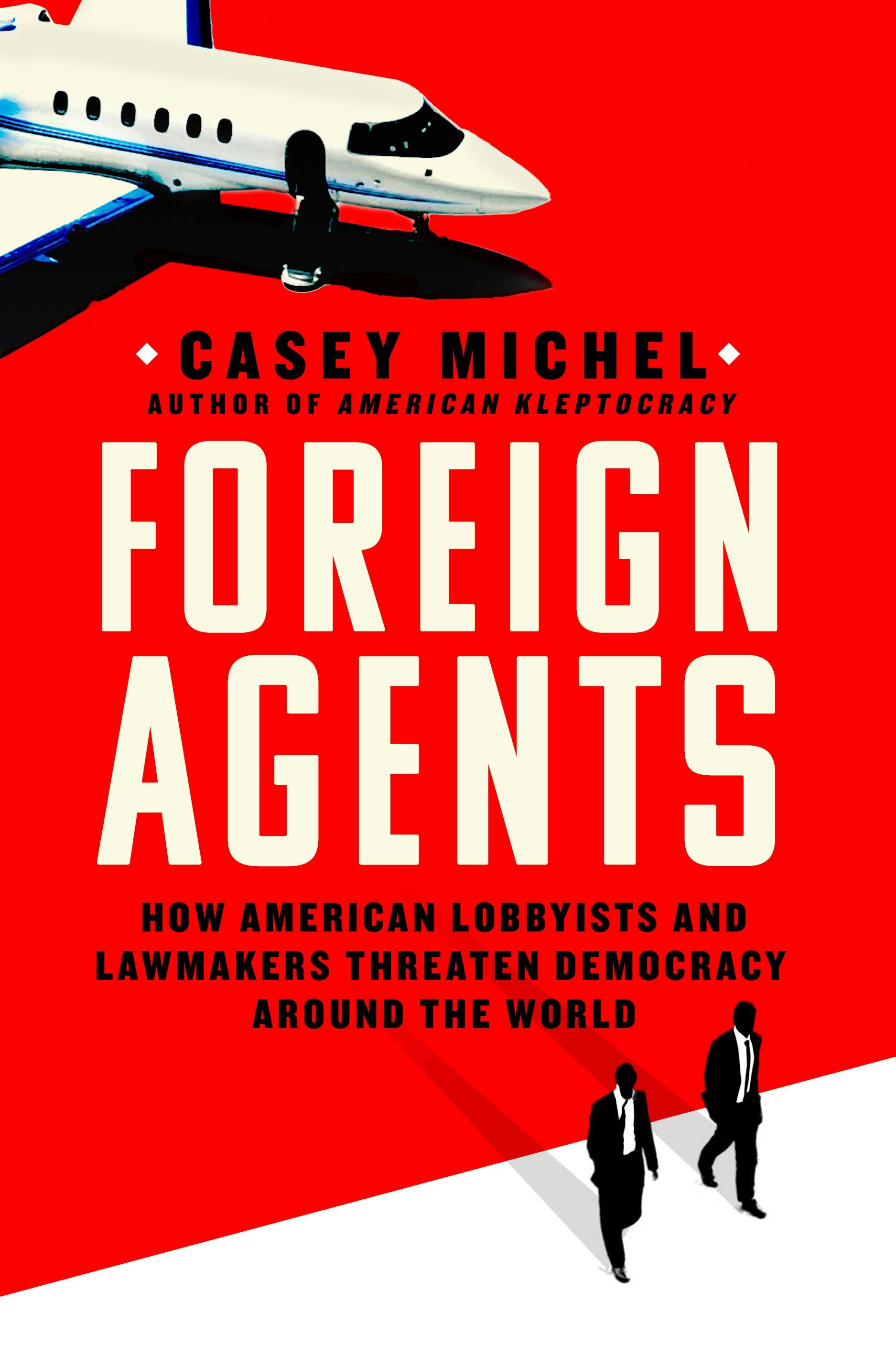
Foreign Agents: How American Lobbyists and Lawmakers Threaten Democracy Around the World

Foreign Agents

By Casey Michel (August 2024)

A stunning investigation and indictment of the elements in United States’ foreign lobbying industry and the threat they pose to democracy.

For years, one group of Americans has worked as foot-soldiers for the most authoritarian regimes around the planet. In the process, they’ve not only entrenched dictatorships and spread kleptocratic networks, but they’ve secretly guided U.S. policy without the rest of America even being aware. And now, journalist Casey Michel contends some of them have begun turning their sights on American democracy itself.

New Cold Wars : China’s Rise, Russia’s Invasion, and America’s Struggle to Defend the West

New Cold Wars by David E. Sanger: 9780593443590 | PenguinRandomHouse.com:  Books

By David E. Sanger (April 2024)

Three decades after the end of the Cold War, the United States finds itself in a volatile rivalry against the other two great nuclear powers–Xi Jinping’s China and Vladimir Putin’s Russia–in a world far more complex and dangerous than that of a half century ago

.New Cold Wars–the latest from Pulitzer Prize-winning journalist and bestselling author of The Perfect Weapon, David E. Sanger–is a fast-paced account of America’s plunge into simultaneous confrontations against two very different adversaries. For years, the United States was confident that the newly-democratic Russia and increasingly wealthy China could be lured into a Western-led order that promised prosperity and relative peace–so long as they agreed to Washington’s terms. By the time America emerged from the age of terrorism, it was clear that this had been a fantasy.
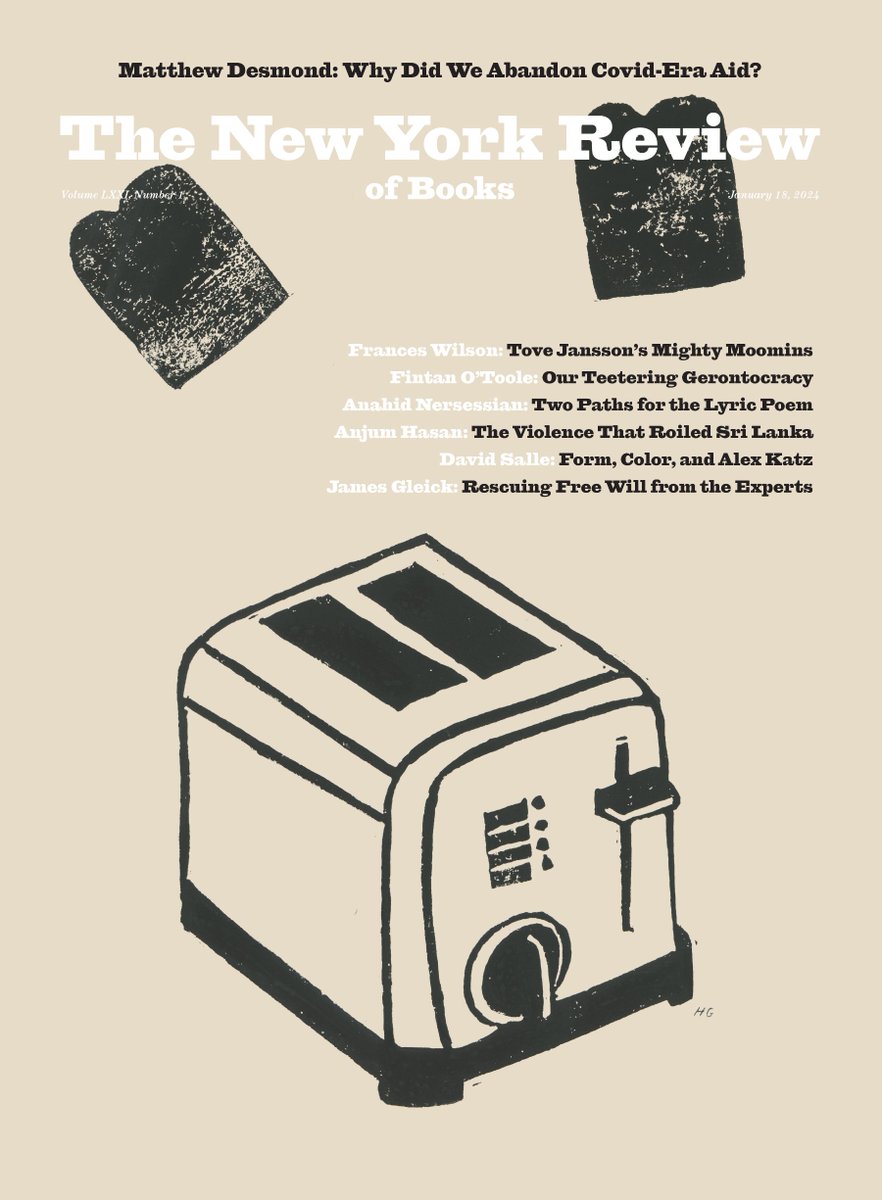

The New York Review Of Books – January 18, 2024

Image

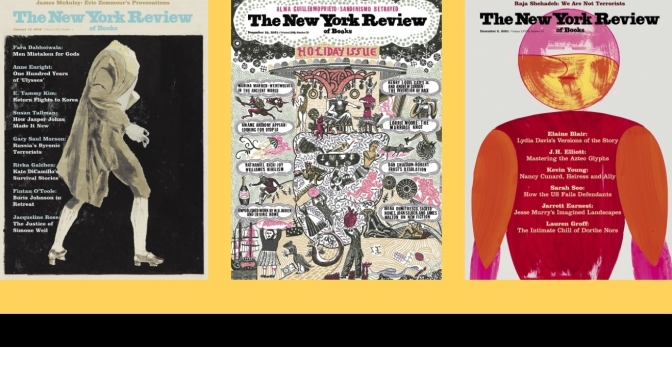
The New York Review of Books (December 28, 2023)The latest issue features Ben Tarnoff on Elon Musk, Julian Bell on Peter Paul Rubens, Fintan O’Toole on the American gerontocracy, Anjum Hasan on recent Sri Lankan fiction, Matthew Desmond on America’s Covid-era experiment with a social safety net, Francine Prose on a vampiric celluloid Pinochet, James Gleick on the science of free will, Frances Wilson on Tove Jansson and the Moomintrolls, Álvaro Enrique on indigenous Americans in Europe, Katie Trumpener on Alexander Kluge, two poems by Jack Underwood, and more.

The Fate of Free Will

By James Gleick

In Free Agents, Kevin Mitchell makes a scientific case for the existence of human agency.

Free Agents: How Evolution Gave Us Free Will by Kevin J. Mitchell

Nobody was holding a gun to your head when you started reading this. You made a choice. Surely it felt that way, at least. A sense of agency—of control over our actions, of continual decision-making—is part of the experience of being human, moment by moment and day by day. True, we sometimes just drift, like robots or zombies, but at other times we gird our loins and exert our will. David Hume defined will nearly three centuries ago as “the internal impression we feel and are conscious of, when we knowingly give rise to any new motion of our body, or new perception of our mind.” The feeling was universal then and it’s universal now.

Tools to End the Poverty Pandemic

Why have Americans not fought to sustain the unprecedented Covid-era expansion of aid to children, renters, and gig workers?

By Matthew Desmond

The Pandemic Paradox: How the Covid Crisis Made Americans More Financially Secure by Scott Fulford

The Viral Underclass: The Human Toll When Inequality and Disease Collide by Steven W. Thrasher

Poverty in the Pandemic: Policy Lessons from Covid-19 by Zachary Parolin

Historical: Saving John Steinbeck’s ‘Western Flyer’

CBS Mornings (December 23, 2023) – After writing “The Grapes of Wrath,” author John Steinbeck explored the Gulf of Mexico in a famous boat called the Western Flyer.

Since then, the boat has inspired adventurers and scientists for generations, but the original ship was nearly lost. CBS News’ Jeff Glor reports on the person determined to give it new life.
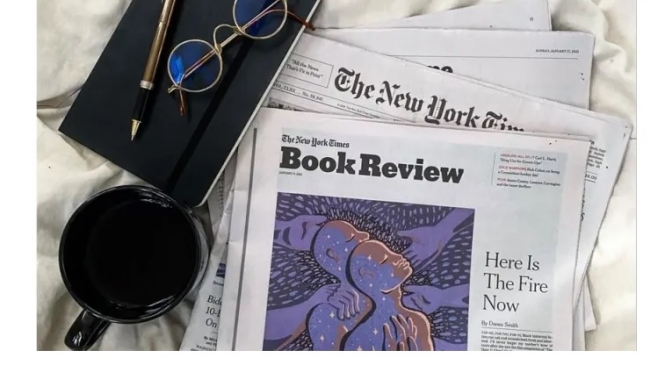
The New York Times Book Review – December 24, 2023

Image

THE NEW YORK TIMES BOOK REVIEW (December 22, 2023): The latest issue features MAGIC: The Life of Earvin “Magic” Johnson, by Roland Lazenby; My Jewish Charlie Brown Christmas – The Peanuts special is the most overtly Christian TV holiday classic. So why does it speak to me so deeply?; Seven Fishes (Not Seven Dishes) for Christmas Eve – A modern Italian American take on the Feast of the Seven Fishes offers a streamlined menu any family can pull off….

Magic Man: The Story of the Greatest Point Guard in N.B.A. History

A color photograph of a tall man in midair holding a basketball. His uniform is purple and gold.

Roland Lazenby’s big biography of Magic Johnson gives us a wealth of detail, a huge cast of characters and, in a way, the tapestry of our time.

By Thomas Beller

MAGIC: The Life of Earvin “Magic” Johnson, by Roland Lazenby


I once asked a portrait photographer why no one ever smiled in her pictures, and she replied, “A smile is a mask.”

I thought of this aphorism as I read Roland Lazenby’s 800-page biography of Magic Johnson. Sports Illustrated declared his smile to be one of the two greatest smiles of the 20th century. (The other was Louis Armstrong’s.) As Missy Fox, the daughter of his high school coach, says in the book, “That is the one thing he’s always had, that smile.”

My Jewish Charlie Brown Christmas

Two animated Peanuts characters, Charlie Brown and Linus, stand beside a very anemic Christmas tree in the snow.

The Peanuts special is the most overtly Christian TV holiday classic. So why does it speak to me so deeply?


By James Poniewozik

“A Charlie Brown Christmas” was a one-of-a-kind wonder when it premiered in 1965 and remains so almost 60 years later. Unlike the other jingle-belled baubles that TV throws down the chimney each year, it is melancholy and meditative. The animation is minimalist and subdued, full of grays and wafting snowflakes. I could wrap myself in the Vince Guaraldi jazz score like a quilt.

And then there’s the speech.

Reviews: The Best 15 Books About Cities In 2023

Green Earth by Kim Stanley Robinson

Green Earth book cover


Kim Stanley Robinson is credited with helping create the genre of climate fiction, and his book Green Earth is yet another example of that. Set in Washington, DC, Robinson draws from his own personal experience living and working in the capital city. “What I like about DC is that there is kind of an electricity in the air, a human electricity,” Robinson told CityLab. “You walk the streets, you see people from all over the world. To go to the world capital and settle there is a statement. It’s an attempt to wrest control of one’s fate.” But where the fictional part of the story begins is in its characters — when he portrays federal bureaucrats as a positive force for good.

Biourbanism: Cities as Nature by Adrian McGregor

Biourbanism book ov


“If we can understand that cities are part of nature — even if they don’t really look like nature — that means we’ve got to change how we plan with them, how we work with them, and what our future looks like on spaceship Earth,” Adrian McGregor says. That’s the premise of Biourbanism: Cities as Nature, which looks at how effective urban planning and design can be achieved by viewing cities through a natural lens. McGregor sees cities as instrumental to lead the fight against the climate crisis. “There’s a policy gap between a federal government making decarbonization commitments and actual city policy,” he says. “They’re not really thinking clearly about where the emissions are coming from and therefore how to target them.”

Paved Paradise: How Parking Explains the World by Henry Grabar

Paved Paradise book cover

Journalist Henry Grabar has a pretty simple solution for better city living: parking reform. The act of parking, for so many, is an aggravating experience. “You’re more likely to be killed over a parking space than you are to be killed by a shark,” Grabar told CityLab. In his book Paved Paradise, he argues that the key to happier residents is transforming parking policies to make them smarter and more convenient, and by undoing some of the privileges given to drivers in order to help boost multimodal transportation. “It’s very hard to overrule the instinctive feeling that parking ought to be available when I want it, where I want it, for the price I want to pay, which is zero,” Grabar said. “A lot of smart parking policy deviates from those assumptions, like charging for coveted street parking in busy locations, or trying to encourage people to park in a garage a few blocks away and then walk a bit.”

Built From the Fire by Victor Luckerson

Built from the Fire by Victor Luckerson: 9780593134375 |  PenguinRandomHouse.com: Books


What happened after the Tulsa race massacre? It’s a question often lost when thinking about the violence that saw one of the wealthiest historic Black American neighborhoods burned down, and its residents killed or chased out. Built From the Fire seeks to tell the story of Greenwood from start to end, past the initial tragedy that wiped out Black Wall Street and the destructive urban renewal plans and physically divisive highways that followed. For Victor Luckerson, who moved to Tulsa and embedded himself in Greenwood’s community and archives in order to tell the story right, the policies and actions of local government officials did as much damage, if not more, to the neighborhood’s heritage than the initial conflagration. “I would say the massacre was more devastating in the short term, and urban renewal more devastating in the long term,” he says.

There Goes the Neighborhood by Jade Adia

There Goes The Neighborhood book cover

It’s not just heartbreak and bad grades that teens are facing — now, it’s gentrification too. Author Jade Adia found inspiration in the Los Angeles youth that came out to protest against police brutality after the murder of George Floyd, and wrote There Goes the Neighborhood with those young people in mind. Her debut young adult novel tells the story of 15-year-old Rhea, who devises a plan to save her best friend’s family from eviction, as gentrifiers threaten to upend her neighborhood in South Los Angeles. “I wanted to tackle the topic [of gentrification] in the most accessible way possible,” Adia told CityLab, “by putting young people and their experiences on the front lines of the conversation.”

READ MORE

London Review Of Books – January 4, 2024 Preview

Image

London Review of Books (LRB) – December 20, 2023: The latest issue features Stevenson in Edinburgh; Katherine Mansfield’s Lies; James Meek changes the channel, and Israel and Germany…

Pandora’s Box: The Greed, Lust, and Lies that Broke Television by Peter Biskind

Short Cuts: Edinburgh’s Festivalisation

Subcontractors of Guilt: Holocaust Memory and Muslim Belonging in Postwar Germany by Esra Özyürek

Never Again: Germans and Genocide after the Holocaust by Andrew Port

America’s Philosopher: John Locke in American Intellectual Life by Claire Rydell Arcenas

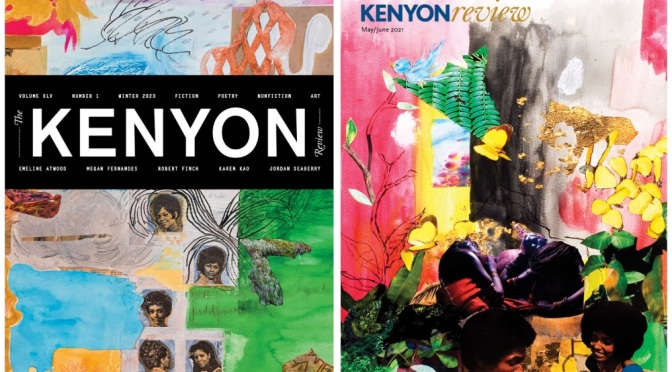
Arts/Books: Times Literary Supplement – Dec 22, 2023

Image

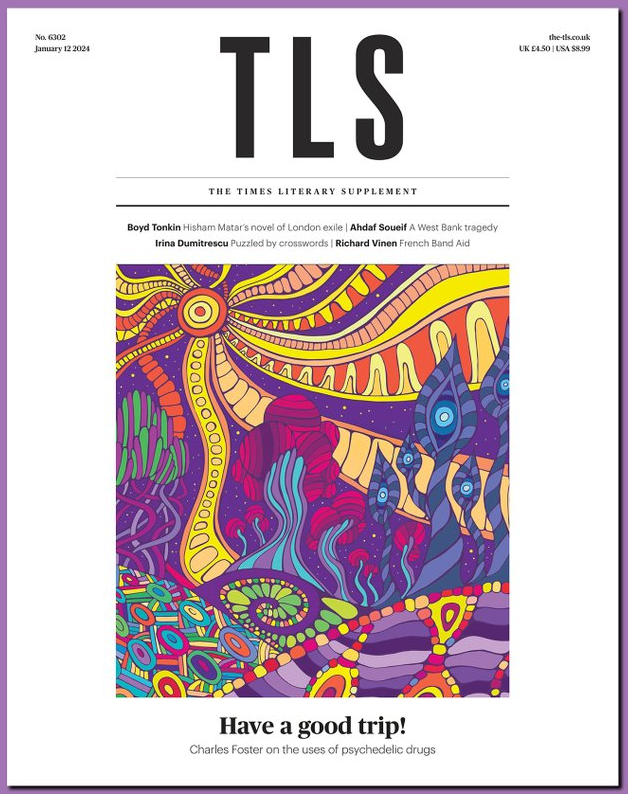
Times Literary Supplement (December 20, 2023): The latest issue features ‘A nice little earner’ – On Dicken’s Christmas Carol; Jane Austen’s Truth Universally Acknowledged; Between God and Jingle Bells; and ‘Revoltingly Cute’…

Reviews: Best Books On Foreign Affairs For 2023

Foreign Affairs Magazine (December 17, 2023) – The Best of Books 2023 – This Year’s Top Picks From Foreign Affairs’ Reviewers

Against the World: Anti-Globalism and Mass Politics Between the World War

by Tara Zahra

In a timely and thought-provoking book, Zahra delves into the tumultuous years between World War I and World War II to argue that it was resistance to globalism and globalization that ended up weakening Europe’s then-fragile democracies, eventually contributing to the continent’s slide into dictatorship. READ THE REVIEW

Judgment at Tokyo: World War II on Trial and the Making of Modern Asia

Amazon.com: Judgment at Tokyo: World War II on Trial and the Making of Modern  Asia eBook : Bass, Gary J.: Kindle Store

by Gary Bass

Bass’s magnificent book, an account of the post–World War II Tokyo war-crimes trial, encourages a deeper understanding of the Asian experience of war and occupation. His work also sheds light on an enduring debate about liberalism and international politics, showing how the trial played formative roles both in postwar Asian politics and in the making of the postwar global human rights regime. READ THE REVIEW

The Crisis of Democratic Capitalism

The Crisis of Democratic Capitalism: Martin Wolf: 9780241303412:  Amazon.com: Books

by Martin Wolf

In a sophisticated and expansive account, Wolf, a veteran economics commentator, suggests that the root cause of today’s political and economic malaise lies in the breakdown of the relationship between capitalism and liberal democracy—and the failure of institutions to counter poverty and marginalization. READ THE REVIEW

Human Rights for Pragmatists: Social Power in Modern Times

Human Rights for Pragmatists: Social Power... by Snyder, Jack

by Jack Snyder

In this masterful work, Snyder offers a bold explanation for why, how, and when societies make progress in expanding political rights and freedoms, arguing that breakthroughs occur when human rights serve the interests of a country’s dominant political coalition .READ THE REVIEW

Geopolitics and Democracy: The Western Liberal Order From Foundation to Fracture

by Peter Trubowitz and Brian Burgoon

Trubowitz and Burgoon argue in this groundbreaking study that the current backlash against the Western-led liberal international order can be traced to the 1990s, when the United States and European governments encouraged globalization at the expense of social and economic protections at home. READ THE REVIEW

The Project-State and Its Rivals: A New History of the Twentieth and Twenty-first Centuries

by Charles S. Maier

Moving beyond the standard account of the twentieth century as an epic struggle between democracy and autocracy, Maier examines how a wide range of actors tried to harness industrial modernity in the pursuit of power and material interests, weaving an alternative narrative about the explosive interplay of economic privilege and political grievance. READ THE REVIEW

Nature Magazine: Best Science Books Of 2023

Nature Magazine (December 15, 2023):

The AI Dilemma

Juliette Powell & Art Kleiner Berrett-Koehler (2023)

The benefits and harms of social media are intimately tied to the ongoing debate about artificial intelligence (AI). Will AI systems trained partly on social media benefit or harm humanity? In their excellent, sometimes alarming, analysis of engineering, social justice, commerce and government, entrepreneur and technologist Juliette Powell and writer and educator Art Kleiner compare humans developing AI tools to first-time parents. They recommend guiding AI systems “as we would a child towards full adulthood”.

Consciousness

John Parrington Icon (2023)

“The material basis of human consciousness is one of the biggest unsolved issues in science,” admits cellular and molecular pharmacologist John Parrington in his pithy addition to a vast literature dating from the time of ancient Greek philosopher Aristotle. He considers many theories and proposes his own. Humans, he argues, are distinguished by conceptual thought and language, along with skills in designing tools and technologies. The evolution of these powers transformed our brains, creating meaning and consciousness.

Democracy in a Hotter Time

Ed. David W. Orr MIT Press (2023)

Environmentalist David Orr writes in the introduction to this timely collection that the planet faces two interlinked crises: “rapid climate change and potentially lethal threats to democracy”. The US Constitution rigorously protects private property but does not mention ecological systems, he observes. Contributors — almost all US-based — from a wide range of fields examine the need for political reform. The book is in four parts: the nature of democracy; roadblocks to change; policy and law; and education, including academic culture.

Extinctions

Michael J. Benton Thames & Hudson (2023)

When palaeontologist Michael Benton learnt about dinosaurs as a boy, he “loved the fact they were extinct”. They were like real science fiction. Perhaps he also intuited that their extinction permitted his existence. As his deeply informed and readable book reveals, the mass extinction at the end of the Cretaceous period 66 million years ago allowed a new cohort of creatures — including mammals — to “inherit the Earth”, as did four earlier extinction events. Living species represent less than 1% of all the species that have existed.

A Guess at the Riddle

David Z. Albert Harvard Univ. Press (2023)

The physical interpretation of quantum mechanics has been a controversial riddle since the 1920s, when Niels Bohr argued that the atom’s inner workings could not be described in physical terms. Today, many philosophers and physicists disagree, but there’s no consensus on an alternative. Philosopher David Albert’s provocative book argues, in three essays, that Bohr’s quantum-measurement problem starts to make sense if the wave function is understood as the fundamental physical ‘stuff’ of the Universe.

The New Criterion – January 2024 Preview

Image
The New Criterion – January 2024 issue:

A stately setting  by Myron Magnet
The Loeb Platos  by Mark F. McClay
The peace women  by Peter Baehr
Hopper horrors at the Whitney  by Gail Levin

New poems  by Peter Vertacnik