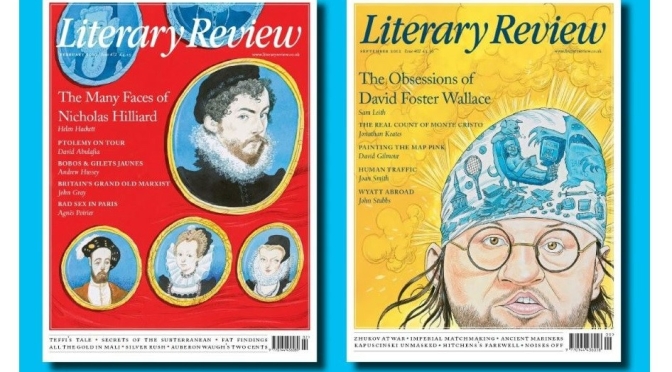
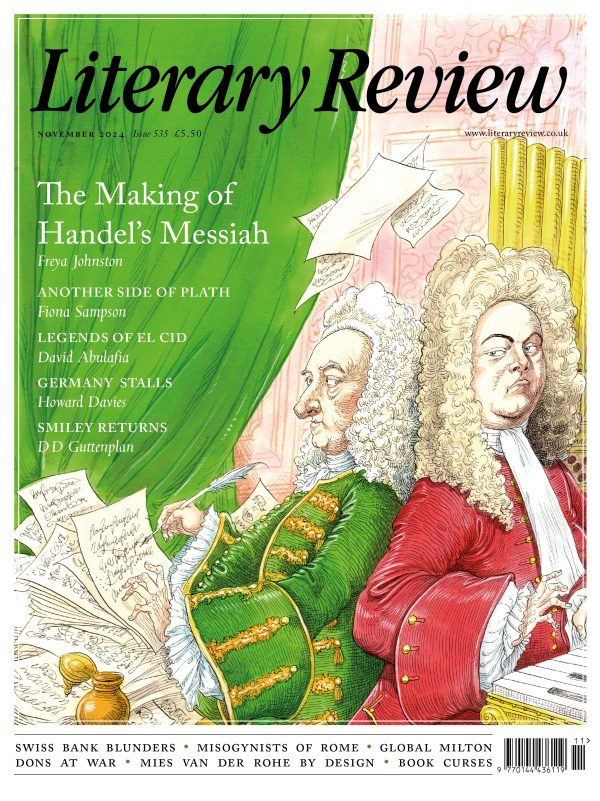

Literary Review – November 2, 2024: The latest issue features ‘The Making of Handel’s Messiah’; Another Side of Plath; Legends of El Cid; Germany Stalls and Smiley Returns…

Literary Review – November 2, 2024: The latest issue features ‘The Making of Handel’s Messiah’; Another Side of Plath; Legends of El Cid; Germany Stalls and Smiley Returns…
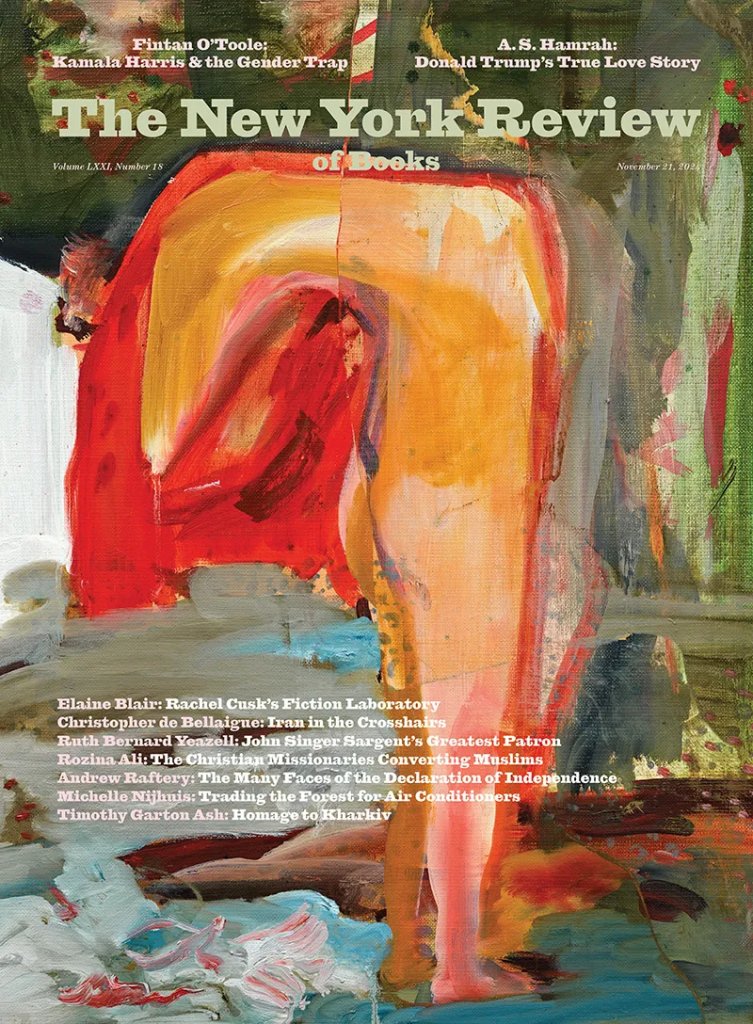

Two recent books about our immigration system reveal its long history of exploiting vulnerable individuals for financial gain.
Welcome the Wretched: In Defense of the “Criminal Alien” by César Cuauhtémoc García Hernández
In the Shadow of Liberty: The Invisible History of Immigrant Detention in the United States by Ana Raquel Minian
Two new books consider the delusion of the human quest to be free from the constraints of nature.
The Burning Earth: A History by Sunil Amrith
A Natural History of Empty Lots: Field Notes from Urban Edgelands, Back Alleys, and Other Wild Places by Christopher Brown
The Islamic Republic’s sordid proxy war with the West may now be leaving it open to an all-out attack as Israel attempts to eliminate its enemies throughout the region.


Times Literary Supplement (October 30, 2024): The latest issue features ‘Scare Stories’ – On modern horror. Asked why he liked horror films, or terror films as he preferred to call them, Kingsley Amis wrote: “like Mark Twain on a dissimilar occasion, I have an answer to that: I don’t know”. He viewed horror as purely “harmless” entertainment. That explanation might satisfy teenage addicts, but moralists, psychologists and literary critics are inclined to examine the bloody entrails of the genre to divine deeper truths.
Taking the British Revolution out of the Restoration’s shadow By Jonathan Fitzgibbons
The decades before horror became respectable By Mark Storey
How Mary Oliver ‘encourages us to believe’ By Rory Waterman
An Australian vision of the eco-apocalypse By Tom Seymour Evans
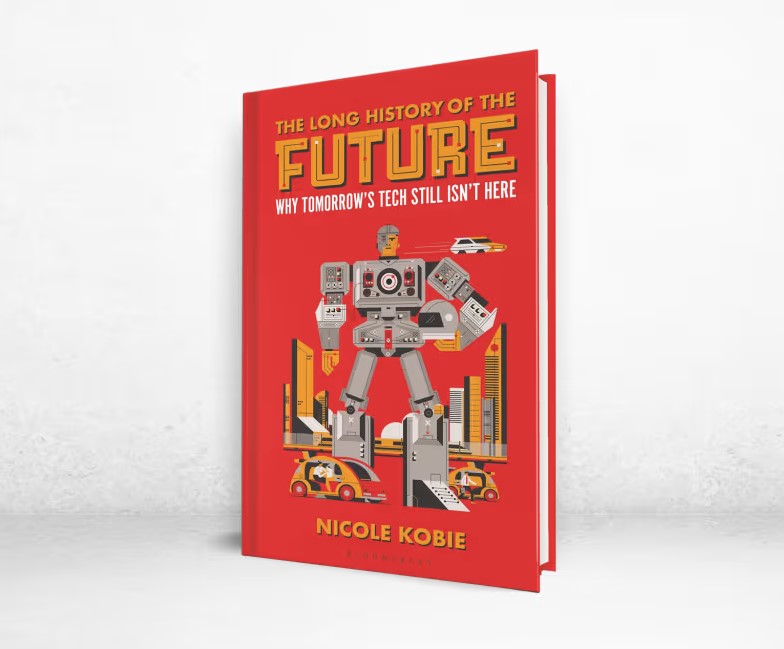

We don’t have flying cars or Jetsons-like robots to cook our meals. What we have is better: constant incremental progress.
The Long History of the Future: Why Tomorrow’s Technology Still Isn’t Here By Nicole Kobie
A video flickers to life as Dave Brubeck’s “Take Five” begins to sound. A long-haired man appears on screen. You might expect a jazz concert, but the man fiddles with a cabinet-like, camera-laden machine on wheels. As he steps away, a buzzer sounds, the machine slowly rolls forward, and the narrator announces its name: Shakey the Robot.
By Michael Wood
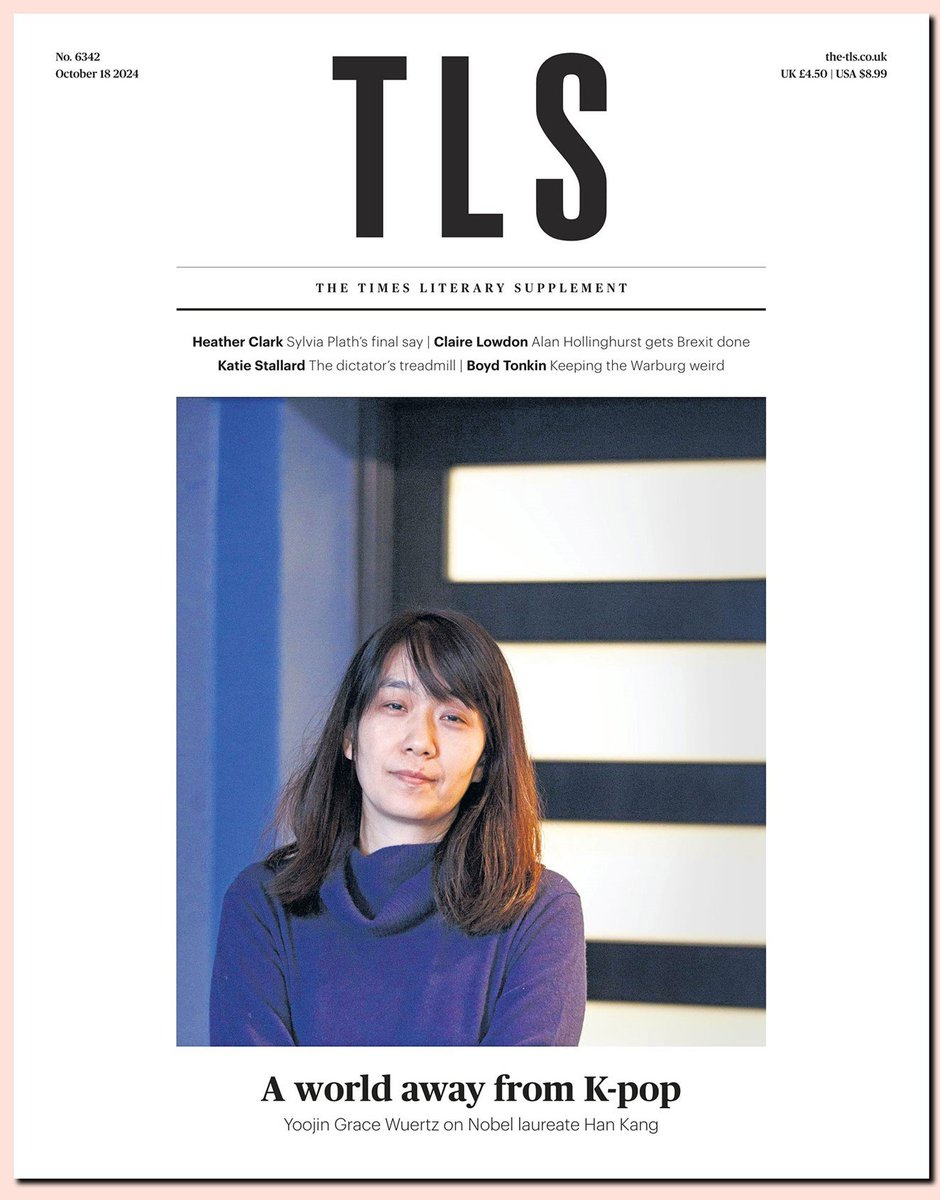
Times Literary Supplement (October 16, 2024): The latest issue features ‘A world away from K-pop -The Nobel laureate Han Kang, Sylvia Plath’s final say; Alan Hollinghurst gets Brexit done; The dictotor’s treadmill; Keeping the Warburg weird…
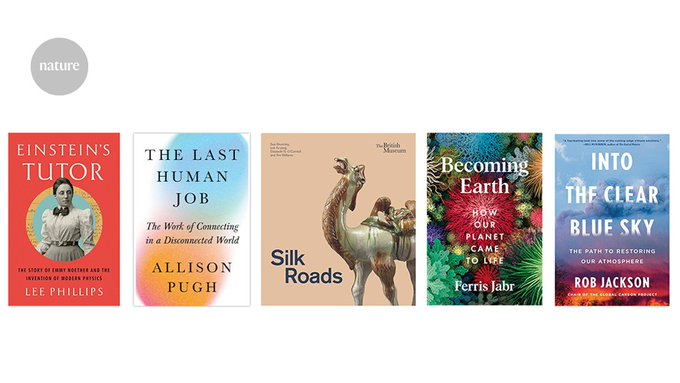
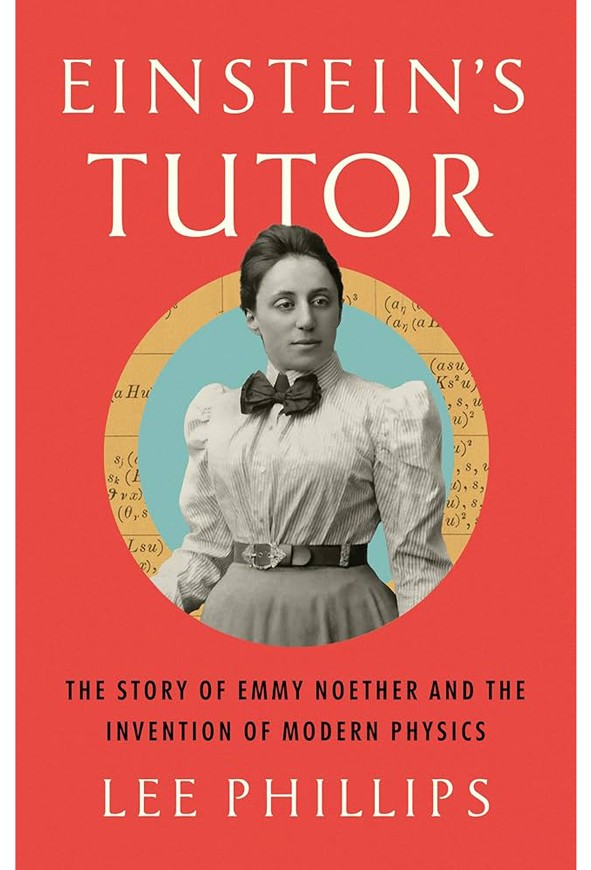
Einstein’s Tutor
Lee Phillips PublicAffairs (2024)
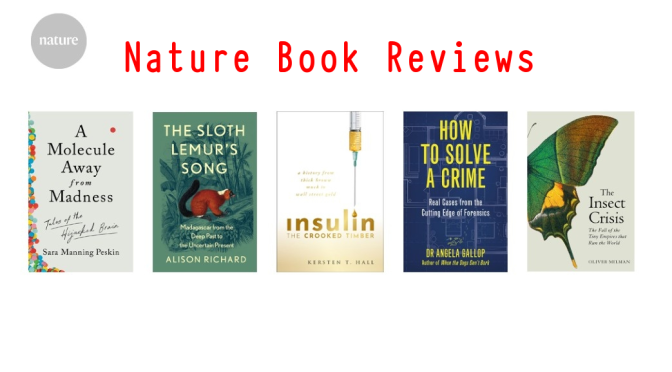
Major studies of Albert Einstein’s work contain minimal, if any, reference to the role of German mathematician Emmy Noether. Yet, she was crucial in resolving a paradox in general relativity through her theorem connecting symmetry and energy-conservation laws, published in 1918. When Noether died in 1935, Einstein called her “the most significant creative mathematical genius thus far produced since the higher education of women began”. In this book about her for the general reader, physicist Lee Phillips brings Noether alive.
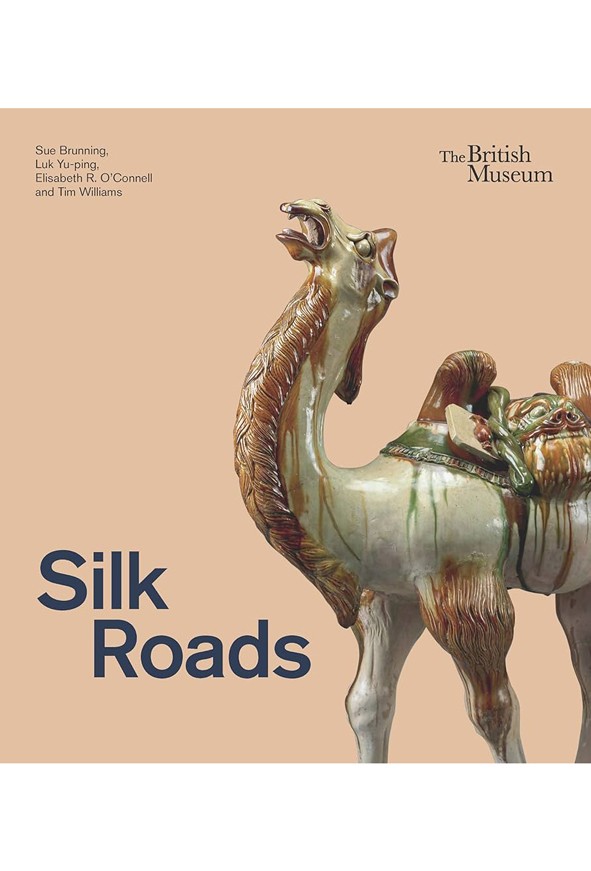
Silk Roads
Sue Brunning et al. British Museum Press (2024)
The first object discussed in this lavishly illustrated British Museum exhibition book reveals the far-ranging, mysterious nature of the Silk Roads. It is a Buddha figure, excavated in Sweden from a site dated to around ad 800, and probably created in Pakistan two centuries earlier. No one knows how it reached Europe or its significance there. As the authors — three of them exhibition curators — admit, it is “impossible to capture the full extent and complexity of the Silk Roads in a single publication”— even by limiting their time frame to only five centuries.
The Last Human Job
Allison Pugh Princeton Univ. Press (2024)
A century ago, notes sociologist Allison Pugh, people doing their food shopping gave lists to shop workers, who retrieved the goods then haggled over the prices. The process epitomized what she terms connective labour, which involves “an emotional understanding with another person to create the outcomes we think are important”. A healthy society requires more connective labour, not more automation, she argues in her engaging study, which observes and interviews physicians, teachers, chaplains, hairdressers and more.
Becoming Earth
Ferris Jabr Random House (2024)
According to science journalist Ferris Jabr, his intriguing book about Earth — divided into three sections on rock, water and air — is “an exploration of how life has transformed the planet, a meditation on what it means to say that Earth itself is alive”. If this definition sounds similar to the Gaia hypothesis by chemist James Lovelock and biologist Lynn Margulis, that is welcome to Jabr, who admires Lovelock as a thinker and personality. He also recognizes how the 1970s hypothesis, which evolved over decades, still divides scientists.
Into the Clear Blue Sky
Rob Jackson Scribner (2024)
Earth scientist Rob Jackson chairs the Global Carbon Project, which works to reduce greenhouse-gas emissions and improve air and water quality. His book begins hopefully on a visit to Rome, where Vatican Museums conservators discuss the “breathtaking” restoration of the blue sky in Michelangelo’s fresco The Last Judgement, damaged by centuries of grime and visitors’ exhalations. But he ends on a deeply pessimistic note on a research boat in Amazonia, which is suffering from both floods and fires: the “Hellocene”.


THE NEW YORK TIMES BOOK REVIEW (October 12, 2024): The latest issue features ‘The Heart of the Matter’
These terrifying tales by the likes of Stephen King and Shirley Jackson are more than good reads: They’ll freak you out, too.
The memoir, which will cover his time in prison and Russia’s move toward autocracy, will be published by Crown, an imprint of Penguin Random House.
The South Korean author, best known for “The Vegetarian,” is the first writer from her country to receive the prestigious award.

 Boomers Daily