

 Fifty-five years after co-founding the rock band The Who, Pete Townshend is still at it. The lead lyricist and guitarist says he actually doesn’t enjoy performing but views it as an “easy” job necessary to finance his lifestyle and support his family and staff. Economics correspondent Paul Solman sits down with Townshend to discuss aging, surviving child abuse and art’s ability to inspire hope.
Category Archives: Arts & Literature
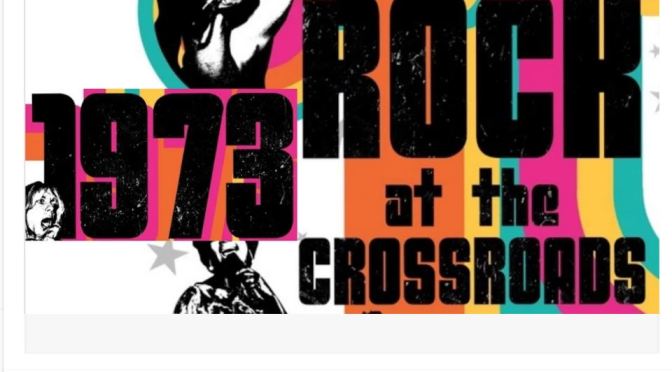
Nostalgia Books: “1973 – Rock At The Crossroads” By Andrew Grant Jackson
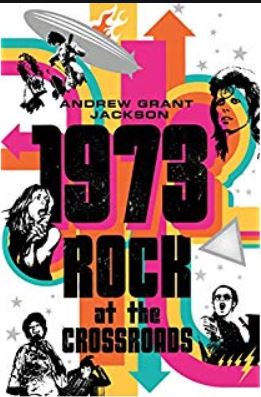 Led Zep’s Houses of the Holy reflected the rise of funk and reggae. The singer songwriter movement led by Bob Dylan, Neil Young, and Joni Mitchell flourished at the Troubadour and Max’s Kansas City, where Bruce Springsteen and Bob Marley shared bill. Elvis Presley’s Aloha from Hawaii via Satellite was NBC’s top-rated special of the year, while Elton John’s albums dominated the number one spot for two and a half months.
A fascinating account of the music and epic social change of 1973, a defining year for David Bowie, Bruce Springsteen, Pink Floyd, Elton John, the Rolling Stones, Eagles, Elvis Presley, and the former members of The Beatles.
1973 was the year rock hit its peak while splintering―just like the rest of the world. Ziggy Stardust travelled to America in David Bowie’s Aladdin Sane. The Dark Side of the Moon began its epic run on the Billboard charts, inspired by the madness of Pink Floyd’s founder, while all four former Beatles scored top ten albums, two hitting #1.
To read more and purchase: https://www.amazon.com/1973-Crossroads-Andrew-Grant-Jackson/dp/1250299985

New Photography Books: “France Around 1900 – A Portrait In Color” (Taschen)
 Between the Franco-Prussian War and WWI, France in the 1900s was a gilded moment of peace and prosperity. Critically acclaimed authors Sabine Arqué and Marc Walter curate this XXL collection of some 800 vintage photographs, postcards, posters, and photochromes. From the grand Paris World’s Fair to the honey light of the Côte d’Azur, it’s a glimpse into an era of rose-tinted optimism.
To read more and purchase: https://www.taschen.com/pages/en/catalogue/photography/all/01161/facts.france_around_1900_a_portrait_in_color.htm
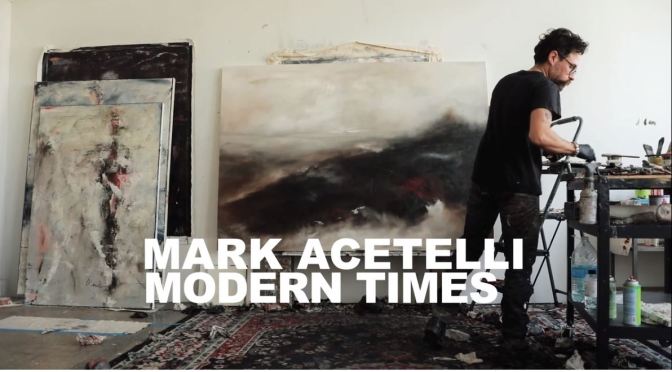
Artist Video Profiles: “Mark Acetelli – Modern Times” (EMS Legacy Films)
A film by Eric Minh Swenson.
My paintings are inspired by an intensely personal introspective journey of life, from the ever-changing complexities of love, loss, birth, and death. The context of my work is what I call, “Absence and Presence” pertaining to how someone or something can be physically gone, but the essence still remains. Capturing the physical mixed with spirituality on canvas. My application of paint is an extension of that thought process. Continuously building up and tearing down, layer upon layer, adding and subtracting. A visceral dance between the conscious and the unconscious until the emotion is expressed. Painting the essence of something rather than a depiction. My message is about the human condition, that joy is sweetened by the memory of the pain endured to reach it.
From a VoyageLA online article: http://voyagela.com/interview/art-life-mark-acetelli/
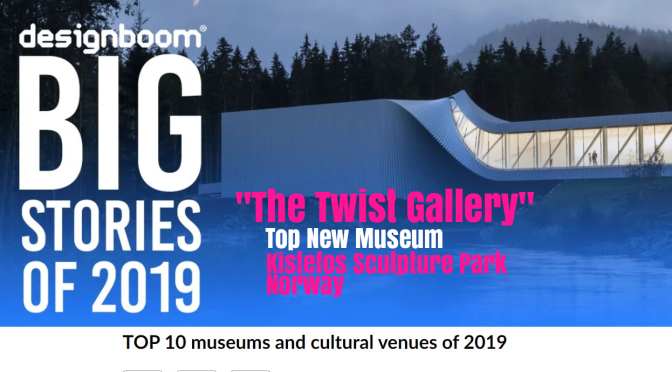
Best New Museum: “The Twist Gallery”, Kistefos Sculpture Park, Norway
From a DesignBoom online article:
spanning the winding randselva river, a unique new building connects two forested riverbanks at kistefos — northern europe’s largest sculpture park. part museum, part bridge, and part sculpture, ‘the twist’ has been designed by bjarke ingels group (BIG) and represents the firm’s first project in norway. dramatically torqued at its center, the structure not only allows visitors to cross from one riverbank to the other, but is also capable of hosting an international program of contemporary art exhibitions.
To read more: https://www.designboom.com/architecture/twist-bjarke-ingels-group-kistefos-sculpture-park-norway-museum-09-18-2019/

Profiles: Remembering English Art Critic John Berger (1926-2017)
From an Aeon online article:
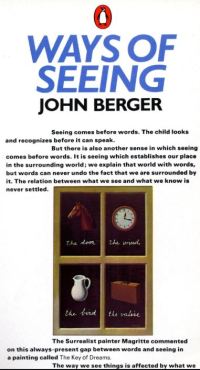 Time brings new colour to old materials, and what makes Ways of Seeing so enduring might not be the same as what made it so electrically influential when it first appeared. We are now more aware of the fissures in the show, in its slight hesitations and indecisions, and in the hedges to what was otherwise such a freight train of an argument. The pictorial tradition of the female nude, Berger argues throughout the second episode, was not a celebration of humanist virtue but a fantasy of the acquisitive ‘male gaze’ (the term was coined a year later by Laura Mulvey).
At the start of the first TV episode of Ways of Seeing, John Berger takes a scalpel to Botticelli’s Venus and Mars. The opening beat of the programme is the audio of the incision – the blade’s rough abrasion on canvas – before the soundtrack settles into voiceover. ‘This is the first of four programmes,’ Berger says, ‘in which I want to question some of the assumptions usually made about the tradition of European painting. That tradition which was born about 1400, died about 1900.’
Ways of Seeing first aired on Sunday evenings on BBC2 at the start of 1972. It attracted few initial viewers but, through rebroadcasts and word of mouth, the show gathered steam. By the end of 1972, it had gone viral. People in London and New York argued about Berger’s ideas. When Penguin commissioned a paperback adaptation, the first two print runs sold out in months. Regularly assigned in art schools and introductory art history courses, Berger’s project has never really waned in popularity. That first episode now has close to 1.4 million views on YouTube, and the paperback regularly sits atop Amazon’s Media Studies bestseller list.
Art Books: “Rembrandt – The Self Portraits” By Volker Manuth, Marieke de Winkel (Taschen)
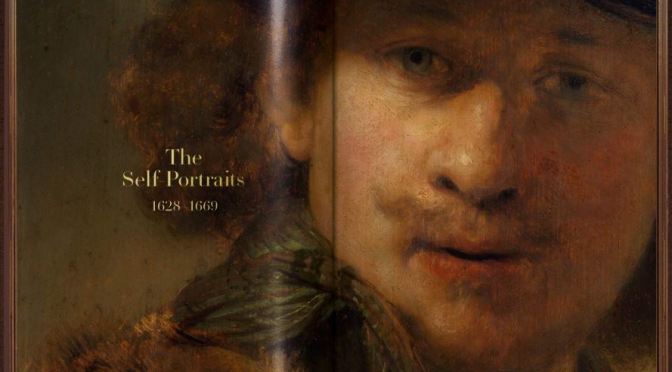
With more than 80 works spanning paintings, etchings, and drawings, the Dutchman’s lifelong practice of self-portraiture functions as a means of concretizing that which is fleeting, be it individual moments of development set against the inexorable passage of time, or the facial contortions of emotion that are gone, without a trace, as swiftly as they arrive.
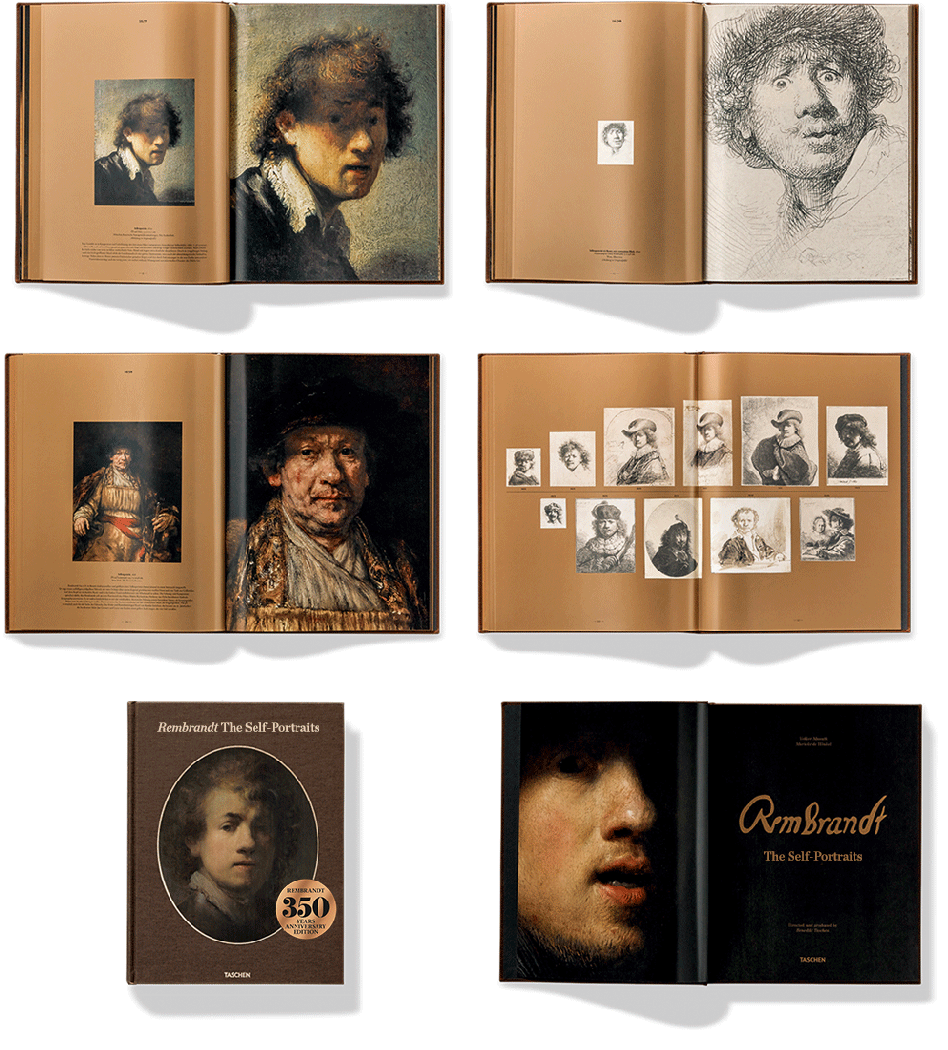
Across the four decades in which they were painted, one constant is particularly striking across media and styles―Rembrandt’s dedication to presenting himself from multiple perspectives, celebrating the multiplicity of the individual and championing the unfiltered portrayal of emotional expression.
To read more and order: https://www.taschen.com/pages/en/catalogue/art/all/04641/facts.rembrandt_the_self_portraits.htm?utm_campaign=2019_xmas4_davinci_rembrandt&utm_source=tas&utm_medium=nl
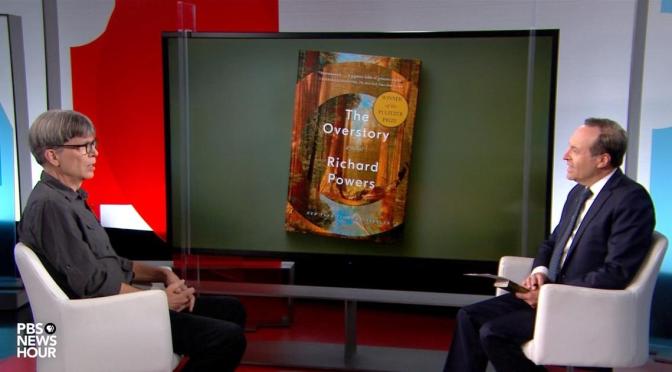
Interview Podcasts: 2019 Pulitzer Prize Winner “The Overstory” Author Richard Powers (PBS)
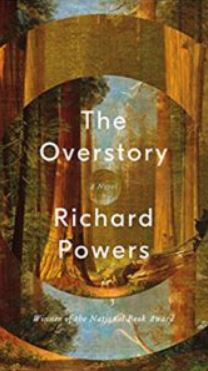 Richard Powers, author of our November pick for the NewsHour-New York Times book club, Now Read This, joins Jeffrey Brown to answer reader questions on “The Overstory,” and Jeff announces the December book selection.
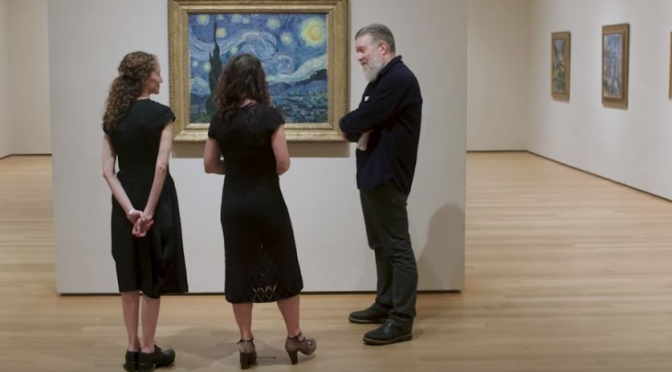
Museum Insider: Van Gogh’s “Starry Night” As Seen By An Astrophysicist (MOMA/BBC Video)
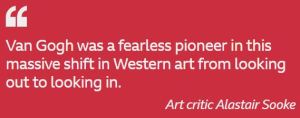 In this episode of “The Way I See It,” Janna Levin brings her celestial expertise to Vincent van Gogh’s star-filled vision, in conversation with senior curator of Drawing and Prints Jodi Hauptman. Levin helps us see how certain
  features of the night sky, including “turbulent air,” the light from a star, and the planet Venus, are rendered visible by Van Gogh’s brush. She also points out that her approach is not so different from Van Gogh’s: “People who observe the world, whether they are artists or scientists, are always on the cusp of what they see and then what is internal.”
To read more: https://www.bbc.co.uk/programmes/m0009c2j
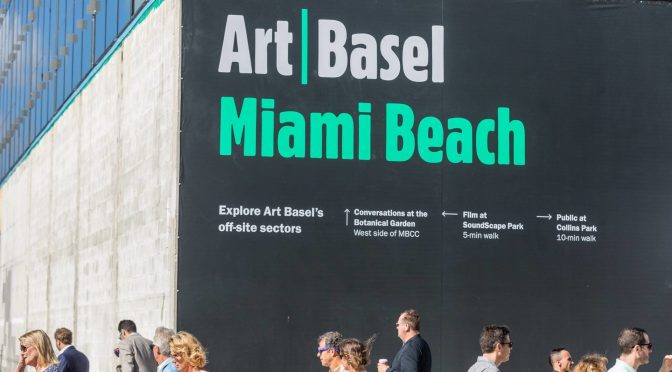
Top Exhibitions: “Art Basel Miami Beach 2019” (Dec 3-8)
 Over 200 of the world’s leading international Modern and contemporary art galleries display artworks by over 4,000 artists, including paintings, sculptures, installations, photography, film, video, and digital art. Visitors can find works ranging from editioned pieces by young artists to museum-caliber masterpieces.
Website: https://www.artbasel.com/miami-beach
 Boomers Daily