Category Archives: Arts & Literature

SHAKESPEARE’S STAGE: WHEN THE MIND OVERHEARS ITSELF

By Michael Cummins, Editor, August 15, 2025

There is a moment in the history of the theater, and indeed in the history of consciousness itself, when the stage ceased to be merely a platform for action and became a vessel for thought. Before this moment, a character might speak their mind to an audience, but the thoughts were settled, the intentions declared. After, the character began to speak to themselves, and in doing so, they changed. They were no longer merely revealing a plan; they were discovering it, recoiling from it, marveling at it, and becoming someone new in the process.

This revolution was the singular invention of William Shakespeare. The literary critic Harold Bloom, who argued it was the pivotal event in Western consciousness, gave it a name: “self-overhearing.” It is the act of a character’s mind becoming its own audience. For Shakespeare, this was not a theory of composition but the very mechanism of being. He placed a theater inside his characters’ minds, and on that internal stage, they overheard the whispers of their own souls.

This interior drama, this process of a consciousness listening to itself, is the molten core of Shakespearean tragedy. It grants his characters a psychological autonomy that feels startlingly, sometimes terrifyingly, modern. While this technique permeates his work, it finds its most potent expression in three of his greatest tragic figures. Through them, Shakespeare presents a triptych of the mind in conflict. In Hamlet, we witness the intellectual paralyzed by the sheer polyphony of his own consciousness. In Iago, we find the chilling opposite: a malevolent artist who overhears his own capacity for evil and gleefully improvises a script of pure destruction. And in Macbeth, we watch a noble soldier become an audience to his own corruption, mesmerized and horrified by the murderous voice his ambition has awakened. Together, these three characters map the frontiers of human consciousness, demonstrating that the most profound tragedies unfold not in castles and on battlefields, but in the silent, echoing theater of the mind.

Hamlet: The Consciousness in Crisis

Hamlet is not merely a character; he is a consciousness. More than any figure in literature, he exists as a mind in perpetual, agonizing conversation with itself. His tragedy is not that he must avenge his father, but that he must first navigate the labyrinth of his own thoughts to do so. His soliloquies are not statements of intent but sprawling, recursive processes of self-interrogation. He is the ultimate self-overhearer, and the voice he listens to is so articulate, philosophically nuanced, and relentlessly self-critical that it becomes a prison.

From his first soliloquy, we see a mind recoiling from a world it cannot stomach. He laments the “unweeded garden” of the world, wishing:

O, that this too too solid flesh would melt,
Thaw and resolve itself into a dew!

 Hamlet, 1.2.129-130

After his encounter with the Ghost, the theater of his mind becomes a chamber of horrors. He overhears not just a command for revenge, but a shattering revelation about the nature of reality itself, concluding that “one may smile, and smile, and be a villain” (Hamlet, 1.5.108). This overheard truth—that appearance is a stage and humanity is a performance—becomes a cornerstone of his own psyche, prompting his decision to put on an “antic disposition.”

Charged with a task demanding bloody action, Hamlet’s consciousness instead turns inward, staging a debate that consumes the play. In his most famous soliloquy, he puts existence itself on trial: “To be, or not to be: that is the question.” This is not a man deciding whether to live or die; it is a mind listening to its own arguments for and against being. He weighs the “slings and arrows of outrageous fortune” against the terrifying uncertainty of “the undiscover’d country from whose bourn / No traveller returns.” The voice of his intellect, he concludes, is what “puzzles the will,” making it so that “conscience does make cowards of us all” (Hamlet, 3.1.56-83). He overhears his own fear and elevates it into a universal principle.

This intellectual paralysis is born of his relentless self-analysis. After watching an actor weep for the fictional Hecuba, Hamlet turns on himself in a fury of self-loathing, beginning with, “O, what a rogue and peasant slave am I!” He overhears his own inaction and is disgusted by it, mocking his tendency to talk instead of act:

Why, what an ass am I! …
That I, the son of a dear father murder’d,
Prompted to my revenge by heaven and hell,
Must, like a whore, unpack my heart with words.

— Hamlet, 2.2.583-586

He is both the speaker and the critic, the actor and the audience, caught in a feedback loop of thought, accusation, and further thought. Hamlet’s mind is a stage where the drama of consciousness perpetually upstages the call to action; the performance is so compelling he cannot bring himself to leave the theater.

Iago: The Playwright of Evil

If Hamlet’s self-overhearing leads to a tragic paralysis, Iago’s is the engine of a terrifying and creative evil. Where Hamlet’s mind is a debating chamber, Iago’s is a workshop. He is Shakespeare’s most chilling villain precisely because his villainy is an act of artistic improvisation. In his soliloquies, we do not witness a man wrestling with his conscience; we witness a playwright brainstorming his plot, listening with detached delight to the diabolical suggestions of his own intellect. He overhears the whispers of a motiveless malignity and, finding them intriguing, decides to write them into being.

Iago’s supposed motives for destroying Othello are flimsy and interchangeable. He first claims to hate the Moor for promoting Cassio. Then, he adds a rumor: “it is thought abroad, that ‘twixt my sheets / He has done my office” (Othello, 1.3.387-388). He presents this not as fact, but as a passing thought he chooses to entertain, a justification he can try on, resolving to act “as if for surety.” Where Hamlet desperately seeks a single, unimpeachable motive to act, Iago casually auditions motives, searching only for one that is dramatically effective. He is listening for a good enough reason, and when he finds one, he seizes it not with conviction but with artistic approval.

His soliloquies are masterclasses in this dark creativity. At the end of Act I, he pauses to admire his burgeoning plot. “How, how? Let’s see,” he muses, like an artist sketching a scene. “After some time, to abuse Othello’s ear / That he is too familiar with his wife.” The plan flows from him, culminating in the famous declaration:

Hell and night
Must bring this monstrous birth to the world’s light.

 Othello, 1.3.409-410

Later, he marvels at the tangible effect of his artistry, watching his poison corrupt Othello’s mind and noting with clinical detachment, “The Moor already changes with my poison: / Dangerous conceits are, in their natures, poisons” (Othello, 3.3.325-326). He is not just the playwright, but the rapt critic of his own unfolding drama. He steps outside of himself to admire his own performance as “honest Iago,” listening with applause to his own deceptive logic. This is the chilling sound of a consciousness with no moral compass, only an aesthetic one. It overhears its own capacity for deception and finds it beautiful. Iago is the playwright within the play, and the voice he hears is that of the void, whose suggestions he finds irresistible.

Macbeth: The Audience to Corruption

In Macbeth, we witness the most visceral and terrifying form of self-overhearing. He is a man who hears two voices within himself—that of the loyal thane and that of a murderous usurper—and the play charts his horrifying decision to listen to the latter. Unlike Hamlet, he is not paralyzed, and unlike Iago, he takes no pleasure in his dark machinations. Macbeth is an unwilling audience to his own ambition. He overhears the prophecy of his own moral decay and, though it terrifies him, cannot bring himself to walk out. His tragedy is that of a man who watches himself become a monster.

Our first glimpse into this internal battle comes after he meets the witches. Their prophecy is a “supernatural soliciting” that he reveals in an aside, a moment of public self-overhearing: “This supernatural soliciting / Cannot be ill, cannot be good” (Macbeth, 1.3.130-131). He listens as his mind debates the proposition. If it’s good, why does he yield to a suggestion:

Whose horrid image doth unfix my hair
And make my seated heart knock at my ribs,
Against the use of nature?

 Macbeth, 1.3.135-137

He is already a spectator to his own treasonous thoughts. The voice of ambition conjures the murder of Duncan, and his body reacts with visceral terror. The most profound moment of this internal drama is the “dagger of the mind” soliloquy. Here, Macbeth is a captive audience to his own murderous intent. “Is this a dagger which I see before me, / The handle toward my hand?” he asks, knowing it is a “dagger of the mind, a false creation, / Proceeding from the heat-oppressed brain” (Macbeth, 2.1.33-39). He is watching his own mind project its bloody purpose into the world; he overhears his own resolve and sees it take physical form.

After the murder, the voice he overheard as temptation becomes an inescapable torment. His consciousness broadcasts its own verdict—“Sleep no more! / Macbeth does murder sleep” (Macbeth, 2.2.35-36)—and he has no choice but to listen. This torment is soon joined by a chilling, logical self-appraisal. He overhears his own entrapment, recognizing that the only path forward is through more violence:

I am in blood
Stepp’d in so far that, should I wade no more,
Returning were as tedious as go o’er.

 Macbeth, 3.4.136-138

His tragedy culminates in his final soliloquy, where, upon hearing of his wife’s death, he overhears the voice of utter despair: “Tomorrow, and tomorrow, and tomorrow, / Creeps in this petty pace from day to day…” (Macbeth, 5.5.19-20). It is his own soul pronouncing its damnation, the final, devastating judgment on a life spent listening to the wrong voice.

Conclusion

The soliloquy, in Shakespeare’s hands, became more than a dramatic convention; it became a window into the birth of the modern self. Through the radical art of self-overhearing, he transformed characters from archetypes who declared their nature into fluid beings who discovered it, moment by moment, in the echo chamber of their own minds.

Hamlet, Iago, and Macbeth stand as the titanic pillars of this innovation. Hamlet’s mind is a storm of intellectual static, a signal so complex it jams the frequency of action. Iago tunes his ear to a darker station, one that transmits pure malignity, and becomes a gleeful conductor of its chaotic symphony. Macbeth, most tragically, is trapped between stations, hearing both the noble music of his better nature and the siren song of ambition, and makes the fatal choice to listen to the latter until it is the only sound left.

In giving his characters the capacity to listen to themselves, Shakespeare gave them life. He understood that identity is not a fixed point but a constant, fraught negotiation—a dialogue between the self we know and the other voices that whisper of what we might become. By staging this internal drama, he invented a new kind of tragedy, one where the fatal flaw is not a trait, but the very process of thought itself. We return to these plays again and again, not merely as an audience, but to witness the terrifying and beautiful spectacle of a soul becoming an audience to itself.

THIS ESSAY WAS WRITTEN AND EDITED UTILIZING AI

The Multi-Faith Prosperity Of 10th-Century Córdoba

By Michael Cummins, Editor, August 13, 2025

While much of Christian Europe was mired in the intellectual and economic stagnation of the so-called “Dark Ages,” 10th-century Córdoba, the capital of the Umayyad Caliphate of al-Andalus, blazed as a singular exception in the medieval world. It was not merely its population of over 250,000, its paved streets, or its public baths that made it a marvel. The true marvel of Córdoba lay in its unprecedented model of intellectual and economic collaboration, a model that harnessed the talents of its diverse Muslim, Jewish, and Christian populations. While modern historians like [suspicious link removed] have rightly challenged the romanticized notion of a perfect convivencia—or coexistence—there is no denying that the collective contributions of its Jewish and Christian communities were not peripheral. They were, in fact, integral to the caliphate’s rise as a preeminent power, forging a society so unique that it stands apart in human history.

This era’s success was a testament to a pragmatic, collaborative environment. As scholar María Rosa Menocal eloquently argued in her book, The Ornament of the World, the period was defined by a culture where “tolerance was an inherent aspect of Andalusian society,” allowing for an extraordinary degree of exchange and innovation. In this multi-faith environment, Jewish and Christian communities were not simply tolerated subjects; they were indispensable collaborators. Their contributions were so intertwined with the caliphate’s achievements that its success would have been impossible without them. This collaborative ethos also extended to the roles of women, who, despite the era’s patriarchal legal framework, rose to prominence as scholars, poets, scribes, and even political figures, further enriching the city’s intellectual and cultural life.


The Engine of Scholarship: A Shared Knowledge Base

The intellectual life of 10th-century Córdoba was a testament to the power of a shared, multilingual knowledge base, a system that was virtually without parallel in the medieval world. The Umayyad rulers, particularly Caliph al-Hakam II, created the institutional framework for learning. A dedicated bibliophile, al-Hakam II amassed a caliphal library that some sources claim numbered as many as 400,000 volumes, commissioning scribes and bookbinders to produce new copies.

While monastic libraries in Christian Europe contained only a few hundred manuscripts, often focused on religious dogma, the caliphal library was a dynamic workshop where scholars of all faiths worked side by side to translate ancient Greek and Latin texts, a process that preserved and expanded upon classical knowledge largely lost to the rest of Europe. The caliph’s agents were dispatched across the Islamic world and beyond to acquire rare manuscripts on every conceivable subject, from medicine and astronomy to poetry and philosophy.

The caliph’s patronage extended to a diverse group of intellectuals who curated the collection, and the role of women in this intellectual flowering was particularly striking. Among them was Lubna of Córdoba, a remarkable intellectual, poet, and mathematician who rose from slavery to become one of al-Hakam II’s most trusted secretaries, instrumental in the administration of the library itself. Her story is a powerful example of the city’s unique meritocratic ethos, where talent and intellect could transcend social barriers.

The contributions of women in scholarship were not limited to Lubna; records show that hundreds of women worked as professional scribes and copyists, transcribing books and manuscripts for the royal library. Beyond the library, the era produced celebrated female poets and scholars whose work was highly regarded, such as ‘A’isha bint Ahmad al-Qurtubiyya, a renowned poet and calligrapher, and the poet Wallada bint al-Mustakfi, famous for her sharp wit and love poems.

The Great Mosque of Córdoba served as the city’s de facto university, a hub of religious and secular learning where scholars and students from diverse backgrounds gathered for instruction. The caliphs funded chairs for distinguished professors, and the mosque’s courtyards provided a space for open intellectual exchange, fostering a culture of critical inquiry and debate. As Dr. Nowar Nizar Al-Ani and his colleagues noted, this institutional framework was designed to “foster a kind of intellectual pluralism that was revolutionary for its time.”

It was in this environment that Jewish and Christian scholars were not just conduits for old ideas but active contributors to new ones. The Jewish community, in particular, experienced a golden age under this system. Hasdai ibn Shaprut, a Jewish court physician and scholar, was at the forefront of medical research and botanical studies. He was also a major patron of Jewish intellectual life, sponsoring scholars and poets who would compose masterpieces of Hebrew literature and helping to establish Córdoba as a new center for Jewish scholarship, eclipsing the traditional academies in Baghdad.

This era also produced pioneering scientific advancements, such as those of the physician Abulcasis (Al-Zahrawi), a key figure of the late 10th century. He wrote a comprehensive 30-volume medical encyclopedia, Al-Tasrif, which was revolutionary for its detailed descriptions of surgical procedures and instruments, many of which he invented. His work would become a standard medical text in Europe for centuries, directly influencing the development of surgery.

The fusion of knowledge and faith led to a unique intellectual environment where, as Jerrilynn D. Dodds‘s edited volume, Al-Andalus: The Art of Islamic Spain, suggests, “the arts of the mind were as celebrated as the arts of the hand.” This collaborative spirit permeated scholarly life: a Christian monk might have been translating a Greek medical treatise in one corner of a library while a Jewish botanist analyzed a new plant in another. It was this cross-pollination of ideas, made possible by the linguistic and cultural fluency of the Christian and Jewish communities, that truly powered Córdoba’s intellectual engine.


The Foundation of Prosperity: Economic and Diplomatic Contributions

The wealth and political stability of the Umayyad Caliphate did not emerge in a vacuum; they were built on the contributions of its non-Muslim subjects, who served as a vital economic and diplomatic backbone. In a period when European feudal society was strictly hierarchical and exclusive, Córdoba’s pragmatic approach was historically unique.

The Jewish community was essential to Córdoba’s sophisticated diplomatic network, with its members highly valued for their linguistic skills and relative neutrality in disputes between Muslim and Christian rulers. The elevation of Hasdai ibn Shaprut to a position of such immense influence—a Jewish diplomat and physician serving as a key advisor to the caliph—was a political innovation without parallel in the medieval West. Fluent in Arabic, Hebrew, and Latin, Hasdai was an indispensable intermediary in diplomatic missions to Christian kingdoms like León and the Holy Roman Empire, skillfully navigating political tensions and securing alliances. He also served as the head of the Jewish community, centralizing cultural life in Córdoba and fostering its independence from the Jewish academies in Baghdad.

The economic engine of Córdoba was also powered by its minorities. The Jewish community was instrumental in the city’s robust international trade, acting as merchants and financiers. Their extensive networks across Europe and the Mediterranean were crucial to Córdoba’s commercial success, helping to establish trade routes that brought precious silks, spices, and other luxury goods into al-Andalus. This immense wealth funded the caliphate’s ambitious building projects. As L. P. Harvey notes in his work, Islamic Spain, 1250 to 1500, the caliphate’s political authority rested on a “pragmatic reliance on a professional class of civil servants, many of whom came from the dhimmi communities, whose loyalty and expertise were a cornerstone of the administrative apparatus.”

Christians, known as Mozarabs, also played critical, though often different, roles. While the highest offices were reserved for Muslims, some Christians rose to positions of influence. For example, a Christian cleric named Recemund served as a civil servant for ‘Abd al-Rahman III and even undertook a diplomatic mission to the Holy Roman Emperor, Otto I. However, the majority of the Christian population was essential to the agricultural economy in the surrounding rural areas. Their contributions as farmers and artisans, who continued many of the traditions and techniques from the Visigothic period, were fundamental to the food supply and wealth of the caliphate.


The Unique Fabric: Cultural and Artistic Synthesis

The artistic and cultural identity of 10th-century Córdoba was a magnificent tapestry woven from the threads of all three religions. The caliphs’ patronage of the arts led to a unique blending of styles that is most famously showcased in the Great Mosque. Its most significant and elaborate expansion, led by Caliph al-Hakam II, featured intricate polylobed arches, ribbed domes, and the lavish use of mosaics—a technique learned directly from Byzantine Christian craftsmen. According to the article “Historical restorations of the Maqṣūrah glass mosaics from the Great Mosque of Córdoba” by J. V. Tarín et al., the caliph specifically sought out Byzantine craftsmen, a profound act of cultural confidence that integrated Christian artistic tradition into the very heart of Islamic worship. In a world often defined by sectarian art, this was a revolutionary aesthetic vision.

Beyond the grand monuments, this cultural synthesis permeated everyday life. The “Mozarabic” style of art and architecture—a blend of Christian and Islamic design—flourished. Christian artisans were not only employed on royal projects but also developed their own unique style that incorporated elements of Islamic geometric patterns and calligraphy. This fusion was also evident in language and literature. Many Christians and Jews adopted Arabic as their language for daily life and scholarship, leading to a unique body of work where Jewish poets composed in a sophisticated Hebrew deeply influenced by Arabic meter and rhyme schemes. As the volume Al-Andalus: The Art of Islamic Spain captures, the art of the period was a “visual dialogue between cultures.” The result was a truly syncretic culture, a unique and irreplaceable expression of the people who created it.

The caliphate’s immense wealth also fueled a boom in refined artistic crafts. Cordoban artisans were celebrated for their skills in calligraphy, which adorned not only architecture but also the lavish ivory caskets and boxes that were prized possessions of the caliph’s court. These caskets, often carved with intricate scenes and calligraphic inscriptions, are a perfect example of how different artistic traditions were fused. Similarly, the city was famous for its fine metalwork, glazed tiles, and high-quality textiles, which were not only major economic drivers but also expressions of a sophisticated and cosmopolitan taste. The creation of the palatine city of Madinat al-Zahra, a new capital built by ‘Abd al-Rahman III, further exemplified this artistic ambition. Its lavish palaces and gardens, described in scholarly works as “a testament to the state’s power and artistic ambition,” were a massive undertaking that drew on the combined skills of Muslim, Jewish, and Christian artisans, cementing the visual legacy of the golden age.


Conclusion

Córdoba in the 10th century was more than just a powerful city; it was a testament to the potential for a pluralistic society to flourish. Its success was a collaborative endeavor, with Jewish, Christian, and female communities providing the crucial intellectual, economic, and cultural components that enabled the Umayyad Caliphate to achieve its zenith. Through their roles as translators, scholars, diplomats, merchants, and artisans, these groups were not simply tolerated subjects but indispensable collaborators in the creation of a sophisticated civilization.

The modern scholarship of historians like Kenneth Baxter Wolf has rightly challenged the romanticized “myth of coexistence,” pointing to the complex realities of power dynamics. But even with this more critical lens, the story that emerges is not one of a failed paradise, but a more compelling and historically significant narrative: a society where, for a sustained period, deep cultural and intellectual collaboration was possible. The lessons of Córdoba continue to resonate today, reminding us that cultural exchange is often the true catalyst for progress.

This legacy is perhaps best captured by a post on the Jewish Andalusian Heritage Route, which describes how the Jewish sages of Andalusia “loved the Torah but understood existence and Judaism as a whole that encompassed religion, spirituality, science, poetry and literature, music, medicine and philosophy.” This powerful insight tells a more complete and hopeful story of how diverse people, bound together by a shared quest for knowledge and prosperity, can build an enduring legacy.

THIS ESSAY WAS WRITTEN AND EDITED UTILIZING AI

THE NEW YORKER MAGAZINE – AUGUST 18, 2025 PREVIEW

The illustrated cover of the August 18 2025 issue of The New Yorker in which people hike on a colorful landscape.

THE NEW YORKER MAGAZINE: The latest cover features ‘Lorenzo Mattotti’s “Summer Rays” – The art of wandering.

Can Democrats Fight Back Against Trump’s Redistricting Scheme?

Fleeing lawmakers in Texas are unlikely to stop Republicans from redrawing the state’s congressional maps, but their effort has offered a rallying cry—and a reminder of the Democratic Party’s weaknesses. By Jonathan Blitzer

How an Ultra-Rare Disease Accelerates Aging

Teen-agers with progeria have effectively aged eight or nine decades. A cure could help change millions of lives—and shed light on why we grow old. By Dhruv Khullar

How Much Is Trump Profiting Off the Presidency?

An honest accounting of our Executive-in-Chief’s runaway self-enrichment. By David D. Kirkpatrick

The Humanist Genius Of Boccaccio’s “Dirty Tales”

By Michael Cummins, Editor, August 8, 2025

The enduring literary fame of the Italian writer and humanist Giovanni Boccaccio (1313-1375) is a monument to paradox. His name has been synonymous with the ribald, lascivious, and often obscene tales of the Decameron, a reputation that stands in stark opposition to the scholarly humanist who devoted his life to promoting Dante, meticulously copying ancient manuscripts, and writing a monumental work of literary theory. This seemingly irreconcilable contradiction, however, was not a sign of a conflicted personality but a masterfully deployed strategy.

Boccaccio’s genius lay in his ability to harness this paradox—juxtaposing the vulgar with the profound, the entertaining with the intellectual, the vernacular with the classical—to achieve his most ambitious goals. As Barbara Newman writes in her review “Dirty Books,” Boccaccio “used the irresistible allure of obscenity as a Trojan horse” to advance a revolutionary literary and intellectual agenda, ultimately establishing a new standard for vernacular literature and its relationship with the reader. He even feared this reputation, fretting that female readers, to whom he had dedicated the book, would consider him:

“a foul-mouthed pimp, a dirty old man.”

It was this very anxiety, however, that Boccaccio would so expertly exploit. His work, far from being a moral compromise, was a brilliant act of subversion. It offered a compelling blend of popular entertainment and intellectual rigor, creating a new literary space that transcended the rigid social and intellectual hierarchies of his time. The Decameron was not just a collection of tales but a comprehensive literary project, a direct challenge to the staid Latin humanism of his peers, and a deliberate attempt to shape the future of a nascent Italian literary tradition.

The “Light Fare” of Romance

Boccaccio’s first and most crucial strategic maneuver was the deliberate choice to write for an audience that had been largely ignored by the literary establishment: the common people, and especially women. In an era dominated by humanists who saw the Latin language as the only worthy vehicle for serious intellectual thought, Boccaccio’s decision to compose his masterpiece in the Italian vernacular was a revolutionary act. The review of his biography notes that few women could read Latin, and that his vernacular works were, in part, a response to their plight, offering them a mind-broadening occupation beyond their cloistered chambers. The “light fare” of romance and other stories was the key that unlocked this new readership, and Boccaccio brilliantly understood that the most effective way to captivate this audience was through sheer entertainment.

The scandalous and titillating stories, such as the tale of Alibech and Rustico, served as an irresistible hook. These seemingly frivolous tales were the attractive exterior of the Trojan horse, designed to slip past the defenses of literary elitism and cultural propriety, and gain access to an audience that was hungry for engaging material. In doing so, Boccaccio laid the groundwork for a literary future where the vernacular would reign supreme and where the lines between high art and popular entertainment would be forever blurred. He openly admitted to this strategy, telling his critics:

“the fact is that ladies have already been the reason for my composing thousands of verses, while the Muses were in no way the cause.”

This statement, with its characteristic blend of humility and boldness, was both a gracious dedication to his female audience and a powerful declaration of his revolutionary purpose: to create a new form of literature for a new kind of reader.

Once inside the gates, Boccaccio’s Trojan horse began its true work, embedding profound scholarly and social critiques within the entertaining narratives. The first of these, and one of the most powerful, was his use of satire to expose the hypocrisies of popular piety and clerical corruption. The tale of Ser Ciappelletto, the heinous villain who, on his deathbed, fakes a pious confession to an unwitting friar, is not merely a funny story. It is a brilliant, inverted hagiography that exposes the emptiness of a religious system based on appearances rather than genuine faith.

a scholarly and theological examination of popular piety, raising serious questions about the nature of sin, redemption, and the efficacy of the Church’s authority.

Boccaccio’s meticulous description of Ciappelletto’s fabricated saintliness and the friar’s unquestioning credulity is a scathing critique of a society that would venerate a man based on a convincing lie. This tale, disguised as a vulgar joke, functions as a scholarly and theological examination of popular piety, raising serious questions about the nature of sin, redemption, and the efficacy of the Church’s authority. This intellectual core is hidden beneath the surface of a simple, bawdy tale, a testament to Boccaccio’s strategic genius.

Entertaining Tales to Present Shockingly Progressive Philosophical Ideas

Boccaccio also used his entertaining tales to present shockingly progressive philosophical ideas. The story of Saladin and the Jewish moneylender Melchisedek is a prime example. The core of this story is the “Ring Parable,” in which a father with three equally beloved sons has three identical rings made, so that no one son can prove he holds the “true” inheritance. Melchisedek uses this parable to cleverly sidestep Saladin’s theological trap about which of the three Abrahamic religions is the true one. This tale, with its message of religious tolerance and the indeterminacy of religious truth, is an astonishingly modern concept for the 14th century.

Boccaccio’s decision to embed this complex philosophical lesson within a compelling narrative about a clever Jewish moneylender and a benevolent sultan was a stroke of genius. It made a difficult and dangerous idea palatable and memorable, allowing it to be discussed and absorbed by an audience that would likely never have read a dry theological treatise. It is no wonder that centuries later, Gotthold Lessing would make this same parable the centerpiece of his own play, Nathan the Wise, an impassioned plea for interreligious peace.

“a Jewish man who converts to Christianity despite witnessing the total debauchery of the pope and his clerics. He reasons that no institution so depraved could have survived without divine aid.”

The most politically charged of Boccaccio’s embedded critiques is the tale of the Jewish man Abraham, who, after a visit to Rome, converts to Christianity despite witnessing the total debauchery of the pope and his clerics. He reasons that no institution so depraved could have survived without divine aid. While the tale is a humorous inversion of the traditional conversion story, its message is deeply subversive and profoundly serious.

It serves as a devastating critique of clerical corruption, an attack so potent that it resonated for centuries, even finding an admirer in the less-than-tolerant Martin Luther. The review notes that Luther preferred this story for its “vigorous anti-Catholic message,” a clear indication that Boccaccio’s seemingly simple tale had a scholarly and political weight far beyond mere entertainment. This tale, along with the others, reveals that the Decameron was not just a collection of stories but a well-orchestrated assault on the religious and social institutions of his day, all delivered under the guise of an amusing “dirty book.”

Shifting Moral Blame

Boccaccio’s most explicit defense of his method can be found in his own writings, where he articulated a revolutionary literary theory that placed the moral responsibility for a work squarely on the reader. In the introduction to Book 4 and his conclusion to the Decameron, Boccaccio confronts his prudish critics head-on. He disarmingly accepts their accusations that he wrote to please women, arguing that the Muses themselves are ladies. But his most significant contribution is his groundbreaking theory of “reader responsibility.” Drawing on St. Paul, he argues that “to the pure all things are pure,” and that a corrupt mind sees nothing but corruption everywhere. This was not a flimsy excuse for his bawdy tales but a serious philosophical statement about the nature of interpretation and the autonomy of fiction. He drove this point home with a pointed command to his detractors:

“the lady who is forever saying her prayers or baking… cakes for her confessor should leave my tales alone,”

Boccaccio was, in effect, defending the right to write for amusement while simultaneously ensuring that those who sought a deeper meaning would be rewarded with profound truths.

The “Feminine” Chain

This revolutionary theory was not an isolated thought but was, as the review so eloquently puts it, “braided together and gendered feminine.” This final act cemented his position as a far-sighted innovator, one who saw the future of literature not in the elitist cloisters of humanism but in the hands of the wider public. Boccaccio’s defense of vernacularity, writing for entertainment, and reader responsibility all coalesced into a single, cohesive argument about the nature of literature. In his Latin masterpiece, the Genealogy of the Pagan Gods, Boccaccio defined poetry as a:

“fervent and exquisite invention” proceeding from the bosom of God.

By dedicating his works to women, by championing the vernacular language they could read, and by giving them the power to interpret the stories for themselves, Boccaccio was creating a new and enduring literary canon. He was not only writing for a new audience; he was creating it, and he was giving it the tools to appreciate literature on its own terms, free from the conservative constraints of his era.

Conclusion

Boccaccio’s reputation as a purveyor of “dirty” tales is not a stain on his scholarly legacy, but the very tool he used to forge it. His strategic use of popular, entertaining stories was a brilliant, multilayered gambit to achieve his most ambitious goals: to create a new literary audience, to disseminate challenging intellectual and philosophical ideas, and to articulate a groundbreaking theory of literature itself. By packaging his sharp wit, profound social critiques, and revolutionary ideas within the guise of a “commedia profana,”

His genius, as a biographer would later note, lay in his “psychological fragility” that led to a restlessness and a willingness to “experiment in genre and style.”

Boccaccio bypassed the conservative gatekeepers of his time and proved that literature could be both enjoyable and intellectually rigorous. His genius, as a biographer would later note, lay in his “psychological fragility” that led to a restlessness and a willingness to “experiment in genre and style.” This willingness, combined with his strategic mind, secured his place as a foundational figure of the Renaissance and as a truly modern writer—one who understood that the most effective way to change minds was to first capture hearts and imaginations, even with the “dirtiest” of stories.

Boccaccio’s influence stretches far beyond his immediate contemporaries. His work became a cornerstone for a new literary tradition that valued realism and human psychology. Writers like Chaucer, despite his reluctance to name him, were clearly influenced by Boccaccio’s narrative structures and characterizations. Later, in the English Renaissance, Shakespeare drew inspiration from Boccaccio’s plots for plays like All’s Well That Ends Well and Cymbeline. The development of the modern novel, with its emphasis on detailed character portraits and the use of dialogue to drive the plot, owes a significant debt to Boccaccio’s innovations. He was among the first to give voice to the full spectrum of humanity, from the most pious to the most profane, laying the groundwork for the rich, multifaceted characters we see in literature today. His legacy is not merely that of a storyteller, but of a literary architect who built the foundations of a new, more expansive, and more humanistic form of writing.

Works Cited: Newman, Barbara. “Dirty Books.” Review of Boccaccio: A Biography, by Marco Santagata, and Boccaccio Defends Literature, by Brenda Deen Schildgen. London Review of Books, 14 August 2025.

THIS ESSAY WAS WRITTEN AND EDITED UTILIZING AI

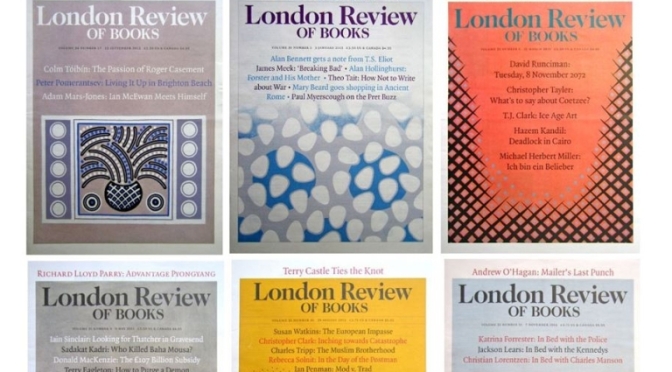
LONDON REVIEW OF BOOKS – AUGUST 14, 2025 PREVIEW

LONDON REVIEW OF BOOKS: The latest issue features Tariffs Before Trump; Boccaccio’s Dirty Book and Constance Marten’s Defiance

Exile Economics: If Globalisation Fails by Ben Chu

No Trade Is Free: Changing Course, Taking on China and Helping America’s Workers by Robert Lighthizer

White Light: The Elemental Role of Phosphorus – in Our Cells, in Our Food and in Our World by Jack Lohmann

Boccaccio: A Biography by Marco Santagata, translated by Emlyn Eisenach

Boccaccio Defends Literature by Brenda Deen Schildgen

Passion Unleashed Or Reason Restrained: The Tale Of Two Theaters

By Michael Cummins, Editor, August 6, 2025

The theatrical landscapes of England and France, while both flourishing in the early modern period, developed along distinct trajectories, reflecting their unique cultural, philosophical, and political climates. The English Renaissance stage, exemplified by the towering figures of Christopher Marlowe and William Shakespeare, embraced a sprawling, often chaotic, exploration of human experience, driven by individual ambition and psychological depth. In contrast, the French Neoclassical theatre, championed by masters like Molière and Jean Racine, championed order, reason, and a more focused examination of societal manners and tragic passions within a stricter dramatic framework.

This essay will compare and contrast these two powerful traditions by examining how Marlowe and Shakespeare’s expansive and character-driven dramas differ from Molière’s incisive social comedies and Racine’s intense psychological tragedies. Through this comparison, we can illuminate the divergent artistic philosophies and societal preoccupations that shaped the dramatic arts in these two influential European nations.

English Renaissance Drama: The Expansive Human Spirit and Societal Flux

The English Renaissance theatre was characterized by its boundless energy, its disregard for classical unities, and its profound interest in the multifaceted human psyche. Playwrights like Christopher Marlowe and William Shakespeare captured the era’s spirit of exploration and individualism, often placing ambitious, flawed, and deeply introspective characters at the heart of their narratives. These plays, performed in bustling public theaters, offered a mirror to an English society grappling with rapid change, shifting hierarchies, and the exhilarating—and terrifying—potential of the individual.

Christopher Marlowe (1564–1593), a contemporary and rival of Shakespeare, pioneered the use of blank verse and brought a new intensity to the English stage. His plays often feature protagonists driven by overwhelming, almost superhuman, desires—for power, knowledge, or wealth—who challenge societal and divine limits. In Tamburlaine the Great, the Scythian shepherd rises to conquer empires through sheer force of will, embodying a ruthless individualism that defied traditional hierarchies. Marlowe’s characters are often defined by their singular, often transgressive, ambition.

“I hold the Fates bound fast in iron chains, / And with my hand turn Fortune’s wheel about.” — Christopher Marlowe, Tamburlaine the Great

Similarly, Doctor Faustus explores the dangerous pursuit of forbidden knowledge, with its protagonist selling his soul for intellectual mastery and worldly pleasure. Marlowe’s drama is characterized by its grand scale, its focus on the exceptional individual, and its willingness to delve into morally ambiguous territory, reflecting a society grappling with new ideas about human potential and the limits of authority. His plays were often spectacles of ambition and downfall, designed to provoke and awe, suggesting an English fascination with the raw, unbridled power of the individual, even when it leads to destruction. They spoke to a society where social mobility, though limited, was a potent fantasy, and where traditional religious and political certainties were increasingly open to radical questioning.

William Shakespeare (1564–1616) built upon Marlowe’s innovations, expanding the scope of English drama to encompass an unparalleled range of human experience. While his historical plays and comedies are diverse, his tragedies, in particular, showcase a profound psychological realism. Characters like Hamlet, Othello, and King Lear are not merely driven by singular ambitions but are complex individuals wrestling with internal conflicts, moral dilemmas, and the unpredictable nature of fate. Shakespeare’s plays often embrace multiple plots, shifts in tone, and a blend of prose and verse, reflecting the messy, unconstrained reality of life.

“All the world’s a stage, / And all the men and women merely players; / They have their exits and their entrances; / And one man in his time plays many parts…” — William Shakespeare, As You Like It

Hamlet’s introspection and indecision, Lear’s descent into madness, and Othello’s tragic jealousy reveal a deep fascination with the inner workings of the human mind and the devastating consequences of human fallibility. Unlike the French emphasis on decorum, Shakespeare’s stage could accommodate violence, madness, and the full spectrum of human emotion, often without strict adherence to classical unities of time, place, or action. This freedom allowed for a rich, multifaceted exploration of the human condition, making his plays enduring studies of the soul. These plays vividly portray an English society grappling with the breakdown of traditional order, the anxieties of political succession, and the moral ambiguities of power. They suggest a national character more comfortable with contradiction and chaos, finding truth in the raw, unfiltered experience of human suffering and triumph rather than in neat, rational resolutions.

French Neoclassical Drama: Order, Reason, and Social Control

The French Neoclassical theatre, emerging in the 17th century, was a reaction against the perceived excesses of earlier drama, favoring instead a strict adherence to classical rules derived from Aristotle and Horace. Emphasizing reason, decorum, and moral instruction, playwrights like Molière and Jean Racine crafted works that were elegant, concentrated, and deeply analytical of human behavior within a structured society. These plays offered a reflection of French society under the centralized power of the monarchy, particularly the court of Louis XIV, where order, hierarchy, and the maintenance of social appearances were paramount.

Molière (Jean-Baptiste Poquelin, 1622–1673), the master of French comedy, used wit and satire to expose the follies, hypocrisies, and social pretensions of his contemporary Parisian society. His plays, such as Tartuffe, The Misanthrope, and The Miser, feature characters consumed by a single dominant passion or vice (e.g., religious hypocrisy, misanthropy, avarice). Molière’s genius lay in his ability to create universal types, using laughter to critique societal norms and encourage moral rectitude. His comedies often end with the restoration of social order and the triumph of common sense over absurdity.

“To live without loving is not really to live.” — Molière, The Misanthrope

Unlike the English focus on individual transformation, Molière’s characters often remain stubbornly fixed in their vices, serving as satirical mirrors for the audience. The plots are tightly constructed, adhering to the classical unities, and the language is precise, elegant, and witty, reflecting the French emphasis on clarity and rational thought. His plays were designed not just to entertain, but to instruct and reform, making them crucial vehicles for social commentary. Molière’s comedies reveal a French society deeply concerned with social decorum, the perils of pretense, and the importance of maintaining a rational, harmonious social fabric. They highlight the anxieties of social climbing and the rigid expectations placed upon individuals within a highly stratified and centralized court culture.

Jean Racine (1639–1699), the preeminent tragedian of the French Neoclassical period, explored the destructive power of human passions within a highly constrained and formal dramatic structure. His tragedies, including Phèdre, Andromaque, and Britannicus, focus intensely on a single, overwhelming emotion—often forbidden love, jealousy, or ambition—that inexorably leads to the protagonist’s downfall. Racine’s plays are characterized by their psychological intensity, their elegant and precise Alexandrine verse, and their strict adherence to the three unities (time, place, and action).

“There is no greater torment than to be consumed by a secret.” — Jean Racine, Phèdre

Unlike Shakespeare’s expansive historical sweep, Racine’s tragedies unfold in a single location over a short period, concentrating the emotional and moral conflict. His characters are often members of the aristocracy or historical figures, whose internal struggles are presented with a stark, almost clinical, precision. The tragic outcome is often a result of an internal moral failing or an uncontrollable passion, rather than external forces or a complex web of events. Racine’s work reflects a society that valued order, reason, and a clear understanding of human nature, even when depicting its most destructive aspects. Racine’s tragedies speak to a French society that, despite its pursuit of order, recognized the terrifying, almost inevitable, power of human passion to disrupt that order. They explore the moral and psychological consequences of defying strict social and religious codes, often within the confines of aristocratic life, where reputation and controlled emotion were paramount.

Divergent Stages, Shared Human Concerns: A Compelling Contrast

The comparison of these two dramatic traditions reveals fundamental differences in their artistic philosophies and their reflections of national character. English Renaissance drama, as seen in Marlowe and Shakespeare, was expansive, embracing complexity, psychological depth, and a vibrant, often chaotic, theatricality. It reveled in the individual’s boundless potential and tragic flaws, often breaking classical rules to achieve greater emotional impact and narrative freedom. The English stage was a mirror to a society undergoing rapid change, where human ambition and internal conflict were paramount, and where the individual’s journey, however tumultuous, was often the central focus.

French Neoclassical drama, in contrast, prioritized order, reason, and decorum. Molière’s comedies satirized social behaviors to uphold moral norms, while Racine’s tragedies meticulously dissected destructive passions within a tightly controlled framework. Their adherence to classical unities and their emphasis on elegant language reflected a desire for clarity, balance, and a more didactic approach to theatre. The French stage was a laboratory for examining universal human traits and societal structures, often through the lens of a single, dominant characteristic or emotion, emphasizing the importance of social harmony and rational control.

The most compelling statement arising from this comparison is that while English drama celebrated the unleashing of the individual, often leading to magnificent chaos, French drama sought to contain and analyze the individual within the strictures of reason and social order. The English stage, with its public accessibility and fewer formal constraints, became a crucible for exploring the raw, unvarnished human condition, reflecting a society more comfortable with its own contradictions and less centralized in its cultural authority. The French stage, often patronized by the monarchy and adhering to strict classical principles, became a refined instrument for social critique and the dissection of universal passions, reflecting a society that valued intellectual control, social hierarchy, and the triumph of reason over disruptive emotion.

Despite these significant stylistic and philosophical divergences, both traditions ultimately grappled with universal human concerns: ambition, love, betrayal, morality, and the search for meaning. Whether through the grand, sprawling narratives of Shakespeare and Marlowe, or the concentrated, analytical dramas of Molière and Racine, the theatre in both nations served as a vital arena for exploring the human condition, shaping national identities, and laying groundwork for future intellectual movements. The “stages of the soul” in the Renaissance and Neoclassical periods, though built on different principles, each offered profound insights into the timeless complexities of human nature.

THIS ESSAY WAS WRITTEN AND EDITED UTILIZING AI

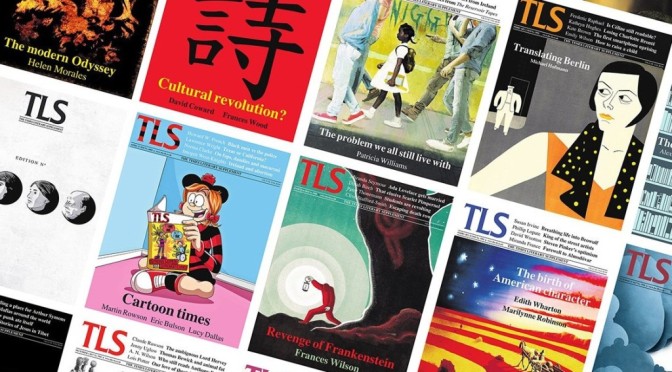
TIMES LITERARY SUPPLEMENT – AUGUST 8, 2025 PREVIEW

TIMES LITERARY SUPPLEMENT: The latest issue features ‘Tech Bro Utopia’ – Why Bacon’s New Atlantis is Peter Thiel’s favorite book; The monarch who built Britain; Charles and the carbuncles; The miseries of Victor Hugo’s daughter…

THE NEW YORKER MAGAZINE – AUGUST 11, 2025 PREVIEW

The illustrated cover of the August 11 2025 issue of The New Yorker in which a trans woman poses as the Statue of Liberty.

THE NEW YORKER MAGAZINE: The latest cover features ‘Amy Sherald’s “Trans Forming Liberty” – The art and politics of representation.

The Politics of Fear

As a Presidential candidate, Donald Trump made his world view plain: there was “us” and there was “them.” Once he was in the White House, the fear factor would prevail. By David Remnick

The Pain of Perfectionism

It’s the fault people humblebrag about in job interviews. but psychologists are discovering more and more about the real harm it causes. By Leslie Jamison

The Engines and Empires of New York City Gambling

As plans are laid for a new casino, one can trace, through four figures, a history of rivalry and excess, rife with collisions of character and crime. By Adam Gopnik

LITERARY REVIEW – AUGUST 2025 NEW BOOKS PREVIEW

LITERARY REVIEW (August 2, 2025): The latest issue features ‘Mark Twain’s American Odyssey’…

The Bard & the Builders: The Dream Factory: London’s First Playhouse and the Making of William Shakespeare By Daniel Swift

Hannibal’s Lament: Carthage: A New History of an Ancient Empire By Eve MacDonald

Colosseum Confidential: Those Who Are About to Die: Gladiators and the Roman Mind By Harry Sidebottom

TIMES LITERARY SUPPLEMENT – AUGUST 1, 2025 PREVIEW

TIMES LITERARY SUPPLEMENT: The latest issue features Daniel Karlin about his twelve-month abstinence from the printed word. As one of his friends remarked, he must have been the first person to make a New Year’s resolution to read less.

Life beyond literature

A year without reading By Daniel Karlin

What lies ahead for fiction?

AI, literary theory and traditional storytelling By Benjamin Markovits

Maggots as meat

The ethics of industrial insect farming By Simone Gubler

A right to choose

Efforts to prohibit abortion down the ages By Elizabeth Abbott