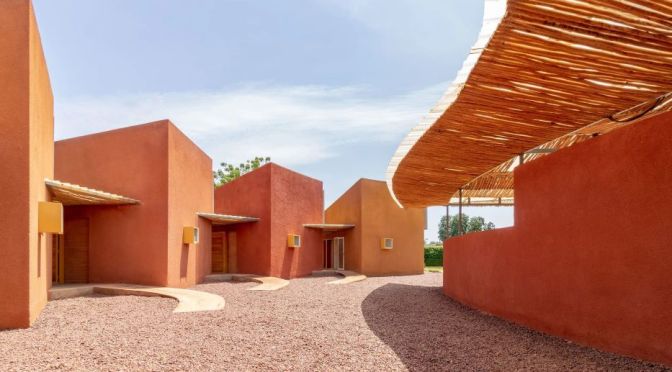
"In a world where architects are building projects in the most diverse contexts -not without controversies- Kéré contributes to the debate by incorporating local, national, regional and global dimensions in a very personal balance…and truly sophisticated multiculturalism." pic.twitter.com/oeZIdEgYae
British bicycle manufacturer Brompton has unveiled plans to build a carbon-neutral headquarters and factory building designed by architects Hollaway Studio in Ashford, Kent. Envisioned by Brompton as a factory of the future, the facility will sit within an unused wetlands area that will be rewilded to become a nature reserve as part of the plans.
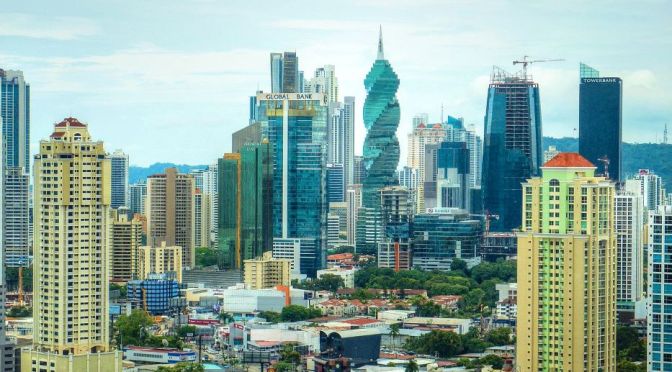
Panama City, the capital of Panama, is a modern city framed by the Pacific Ocean and man-made Panama Canal. Casco Viejo, its cobblestoned historic center, is famed for colonial-era landmarks like the neoclassical Palacio Presidencial and bougainvillea-filled plazas lined with cafes and bars. The Miraflores Locks offers views of ships traversing the canal, an essential shipping route linking the Atlantic and Pacific.
“You look at the thinking behind the creation of the building, but then also at the material needs. And you merge the two to really build an in-depth understanding of the building, and a path forward to preserving it.”
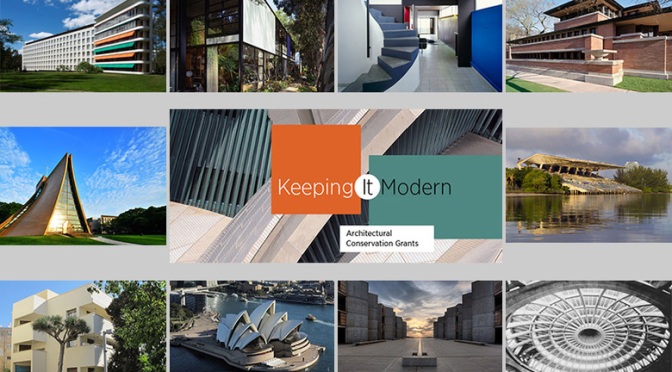
From the sculptural curves of the Sydney Opera House to the sliding walls and windows of the Eames House, the hallmarks of modern buildings make them easy to spot. Modernist architecture—with its signature use of industrial materials and innovative, sleek designs—emerged in the early 1900s and dominated the post–World War II building boom. Unfortunately, many of the iconic buildings from this period are now in serious need of repair but lack clear conservation plans due to the use of untested building methods and materials. How do you fix concrete that’s been damaged by ocean water, or remove graffiti to preserve stainless steel? In response to such dilemmas, the Getty Foundation created the Keeping It Modern initiative, an international grant program focused on the conservation of significant 20th-century architecture. Launched in 2014, Keeping It Modern has to date supported a total of 77 projects in 40 countries.
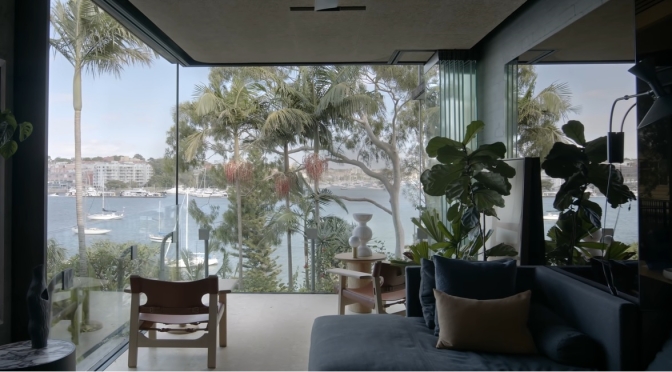
As an architect’s own home, SRG House by Studio Johnston balances its heritage context with contemporary design aesthetics. Facing the nearby water, the family home retains natural qualities through a strong connection to the surrounding bushland. Despite its inner-city location, the structure has an almost tree house-like quality to it, relating to its waterfront position in subtle and interesting ways.
The original building was dilapidated and had a number of unsympathetic alterations. Being an architect’s own home and after being stripped back, SRG House was reimagined to capture an element of discovery, seen through the materials used and maintained. The house stands as three storeys with an entrance at its middle level. To the left sits the kitchen, and adjacent to this is the dining area with inbuilt furniture.
The house tour then follows the floor plan out to the living space that looks out towards the water. In the original structure, the downstairs space was underutilised and was transformed to become bedrooms and a lounge room overlooking the pool.
Video Timeline: 00:00 – Introduction to the Architect’s Own Home 00:40 – Heritage and History of the Tree House 01:27 – House Design of the Architect’s Own Home 02:10 – Reimagining and Utilising Materials 03:40 – The Aspect of the Tree House 04:23 – The Architect’s Favourite Part of the Home 04:58 – Materials, Products and Furniture Round-Up
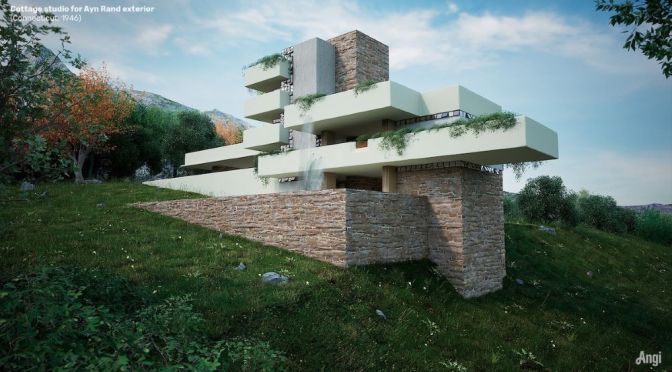
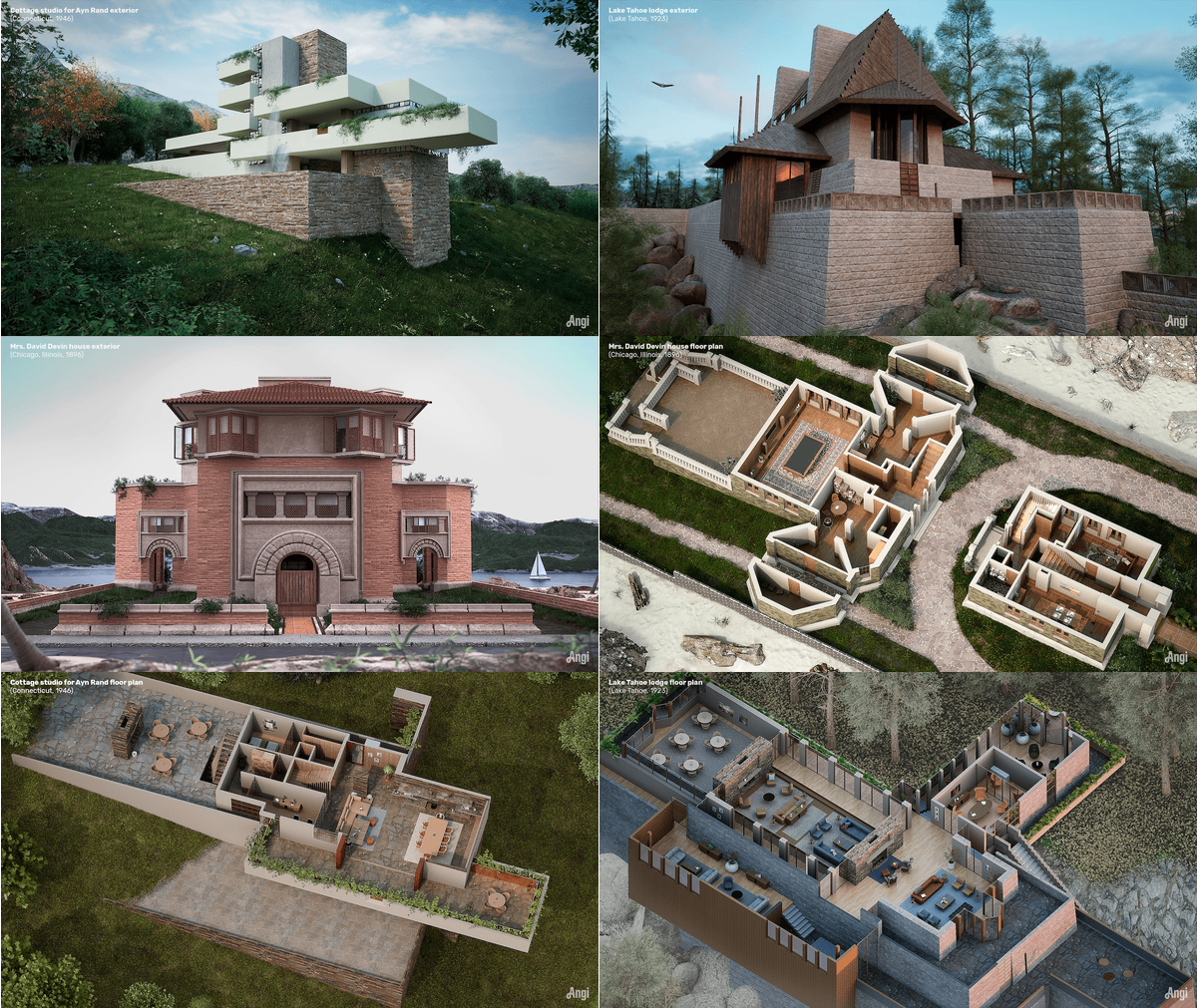
Frank Lloyd Wright is one of the most famous architects to ever live. He is known for the first American style of architecture called the Prairie style, the architectural masterpiece Falling Water, the Solomon R. Guggenheim Museum, and more. But despite his fame and the many followers he trained during his lifetime, more than half of his projects were never built. Out of 1,171 concepts, only 660 made it past the design phase. Angi and NeoMam Studios have selected three of these paper projects to bring to life.
“Wright’s plans are things of beauty, but it’s difficult to imagine what his unrealized sketches might have looked like in real life,’ says Angi. The new work helps make those sketches accessible to those not able to easily read or understand architectural drawings. The designers created a series of six images that feature one plan rendering and one perspective rendering of each project. The set describes not only what the buildings would have looked like, but also how they were organized.
Chinese architecture studio MAD has released visuals of The Eyes of Sanxingdui, a scatter of wooden buildings it has designed for the Sanxingdui Museum in Guanghan City, China. The Eyes of Sanxingdui will contain new exhibition spaces and a visitor centre for the museum, which is known fully as the Sanxingdui Ancient Shu Cultural Heritage Museum. See more on Dezeen: https://www.dezeen.com/?p=176991
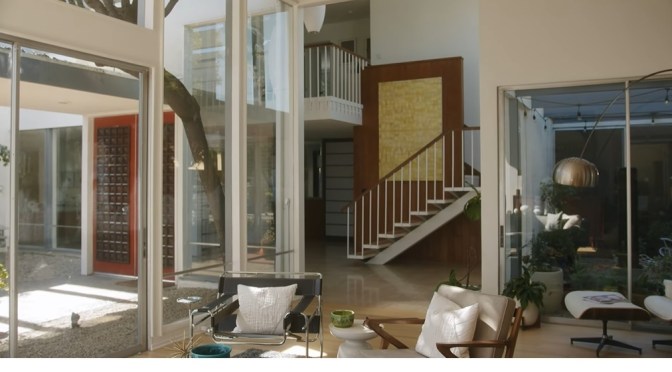
The Linnell Residence by Charles Wong, 1965. Ladera Heights is home to some unique modernists homes in Los Angeles and this Charles Wong home is no exception. Charles Wong immigrated from China in the 1930’s and graduated from USC’s School of Architecture in 1951 and was one of a handful of Asian American Modernist Architects that contributed to the Modernists landscape of the 60’s.
The owners Adrian and Jason (One who works with the Los Angeles Conservancy) lovingly restored the home for 7 months once moved in after their long 5 month escrow. The story on how they discovered the full set of plans for the home is something to be heard alongside what their vision was for the home when they purchased it. The home couldn’t have fallen into better hands as Adrian and Jason are the best examples of who should end up in these homes, someone who is going to Preserve, Restore and maintain the rich history that we have here in Los Angeles and it’s Architecture.
Concrete, curtain creepers and light wells define this beautiful villa that is designed to house three generations.
We were set to design a house for a three-generation family with different lifestyles between the family members. While the grandparents are used to the traditional Vietnamese lifestyle, the married couple and their children are familiar with the modern way of living in foreign countries. The elders in this family have been living in this area for a long time and have a strong connection with the neighbors and interact with their acquaintances daily while their children and grandchildren only travel to Vietnam a few times per year so big spaces to accommodate a large family gathering as well as multiple social events is a must.






 Boomers Daily