Category Archives: Archaeology

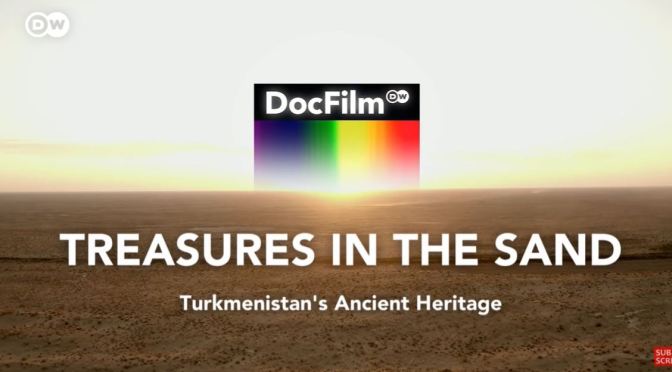
History: ‘Turkmenistan – Cultural Treasures’

To outsiders, Turkmenistan is one of the world’s least known countries. For the first time in ten years, a film crew has been free to visit spectacular excavation sites and follow international researchers into areas that have long been off-limits. Once considered the poorest part of the Soviet Union, oil and natural gas have brought new wealth to Turkmenistan today.

A little known fact in the West is that 4,000 years ago, the country was home to one of the ancient world’s centers of power. Although it flourished around the same time as the advanced civilizations of Mesopotamia and Egypt, the Margiana empire was later largely forgotten. But recently, archaeologists have discovered palace buildings and magnificent burial treasures at the site of the capital, Gonur Depe, in the Karakum Desert. Incredible aerial photography shows the dimensions of the lost metropolis. An international team of researchers also unearthed monumental fortifications in neighboring Ulug Depe.

The ruined cities of Merv and Kunya-Urgench have been declared UNESCO World Heritage Sites. Suddenly, historians and the media are paying much more attention to Central Asia. Why has Turkmenistan seen powerful empires rise and fall since the Bronze Age? DNA analysis shows a highly mobile population, whose contacts reached as far as India, the Urals and the Mediterranean Sea. The Silk Road between China and Europe was the world’s most important trade route for thousands of years, lending Turkmenistan great historical significance. Since the fall of the Soviet Union, the country has been slowly opening up to international researchers, and its astounding cultural heritage is coming to light.
Ancient Walks: ‘Masada – Judean Desert, Israel’

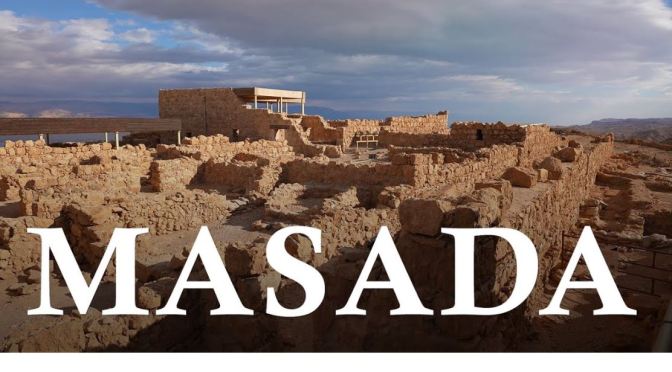
Masada is an ancient fortress in southern Israel’s Judean Desert near the Dead Sea. It’s on a massive plateau overlooking the Dead Sea. A cable car and a long, winding path climb up to the fortifications, built around 30 B.C. Among the ruins are King Herod’s Palace, which sprawls over 3 rock terraces, and a Roman-style bathhouse with mosaic floors. The Masada Museum has archaeological exhibits and recreations of historical scenes.

Archaeology: Chedworth Roman Villa In England

Join us on a behind-the-scenes tour of the National Trust Chedworth Roman Villa in Gloucestershire and discover Britain’s first known 5th-century mosaic. Although the site in the Cotswolds is currently closed for visitors, you can still uncover the fascinating story behind this mosaic and meet one of the archaeologists involved in its excavation.

Archaeology is just one of the ways we can bring to life the stories of our places. We protect and care for places so people and nature can thrive. Everyone can get involved, everyone can make a difference. Nature, beauty, history. For everyone, for ever.

English History: Roman Ruins In Northumberland

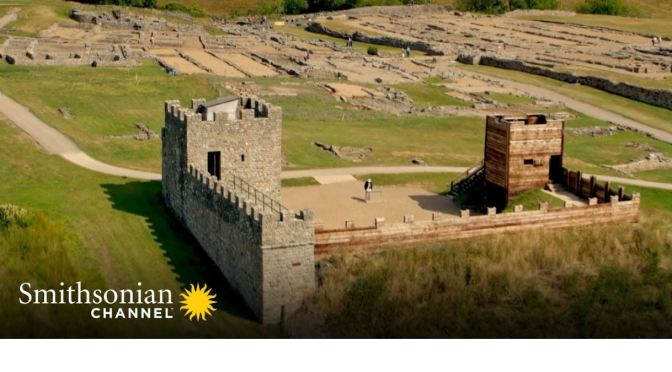
Northumberland is one of Britain’s most historic regions, an archaeological treasure trove of impressive buildings that date back to the Roman conquest: From Hadrian’s Wall to the Vindolanda Fort.

From Aerial Britain: https://bit.ly/38DQJao

Archaeology: ‘Legends Of Atlantis’ (NatGeo Video)

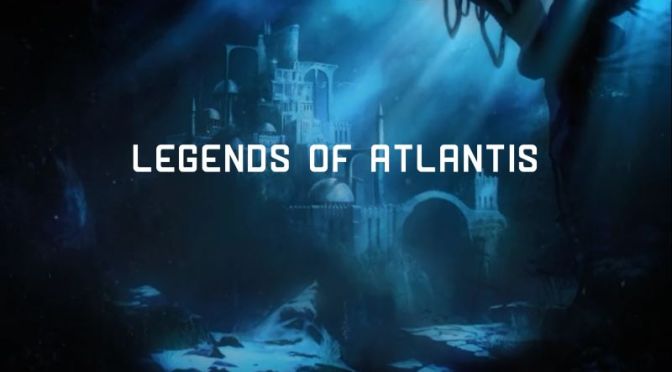
Exciting evidence emerges of civilizations lost for centuries under the waves, from mysterious underwater pyramids off the coast of Japan to the fabled city of Atlantis itself. Using cutting-edge graphics to reveal what’s actually lying on the seafloor, and insight from the world’s top marine archaeologists, Drain the Oceans finds the answers.

Roman History: ‘Street Food Shop’ Discovered In Pompeii Excavation (Video)

A street food eatery discovered at Pompeii has now been completely excavated, helping to reveal some of the favourite dishes of the citizens of the ancient Roman city. The shop is known as a “thermopolium” since it served hot food. A segment of the fast-food building’s counters was discovered in 2019 during work to shore up Pompeii’s often-crumbling ruins. The counter was decorated with paintings of animals, which might provide clues of the ingredients those meals contained. On top of the counter there were holes, where warm food was stored to be served.

Egyptian History: ‘Secrets Of The Sphinx Of Giza’

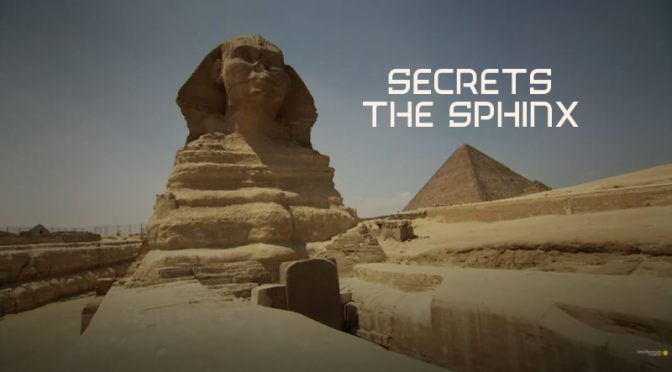
Join Egyptian historians and archeological experts on a mission to decode the mysteries of Egypt’s Great Sphinx. Season 1 Episode 2 “Secrets” from the series: Secrets https://bit.ly/31xTgju

The Great Sphinx of Giza, commonly referred to as the Sphinx of Giza or just the Sphinx, is a limestone statue of a reclining sphinx, a mythical creature. Facing directly from West to East, it stands on the Giza Plateau on the west bank of the Nile in Giza, Egypt. The face of the Sphinx is generally believed to represent the pharaoh Khafra.

Travel & Archaeology: ‘Skara Brae’ Stone Age Settlement In The Orkney Islands, Scotland (Video)

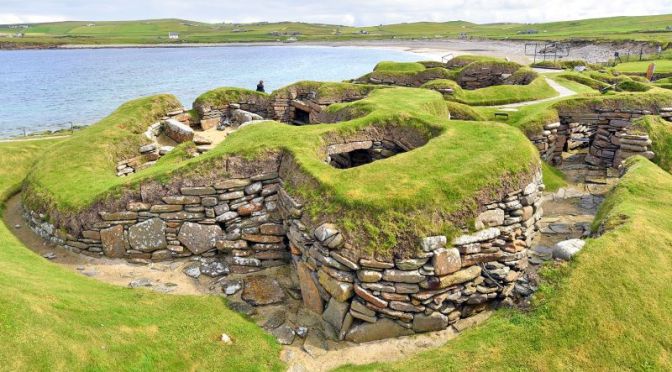
The Orkneys, an archipelago of islands off the northern coast of Scotland, are home to some of the greatest neolithic treasures in western Europe: from the settlement of Skara Brae to the Ness of Brodgar.

Skara Brae is a stone-built Neolithic settlement, located on the Bay of Skaill on the west coast of Mainland, the largest island in the Orkney archipelago of Scotland. Consisting of eight clustered houses, it was occupied from roughly 3180 BC to about 2500 BC and is Europe’s most complete Neolithic village.