

Rising costs for everyday foods like bacon and fruit have raised concerns about inflation. Here’s why you may be paying more for breakfast, and what that says about where prices might be heading in the future. Photo: Carter McCall/WSJ
Category Archives: Analysis

Infrastructure: Highways In U.S. Being Removed (WSJ)
President Biden’s infrastructure plan calls for non-traditional projects like the removal of some highways. What Democrats want for cities like Baltimore says a lot about the President’s goals in the next wave of development. Photo: Carlos Waters/WSJ More from the Wall Street Journal: Visit WSJ.com:

Analysis: The Logistics & Challenges Of Flying Cars
As electric vehicle technology takes off—literally—how will the logistics of air traffic work out? Join American broadcaster Miles O’Brien and NOVA to watch how NASA researchers are writing the rules that will make air travel via electric vehicles safe. Tune in to “Great Electric Airplane Race” on Wednesday, May 26 at 9/8c or stream it on the PBS Video app or online now: https://to.pbs.org/3vNPEGF

Political Analysis: Amy Walter & Errin Haines On Texas Voting, Fillibusters
Amy Walter of the Cook Political Report and Errin Haines of of The 19th join Amna Nawaz to discuss the latest political news, including the GOP efforts to change election rules in Texas, filibuster rules in the Senate, and how President Joe Biden’s agenda is faring in a divided Congress as the country re-opens.
Analysis: Can EV Battery Swapping Gain In The U.S.?
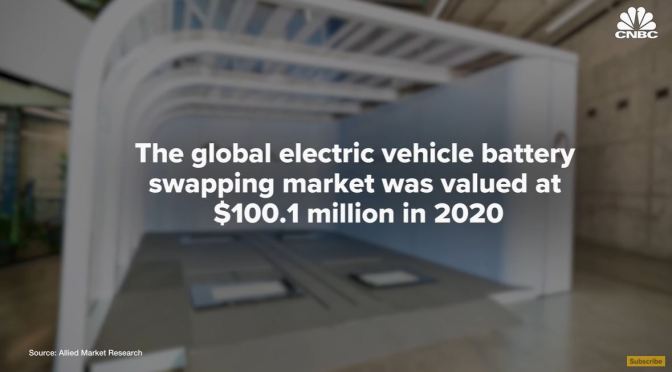
San Francisco-based Ample has brought electric vehicle battery swapping to the U.S. The company was in stealth mode for seven years before launching recently with five swapping stations in the Bay Area. Uber drivers in the area are Ample’s first customers.
The concept isn’t new. A start-up called Better Place launched an EV and battery swapping company after it raised $850 million in venture funding, but it ultimately went bankrupt in 2013. Tesla also demoed battery swapping in 2013 but only opened one station for about a year. Elon Musk said Tesla owners were not interested in it.
Battery swapping is already common in China. Electric vehicle maker Nio, for example, plans to double its network of swapping stations to 500 this year and plans to open stations in Norway as part of its expansion into Europe. Ample has a different approach, with modular batteries and a focus on fleets. CNBC got an inside look at its headquarters and battery factory in San Francisco to learn how the company plans to bring battery swapping into the mainstream.

Political Analysis: Brooks & Capehart On Failure Of Capitol Riot Commission
New York Times columnist David Brooks and Washington Post columnist Jonathan Capehart join Judy Woodruff to discuss the week in politics, including QAnon conspiracy theories and the relation to Congress’ failure to establish a Jan. 6 commission, President Joe Biden’s budget plan and its influence on deficit and economic inflation, and how far America has come since George Floyd’s killing.
Finance: The $1 Trillion Market For ‘Green Bonds’
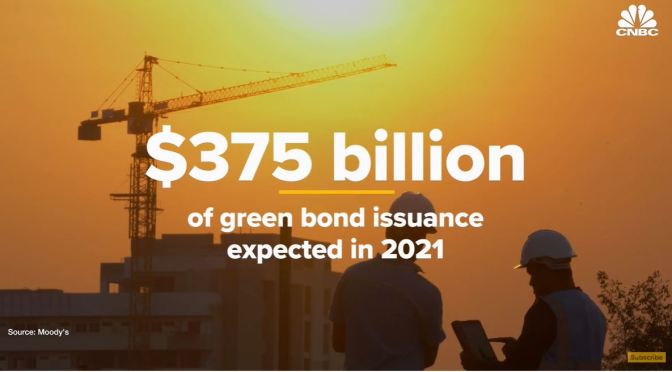
So-called green bonds have become more popular in recent years, and this fast-growing segment of the $128.3 trillion global bond market could grow even more. When an issuer sells a green bond, they’re making a nonbinding commitment to earmark the sale’s proceeds for environmentally friendly projects. That could include renewable energy projects, constructing energy efficient buildings or making investments in clean water or transportation. Green bonds fall under the wider umbrella of sustainable bonds, which include fixed-income instruments whose proceeds are set aside for social or sustainability projects. Big household names such as Apple and PepsiCo are diving into this space. A handful of massive banks and governments around the world are also issuing sustainable bonds, including China, Russia and the European Union. This may be contributing to the space’s rapid growth. A report from Moody’s said new sustainable bond issuance may top $650 billion in 2021. That would represent a 32% jump from 2020.

Post Covid-19: How Our Brains Will Weigh Risks
Indoor dining, workout classes, concerts. These once commonplace events are coming back into daily life. But because of Covid-19, everyone now has a different level of comfort. What happens in the brain as we decide what’s risky or not? Photo illustration: Laura Kammermann

Remote Work: How It Is Changing Cities & Offices
From commuting to office time, automation to virtual reality – here’s how we’ll be working in 2030

Analysis: Why U.S. Houses Are So Expensive (CNBC)
With Covid encouraging city-dwellers to emigrate to the suburbs and families looking for home offices and bigger yards, prices for the American dream home have skyrocketed. Home prices surged in March 2021 up 13% from the year prior, according to the S&P Case-Shiller index. With homeowners unwilling to sell, a record-low supply of homes for sale has forced buyers into intense bidding wars. At the end of April 2021 there were only 1.16 million houses for sale in the U.S. down more than 20.5% from the year prior. Higher costs for land, labor and building materials including lumber have also impacted homebuilders. With the 30-year fixed mortgage rate hovering near a 50-year low and strong demand pushing prices to all-time highs, why is the housing supply so meager? Watch the video to find out if the U.S. is running out of houses.
 Boomers Daily