
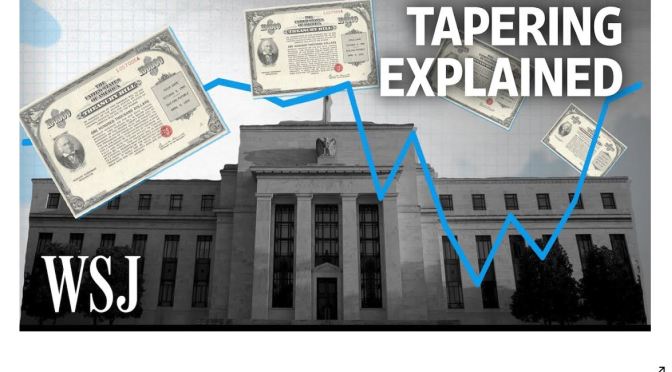
The Federal Reserve says it will accelerate the wind-down of its bond-buying program, the biggest step the central bank has taken in reversing its pandemic-era stimulus. Here’s how tapering works, and why it sends markets on edge. Photo illustration: Adele Morgan/WSJ
Category Archives: Analysis

Education: Can Science Help Poor Kids Earn More?
The wide gap in development between rich and poor children could be closed with the help of neuroscience. Might a controversial focus on genetics also help? Film supported by @Mishcon de Reya LLP
Video timeline: 00:00– The achievement gap between rich and poor kids 00:55 – Words matter in childhood development 03:16 – Conversation can combat childhood inequality 05:09 – Can genetics help close the achievement gap? 07:30 – Genetics can be controversial
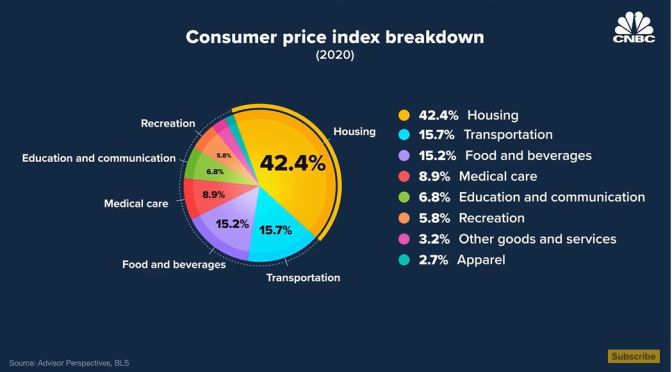
Housing: Why Rents Are Rising In The U.S. (CNBC)
Fresh numbers from the fall of 2021 suggest that rents will increase at a rapid pace in the coming years. That’s a problem for Americans; many spend 30% or more of their income on rent. A decade-long slowdown in house building is coming to a close, which could help renters.
But the new developments in construction are generally for high-end and luxury apartment units. Experts say the market conditions are pushing people further away from their jobs and weighing on the economy writ large. Market indicators suggest that rent hikes are coming in 2022.
Average rents for a one-bedroom apartment in the booming suburbs of Phoenix, Arizona, have more than doubled year over year, according to data from Apartment Guide. Meanwhile, rents in Manhattan have reached fresh records as life returns to the cities, according to Zumper.
The problems aren’t confined to the usual suspects, however. Rents for single-family homes across the country jumped more than 9% on average in August 2021 from the prior year, according to a report from the analytics firm CoreLogic.
Rents are moving fastest in the buzzy enclaves across the South and West. For Maria Arredondo, a teacher based in Austin, Texas, a sudden rent hike of nearly $400 forced her to make a move. “If I had signed the lease … it would be taking a lot of my savings. And so I decided to move to a new building, losing about 150 square feet,” she told CNBC. Mark Zandi of Moody’s Analytics said the strains on the housing construction market were building well before the pandemic took hold in the states.
“There’s a lot of evidence that the lack of housing closer to where the demand is and urban cores is having a meaningful negative consequence on long-term economic growth.“ Generous monetary and fiscal policies have juiced demand for goods and services coming out of the pandemic. All that extra money sloshing around the economy is bubbling up into the rent. The fresh demand is giving investors a reason to jump into the market.
Experts say that’s boosting desperately needed supply. But there’s a catch: The homes being built are priced into the high end of the market. As a result, the evidence suggests that renters will be paying more for shelter this decade.
Politics: What America Will Fight For, British PM Grounded, China Olympics
A selection of three essential articles read aloud from the latest issue of The Economist. This week: what would America fight for? Also, why two years after a famous election victory, Boris Johnson’s would-be radical administration has run into the ground (09:20). And we explore how Beijing’s Winter Olympics may hasten China’s break with the West (17:10).

Analysis: How Cadillac And Lincoln Lost Their American Luxury Status
Lincoln and Cadillac were once two aspirational car brands for American consumers. They slowly lost their dominance and prestige to imports. Now they are trying once again to reinvent themselves by reaching into their histories, playing to their strengths, and pushing forward with cutting edge technology.

The Economist: Top Issues & Stories For 2022 (Video)
What will some of 2022’s top themes and stories be? Tom Standage, editor of The Economist’s future-gazing annual, “The World Ahead 2022”, gives his prediction.
Video timeline: 00:00 What to expect in 2022 00:35 Pandemic to endemic 01:35 Inequality in hybrid working 02:34 Taming cryptocurrencies 03:43 The race to dominate space 04:34 The need for corporate climate solutions
Read our latest coverage on The World Ahead: https://econ.st/3HtLmuQ

Views: Hong Kong Builds Housing For 2.5 Million
Hong Kong will develop a new metropolis in its northern part to accommodate 2.5 million people and better integrate itself into the overall development of the country, according to the annual policy address delivered Wednesday by Chief Executive of China’s Hong Kong Special Administrative Region Carrie Lam.
Hong Kong, officially the Hong Kong Special Administrative Region of the People’s Republic of China, is a city and special administrative region of China on the eastern Pearl River Delta in South China.
Analysis: Omicron & The Economy, Stablecoins & Russia’s Gulag Legacy
A selection of three essential articles read aloud from the latest issue of The Economist. This week: what the Omicron variant means for the world economy, what experiments with “free banking” in the 18th and 19th centuries reveal about the future of stablecoins (10:53) and how the legacy of Stalin’s gulag continues to shape Russian fortunes (18:16).
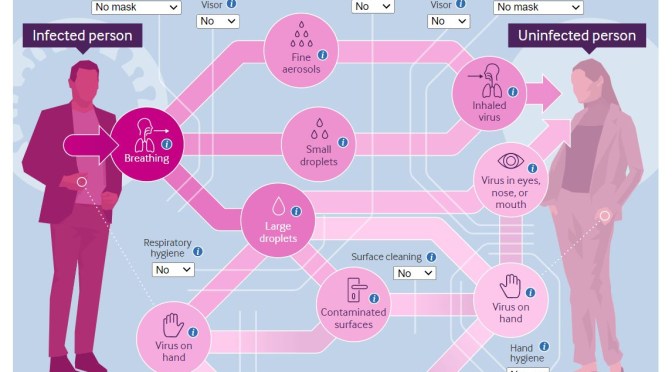
Covid-19: The Best Ways To Avoid Virus Transmission

Analysis: Rise Of Sports Betting In The U.S. (CNBC)
Sports betting in the U.S. is booming. During the 2021 NFL season an estimated 45 million Americans are expected to wager at least $12 billion. Since a 2018 Supreme Court ruling, sports betting is now legal in more than 30 states.
A flood of new customers eager for risk and excitement has made DraftKings one of the nation’s biggest sportsbooks. In the third quarter of 2021 DraftKings revenue rose 60% from the year prior to $213 million. During that same period with mobile betting launching in several states the number of its monthly unique paying customers rose 31% to 1.3 million.
And the online sports betting and gaming industry in the U.S. is just starting to grow. As of 2021 only 4% of gross gaming revenue in the U.S. was generated online compared with 45% in a more mature market like the UK. The online sports betting market in the U.S. is expected to be worth nearly $40 billion by 2033. So what does the future look like for legal sports betting in America and what challenges lie ahead for sports betting providers like BetMGM, FanDuel and DraftKings?
 Boomers Daily