The Globalist (March 25, 2024):The crisis in Haiti continues to spiral as political parties edge closer to forming a security council. Will a new government halt the Caribbean nation’s nosedive?
Also, fugitive separatist Carles Puigdemont plans to run in Catalan elections, the latest trade and economy news and a special interview with ambassador Mark Green.
The violent attack on Moscow’s outskirts on Friday was a scene of chaos and terror. “You’re just running to figure out where else to run,” one attendee said.
The Local Project (March 24, 2024) – Located in Mooloolaba on the Sunshine Coast, Carwoola Residence by Reitsma is a super house surrounded by white beaches and deep water access. Delivering a brief to Reitsma, who were in partnership with Clipsal, the clients listed their essential needs for their super house, which included maximum privacy as well as a place to celebrate their interests of boating and automobiles.
Video timeline:00:00 – Introduction To The Super House 00:25 – The Waterfront Location 00:36 – Client’s intention 00:53 – Walkthrough Of The Super House 01:47 – Electrical Design With Clipsal 02:16 – Designed For Comfort 02:53 – Exploring The Upper Level 03:41 – Features Of The Saturn Zen Range 04:18 – The Moon Circle 04:36 – A Car Enthusiast’s Basement 05:01 – Materials And Highlights Of The Project
As such, the super house has been built and designed with the intention to allow the owners to store multiple cars, entertain and have access to the rear canal system. The angled shroud of the facade adds a depth to the characteristics of the exterior design and architecture. Upon entry, the house tour leads under a concrete portal, which is used to compress the space before opening up into an expansive void that gives views up to the sky. From here, the oversized pivot front door blurs where the inside and outside of the super house meet. Further inside, the house tour reveals another full-height void that tapers to a frameless window that looks out onto the pool and Mooloolaba wharf.
The interior design brings the essence of water right to the front door and immediately ignites the desire to explore what lies beyond. The privacy walls running north and south of the home are used as a buffer to shield the neighbours’ views and give the owners utmost privacy. However, these walls end at the rear of the home where they then open up to the views of the Mooloolaba wharf. In the outdoor living area, the architect has created a cascading effect where the entertaining areas waterfall towards the wharf to create a beach-like element to the super house. This is also done to create more viewing opportunities from inside.
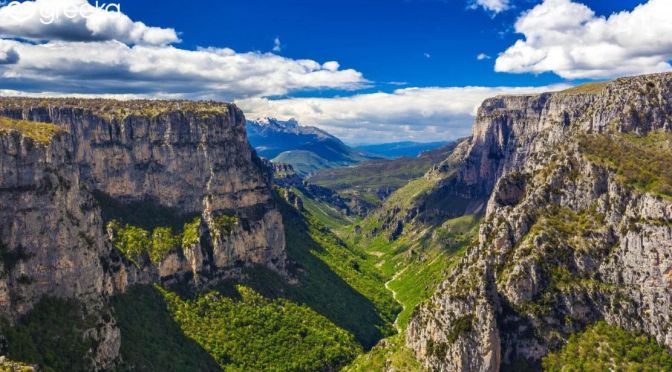
TRACKS – Travel Documentaries (March 23, 2024): From mountain ranges with snow dusted peaks and the clear blue sea, the beautiful country of Greece boasts 13,000 km of shoreline.
Today we look at the region of Epirus, starting in the wilderness near the Albanian border, we go through little mountain villages to the historically significant town of Ioannina and then then all the way down to the Ambracian Gulf. Learn about the lives of locals in the area, from shepherds, herb collectors, tavern owners, and the caretaker of a cliffside monastery.
Monocle on Sunday, March 24, 2024: Emma Nelson, Nina dos Santos and David Bodanis on the weekend’s biggest talking points.
We also speak to Monocle’s editorial France and North Africa correspondent, Mary Fitzgerald, and our Vienna correspondent, Alexei Korolyov, for the latest on the Slovakia elections.
As the Islamic State claimed responsibility, President Vladimir V. Putin vowed to “identify and punish” those responsible and tried to implicate Ukraine.
An investigation into the sugar-cane industry in the Indian state of Maharashtra found workers ensnared by debt and pushed into child marriages and unnecessary hysterectomies.
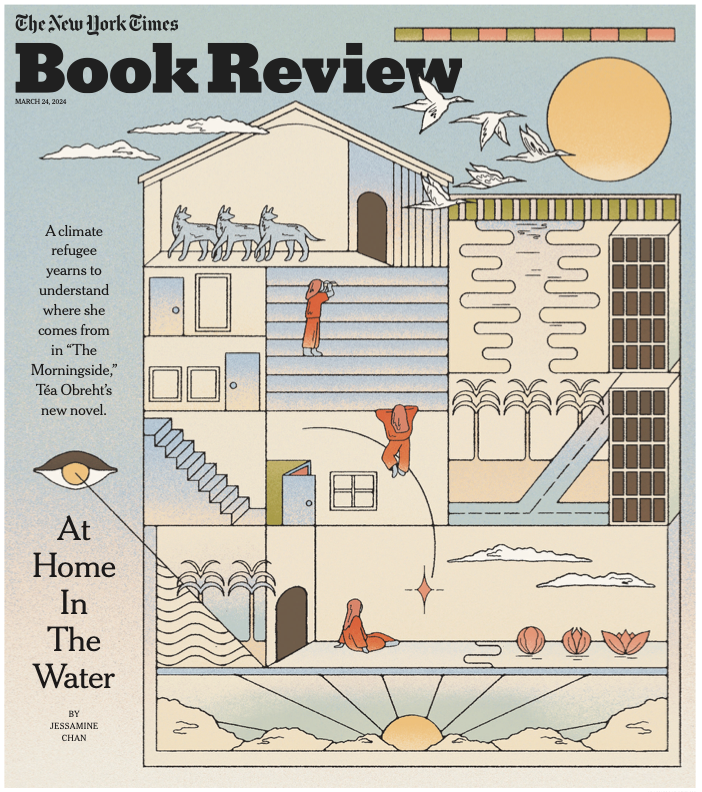
“The Morningside” reckons with climate change and its fallout while finding hope in the stories we preserve.
By Jessamine Chan
THE MORNINGSIDE, by Téa Obreht
The elegant, effortless world-building in Téa Obreht’s haunting new novel, “The Morningside,” begins with a map. Island City resembles Manhattan, but alarmingly smaller, the borders of the city redrawn by the rising water. There’s the River to the east, the Bay to the west. Here, hurricanes and tides have made building collapse a constant danger, the freeway is visible only on low-tide days, food is government rations, the wealthy have fled “upriver to scattered little freshwater townships,” and gigantic birds called rook cranes are everywhere.
CHASING BEAUTY: The Life of Isabella Stewart Gardner, by Natalie Dykstra
Bright, impetuous and obsessed with beautiful things, Isabella Stewart Gardner led a life out of a Gilded Age novel. Born into a wealthy New York family, she married into an even wealthier Boston one when she wed John Lowell Gardner in 1860, only to be ostracized by her adopted city’s more conservative denizens, who found her self-assurance and penchant for “jollification” a bit much.
Téa Obreht’s stunning debut novel, “The Tiger’s Wife,” is a hugely ambitious, audaciously written work that provides an indelible picture of life in an unnamed Balkan country still reeling from the fallout of civil war. At the same time it explores the very essence of storytelling and the role it plays in people’s lives, especially when they are “confounded by the extremes” of war and social upheaval and need to somehow “stitch together unconnected events in order to understand” what is happening around them.
The London-based mining company produces copper ore, diamonds, and platinum, but its shares are treated more like lead. It offers shareholders two ways to win.
After hours of delay, the Senate overwhelmingly voted for the $1.2 trillion bill to fund more than half of the government, sending the measure to President Biden’s desk.
U.S. Call for Gaza Cease-Fire Runs Into Russia-China Veto at U.N.
The American draft resolution before the Security Council did not go far enough to end the Israel-Hamas war, Russia and China said, after the United States had vetoed three earlier resolutions.
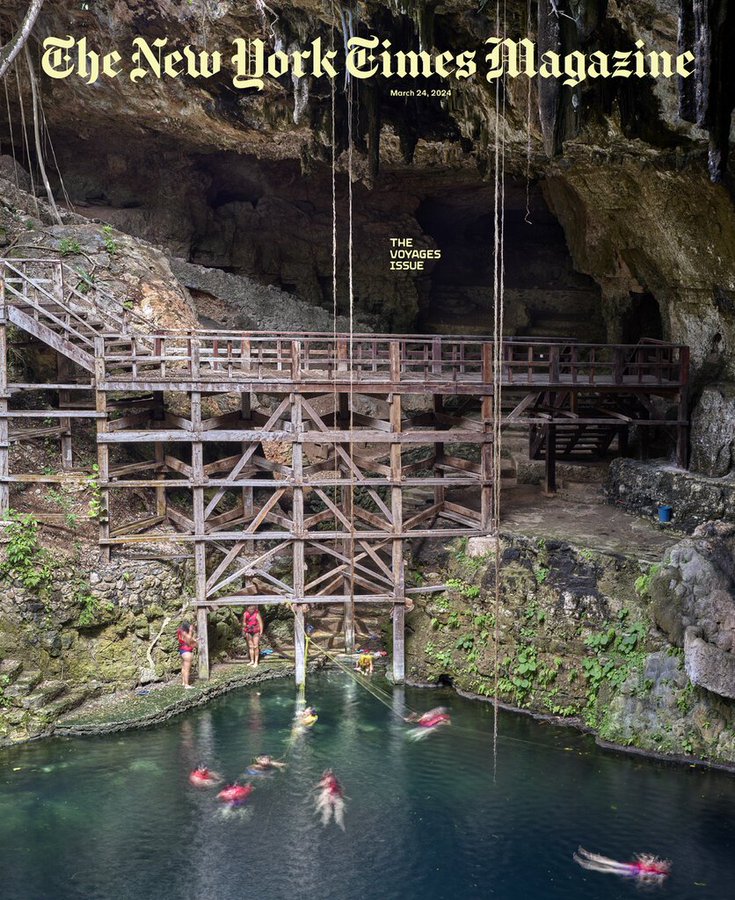
When it’s a quick trip from the schlocky pleasures of Cancún to the remote cities of the Maya, is something lost along the way?
El Tren Maya, which links five states in southern Mexico, is one of the country’s most-debated infrastructure projects. Carved through the Yucatán Peninsula at great expense, the 966-mile loop pits the megaproject ambitions of Mexico’s departing president, Andrés Manuel López Obrador, against the will of environmentalists and Indigenous leaders seeking to preserve a pristine environment of jaguars, ancient ruins and sacred underwater caves.
Why had immigrants, seekers and pilgrims been drawn for centuries to the treacherous shores of Mona Island? I set off to find out.
By Carina del Valle Schorske
Every year, I spend a month or two in Puerto Rico, where my mother’s family is from. Often I go in winter, with the other snowbirds, finding solace among palm trees. But I’m not a tourist, not really. I track the developers that privatize the shoreline; I follow the environmental reports that give our beaches a failing grade. I’m disenchanted with the Island of Enchantment, suspicious of an image that obscures the unglamorous conditions of daily life: frequent blackouts, meager public services, a rental market ravaged by Airbnb. Maybe that’s why I turned away from the sunshine and started to explore caves with my friends Ramón and Javier, seeking out wonders not yet packaged for the visitor economy. I’ve been learning to love stalactites and squeaking bats, black snakes and cloistered waterfalls — even, slowly, the darkness itself.
News, Views and Reviews For The Intellectually Curious























 Boomers Daily