

From a Neuroscience News & Research online article:
 “The link between antibiotic exposure and Parkinson’s disease fits the current view that in a significant proportion of patients the pathology of Parkinson’s may originate in the gut, possibly related to microbial changes, years before the onset of typical Parkinson motor symptoms such as slowness, muscle stiffness and shaking of the extremities. It was known that the bacterial composition of the intestine in Parkinson’s patients is abnormal, but the cause is unclear. Our results suggest that some commonly used antibiotics, which are known to strongly influence the gut microbiota, could be a predisposing factor,” says research team leader, neurologist Filip Scheperjans MD, Ph.D. from the Department of Neurology of Helsinki University Hospital.
Higher exposure to commonly used oral antibiotics is linked to an increased risk of Parkinson’s disease according to a recently published study by researchers from the Helsinki University Hospital, Finland.
The strongest associations were found for broad-spectrum antibiotics and those that act against anaerobic bacteria and fungi. The timing of antibiotic exposure also seemed to matter.
The study suggests that excessive use of certain antibiotics can predispose to Parkinson’s disease with a delay of up to 10 to 15 years. This connection may be explained by their disruptive effects on the gut microbial ecosystem.






 Who among us hasn’t wished we could read someone else’s mind, know exactly what they’re thinking? Well that’s impossible, of course, since our thoughts are, more than anything else, our own. Private, personal, unreachable. Or at least that’s what we’ve always, well, thought.
 How is a drapery put in place? For what reasons does this motive persist until today? How to explain its power of fascination? These are the questions that this exhibition intends to pose, in order to enter the “factory” of the drapery and to get closer to the artistic gesture. By showing the stages of making a drapery, the visitor will discover the singular practices of artists from the Renaissance to the second half of the 20th century.
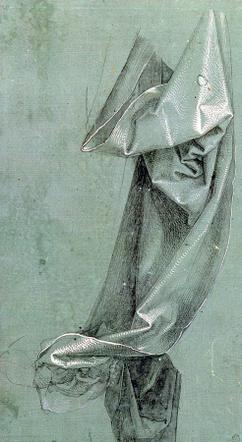 Albrecht Dürer, Drapery Study, 1508, Brush and Indian Ink, heightened white on dark green paper
 “Everywhere is the wait and the gathering,” concludes “Resort.” A kind of soporific haze has seeped into de Chirico’s imagination, asserted through evocations of sleeping and dreaming. Even the violence and ambiguous sexual imagery of “The Mysterious Night” yield to a final note of definitive somnolence: “Everything sleeps; even the owls and the bats who also in the dream dream of sleeping.”
 He daydreams of Mexico or Alaska and invokes a future-oriented “avant-city” and a distant day where he is immortalized, albeit in an old-fashioned mode as a “man of marble.”
 “I don’t think you can think about British politics or British history without thinking about her a very great deal,” Charles Moore, the authorized biographer of Margaret Thatcher, says of his subject on this week’s podcast. “And to some extent, you can’t think about the history of the modern West without thinking about her a very great deal.”
 More than 60% of cancers in the U.S. occur in people older than 65. As the population grows older, so will the rate of cancer among seniors. The cancer incidence in the elderly is expected to rise 67% from 2010 to 2030, according to a 2017 study in the Journal of Clinical Oncology. Yet many oncologists don’t have geriatric training.
 Although he had no pet birds, on closer questioning he had recently acquired a duvet and pillows containing feathers. His symptoms, chest radiograph and lung function tests improved after removal of all feather bedding, and he was also started on oral corticosteroid therapy. Our case reinforces the importance of taking a meticulous exposure history and asking about domestic bedding in patients with unexplained breathlessness. Prompt recognition and cessation of antigen exposure may prevent the development of irreversible lung fibrosis.

 Boomers Daily