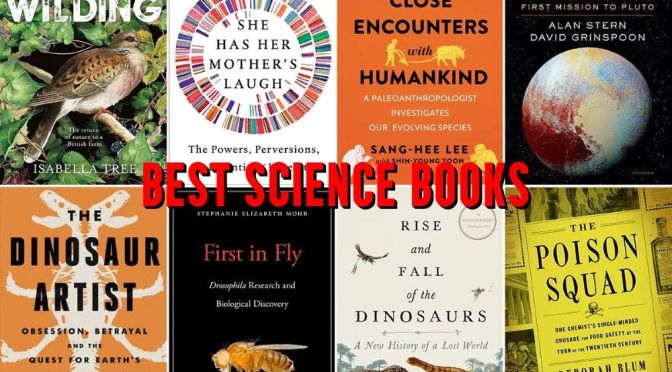

Nature Magazine: Best Science Books Of 2023

Nature Magazine (December 15, 2023):

The AI Dilemma
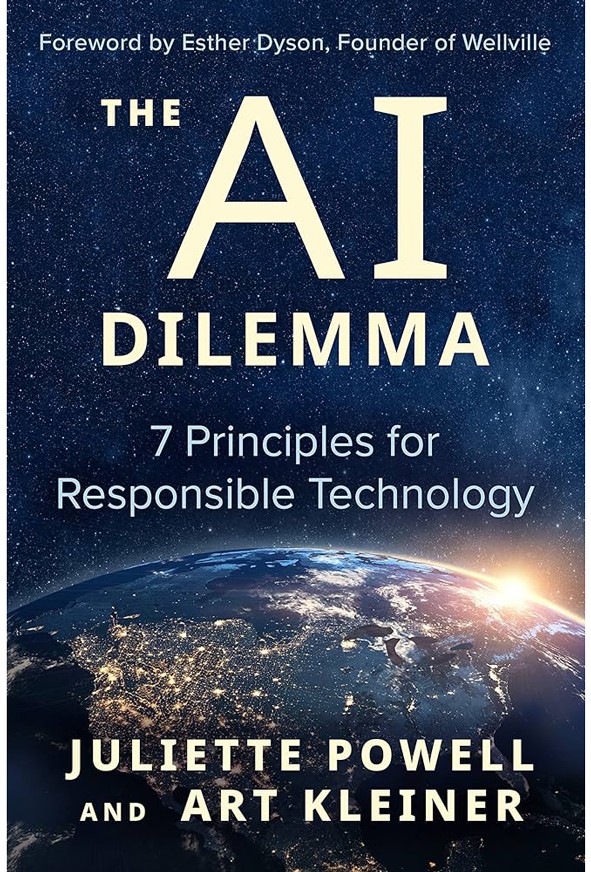
Juliette Powell & Art Kleiner Berrett-Koehler (2023)

The benefits and harms of social media are intimately tied to the ongoing debate about artificial intelligence (AI). Will AI systems trained partly on social media benefit or harm humanity? In their excellent, sometimes alarming, analysis of engineering, social justice, commerce and government, entrepreneur and technologist Juliette Powell and writer and educator Art Kleiner compare humans developing AI tools to first-time parents. They recommend guiding AI systems “as we would a child towards full adulthood”.

Consciousness
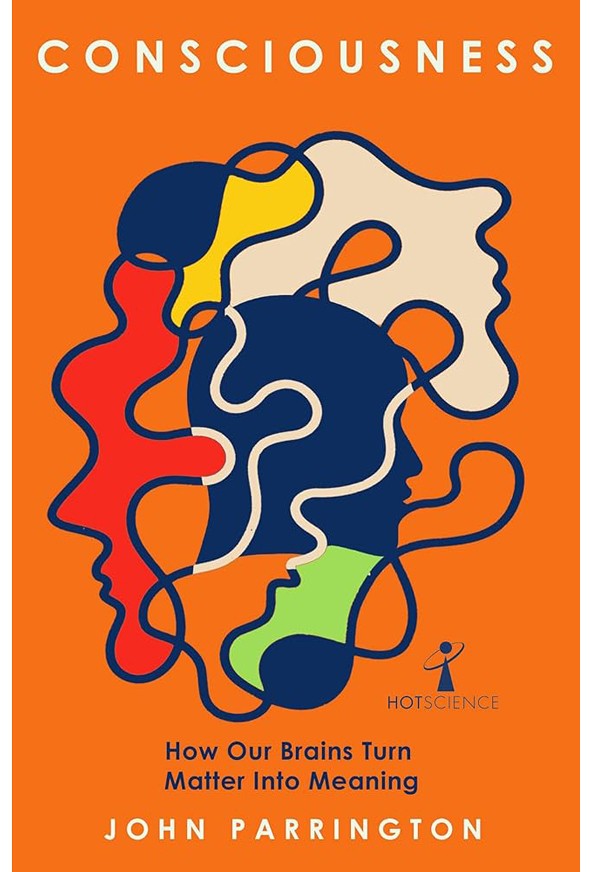
John Parrington Icon (2023)

“The material basis of human consciousness is one of the biggest unsolved issues in science,” admits cellular and molecular pharmacologist John Parrington in his pithy addition to a vast literature dating from the time of ancient Greek philosopher Aristotle. He considers many theories and proposes his own. Humans, he argues, are distinguished by conceptual thought and language, along with skills in designing tools and technologies. The evolution of these powers transformed our brains, creating meaning and consciousness.

Democracy in a Hotter Time
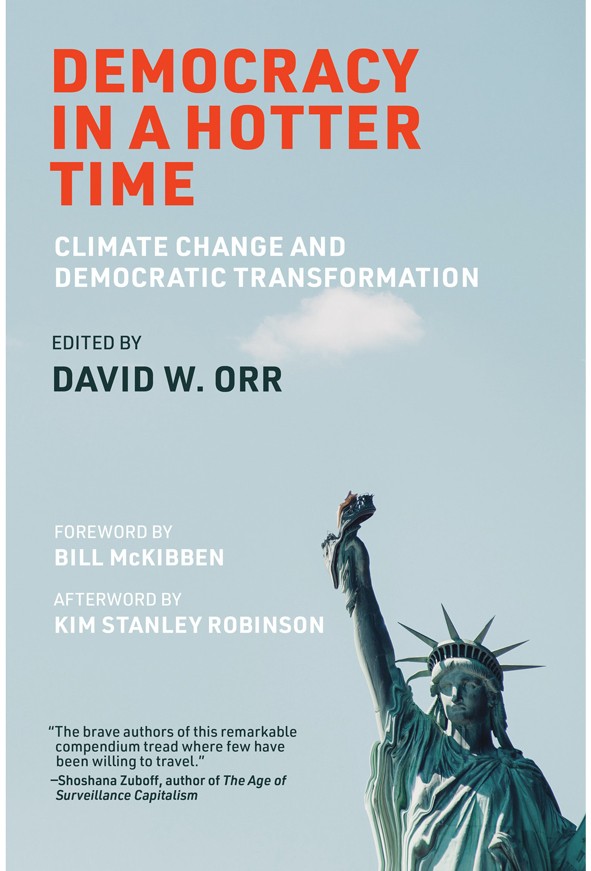
Ed. David W. Orr MIT Press (2023)

Environmentalist David Orr writes in the introduction to this timely collection that the planet faces two interlinked crises: “rapid climate change and potentially lethal threats to democracy”. The US Constitution rigorously protects private property but does not mention ecological systems, he observes. Contributors — almost all US-based — from a wide range of fields examine the need for political reform. The book is in four parts: the nature of democracy; roadblocks to change; policy and law; and education, including academic culture.

Extinctions
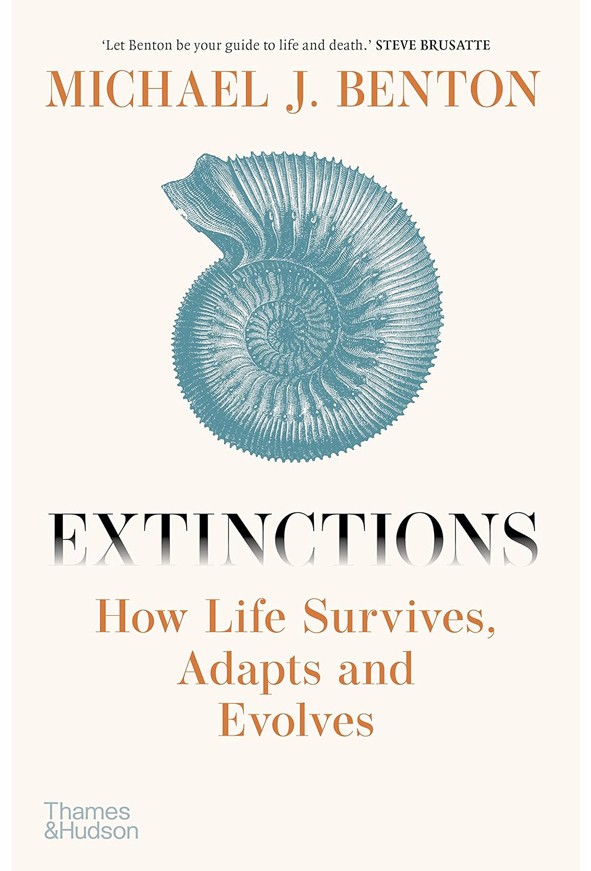
Michael J. Benton Thames & Hudson (2023)

When palaeontologist Michael Benton learnt about dinosaurs as a boy, he “loved the fact they were extinct”. They were like real science fiction. Perhaps he also intuited that their extinction permitted his existence. As his deeply informed and readable book reveals, the mass extinction at the end of the Cretaceous period 66 million years ago allowed a new cohort of creatures — including mammals — to “inherit the Earth”, as did four earlier extinction events. Living species represent less than 1% of all the species that have existed.

A Guess at the Riddle
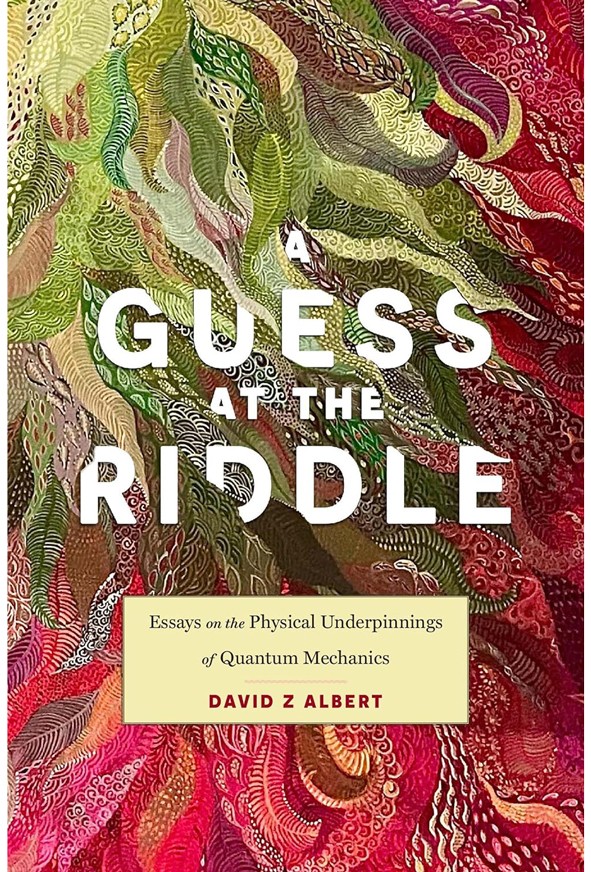
David Z. Albert Harvard Univ. Press (2023)

The physical interpretation of quantum mechanics has been a controversial riddle since the 1920s, when Niels Bohr argued that the atom’s inner workings could not be described in physical terms. Today, many philosophers and physicists disagree, but there’s no consensus on an alternative. Philosopher David Albert’s provocative book argues, in three essays, that Bohr’s quantum-measurement problem starts to make sense if the wave function is understood as the fundamental physical ‘stuff’ of the Universe.
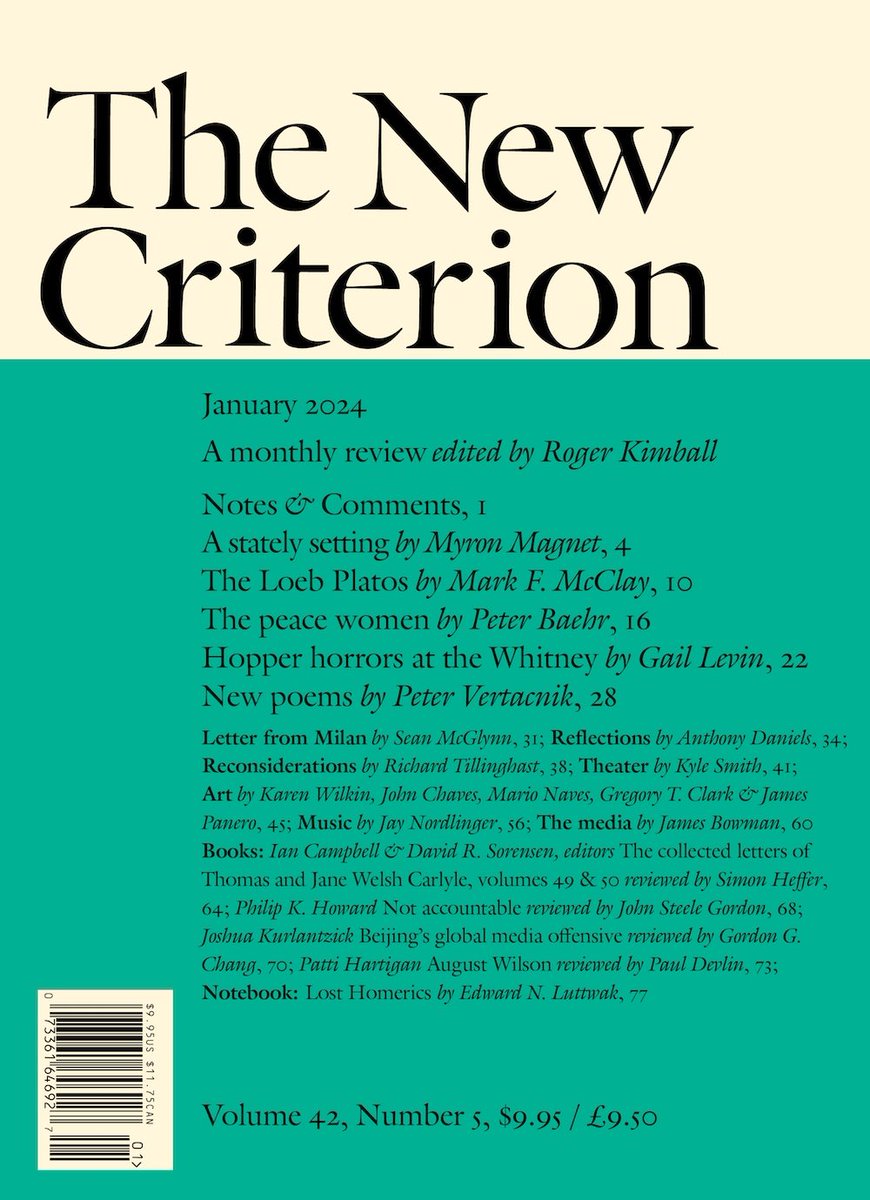
The New Criterion – January 2024 Preview

Image
The New Criterion – January 2024 issue:

A stately setting  by Myron Magnet
The Loeb Platos  by Mark F. McClay
The peace women  by Peter Baehr
Hopper horrors at the Whitney  by Gail Levin

New poems  by Peter Vertacnik

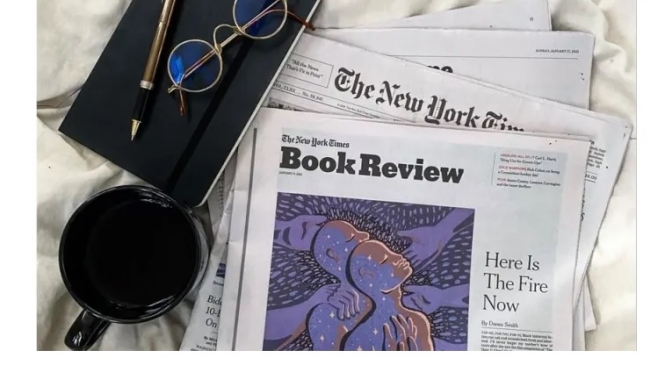
The New York Times Book Review – December 17, 2023

Image

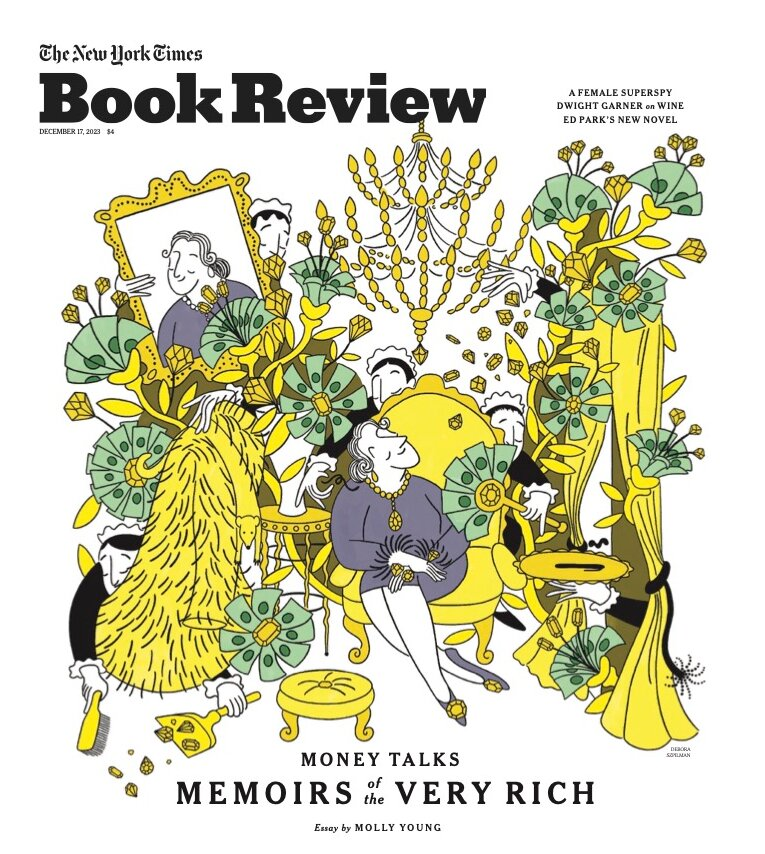
THE NEW YORK TIMES BOOK REVIEW (December 15, 2023): The latest issue features ‘Glorious Memoirs by the Very Rich’ – A look back at a time when the super-wealthy felt they had nothing to lose by letting readers inside their gilded corridors; For Kate Christensen, Bad Prose Can Never Yield a Great Book – “A book is made of language,” says the author, whose new novel is “Welcome Home, Stranger.” “How can a house be great if it’s made of shoddy materials? How can a dinner be great if it’s made with terrible ingredients?”

It’s My Privilege: Glorious Memoirs by the Very Rich

This whimsical illustration, in shades of yellow, green, gray, brown and black, features a lavishly decorated domestic space, at the center of which, beneath an opulent chandelier, sits a smiling bejeweled woman in a plush armchair. Behind her and around her we can see part of the faces and hands of busy serving staff — holding a fan, a serving tray, a dustpan and broom, etc.

A look back at a time when the super-wealthy felt they had nothing to lose by letting readers inside their gilded corridors.

By Molly Young

“Class consciousness takes a vacation while we’re in the thrall of this book,” Barbara Grizzuti Harrison wrote in the Book Review in 1985, in her evaluation of the heiress Gloria Vanderbilt’s memoir “Once Upon a Time.” To be clear, Harrison was referring to the class consciousness of the reader, not the author. Vanderbilt demonstrates perfect awareness throughout her book that most young children don’t play with emerald tiaras and alligator jewel boxes lined in chestnut satin, or rely on the services of multiple butlers, or lose count of their own houses. Harrison’s point was that Vanderbilt’s talent with a pen — and perspective on her own economic altitude — allowed consumers of her tale to suspend their envy and engage with the reality of growing up in opulent neglect.

For Kate Christensen, Bad Prose Can Never Yield a Great Book

This illustration of Kate Christensen shows her with long reddish brown hair parted on one side and falling past her shoulders. Her green eyes match her crew-neck blouse.

“A book is made of language,” says the author, whose new novel is “Welcome Home, Stranger.” “How can a house be great if it’s made of shoddy materials? How can a dinner be great if it’s made with terrible ingredients?”

What books are on your night stand?

I’m living temporarily in a rented house in Iowa City, teaching at the Writers’ Workshop. When I arrived there was not one book in the entire place, so I made an emergency trip to the local used-book store, collecting whatever leaped out at me from the shelves, mostly based on the wonderful titles: “Overhead in a Balloon,” by Mavis Gallant; “Watson’s Apology,” by Beryl Bainbridge; “Anthills of the Savannah,” by Chinua Achebe; “The Brandon Papers,” by Quentin Bell; “The Marquis of Bolibar,” by Leo Perutz; “The Seven Sisters,” by Margaret Drabble; “Bruised Hibiscus,” by Elizabeth Nunez; “A Journal of the Plague Year,” by Daniel Defoe.

Travel: Photography Trip To Yosemite National Park

ShotbyDp (December 13, 2023) – A solo film photography trip to California’s Yosemite National Park.

As one of America’s most popular national parks, Yosemite boasts some of the best views, hiking trails, and family vacation opportunities in the country. It was America’s first land dedicated to recreation and enjoyment. Located in central California, Yosemite National Park was established in 1890 and draws four million annual visitors. Almost 95 percent of the park’s 747,956 acres (roughly the size of Rhode Island) is classified as wilderness.

Concrete Design: Cloister House Tour In Australia

The Local Project (December 15, 2023) – Distinctively robust and private, Cloister House I celebrates simple design and timelessness. MORQ creates a refuge inside a family home built around the idea of sanctuary, in a refreshing counterpoint to the busy street it sits upon.

Video timeline: 00:00 – Introduction to the Family Home 01:23 – An Interesting Family Brief 02:09 – A Walkthrough of the Home 03:22 – Incorporating the Idea of Retreat and Refuge 04:29 – The Evocative Material Palette 05:45 – Design Properties of the Courtyard 06:26 – Aiming for Sustainable and Durable Design

“The idea of retreat is very much an aspect of the brief, and we felt that creating a fence and leaving the inside as a void creates a peaceful space,” says Andrea Quagliola, co-founder at MORQ. The home of grandparents, Cloister House I welcomes one inside a family home built around the notion of being able to comfortably house just two, as well as cater for lots of visitors. Inside a family home built around a courtyard, the architecture feels almost fortress-like from approach.

Its concrete structural face and concrete cladding comprise of steel that resembles the red earth that surrounds the Western Australia locale of Perth where the home sits, while the interior design combines Italian design nuances, as per Andrea’s roots. The home is split into two distinct volumes – a space for just two people that relates to the central courtyard and a space for visiting family that relates to the rear of the home. This architecture enables the house to feel appropriate in smaller and larger settings, and a customised glazing system allows one to open and close the spaces as desired.

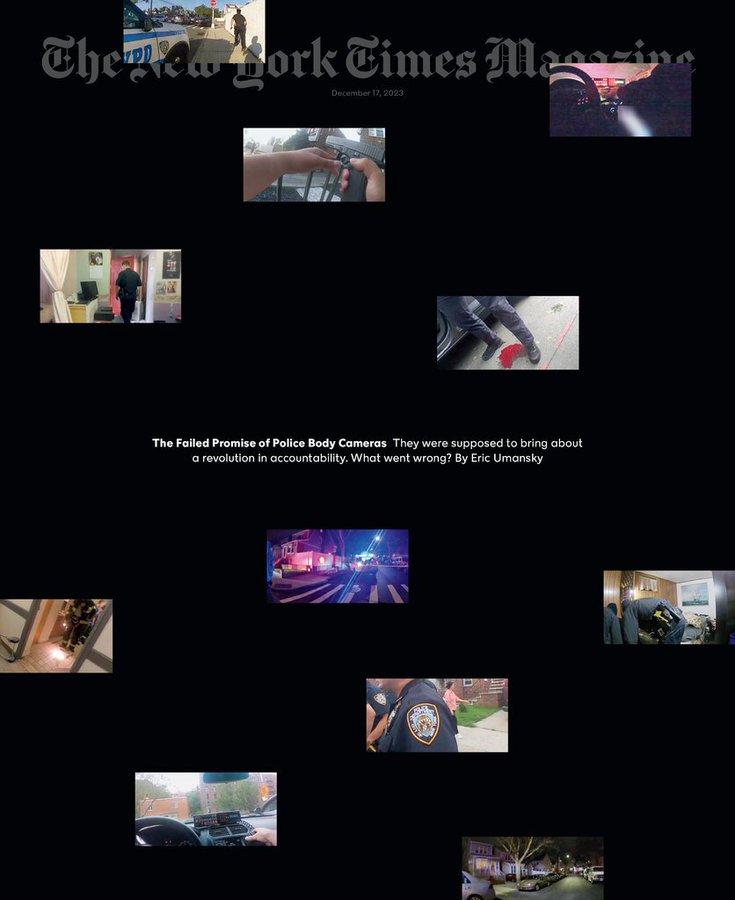
The New York Times Magazine – Dec 17, 2023

Image

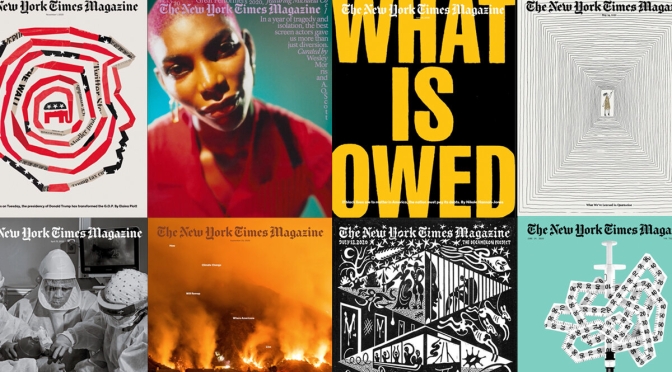
THE NEW YORK TIMES MAGAZINE (December 15, 2023):

The Failed Promise of Police Body Cameras

U.S. taxpayers spent millions to fund what was supposed to be a revolution in accountability. What went wrong?

Provocative Sex Is Back at the Movies. But Are We Ready for It?

Alden Ehrenreich and Phoebe Dynevor in “Fair Play.”

After an awkward MeToo hiatus, ‘May December’ and other films are showing​ intimacy in messy, complicated ​ways again.

By ALEXANDRA KLEEMAN

Is the Way Men Talk About Fashion About to Undergo Another Sea Change?

How two “grown dirtbags” are reshaping men’s wear.

By T.M. BROWN

News: 2024 U.S. Election, Trump Poll Surge, Biden Impeachment Inquiry

The Globalist Podcast (December 15, 2023) –The latest on the battle for the White House as Donald Trump surges in key swing-state polls and Joe Biden grapples with inflation, as well as a looming impeachment investigation.

Then: Moncole’s Tokyo bureau chief, Fiona Wilson, discusses the political fallout from Japan prime minister Fumio Kishida’s latest scandal. Plus: Vladimir Putin’s Year of the Family 2024 agenda, a flip through the papers and Andrew Mueller’s take on the news of the week.

The New York Times — Friday, December 15, 2023

Image

Washington Urges Israel to Scale Down Its War in Gaza

A soldier on an armored vehicle.

The call for a more targeted phase in the war appeared to be the most definitive effort yet by the United States to restrain Israel in its retaliation against Hamas for the attacks it led on Oct. 7.

How the Israel-Hamas War Tore Apart Public Defenders in the Bronx

The Bronx Defenders, who represent the borough’s most vulnerable in court, have been mired in furious debate over a faraway conflict.

The Bronx Defenders is one of the most influential public defense organizations in the United States. But allegations of antisemitism have dogged it and have grown louder since Oct. 7.

Who Gets the Water in California? Whoever Gets There First.

As the world warms, the state is re-examining claims to its water that have gone unchallenged for generations.

Losing Hair, Gaining Followers

Hair-loss influencers on TikTok say they are destigmatizing a common insecurity. Critics say they are cashing in on a vulnerable audience.