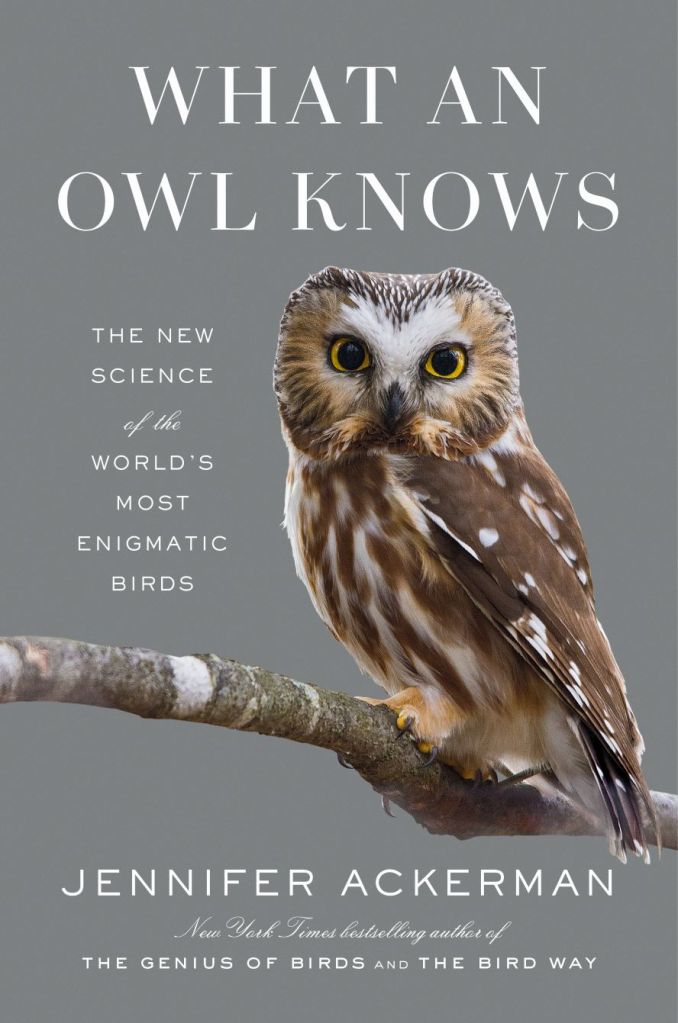
Book Reviews: ‘What An Owl Knows’ By Jennifer Ackerman (June 2023)

With their unnerving stare and eerie ways, it is small wonder that owls provoke superstition—and flights of fancy, as in the owl who sails with the pussycat in Edward Lear’s poem. In myths, stories and art, “owls speak of wisdom and luck, of misfortune and malevolence”, the author writes. They were associated with Athena, Greek goddess of wisdom.

The Economist (June 11, 2023) – With a face as round as the first letter of its name and a stance as upright as the last—along with human-like features and a haunting cry—the owl has a mystical, mythical perch in the imagination. Difficult to spot because of their mostly nocturnal habits, and sporting cryptic plumage that helps them melt into landscapes, owls, writes Jennifer Ackerman, are the most enigmatic of birds.

Ms Ackerman is a natural-history writer who specialises in the avian world. In What an Owl Knows” she offers an absorbing ear-tuft-to-tail appreciation of the raptor that Mary Oliver, a poet, called a “god of plunge and blood”. Owls, it seems, know a lot. Ms Ackerman draws on recent research to explain what and how.

To begin with, she stresses, there is no generic owl, but rather a diversity of some 260 species found on every continent bar Antarctica. They stretch from the fire-hydrant-sized Blakiston’s Fish Owl to the Elf Owl, which could fit in your palm. Most, but not all, are nocturnal. 

Read more

Jennifer Ackerman has been writing about science and nature for almost three decades. Her most recent book, What an Owl Knows: The New Science of the World’s Most Enigmatic Birds, explores recent findings on the biology, behavior, and conservation of owls. Her previous book, The Bird Way: A New Look at How Birds Talk, Work, Play, Parent, and Think, was a finalist for the PEN/E. O. Wilson Literary Science Writing Award. Her New York Times bestselling book, The Genius of Birds, has been translated into twenty-five languages and was named one of the best nonfiction books of 2016 by The Wall Street Journal, a Best Science Book by NPR’s Science Friday, and a Nature Book of the Year by The Sunday Times

Technology: ‘The Frost’ – AI-Generated Film (2023)

The Frost is a 12-minute movie in which every shot is generated by an image-making AI. It’s one of the most impressive—and bizarre—examples yet of this strange new genre. You can watch the film below in an exclusive reveal from MIT Technology Review.

MIT Technology Review (June 2023)The Frost nails its uncanny, disconcerting vibe in its first few shots. Vast icy mountains, a makeshift camp of military-style tents, a group of people huddled around a fire, barking dogs. It’s familiar stuff, yet weird enough to plant a growing seed of dread. There’s something wrong here.

“Pass me the tail,” someone says. Cut to a close-up of a man by the fire gnawing on a pink piece of jerky. It’s grotesque. The way his lips are moving isn’t quite right. For a beat it looks as if he’s chewing on his own frozen tongue.

Welcome to the unsettling world of AI moviemaking. “We kind of hit a point where we just stopped fighting the desire for photographic accuracy and started leaning into the weirdness that is DALL-E,” says Stephen Parker at Waymark, the Detroit-based video creation company behind The Frost.

Travel: Top Places To Visit In French Polynesia (2023)

Ryan Shirley Films (June 11, 2023) – I recently returned from exploring the islands of French Polynesia and I want to share with you my favorite places & experiences, from the towering mountains of Mo’orea to the overwater bungalows in Bora Bora.

The archipelagoes of French Polynesia are the Society IslandsTuamotu ArchipelagoGambier IslandsMarquesas Islands, and Tubuai Islands. The capital, Papeete, is on Tahiti, French Polynesia’s largest island, in the Society group.

Travel & Photography: The Isle Of Skye In Scotland

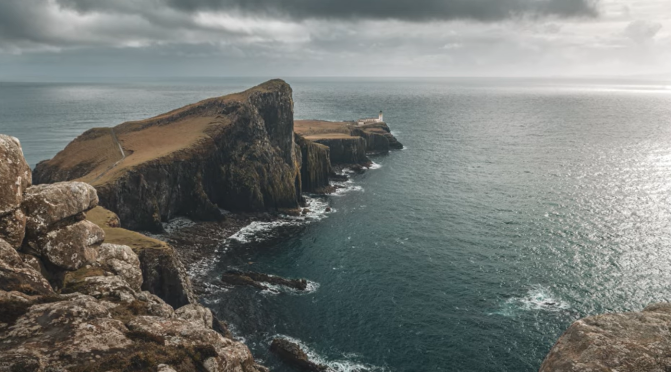
Andrew Lanxon Photography (June 10, 2023) – The Isle of Skye in Scotland is famous for being a playground for landscape photography and in this week’s video, I find out why.
I explored some of the island’s most famous landmarks, including the Old Man of Storr, Talisker Bay and Neist Point lighthouse, while venturing further to find more hidden gems like Loch Coruisk.

This video is a diary of my time on the island, aimed at being part travel documentary, part photo inspiration for those of you wanting to visit the island for yourself.

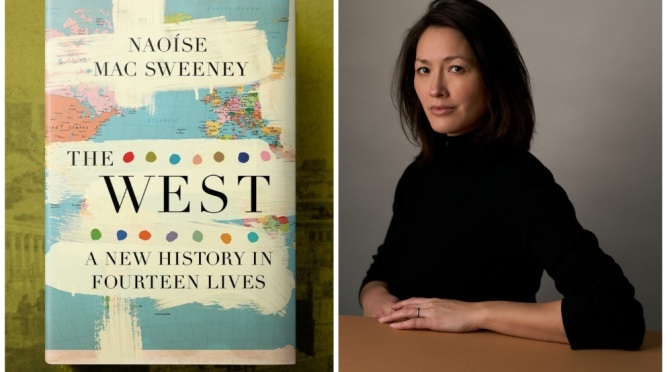
Reviews: “The West – A New History In Fourteen Lives” By Naoíse Mac Sweeney 

The American Scholar (June 9, 2023): The idea of “Western civilization” looms large in the popular imagination, but it’s no longer taken seriously in academia.

The West: A New History in Fourteen Lives: 9780593472170: Mac Sweeney,  Naoíse: Books - Amazon.com

In her new book, The West: A New History in Fourteen Lives, historian Naoíse Mac Sweeney examines why the West won’t die and, in the process, dismantles ahistorical concepts like the “clash of civilizations” and the notion of a linear progression from Greek and Roman ideals to those of our present day—“from Plato to NATO.”

Through biographical portraits of figures both well-known and forgotten—Herodotus and Francis Bacon, Livilla and Phyllis Wheatley, Tullia d’Aragona and Abu Yusuf Yaqub ibn Ishaq al-Kindi—Mac Sweeney assembles a history that resembles less of a grand narrative than a spiderweb of influence. Successive empires (whether Ottoman, Holy Roman, British, or American) built up self-mythologies in the service of their expansionist, patriarchal, or, later, racist ideologies.

Mac Sweeney joins the podcast to talk about why the West has been such a dominant idea and on what values we might base a new vision of contemporary “western” identity.Go beyond the episode:Naoíse Mac Sweeney’s The West: A New History in Fourteen LivesWe have covered Greece and Rome in previous episodes, as well as Njinga of AngolaIn our Summer 2023 issue, Sarah Ruden considers how modern biographers distort VergilTune in every week to catch interviews with the liveliest voices from literature, the arts, sciences, history, and public affairs; reports on cutting-edge works in progress; long-form narratives; and compelling excerpts from new books. 

Sunday Morning: Stories From Zürich & Marseille

June 11, 2023 – Monocle’s editorial director, Tyler Brûlé, discusses the weekend’s biggest news stories with Juliet Linley and Christof Münger.

We also speak to Mary Fitzgerald in Marseille and hear the latest from the Zürich Art Weekend.

The New York Times – Sunday, June 11, 2023

Image

With Probes of Russian Lines, Ukraine’s Counteroffensive Takes Shape

Ukraine is using its new arsenal of Western tanks and armored vehicles in what is expected to be one of the largest military operations in Europe since World War II.

Trump’s Case Puts the Justice System on Trial, in a Test of Public Credibility

Polls suggest that former President Donald J. Trump has made headway in persuading his supporters — and perhaps others — that any allegations against him are just political.

The former president’s efforts to defend against multiple felony counts by discrediting law enforcement pose a grave challenge to democracy.

The Failed Affirmative Action Campaign That Shook Democrats

Voters outside the Alameda County Courthouse casting their ballots in the 2020 election in Oakland, Calif.

The Supreme Court will soon rule on race-conscious college admissions, a core Democratic issue. But an analysis of a California referendum points to a divide between the party and voters.

Ted Kaczynski, ‘Unabomber’ Who Attacked Modern Life, Dies at 81

Alone in a shack in the Montana wilderness, he fashioned homemade bombs and launched a violent one-man campaign to destroy industrial society.

Design: Kellogg Doolittle Residence In California

Architectural Digest (June 10, 2023) – A visit to Joshua Tree in California to tour the awe-inspiring Kellogg Doolittle Residence. The sensational build was designed by organic architect Kendrick Bangs Kellogg and his protegee John Vugrin in the 1980s taking over 20 years to complete.

Upon first glance, you would be forgiven for thinking this property was a living creature; the magnificent structure appears skeletal with 26 cast-concrete pieces fanning out in resemblance of vertebrae. An art piece in and of itself, it is no wonder this unique space is considered one of Kellogg’s greatest masterpieces.

Director: Meg Sutton Director of Photography: AJ Young Editor: Daniel Finn Guest: John Vugrin

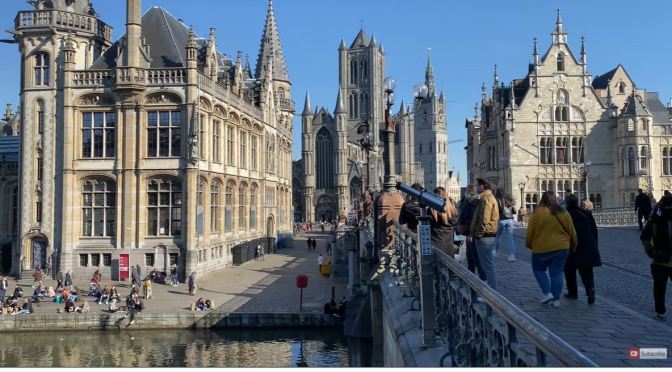
Travel: A Tour Of Ghent In Northwestern Belgium

The Flying Dutchman (June 10, 2023) – Ghent, in the Flanders  Region, northwestern Belgium. Ghent lies at the junction of the canalized Lys and Scheldt and is the centre of an urban complex that includes Ledeberg, Gentbrugge, and Sint-Amandsberg.

One of Belgium’s oldest cities and the historic capital of Flanders, Ghent was powerful, well-organized in its wealthy trade guilds, and virtually independent until 1584. Within its walls was signed the Pacification of Ghent (1576), an attempt to unite the Lowlands provinces against Spain. The Treaty of Ghent (December 24, 1814) marked the end of the War of 1812 between the United States and Britain.

Along with Brugge (Bruges) and Ypres, Ghent was one of the chief towns of the medieval county of Flanders. It owes its origin to the economic developments that occurred in Flanders in the 10th century, and the town sprang up on the banks of the Lys River at a spot under the protection of a nearby castle built by the counts of Flanders. Ghent grew rapidly in the 12th century, and by the 13th century it was one of the largest towns in northern Europe. Its astonishing prosperity was based on the manufacture of cloth; Ghent’s luxury cloths made from English wool were famous throughout Europe until the 15th century.