
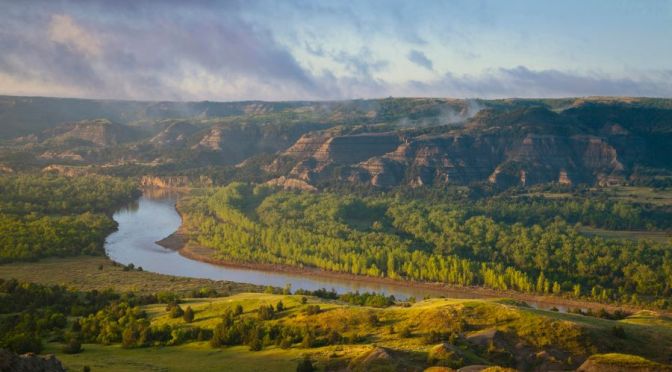
“Sunday Morning” takes us to Theodore Roosevelt National Park in North Dakota, where the buffalo still roam. Videographer: Kevin Kjergaard.
Monthly Archives: November 2021
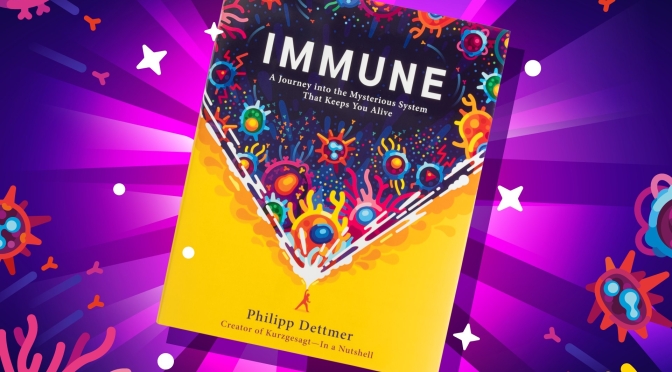
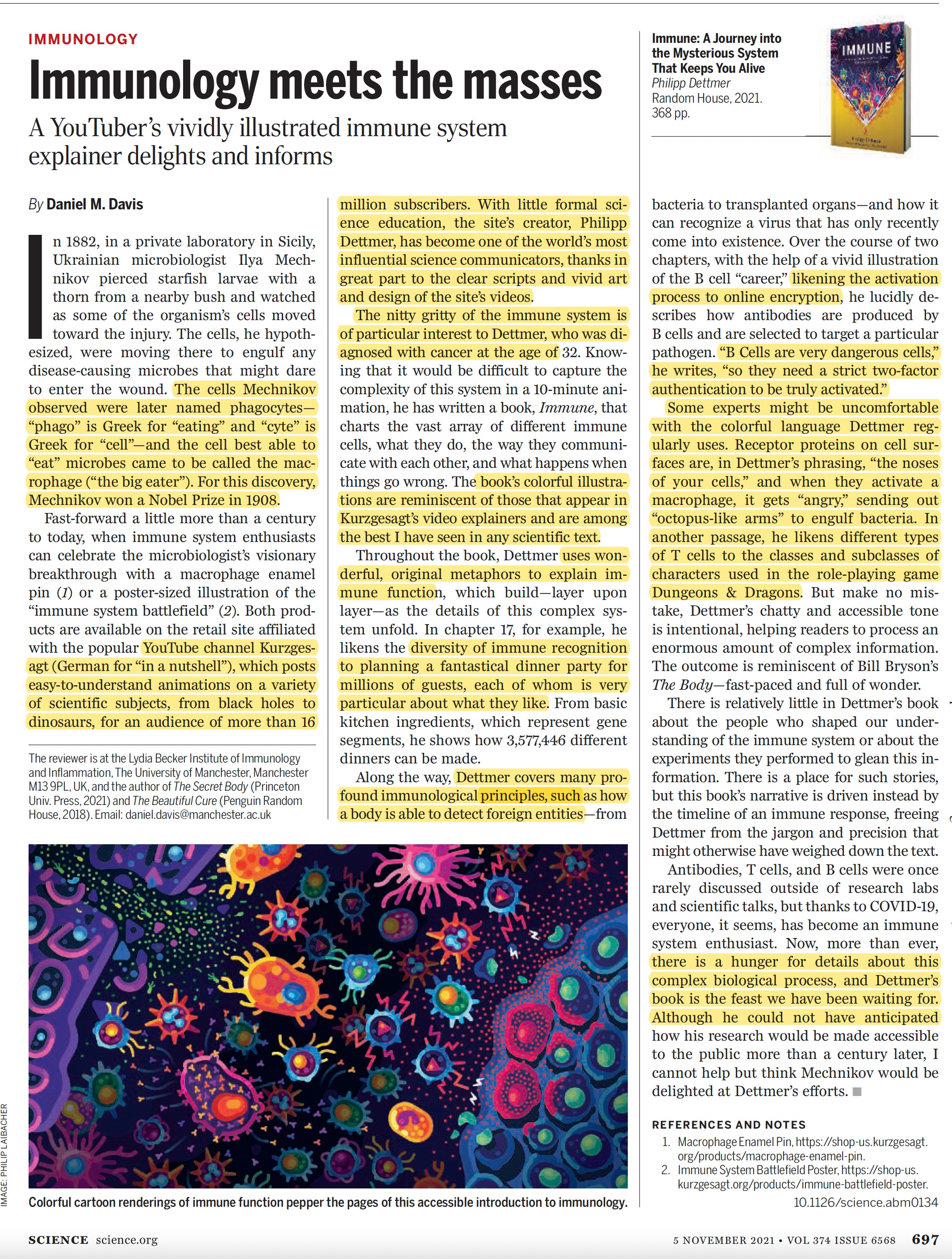
Book Reviews: “IMMUNE” Is An Illustrated Look At Our Body’s Immune System
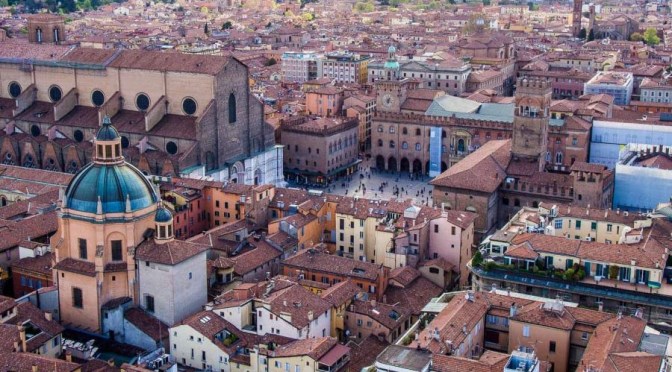
Walking Tour: Bologna Historic Centre, Italy (4K)
Bologna is the capital and largest city of the Emilia-Romagna region in Northern Italy. It is the seventh most populous city in Italy with about 400,000 inhabitants and 150 different nationalities. Its metropolitan area is home to more than 1,000,000 people. It is known as the Fat, Red, and the Learn’d City due to its rich cuisine, red Spanish tiled rooftops, and being home to the oldest university in the western world.
Originally Etruscan, the city has been one of the most important urban centres for centuries, first under the Etruscans (who called it Felsina), then under the Celts as Bona, later under the Romans (Bonōnia), then again in the Middle Ages, as a free municipality and signoria, when it was among the largest European cities by population. Famous for its towers, churches and lengthy porticoes, Bologna has a well-preserved historical centre, thanks to a careful restoration and conservation policy which began at the end of the 1970s. Home to the oldest university in the Western world, the University of Bologna, established in AD 1088, the city has a large student population that gives it a cosmopolitan character. In 2000 it was declared European capital of culture and in 2006, a UNESCO “City of Music” and became part of the Creative Cities Network.[14] In 2021 UNESCO recognized the lengthy porticoes of the city as a World Heritage Site.
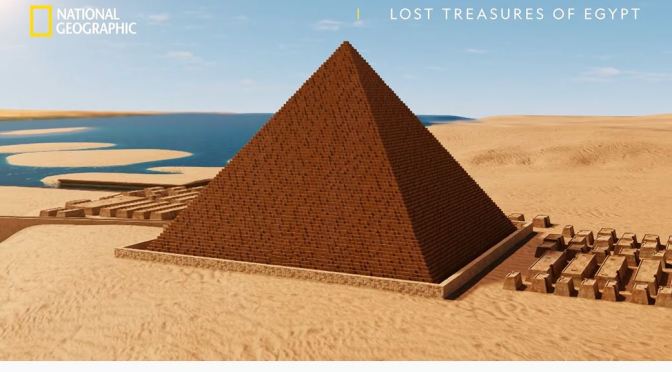
Egyptology: Engineering Secrets Of King Khufu’s Great Pyramid Of Giza
The Great Pyramid of Giza is the largest pyramid ever built and is a staple of Egyptian pyramid architecture. It was built to protect the tomb of King Khufu and was the first-ever true pyramid, due to its perfect shape and extraordinary features.
The entrance of the tomb is located 24 feet off centre and even if trespassers found it, a pulley system of ropes 130 feet above the passage dropped 3 enormous granite slabs to seal the burial chamber entrance. Topped with a layer of white limestone, The Great Pyramid was and is a symbol of the Pharaoh’s reputation and respect. Now, explorers are eagerly searching the pyramid for clues about the life and death of the great King Khufu.

Sunday Morning: Top News & Stories From London, Zurich & Tokyo
Monocle’s editorial director Tyler Brûlé and our panellists round up the weekend’s biggest news. Plus: we check in with our editors in London and Tokyo.

Front Page Views: The New York Times – November 7

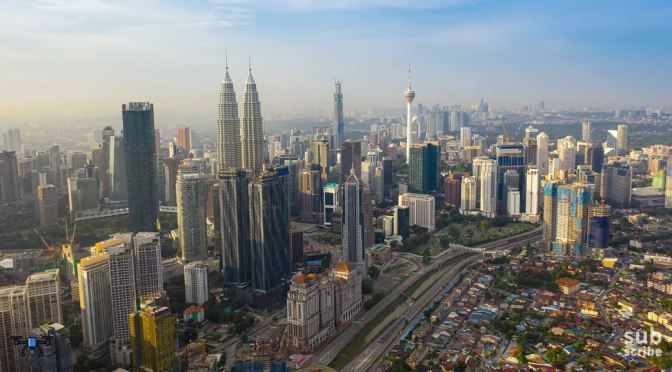
Views: Kuala Lumpur – Capital Of Malaysia (4K)
Kuala Lumpur is the capital of Malaysia. Its modern skyline is dominated by the 451m-tall Petronas Twin Towers, a pair of glass-and-steel-clad skyscrapers with Islamic motifs. The towers also offer a public skybridge and observation deck. The city is also home to British colonial-era landmarks such as the Kuala Lumpur Railway Station and the Sultan Abdul Samad Building.
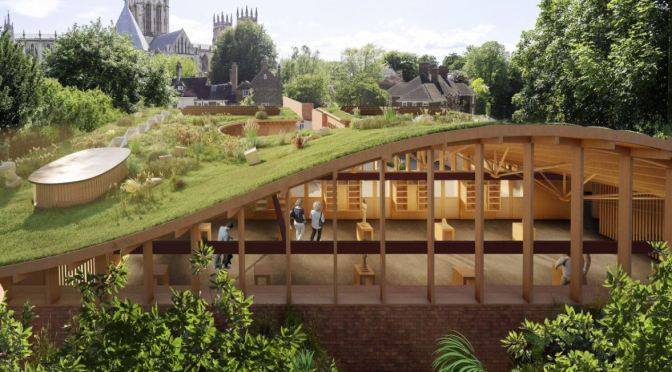
Architecture & Design: York Minster Centre, UK

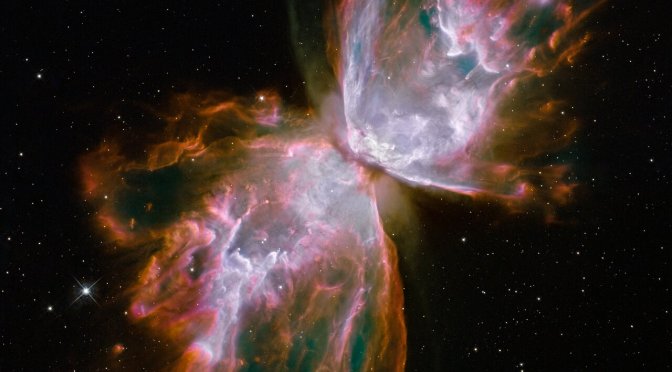
Astronomy: Stunning ‘Butterfly Nebula’ From Hubble Space Telescope

This celestial object looks like a delicate butterfly. But it is far from serene. What resemble dainty butterfly wings are actually roiling cauldrons of gas heated to nearly 20 000 degrees Celsius. The gas is tearing across space at more than 950 000 kilometres per hour — fast enough to travel from Earth to the Moon in 24 minutes! A dying star that was once about five times the mass of the Sun is at the centre of this fury. It has ejected its envelope of gases and is now unleashing a stream of ultraviolet radiation that is making the cast-off material glow. This object is an example of a planetary nebula, so-named because many of them have a round appearance resembling that of a planet when viewed through a small telescope. The Wide Field Camera 3 (WFC3), a new camera aboard the NASA/ESA Hubble Space Telescope, snapped this image of the planetary nebula, catalogued as NGC 6302, but more popularly called the Bug Nebula or the Butterfly Nebula.
WFC3 was installed by NASA astronauts in May 2009, during the Servicing Mission to upgrade and repair the 19-year-old Hubble. NGC 6302 lies within our Milky Way galaxy, roughly 3800 light-years away in the constellation of Scorpius. The glowing gas is the star’s outer layers, expelled over about 2200 years. The “butterfly” stretches for more than two light-years, which is about half the distance from the Sun to the nearest star, Proxima Centauri. The central star itself cannot be seen, because it is hidden within a doughnut-shaped ring of dust, which appears as a dark band pinching the nebula in the centre. The thick dust belt constricts the star’s outflow, creating the classic “bipolar” or hourglass shape displayed by some planetary nebulae. The star’s surface temperature is estimated to be over 220 000 degrees Celsius, making it one of the hottest known stars in our galaxy. Spectroscopic observations made with ground-based telescopes show that the gas is roughly 20 000 degrees Celsius, which is unusually hot compared to a t

Views: Candela C7 – The World’s First Electric Hydrofoil Boat (Video)
At the recent Cannes Yachting Festival, MBY editor Hugo Andreae took the helm of the Candela C-7, the world’s first foiling electric boat, for the flight of a lifetime… Candela C-7 specifications LOA: 25ft 3in (7.7m) Beam: 7ft 10in (2.4m) Weight: 1,300kg Motor: 55kW Torqeedo Battery: 40kWh Lithium Ion Top speed: 30 knots Range: 50nm @ 22knots +8nm @ 5knots Wave height: Up to 1.1m Draft: 0.7m (foils lifted) 1.5m (foils down) Foiling capacity: 800kg
 Boomers Daily