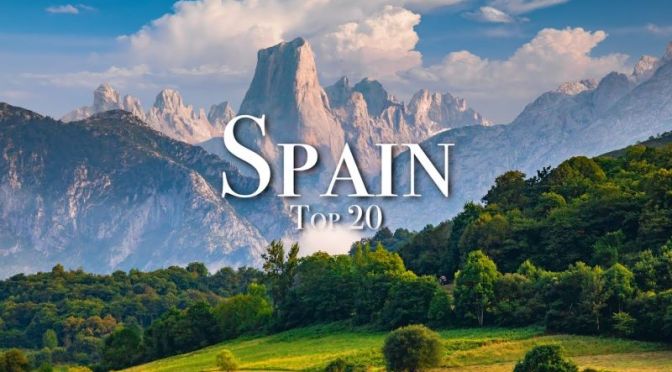
Spain is one of my all time favorite countries! From cliff jumping in Ibiza to hiking the mountains of Picos de Europa, Spain offers so much variety to experience and explore!
Spain, a country on Europe’s Iberian Peninsula, includes 17 autonomous regions with diverse geography and cultures. Capital city Madrid is home to the Royal Palace and Prado museum, housing works by European masters. Segovia has a medieval castle (the Alcázar) and an intact Roman aqueduct. Catalonia’s capital, Barcelona, is defined by Antoni Gaudí’s whimsical modernist landmarks like the Sagrada Família church.
As Joe Biden becomes the new president of the United States after a bitterly contested election, Inside the Americas takes you to Washington and to his hometown of Wilmington, Delaware. In this special edition of the show, our team meets some of the people who made Biden the man he is today. We also discover the places where the president-to-be spent his time, such as the train that took him to Washington every day when he was a young senator.
A new generation of investors wants to force businesses to become environmentally-friendly. Even climate conservationists know that money talks, but can green investments really save the world? Green investment rewards companies that use sustainable production practices and protect the environment. At the same time, companies that pollute or contribute to global warming are deprived of funds.
The strategy converts the once secondary issue of the environment into hard, cold cash. Antonis Schwarz is 30 years old — and an investor, philanthropist, and activist. His slogan is “cash against climate change.” Schwarz, like many other wealthy millennials, sees climate change as the key variable when it comes to investing money. These people intentionally put their cash into companies and projects that protect the environment. Schwarz believes that those who are well-off have a special responsibility to follow this strategy. He says, “When you are able to change something and you don’t, you’re complicit. We all have to become fully involved, so we can prevent a climate disaster.”
This philosophy can be summed up with the following question: “What’s the point of having loads of money if it becomes worthless because you’re living on a planet that’s becoming increasingly chaotic?” Institutional investors have more money at their disposal than wealthy private individuals do. Their approach is also changing — and not out of pure idealism. Extreme weather events caused by climate change, for example, are bad for business. They can force corporations to write off billions in damages.
This documentary goes behind the scenes to take a closer look at the financial markets. How well does “impact investing” work? Can investors really move large, powerful corporations to change their strategies? Politicians have so far failed to do precisely that.
On January 6th, Rioters stormed the U.S. capitol building to overturn the results of the 2020 presidential election. These events were inspired by President Trump and organized and promoted on the platforms of publicly traded companies, most notably Facebook and Twitter. To avoid further violence, those companies, and then many more thereafter including YouTube, banned or blocked President Trump’s access to the megaphone they provide. This exposed a major flaw in the business model of many social media platforms: share first, think later. Tech experts Chamath Palihapitiya, Roger McNamee, Chris Kelly and Dick Costolo all predict major changes coming in the social media landscape and Section 230. Watch the video to find out how big tech may be forced to change.
At this year’s virtual tech megashow, gadgets to protect you from Covid-19 are all the rage. But do you need a connected mask and a personal air purifier? What about a doorbell that takes your temperature? WSJ’s Joanna Stern checks out this new gear—from her basement. Photo illustration: Preston Jessee for The Wall Street Journal
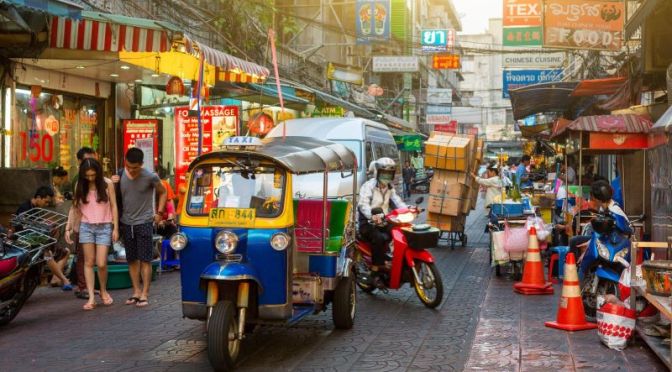
Known by the Thais / as Khrung Thep Maha Nakhon / or the City of Angels. Home to over 8 million inhabitants / the city offers the most unique combinations of history, culture, landscapes, and ways of living.
Chao Praya river flows through the East side of Bangkok. There you can observe why water is at the heart of Thai people, along with temples; river decks and traditional settlements.
Bangkok, Thailand’s capital, is a large city known for ornate shrines and vibrant street life. The boat-filled Chao Phraya River feeds its network of canals, flowing past the Rattanakosin royal district, home to opulent Grand Palace and its sacred Wat Phra Kaew Temple. Nearby is Wat Pho Temple with an enormous reclining Buddha and, on the opposite shore, Wat Arun Temple with its steep steps and Khmer-style spire.
The Hawaiian Islands are an archipelago of eight major islands, several atolls, numerous smaller islets, and seamounts in the North Pacific Ocean, extending some 1,500 miles from the island of Hawaiʻi in the south to northernmost Kure Atoll.
Video timeline: The five largest and most scenic Hawaii islands: Kauai (0:00), Maui (4:21), Big Island (8:50), Molokai (13:18) and Oahu (15:55).
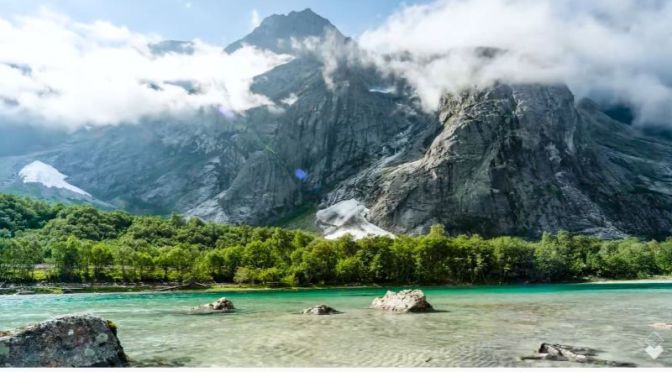
A collage of time-lapses taken over the last years. All taken at different locations around Norway. All the way from Tromsø to Oslo to Bergen and between.
Norway is a Scandinavian country encompassing mountains, glaciers and deep coastal fjords. Oslo, the capital, is a city of green spaces and museums. Preserved 9th-century Viking ships are displayed at Oslo’s Viking Ship Museum. Bergen, with colorful wooden houses, is the starting point for cruises to the dramatic Sognefjord. Norway is also known for fishing, hiking and skiing, notably at Lillehammer’s Olympic resort.
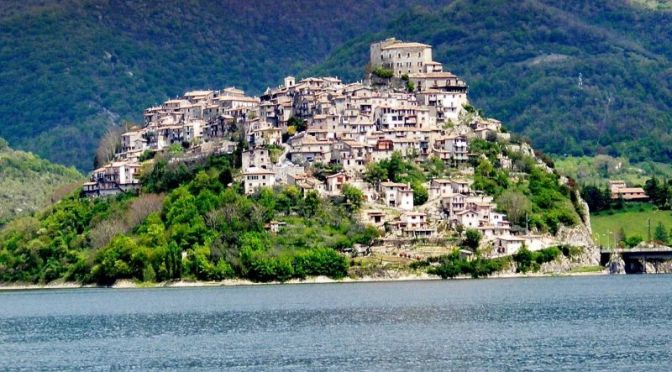
Castel di Tora is a comune in the Province of Rieti in the Italian region Lazio, located about 50 kilometres northeast of Rome and about 20 kilometres southeast of Rieti. Castel di Tora borders the following municipalities: Ascrea, Colle di Tora, Pozzaglia Sabina, Rocca Sinibalda, Varco Sabino.
The first historical evidence of this village dates back to 1035, when in some chronicles there is talk of a Castrum Vetus de Ophiano, and up to 1864 in fact the village had Castelvecchio as its name. The current name was intended to be linked to an ancient Roman settlement called Tora, where in 251 AD. the martyrdom of Santa Anatolia took place. For centuries it was called “Castelvecchio”, a name changed after the unification of Italy in 1864 to that of Castel di Tora, in memory of an ancient Roman Sabine pagus called Thora Thiora. The Abbey of Farfa owned the territory of Castel di Tora. Subsequently the property belonged to the Buzi – Brancaleoni and then to the Mareri, to whom it was confiscated in 1241 by Frederick II of Swabia. In 1440 the fief of Castelvecchio passed to the Orsini and from 1558 to 1570 to the Estouteville and then passed to the Borghese. From this period there remains the testimony of a painting (1601) by the Flemish painter Paul Bril, with a harsh landscape with two castles guarding the gorge formed by the Turano. In the years 1935-38 the Posticciola dam was built and the Turano artificial lake was created which submerged the most fertile soils of the valley, causing a strong emigration of the local population. In recent years, there has been a complete transformation of the local economy, which from agriculture and pastoralism is progressively transforming and moving towards the tertiary sector of trade and tourism.







 Boomers Daily