

From a The Economist online review:
 “Agent Running in the Field” is narrated by Nat, a 47-year-old spy for British intelligence—known not as “the Circus” of yore but, more prosaically, as “the Office”.
After years spent handling secret agents overseas Nat has returned to London to take charge of the Haven, an “outstation” of the Russia department that doubles as “a dumping ground for resettled defectors of nil value and fifth-rate informants on the skids”. With Florence, his number two, Nat throws himself into Operation Rosebud, which involves the surveillance of a London-based Ukrainian oligarch with links to Moscow Centre. Then Florence unexpectedly resigns and won’t return Nat’s calls. Equally abruptly, the powers-that-be pull the plug on the operation.
WHEN JOHN LE CARRÉ’S third book, “The Spy Who Came in From the Cold”, was published in 1963, it presented the world of espionage in a harsh new light. Spies were not brave, suave heroes. “They’re a squalid procession of vain fools, traitors too,” explains the flawed and beleaguered protagonist, Alec Leamas. They are “sadists and drunkards, people who play cowboys and Indians to brighten their rotten lives.” The novel preferred intrigue to adventure, gritty reality to escapist fantasy. Readers expecting a finale in which good conquered evil were instead offered convoluted twists and a bleak denouement.

 The plans for the venue were previously
 the recycling technology is the result of a partnership between coca-cola, the dutch startup ioniqa technologies and indorama ventures, one of
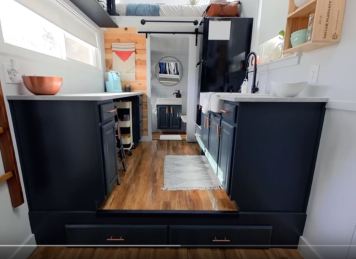 Amazingly, this high-end home was constructed for an unbelievable budget of only US$25,000, a testament to Saul’s perseverance with the DIY build and the couple’s clever sourcing of materials. That means this entire home was built for around the same amount of money that the couple would normally spend on one years rent living in San Diego.
 beautiful, modern tiny house, and best of all, they have pulled off the entire build for a budget equivalent to just a years worth of rent in San Diego. In this weeks episode, we explore this stunning tiny house and meet its builders.
 In a
In a 
 Rediscovered in the late 19th century, celebrated by authors, acknowledged and embraced by the 20th century avant-garde, the artist has enjoyed the dual prestige of tradition and modernity, linking Titian to the Fauvists and Mannerism to Cubism, Expressionism, Vorticism and Abstraction up to the Action painting.
 Whereas most Wright biographies build from one structure to the next, this one caroms from one digression to the next. Mr. Hendrickson spins miniature biographies of the people who commissioned Wright to build their homes and office buildings. An array of midcentury figures appears: e.g., Glenway Wescott, the novelist and poet who rubbed shoulders with Gertrude Stein in Paris and whose sister commissioned one of Wright’s homes; and Clarence Darrow, the renowned lawyer, who waded into the murk of Wright’s personal life when a disgruntled housekeeper attempted to use the Mann Act to have Wright arrested. We also meet the little-known residents of various structures. Seth Peterson, for instance, dreamed of living in a Wright home so powerfully that he camped out in the one he commissioned as it was being built.



 Syndicated columnist Mark Shields and New York Times columnist David Brooks join Judy Woodruff to discuss the week’s political news, including President Trump’s attitude toward Kurds in Syria and stance toward Turkey’s Syria offensive, testimony from the former U.S. ambassador to Ukraine and how the prospect of impeachment affects the race among 2020 Democrats.
 Boomers Daily