
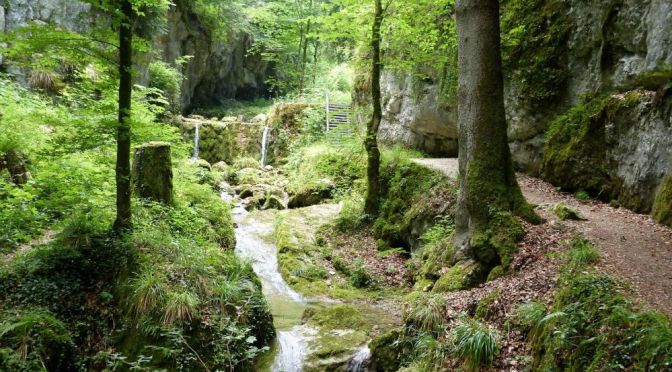
The name Tüfelsschlucht means “The Devil’s Gorge” and this is considered to be one of the most beautiful of the numerous gorges in the Jura. The 2.2km long gorge winds its way along the Cholersbach Stream and is connected by 32 bridges and catwalks.
Videos

World Economic Forum: Top Stories Of The Week
This week the World Economic Forum are highlighting 4 top stories – rethinking global institutions, 4-day week vs flexible work, turning food waste into cement and income loss for UK mothers.
The World Economic Forum is the International Organization for Public-Private Cooperation. The Forum engages the foremost political, business, cultural and other leaders of society to shape global, regional and industry agendas. We believe that progress happens by bringing together people from all walks of life who have the drive and the influence to make positive change.

Classic Italian Cars: 1955 Ferrari 410 Sport Spider
The American sports car racing scene of the 1950s was a time like no other, when fiercely independent, deep-pocketed men could acquire ex-factory racecars and campaign them with some of history’s most legendary drivers. Admirably pure in its essence, this was a golden era of racing that fielded some of the decade’s most beautifully sculpted and ferociously specified competition machines.
One of the most significant purpose-built Ferrari “big block” sports-racing prototypes from the 1950s, this 1955 Ferrari 410 Sport Spider by Scaglietti is one of just two factory-campaigned 410 Sports equipped with a 24-spark plug 4.9-liter V-12 and is one of a select few Ferrari models with coachwork both designed and built by Sergio Scaglietti.
0598 CM was the Scuderia Ferrari team car driven by Juan Manuel Fangio at the 1956 1000 KM Buenos Aires and later piloted by Carroll Shelby during his landmark 1956 and 1957 seasons when driving for the renowned Southern California-based team principal John Edgar. Shelby won more races as a driver in 0598 CM than any other car in his racing career, with eight wins and ten podium finishes.
There seemed to be no race it could not win as Shelby told a Los Angeles Times reporter, “Nothing can touch this Ferrari if it runs” and decades later he added, “It was the best Ferrari I ever drove.” Also raced in-period by legendary drivers Phil Hill, Eugenio Castellotti, Masten Gregory, Richie Ginther, Joakim Bonnier, Bruce Kessler, Jim Rathmann, and Chuck Daigh, 0598 CM is, without exaggeration, one of the most important and colorful Ferraris to compete in racing during the 1950s. It is among the most successful of all even-numbered sports-racing Ferraris, entering nearly 40 races in-period with 11 victories and 19 total podium finishes from 1956-1958.
As it remains a highly original example retaining the matching-numbers engine, chassis, and body, and fitted with the original fuel tank inscribed by Shelby, “Mr. Ferrari told me that this was the best Ferrari he ever built,” this example offers an unparalleled opportunity to acquire a purpose-built, even chassis-numbered racing sports car of unequaled provenance. Faithfully presented in its period livery and desirably maintained, including the recent engine rebuild by a team of Ferrari experts, this 410 Sport can expect an enthusiastic welcome at the most exclusive vintage racing and exhibition events worldwide and will go to its new owners with the first (1956) and last (1958) trophies won by Shelby driving 0598 CM, along with the original 1957 Nassau racing license plate.
Like the famed men who rode it to such success in-period, the illustrious John Edgar and the inimitable Carroll Shelby, this Scaglietti-built spider is a powerful and nuanced character that cannot be repeated—and will never be forgotten.
Cabin Tours: Coromandel Bach In New Zealand (4K)
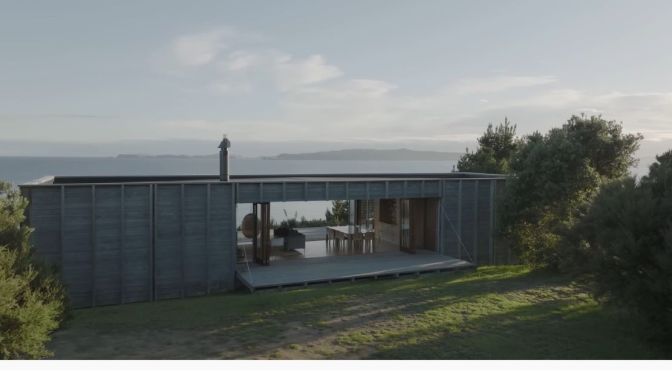
Coromandel Bach, an architect’s own tiny cabin, is designed by Crosson Architects as a functional holiday home. The timber residence is the ideal place of retreat away from busy urban life. Settled on the eastern side of The Coromandel Peninsula, Coromandel Bach is an architect’s own tiny cabin.
Video timeline: 00:00 – The Local Project Print Publication 00:10 – Introduction to the Architect’s Own Tiny Cabin 00:36 – Designing Using Timber 01:35 – The Perfect Holiday House 02:33 – Entering the Tiny Cabin 03:19 – The Bathroom 04:00 – The Kitchen and Dining Spaces 04:23 – An Experimental Home 05:42 – Celebrating Success 06:04
The holiday house sits on a site with no other buildings; no bush, just a north-facing view to white sandy beaches and a series of islands. As an architect’s own tiny cabin, Coromandel Bach expresses a studious approach to form and function. In a manner reminiscent of a suitcase, the architecture of the home can fold open or closed depending on the needs of the occupant, protecting its interior from the natural elements in some instances or embracing the outdoors in others.
The inspiration underpinning Coromandel Bach’s ‘refined camping’ is thoroughly executed, as would be expected in an architect’s own tiny cabin. Crosson Architects omits curtains and drapes from the interior design, enabling occupants to rise with the sun. Nature is celebrated using natural timber and through innovative features such as a bathtub on wheels that allows bathing outdoors in the morning sun or under the stars.
A unique example of an architect’s own tiny cabin, Coromandal Bach is a textural building with an innate sense of dynamism. The residential experience proposed by Crosson Architects is synonymous with the experience of nature.
Walking Tour: Compiègne In Northern France (4K)
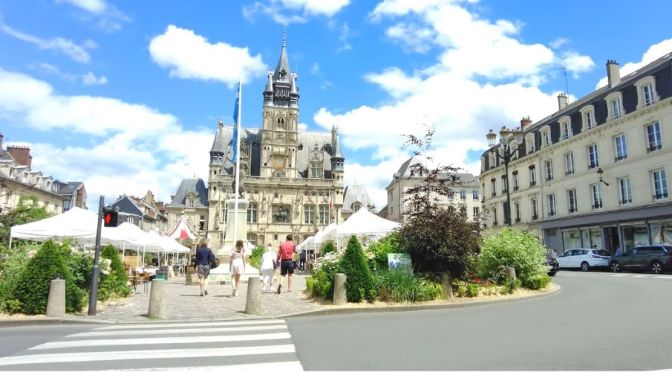
Compiègne, town, Oise département, Hauts-de-France région, northern France. It lies along the Oise River, at the northwest edge of the forest of Compiègne.
Of Roman origin, it was referred to in 557 as Compendium, a name derived from a word meaning “short cut” (between Beauvais and Soissons). The town flourished in the Middle Ages and was the site of assemblies and councils under the Merovingian kings. In 833 Louis the Pious was deposed there. Charles II the Bald enlarged the town and founded the Abbey of Saint-Corneille, now the home of the municipal library. Compiègne became a commune in 1153, and a monument to Joan of Arc commemorates her capture there by the Burgundians in 1430.
2022 Design: 45° Brutalist House – LYX Arkitekter
Since the foundation of LYX Arkitekter company it became a pioneer in the architectural field doing awesome projects in various concepts starting from the lofty designs, passing with the Islamic styles in decoration combining it with the modern design making outstanding artistic whole.
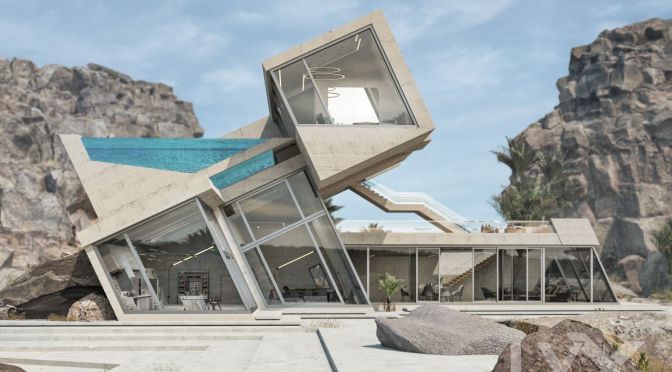
Today the new concept is estimated from the brutalism concept created by the genius engineer le Corbusier in 1952. The new project is designed in Iceland on the form of flipped container but the sides of it replaced with a panoramic glass guaranteeing 360 degrees view on the beach in the ground floors. Moreover, the total space of the project is 750 sq.m with two floors.
The ground floor contains living, and dining room attached with a bathroom and a kitchen. The creativity of design is manifested in the terrace where you can see the whole view in front of you while you are enjoying your coffee in the first hours of morning.
Last but not least, the third floor that contains the fascinating master bedroom and a separate door for jumping into the spectacular panoramic pool at hot summer days making it invaluable place to stay at in the vacations all of that is ensured and taken into consideration from the moment it was designed by the company experts.
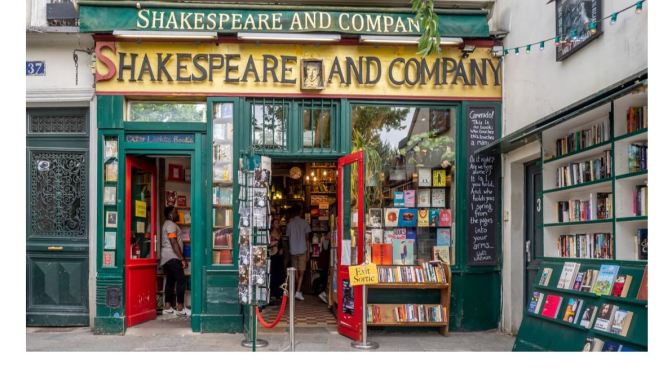
City Walks: The ‘Latin Quarter’ In Paris, France
Also known as the 5th arrondissement, the quaint Latin Quarter is home to the Sorbonne University and student-filled cafes. It’s also famed for its bookshops, including the landmark Shakespeare & Company. Family-friendly attractions include the Jardin des Plantes botanical gardens and the National Museum of Natural History. The stately Panthéon building holds the remains of notables like Voltaire and Marie Curie.

South Carolina: French Quarter In Charleston
The busy French Quarter, in Charleston’s original walled city, is home to the 19th-century Charleston City Market, selling clothing, crafts, and artwork, with the Confederate Museum in the old Market Hall. African-American history is recounted at the Old Slave Mart Museum on the site of slave auctions. Families and visitors head to Waterfront Park on the Cooper River, while boutiques and galleries dot King Street.
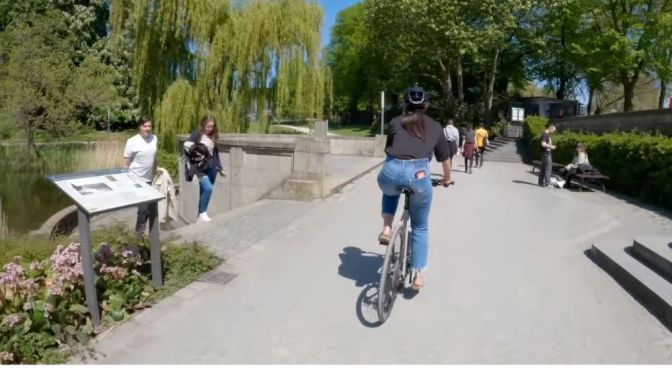
Bike Tours: Hamburg In Northern Germany (4K)
Two wheels, one goal: exploring Hamburg from a cycling perspective. Rather than exploring Hamburg through a city walk, Amélie’s mission on a sunny day in Hamburg is to bike through the urban jungle as well as through the green parts of the city. Amélie starts at the Fischmarkt in the Rad Race Shop and crosses the Elbtunnel, which connects the centre of Hamburg with the docks and shipyards on the south side of the Elbe.
Video timeline: 00:00 Fischmarkt | Rad Race Shop 03:44 Elbtunnel 08:33 Landungsbrücken 11:34 Elbphilharmonie 12:37 Hafencity 18:22 Speicherstadt 25:41 Hamburger Rathaus 28:16 Jungfernstieg 40:14 Planten un Blomen 49:06 Reeperbahn
Out of the lift of the Elbtunnel, the route continues via the Landungsbrücken to the Elbphilharmonie. From there, via the Speicherstadt to Hamburg City Hall. After the Jungfernstieg, the tour continues along the green side of Hamburg through the Old Botanical Garden and Planten un Blomen.
Via the Reeperbahn, we return to the Rad Race Shop for Amélie to enjoy a cup of coffee.
In case you want to follow the same bike tour through Hamburg, you can check the route here: https://click.canyon.com/3HLn8Nq
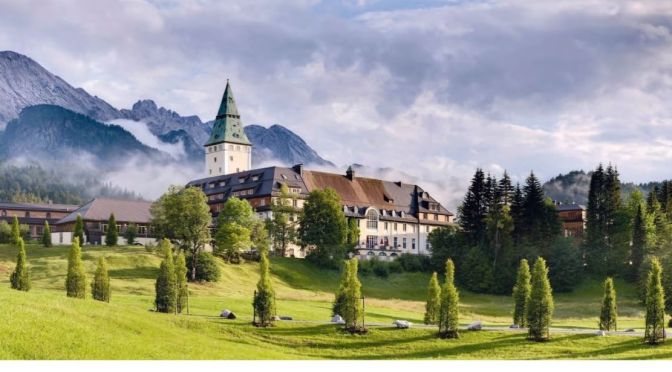
Historic Hotels: Schloss Elmau In Bavaria, Germany
Heads of state are meeting for the G7 World Economic Summit at the luxury Schloss Elmau hotel in Bavaria. And they won’t just be talking about global problems there, they’ll also be staying at the hotel, protected from the outside world.
We take a look behind the scenes at the five-star superior hotel close to Garmisch-Partenkirchen in the south of Germany. What does German Chancellor Olaf Scholz’s hotel room look like? And US President Joe Biden’s bathtub? How’s the view from the balcony over the Alps? What’s the food like at the hotel’s two-star Michelin restaurant? How much does it all cost? And why is the hotel manager such a fan of elephants?
Schloss Elmau, built by the philosopher and theologian Johannes Müller and architect Carl Sattler between 1914 and 1916, is a four-story national monument with hipped roof, tower and porch, situated between Garmisch-Partenkirchen and Mittenwald in a sanctuary of the Bavarian Alps, Germany.
 Boomers Daily