

From a Wall Street Journal online article:
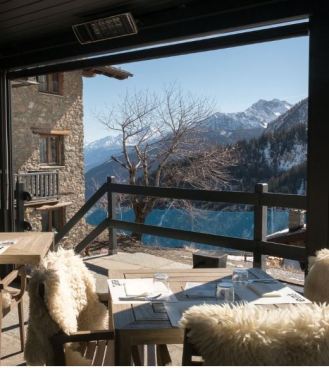
Courmayeur, both a town and a ski resort, boasts nearly as many ambitious, full-service restaurants as it does lifts on the slopes. Even on bright sunny days with powdery trails, the big question tends to be, “What’s for lunch?” The village, nestled in a snug valley on the south slope (the Italian side) of Mont Blanc, Europe’s highest peak, is a typically sleepy mountain town for much of the year with around 3,000 full-time residents. But when the ski season kicks into high gear, its restaurants, bars and cafes all come roaring to life. It’s a favorite winter escape for residents of Italy’s fashion capital, Milan, a straight two-hour shot up the highway.
For the urbane crowds in from the city on winter weekends, Courmayeur is as much an epicurean as snow-sports destination, known for its mountain cheeses, wild game and cured meats, and for its increasingly serious restaurants. Top tables on and off the slopes can book up weeks in advance. The region’s minerally white and earthy red wines come from some of the highest altitude vineyards in Europe. The sparkling Cuvée des Guides is made 7,000 feet above sea level on the slopes of Mont Blanc, with a tasting room atop one of the state-of-the-art Skyway Monte Bianco cable car stations.
To read more: https://www.wsj.com/articles/an-italian-ski-town-where-the-food-rivals-the-views-11574791692

 The complementary pair—Onassis the sophisticate, and Simon the nervous hippie—were close until Onassis died in 1994. Over a sprawling conversation, Simon discussed seeing the “goofy” side of Onassis, what she misses about performing and what she envied about Onassis.
 It started with a phone call. In a week, a scammer would take Nina Belis’s life savings. WSJ’s Sarah Krouse explains why robocalls persist: Because sometimes they work.
 “The script is about questioning the nature of existence. I think about that every day of life. What is the purpose of life? As I get older, I look back on my own life as if it’s a novel written by someone else. To me it’s all a mystery. I started out over 60 years ago. My first job was, my God, 62 years ago and here I am. I don’t understand any of it. They gave me work, and I continued to work. It’s only just recently looking back, I thought, ‘My goodness, who designed this life? I certainly didn’t.’ I don’t know what’s life or destiny or kismet or God. I don’t want to get too philosophical about it. I’m fascinated about the mystery of life, about how we get through it, how we survive. I have no answers and I can’t take credit for any of it.”
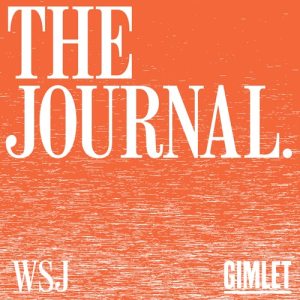 A 2019 Super Bowl ad kicked off a showdown between the maker of Bud Light and the maker of Coors Light. WSJ’s Jennifer Maloney explains how that standoff has led to accusations of corporate espionage, two lawsuits and questions about the future of the beer industry.
 An obscure think tank in Boston is getting drug companies to lower their prices – using something called a QALY. WSJ’s Denise Roland explains what a QALY is, and why it’s controversial.
 There is no official definition of what constitutes a dry wine in the U.S. The amount of sugar left in the wine after fermentation or added afterward is, however, sometimes noted on a wine’s label, in grams per liter. According to Mr. Ramey, a wine generally considered dry would have less than 1 gram per liter RS (residual sugar), or 0.1%. Beyond that, a wine with 1% RS (10 grams per liter) is off-dry, and a wine at 3% RS (30 grams per liter) or above is sweet.
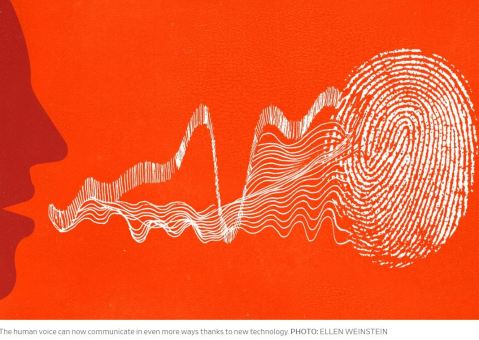 Slower speech, for example, could indicate fatigue or sorrow at one point in time, but over longer periods could signal something more severe, co-founder Jim Harper said.
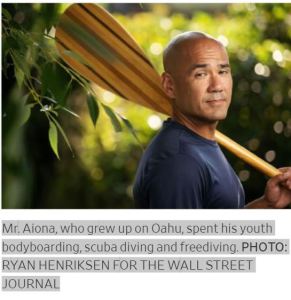 Mr. Aiona paddles with his club on Tuesday and Thursday nights and Saturday mornings for 90 minutes to two hours.They alternate between sprints and endurance paddles of up to eight miles in a six-man outrigger canoe. They also work on paddle technique and do huli drills. “Huli is Hawaiian for turn over,” he explains. “If you flip your canoe there is a very precise process for getting everyone safely and efficiently back in. We call out positions to make sure no one is underneath.

 Boomers Daily