Tag Archives: Writing

The Ethics of Defiance in Theology and Society

This essay was written and edited by Intellicurean utilizing AI:
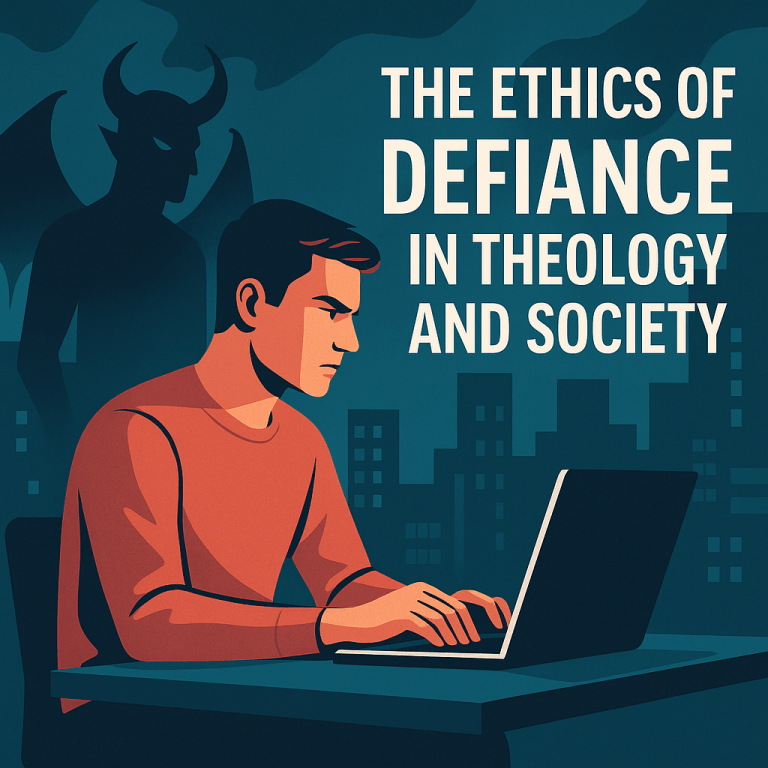
Before Satan became the personification of evil, he was something far more unsettling: a dissenter with conviction. In the hands of Joost van den Vondel and John Milton, rebellion is not born from malice, but from moral protest—a rebellion that echoes through every courtroom, newsroom, and protest line today.

Seventeenth-century Europe, still reeling from the Protestant Reformation, was a world in flux. Authority—both sacred and secular—was under siege. Amid this upheaval, a new literary preoccupation emerged: rebellion not as blasphemy or chaos, but as a solemn confrontation with power. At the heart of this reimagining stood the devil—not as a grotesque villain, but as a tragic figure struggling between duty and conscience.

“As old certainties fractured, a new literary fascination emerged with rebellion, not merely as sin, but as moral drama.”

In Vondel’s Lucifer (1654) and Milton’s Paradise Lost (1667), Satan is no longer merely the adversary of God; he becomes a symbol of conscience in collision with authority. These works do not justify evil—they dramatize the terrifying complexity of moral defiance. Their protagonists, shaped by dignity and doubt, speak to an enduring question: when must we obey, and when must we resist?

Vondel’s Lucifer: Dignity, Doubt, and Divine Disobedience

In Vondel’s hands, Lucifer is not a grotesque demon but a noble figure, deeply shaken by God’s decree that angels must serve humankind. This new order, in Lucifer’s eyes, violates the harmony of divine justice. His poignant declaration, “To be the first prince in some lower court” (Act I, Line 291), is less a lust for domination than a refusal to surrender his sense of dignity.

Vondel crafts Lucifer in the tradition of Greek tragedy. The choral interludes frame Lucifer’s turmoil not as hubris, but as solemn introspection. He is a being torn by conscience, not corrupted by pride. The result is a rebellion driven by perceived injustice rather than innate evil.

The playwright’s own religious journey deepens the text. Raised a Mennonite, Vondel converted to Catholicism in a fiercely Calvinist Amsterdam. Lucifer becomes a veiled critique of predestination and theological rigidity. His angels ask: if obedience is compelled, where is moral agency? If one cannot dissent, can one truly be free?

Authorities saw the danger. The play was banned after two performances. In a city ruled by Reformed orthodoxy, the idea that angels could question God threatened more than doctrine—it threatened social order. And yet, Lucifer endured, carving out a space where rebellion could be dignified, tragic, even righteous.

The tragedy’s impact would echo beyond the stage. Vondel’s portrayal of divine disobedience challenged audiences to reconsider the theological justification for absolute obedience—whether to church, monarch, or moral dogma. In doing so, he planted seeds of spiritual and political skepticism that would continue to grow.

Milton’s Satan: Pride, Conscience, and the Fall from Grace

Milton’s Paradise Lost offers a cosmic canvas, but his Satan is deeply human. Once Heaven’s brightest, he falls not from chaos but conviction. His famed credo—“Better to reign in Hell than serve in Heaven” (Book I, Line 263)—isn’t evil incarnate. It is a cry of autonomy, however misguided.

Early in the epic, Satan is a revolutionary: eloquent, commanding, even admirable. Milton allows us to feel his magnetism. But this is not the end of the arc—it is the beginning of a descent. As the story unfolds, Satan’s rhetoric calcifies into self-justification. His pride distorts his cause. The rebel becomes the tyrant he once defied.

This descent mirrors Milton’s own disillusionment. A Puritan and supporter of the English Commonwealth, he witnessed Cromwell’s republic devolve into authoritarianism and the Restoration of the monarchy. As Orlando Reade writes in Paradise Lost: Mourned, A Revolution Betrayed (2024), Satan becomes Milton’s warning: even noble rebellion, untethered from humility, can collapse into tyranny.

“He speaks the language of liberty while sowing the seeds of despotism.”

Milton’s Satan reminds us that rebellion, while necessary, is fraught. Without self-awareness, the conscience that fuels it becomes its first casualty. The epic thus dramatizes the peril not only of blind obedience, but of unchecked moral certainty.

What begins as protest transforms into obsession. Satan’s journey reflects not merely theological defiance but psychological unraveling—a descent into solipsism where he can no longer distinguish principle from pride. In this, Milton reveals rebellion as both ethically urgent and personally perilous.

Earthly Echoes: Milgram, Nuremberg, and the Cost of Obedience

Centuries later, the drama of obedience and conscience reemerged in psychological experiments and legal tribunals.

In 1961, psychologist Stanley Milgram explored why ordinary people committed atrocities under Nazi regimes. Participants were asked to deliver what they believed were painful electric shocks to others, under the instruction of an authority figure. Disturbingly, 65% of subjects administered the maximum voltage.

Milgram’s chilling conclusion: cruelty isn’t always driven by hatred. Often, it requires only obedience.

“The most fundamental lesson of the Milgram experiment is that ordinary people… can become agents in a terrible destructive process.” — Stanley Milgram, Obedience to Authority (1974)

At Nuremberg, after World War II, Nazi defendants echoed the same plea: we were just following orders. But the tribunal rejected this. The Nuremberg Principles declared that moral responsibility is inalienable.

As the Leuven Transitional Justice Blog notes, the court affirmed: “Crimes are committed by individuals and not by abstract entities.” It was a modern echo of Vondel and Milton: blind obedience, even in lawful structures, cannot absolve the conscience.

The legal implications were far-reaching. Nuremberg reshaped international norms by asserting that conscience can override command, that legality must answer to morality. The echoes of this principle still resonate in debates over drone warfare, police brutality, and institutional accountability.

The Vietnam War: Protest as Moral Conscience

The 1960s anti-war movement was not simply a reaction to policy—it was a moral rebellion. As the U.S. escalated involvement in Vietnam, activists invoked not just pacifism, but ethical duty.

Martin Luther King Jr., in his 1967 speech “Beyond Vietnam: A Time to Break Silence,” denounced the war as a betrayal of justice:

“A time comes when silence is betrayal.”

Draft resistance intensified. Muhammad Ali, who refused military service, famously declared:

“I ain’t got no quarrel with them Viet Cong.”

His resistance cost him his title, nearly his freedom. But it transformed him into a global symbol of conscience. Groups like Vietnam Veterans Against the War made defiance visceral: returning soldiers hurled medals onto Capitol steps. Their message: moral clarity sometimes demands civil disobedience.

The protests revealed a generational rift in moral interpretation: patriotism was no longer obedience to state policy, but fidelity to justice. And in this redefinition, conscience took center stage.

Feminism and the Rebellion Against Patriarchy

While bombs fell abroad, another rebellion reshaped the domestic sphere: feminism. The second wave of the movement exposed the quiet tyranny of patriarchy—not imposed by decree, but by expectation.

In The Feminine Mystique (1963), Betty Friedan named the “problem that has no name”—the malaise of women trapped in suburban domesticity. Feminists challenged laws, institutions, and social norms that demanded obedience without voice.

“The first problem for all of us, men and women, is not to learn, but to unlearn.” — Gloria Steinem, Revolution from Within (1992)

The 1968 protest at the Miss America pageant symbolized this revolt. Women discarded bras, girdles, and false eyelashes into a “freedom trash can.” It was not just performance, but a declaration: dignity begins with defiance.

Feminism insisted that the personal was political. Like Vondel’s angels or Milton’s Satan, women rebelled against a hierarchy they did not choose. Their cause was not vengeance, but liberation—for all.

Their defiance inspired legal changes—Title IX, Roe v. Wade, the Equal Pay Act—but its deeper legacy was ethical: asserting that justice begins in the private sphere. In this sense, feminism was not merely a social movement; it was a philosophical revolution.

Digital Conscience: Whistleblowers and the Age of Exposure

Today, rebellion occurs not just in literature or streets, but in data streams. Whistleblowers like Edward Snowden, Chelsea Manning, and Frances Haugen exposed hidden harms—from surveillance to algorithmic manipulation.

Their revelations cost them jobs, homes, and freedom. But they insisted on a higher allegiance: to truth.

“When governments or corporations violate rights, there is a moral imperative to speak out.” — Paraphrased from Snowden

These figures are not villains. They are modern Lucifers—flawed, exiled, but driven by conscience. They remind us: the battle between obedience and dissent now unfolds in code, policy, and metadata.

The stakes are high. In an era of artificial intelligence and digital surveillance, ethical responsibility has shifted from hierarchical commands to decentralized platforms. The architecture of control is invisible—yet rebellion remains deeply human.

Public Health and the Politics of Autonomy

The COVID-19 pandemic reframed the question anew: what does moral responsibility look like when authority demands compliance for the common good?

Mask mandates, vaccines, and quarantines triggered fierce debates. For some, compliance was compassion. For others, it was capitulation. The virus became a mirror, reflecting our deepest fears about trust, power, and autonomy.

What the pandemic exposed is not simply political fracture, but ethical ambiguity. It reminded us that even when science guides policy, conscience remains a personal crucible. To obey is not always to submit; to question is not always to defy.

The challenge is not rebellion versus obedience—but how to discern the line between solidarity and submission, between reasoned skepticism and reckless defiance.

Conclusion: The Sacred Threshold of Conscience

Lucifer and Paradise Lost are not relics of theological imagination. They are maps of the moral terrain we walk daily.

Lucifer falls not from wickedness, but from protest. Satan descends through pride, not evil. Both embody our longing to resist what feels unjust—and our peril when conscience becomes corrupted.

“Authority demands compliance, but conscience insists on discernment.”

From Milgram to Nuremberg, from Vietnam to feminism, from whistleblowers to lockdowns, the line between duty and defiance defines who we are.

To rebel wisely is harder than to obey blindly. But it is also nobler, more human. In an age of mutating power—divine, digital, political—conscience must not retreat. It must adapt, speak, endure.

The final lesson of Vondel and Milton may be this: that conscience, flawed and fallible though it may be, remains the last and most sacred threshold of freedom. To guard it is not to glorify rebellion for its own sake, but to defend the fragile, luminous space where justice and humanity endure.
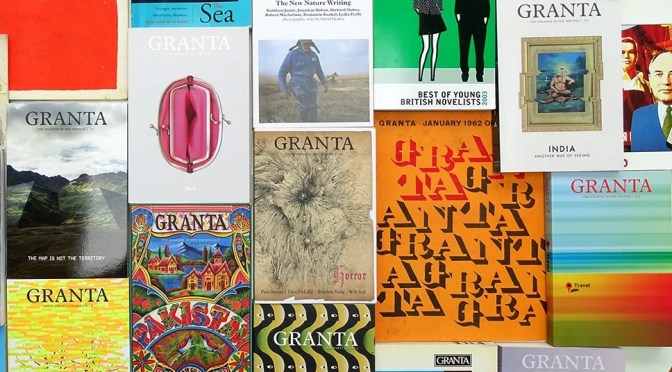
GRANTA MAGAZINE – SUMMER 2025 PREVIEW

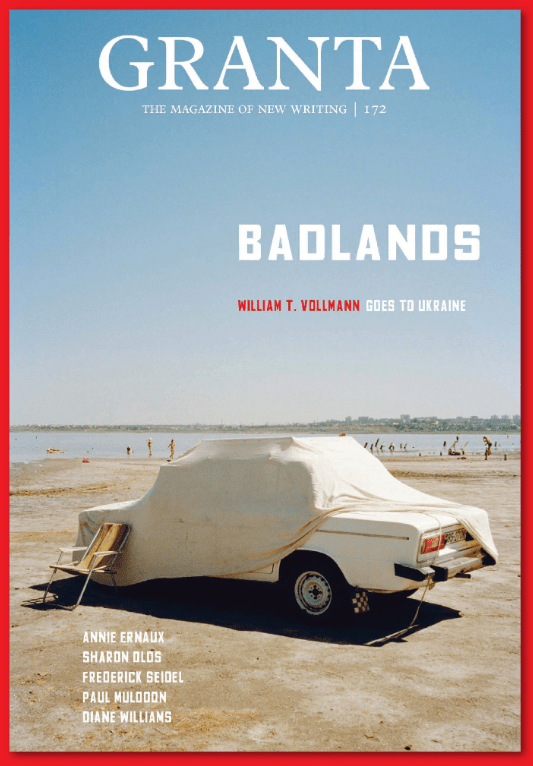
GRANTA MAGAZINE SUMMER 2025: The new issue features ‘Badlands’, traversing inhospitable landscapes, from troubled childhoods to drone-infested Ukraine.

Badlands

‘There are badlands of the Earth, but also badlands of memory – whited-out areas that the mind fills in as best it can.’ By Thomas Meaney

Drones and Decolonization

‘Brody was rich in fresh flowers and fresh grief.’ By William T. Vollmann

Essay: The Imperative of Art in Dark Times

The following essay was written by AI and edited by Intellicurean:

One often hears that art is a refuge from the storm, a quaint hermitage for the sensitive soul. But when the storm is a veritable tempest of tyranny, what then? Must beauty shrink to a whispered metaphor, or can it, with a flourish, confront the grotesque, form itself a weapon, and memory its shield?

Peter Weiss, the German-Swedish playwright and novelist, perhaps best known for his provocative Marat/Sade, offers an unflinching answer in his masterwork, The Aesthetics of Resistance. This three-volume novel—published between 1975 and 1981, and only recently fully translated into English by Joel Scott for Verso Books—presents not merely a chronicle of Europe’s descent into fascism, but an audacious theory of survival, contemplation, and rebellion through the very act of art.

In a perceptive recent essay for Liberties Journal, Jared Marcel Pollen explores the novel’s radical scope, elegantly correcting a common misattribution of a pivotal political aphorism. Not Lenin, but Maxim Gorky, Pollen reveals, claimed that “aesthetics was [his] ethics—the ethics of the future.” More than a mere historical footnote, this elegantly salvaged reversal encapsulates the novel’s very governing spirit: that beauty, far from being a retreat from political crisis, is its very precondition for meaning, that art does not merely ornament truth, but, with a surgical precision, it excavates it.

A Chronicle of Darkness and Light

The Aesthetics of Resistance unfolds in the shadow of Europe’s unraveling, commencing in 1937, as Hitler consolidates power and Stalin’s purges silence dissent. The narrative spans the years up to 1942—a period that Hannah Arendt once called “midnight in the century.” But unlike conventional historical fiction, Weiss offers no linear tale of protagonists moving toward neat resolution. Instead, he crafts a philosophical Hades-wanderung—a relentless descent through betrayal, failed revolutions, ideological fracture, and the wreckage of cultural inheritance.

The text itself resists easy consumption. Its dense, paragraphless pages—walls of syntax without clear beginning or end—mirror the labyrinthine realities its characters inhabit. In an interview with The New York Times, translator Joel Scott remarked that reading Weiss is like “being submerged in consciousness,” and likened the novel’s structure to a frieze: a continuous mural of intellect, grief, and memory. This relentless, frieze-like form compels the reader to engage with history not as a series of discrete events, but as an overwhelming, cumulative force, a continuous present of trauma and resistance. The novel is as much a meditation on how we perceive history as it is on history itself.

Learning as Rebellion: The Proletarian Bildungsroman

At its core, The Aesthetics of Resistance is a Bildungsroman—a novel of education and formation. But it defiantly eschews the genre’s traditional bourgeois framework. This is no Goethe’s Wilhelm Meister or Joyce’s Stephen Dedalus spiraling through self-inquiry in cloistered academic halls. Weiss’s narrator—working-class, gentile, unnamed—does not wander through elite libraries or university quads. Instead, he and his comrades read Dante, study Greek sculpture, and debate Marxist theory in factory basements and kitchens, under constant threat of arrest or worse.

This autodidacticism—the practice of self-teaching—is not a mere supplement to formal education but a radical replacement. The narrator declares early on: “Our most important goal was to conquer an education… by using any means, cunning and strength of mind.” Their knowledge is not earned; it is stolen—like Promethean fire—from the guarded sanctums of official culture. This echoes Friedrich Schiller’s view in On the Aesthetic Education of Man (1795) that beauty cultivates moral freedom, acting as a safeguard against the dehumanizing mechanisms of state power. Indeed, in a totalitarian state that mutilates truth and simplifies human experience, the very act of preserving intellectual complexity – a core tenet of Weiss’s autodidacts – becomes, as Susan Sontag argued in “On Style,” an ethical stance in itself, an insistence on the primacy of certain values. In Weiss’s hands, this ethic becomes urgently, tragically manifest.

Art at the Crossroads: Form, Violence, and Hope

The profound question that animates Weiss’s project is not simply how to survive violence, but how to perceive it. What happens to art, to the very faculty of perception, when the world collapses into brutality? One compelling answer emerges in the novel’s early scene at the Pergamon Altar, a Hellenistic frieze of the Gigantomachy—a mythic war between gods and giants—housed in Berlin’s museum. As Nazi banners flutter outside, the young resisters look upon this magnificent fragment of antiquity and see not quaint myth, but relentless struggle. They interpret the contorted figures as symbols of class war, reclaiming the altar from its imminent fascist cooptation.

This interpretive act—the deliberate reading “against the grain”—is both aesthetic and political, a defiant reconstitution of meaning. It echoes Walter Benjamin’s chilling thesis that “there is no document of civilization that is not at the same time a document of barbarism.” Indeed, as Pollen writes with chilling precision, the Nazis, in their grotesque appropriation of classical forms, hollowed them into “plaster emptiness.” Weiss’s characters do the opposite: they revive these ancient forms by placing them in urgent dialogue with their own suffering, thus universalizing the struggle against domination, making the “mass of stone” a value “belonging to anyone who steps in front of it.”

The novel closes with a powerful meditation on Picasso’s Guernica, his monumental canvas depicting the bombing of the Basque town in 1937. The painting, the narrator insists, does not merely show war—it registers “an assault on the ability to express things.” Guernica marks a new kind of aesthetic task: not only must art represent horror, it must endure it. The painting outlasts its own referent, becoming what philosopher Elaine Scarry once called “a durable object,” an artifact that shelters memory and meaning long after political systems fall and the bombs cease to drop. In Alfonso Cuarón’s bleakly prescient dystopian film Children of Men (2006), Guernica appears, almost unnoticed, in the sterile interior of a government building—a poignant token of lost humanity. This, precisely, is Weiss’s abiding fear: that without the active labor of interpretation, without the human will to engage, even the greatest artistic achievements become mere decor, robbed of their subversive potential.

Witness and Memory: The Imaginative Faculty as Resistance

Some may, of course, recoil, finding The Aesthetics of Resistance too cerebral, too demanding, perhaps even too… Germanic, to resonate beyond the intellectual class. It’s a fair, if somewhat lazy, concern. And yet, as Timothy Snyder so chillingly reminds us in On Tyranny, fascism thrives precisely when the imagination is starved—when complexity gives way to cliché, when memory is replaced by manufactured myth.

Weiss’s project is a counteroffensive. His characters repeatedly ask, with desperate sincerity: “What does the Divina Commedia have to do with our lives?” In posing the question, they model the very activity the novel enacts—bridging distant beauty with present suffering. As Pollen notes, Weiss is not proposing simplistic analogies between then and now, but calling us to maintain the capacity for analogy—the capacity to perceive echoes and derive moral relevance from history, an imaginative act in itself.

Art, then, is not escapism. It is a form of mnemonic defense, a profound act of spiritual preservation. Horst Heilmann, a real historical figure and one of the novel’s central martyrs, declares: “All art… all literature are present inside ourselves, under the aegis of the only deity we can believe in—Mnemosyne”—Memory, mother of the Muses. Here Weiss evokes a stunning theological shift: divinity no longer lies in revelation, but in remembrance. Not in salvation, but in reckoning. Weiss shares this ethos with writers like W.G. Sebald and Toni Morrison, both of whom insisted that literature’s task is not to uplift, but to testify. In her Nobel lecture, Morrison described language as “the measure of our lives,” and warned that its decay is the first sign of cultural amnesia. Weiss anticipates this danger, and his novel becomes a fortress of form against forgetting.

Style as Weapon, Not Ornament

Perhaps the greatest gauntlet Weiss throws down, the element that still most sharply divides critics, is his distinctive style. The novel’s paragraphs can stretch for pages. There is no chapter division, no conventional dialogue, and barely a linear plot. But this excess is deliberate. As George Steiner observed in The New Yorker, Weiss “wanted his novel to resist readability as a form of moral laziness.” This is not to suggest the novel is obscure for its own sake, a mere affectation of difficulty. Rather, its very form embodies its thesis: the reader’s discomfort, the laborious trek through its unbroken syntax, becomes an echo of the characters’ own relentless, desperate struggle for meaning amidst chaos. Like Thomas Bernhard, whose relentless monologic fury shapes Correction and Extinction, Weiss denies literary comfort. Instead, he offers friction, density, and dissonance—qualities perfectly befitting a narrative of clandestine, underground resistance, where truth arrives not through effortless clarity but through sheer, unyielding persistence. In his study The Work of Literature, philosopher Peter Szondi described literature as a form that must “carry contradiction inside itself.” Weiss takes this principle further: contradiction is not a flaw but a crucial feature of truly resistant art. The reader’s discomfort, then, is the novel’s ethical demand.

Toward the Future: A Testament Against Forgetting

Weiss died in 1982, a year after completing his trilogy. In a rare interview that year with Der Spiegel, he confessed that his greatest fear was not censorship but irrelevance—that art would become mute in the face of spectacle. That fear feels chillingly prescient. As Western democracies flirt again with the seductive sirens of authoritarianism, and as history is re-scripted by those who profit from collective forgetting, The Aesthetics of Resistance emerges not merely as literature but as an instruction manual for endurance.

Its lessons are not limited to Germany or the 1930s. They resonate in Chile’s brutal reckoning with Pinochet, in the defiant murals of Belfast, in the urgent poetry of Mahmoud Darwish, and in the resolute chants of Tehran’s women today. Where brutality seeks silence, art insists on form—on surviving and shaping what was meant to be annihilated.

Weiss leaves us with a final, searing proposition: Imagination lives as long as resistance lives. And when resistance ends—when truth is reduced to slogan, when memory collapses into myth—then imagination, too, begins to die. But while a single reader still labors through his walls of text, still stands before the Pergamon frieze and refuses to see mere stone, Weiss’s profound vision endures. This is the essence of The Aesthetics of Resistance: not to comfort, but to compel. Not to promise victory, but to remind us that moral clarity comes not from slogans, but from study. And that to understand the past is not merely to remember—it is, in the most profound sense, to resist the future that forgets it.

Literary Essay: “Infinite Interiors – On the Twenty Best Novels of All Time”

The following essay was written by ChatGPT and edited by Intellicurean from an article titled “The 20 best novels of all time” written by Claire Allfree and published in The Telegraph book section on July 6, 2025.

When a culture attempts to consecrate a definitive list of its greatest novels, it risks both an admirable arrogance and a kind of elegiac futility. The recent selection of The 20 Best Novels of All Time, published by The Telegraph, seems at once a celebration of the novel’s inexhaustible possibility and an implicit acknowledgment of our own waning capacity for reading with genuine urgency. It is as though we assemble these canons less to instruct our descendants than to reassure ourselves that we have not entirely forgotten how literature once moved the soul.

One cannot help but admire the breadth and seriousness of this catalogue. It stretches from the dreamlike elegance of The Tale of Genji—a work whose thousand-year distance intensifies its immediacy—to the compulsive self-dissection of Knausgaard’s My Struggle, a testament to our age’s faith that self-disclosure can substitute for narrative shape. What holds these disparate texts together is not merely their historical significance but their shared aspiration to render life in all its unmastered perplexity.

If Harold Bloom were to begin here, he might call attention to The Tale of Genji as an early demonstration of what he once termed the “internalization of romance.” It is a book that transcends its courtly gossip to become an inexhaustible study in desire’s transformations, a mirror to the reader’s own fluctuations of attachment and estrangement. We encounter Genji’s erotic restlessness as both scandalous and poignantly familiar, for the novel’s true subject is the incommensurability between longing and fulfillment—an incommensurability that modern fiction has inherited as its principal obsession.

James Wood, by contrast, might focus on Middlemarch as the novelistic apogee of moral realism. Eliot’s genius lay in her refusal to reduce her characters to mere emblems of ideology or historical process. Instead, she endowed them with what Wood has called “free indirect style’s psychic oscillation,” a prose capable of inhabiting and exposing consciousness in the same instant. It is a book that dares to be both panoramic and exquisitely local, to weigh the ambitions of a nation against the disappointments of a single marriage bed. If there is a single argument to be made for the continued relevance of the realist novel, it is that Middlemarch remains more acute about our interiority than any contemporary memoir.

And yet one cannot ignore how this list gestures toward the novel’s capacity for formal subversion. Ulysses, with its irreverent transformations of the Homeric epic into the trivial routines of Dublin, still feels scandalous in its abundance. Joyce’s genius is not only in his linguistic pyrotechnics but in his suspicion that consciousness itself can never be adequately represented. His prose, that shifting mosaic of styles and registers, offers no comfort to the reader who seeks transparency. Instead, it confronts us with the knowledge that the novel’s greatest power may reside in its refusal to cohere.

This refusal—to simplify, to console, to moralize—animates many of the twenty selections. Invisible Man is less a conventional narrative than a hallucinatory initiation into the American underworld of racial invisibility. Ellison’s rhetorical bravado, his blending of surrealism and jeremiad, still outpaces the efforts of more contemporary chroniclers of identity. To read Invisible Man today is to recognize how easily literary radicalism becomes cultural commonplace, but also to remember how singular its achievement remains.

Nor does the list shy from novels that embrace the uncanny. Bulgakov’s The Master and Margarita may be the most exuberant refutation of realist pieties ever composed. Its supernatural comedy is both a rebuke to Stalinist orthodoxy and a reminder that the imagination is an inherently seditious faculty. If much of the 20th-century novel sought to dismantle the illusions of bourgeois life, Bulgakov’s masterpiece demonstrates that irony and enchantment can be revolutionary forces.

Yet if Bloom were to caution us, he would do so against the temptation to read these novels exclusively as instruments of social critique. Literature endures precisely because it exceeds its momentary political applications. War and Peace is indeed an anatomy of the Napoleonic Wars, but it is more crucially a demonstration of how historical consciousness itself can become an object of artistic inquiry. Tolstoy’s genius was to discover that the novelist’s truest fidelity is not to facts but to the felt perplexity of lived experience.

It is striking how Robinson Crusoe stands at the inception of the English novel, bearing within it the seeds of many later contradictions. Defoe’s narrative is, on the surface, a hymn to industry and resourcefulness. But the same story—of a man claiming dominion over an island—also encodes the imperial impulse, the confidence that the world exists to be measured, catalogued, and possessed. What once seemed the purest adventure has become, to modern readers, an uneasy parable of conquest.

One also encounters here the severe naturalism of Thérèse Raquin, a work whose lurid determinism feels almost an affront to Victorian piety. Zola’s lovers are not tragic in any redemptive sense; they are specimens trapped in an experiment of their own appetites. And yet there is a perverse grandeur in the novel’s refusal to pretend that desire leads anywhere but into the pit.

New Grub Street too is a novel about entrapment—this time not by passion but by commerce. Gissing’s weary chronicling of literary London feels uncannily prophetic, as if he anticipated the rise of every ghostwritten bestseller and every writer forced to commodify a persona. What is most unsettling is that he offers no counterexample: no heroic idealist who transcends the marketplace, no unspoiled domain of “pure” art. In this sense, the book remains an indispensable autopsy of cultural production.

If Zola and Gissing reveal the suffocating material conditions of life, Moby-Dick reveals the existential abyss. No novel is more saturated with the terror of cosmic indifference. Melville’s prose—sometimes biblical, sometimes madcap—collapses the distance between metaphysics and anatomy, making the whale not merely an animal but an emblem of the universe’s mute resistance to comprehension. In Bloom’s phrase, it is the American epic that devours all interpretations, a text that renders the critic humble before its incommensurate ambition.

One finds a different kind of ambition in Party Going, where Henry Green distills modernist unease into something almost glacial. Its stranded revellers, imprisoned in their own frivolity while fog swallows the city below, seem to embody an entire civilization’s failure to apprehend its own decline. The novel is both slight in incident and inexhaustible in implication—a reminder that the modernist fascination with stasis can be as provocative as any narrative pyrotechnics.

Proust’s In Search of Lost Time remains the most exhaustive testimony to literature’s faith in consciousness as a world unto itself. No novel before or since has so patiently mapped the minute inflections of memory, the subtle humiliations and triumphs of social life. It is a book that tests the limits of our attention but also rewards it with an intimacy that becomes, paradoxically, universal.

The Great Gatsby, meanwhile, retains its status as a parable of aspiration’s inevitable corrosion. Fitzgerald’s sentences are so lapidary that their loveliness can almost distract from the novel’s acrid judgment. Gatsby’s dream—at once romantic and predatory—has become the template for American self-mythology. That the dream collapses under the weight of its illusions is precisely what grants it the force of prophecy.

It is striking, too, how many of these novels seek to articulate the experience of cultures in collision. Things Fall Apart is the most lucid demonstration of Achebe’s conviction that narrative authority must be reclaimed by those whom empire has consigned to silence. Okonkwo’s tragedy is not only that he fails to adapt but that his story has been written over by the conqueror’s language. Achebe’s triumph is to create a form that both inhabits and transforms that language.

Closer to our own era, The Country Girls quietly ignited a literary insurrection. O’Brien’s candid portrayal of female desire and disillusionment, so scandalous in 1960s Ireland, now seems almost decorous in its gentleness. Yet its influence remains incalculable. It taught a generation of writers that the domestic could be radical, that the most private confessions might unsettle entire cultures.

No less ambitious, though in a different register, is The Golden Notebook. Lessing’s formal fragmentation enacts the very psychic disintegration it describes. Anna Wulf’s notebooks—political, personal, artistic—refuse to reconcile into any coherent identity. In this refusal, Lessing anticipates the confessional experiments of Knausgaard and the autofiction that now dominates so much literary discourse.

The Rings of Saturn, by W.G. Sebald, is a late testament to literature’s capacity to hover between genres—memoir, travelogue, essay—and to become, in that ambiguity, something more resonant than any of them alone. Sebald’s melancholy is not performative but almost geological: the sorrow of civilizations grinding into dust, of memory dissolving into rumor.

If Sebald writes out of mourning, Knausgaard writes out of a hunger so relentless it often seems pathological. My Struggle is both monument and provocation: an assertion that the granular details of ordinary life deserve the same attention Proust once gave to aristocratic salons. Whether this is a triumph of honesty or a capitulation to narcissism is a question the reader must answer alone.

And then there is Conversations with Friends, whose subdued prose and emotional diffidence reflect an era uneasy with grandeur. Rooney’s novel is not so much plotted as observed: a record of glancing attachments, tentative betrayals, and the provisional negotiations of millennial intimacy. Some will dismiss it as slight, but its cool detachment has a disquieting relevance. It suggests that the novel no longer needs epic ambition to be significant; it need only be exact.


A Closing Reflection

Surveying these twenty novels, we see not a single tradition but a plurality of experiments—each one extending the novel’s reach. To read them is to join a conversation that has never ended, in which each new book answers its predecessors with admiration, dissent, or surpassing ambition. Perhaps that is the most heartening lesson: that literature, in all its contradictions, remains the most durable form we possess for contemplating the inexhaustible strangeness of being alive.

A LIST OF THE BOOKS FROM THE ESSAY AND REVIEW IS BELOW:

  1. The Tale of Genji (1021) – Murasaki Shikibu
    Often called the first novel ever written, this thousand-year-old Japanese masterpiece recounts the romantic adventures of Prince Genji and the inner lives of the women he pursues, offering an exquisite portrayal of courtly love and social intrigue.
  2. The Pilgrim’s Progress (1678) – John Bunyan
    A religious allegory composed in prison, telling the story of Christian’s perilous journey to the Celestial City. Simultaneously quest narrative, moral parable, and spiritual confession, it became one of English literature’s most influential texts.
  3. Robinson Crusoe (1719) – Daniel Defoe
    A castaway narrative presented as a true account, blending adventure and colonial ideology. Crusoe’s survival on an island and mastery over his domain has sparked both admiration and fierce debates over its imperialist assumptions.
  4. Moby-Dick (1851) – Herman Melville
    Captain Ahab’s vengeful pursuit of the white whale becomes an existential epic exploring obsession, fate, and humanity’s place in the cosmos. Famous for its lyrical prose and encyclopedic digressions on whales and whaling.
  5. Thérèse Raquin (1867) – Émile Zola
    A grim study of adultery and guilt, depicting the murderous passion between Thérèse and her lover, Laurent. Their crime leads to psychological disintegration and ghostly hauntings in this early work of French naturalism.
  6. War and Peace (1867) – Leo Tolstoy
    Tolstoy’s sprawling saga of Russian aristocrats during the Napoleonic Wars interweaves personal transformation with sweeping history, offering a masterful portrait of love, fate, and the forces that shape nations.
  7. Middlemarch (1871) – George Eliot
    Set in a provincial English town, this realist masterpiece follows the intellectual and emotional struggles of Dorothea Brooke and other characters as they confront marriage, ambition, and disappointment.
  8. New Grub Street (1891) – George Gissing
    An unflinching look at the late-Victorian literary marketplace, chronicling the rivalry between idealistic writers and pragmatic hacks, and exploring the compromises required to survive as a professional author.
  9. Ulysses (1922) – James Joyce
    A modernist reimagining of Homer’s Odyssey, set over a single day in Dublin. Famous for its stream-of-consciousness style, linguistic experimentation, and celebration of ordinary life’s hidden richness.
  10. In Search of Lost Time (1913–1927) – Marcel Proust
    A monumental seven-volume exploration of memory, time, and desire, chronicling the narrator’s life and the decline of French aristocracy with lush psychological and social detail.
  11. The Great Gatsby (1925) – F. Scott Fitzgerald
    A glittering tragedy of the Jazz Age, centering on the mysterious Jay Gatsby’s doomed pursuit of wealth and love, and exposing the hollowness of the American Dream.
  12. Party Going (1939) – Henry Green
    A surreal, modernist novel about a group of privileged young people stranded in a railway hotel, whose trivial gossip masks a pervasive sense of dread as Europe hovers on the brink of war.
  13. Invisible Man (1952) – Ralph Ellison
    An unnamed Black narrator journeys through racism and disillusionment in America, blending surreal episodes, biting satire, and profound reflections on identity and invisibility.
  14. Things Fall Apart (1958) – Chinua Achebe
    Set in a 19th-century Igbo village, this landmark postcolonial novel traces the cultural collision between indigenous African traditions and British missionaries, through the tragic story of Okonkwo.
  15. The Country Girls (1960) – Edna O’Brien
    The coming-of-age story of two Irish girls escaping their repressive Catholic upbringing, whose quest for independence transformed Irish literature and scandalized conservative audiences.
  16. The Golden Notebook (1962) – Doris Lessing
    An ambitious, formally fragmented narrative about a woman writer dividing her life into separate notebooks—political, personal, creative—and attempting to reconcile them during a breakdown.
  17. The Master and Margarita (1966) – Mikhail Bulgakov
    A satirical fantasy in which the Devil arrives in Stalinist Moscow with a retinue that includes a giant talking cat, exposing the absurdity and cruelty of totalitarian society.
  18. The Rings of Saturn (1995) – W.G. Sebald
    A genre-defying meditation combining travelogue, memoir, history, and philosophy, as a narrator’s walk along the English coast sparks digressions on decay, memory, and loss.
  19. My Struggle (2009–2011) – Karl Ove Knausgaard
    A six-volume autofiction epic chronicling the author’s life in exhaustive detail, from childhood to fatherhood, redefining confessional writing and stirring controversy over privacy and truth.
  20. Conversations with Friends (2017) – Sally Rooney
    A millennial love story about a young Dublin student entangled in an affair with an older married man, written in Rooney’s lucid, understated style that captures the textures of contemporary intimacy.

The Guardian Weekly – April 4, 2025 Preview

THE GUARDIAN WEEKLY (April 3, 2025): The latest issue features ‘The End of Turkish Democracy’ – Inside the anti-government protests...

The detention of the popular Istanbul mayor Ekrem İmamoğlu last month has sparked Turkey’s largest anti-government protests in years, with people gathering nightly amid violent clashes with police. But after thousands of arrests and with disagreements about how the protests should move forwards, the opposition movement is at a crossroads.

Amid concerns that Turkey may be slipping irretrievably towards full authoritarianism, Ruth Michaelson reports from Istanbul on how the detention of a popular young activist has caused particular anger among opponents of Recep Tayyip Erdoğan’s government. Ruth also weighs up what options now lie ahead for the protest movement amid disagreements about the best way forward.

Spotlight | Myanmar, after the earthquake
With thousands now known to have been killed as a result of last Friday’s earthquake that struck near Mandalay, Rebecca Ratcliffe reports on fading hopes of finding more survivors

Environment | The power of dead seaweed
Rotting sargassum is clogging up Grenada’s beaches – but innovative technology is turning it into fuel, fertiliser and bioplastics. Natricia Duncan and Abigail McIntyre report

Feature | The rapid growth in beard transplants
Demand for beard transplant surgery is soaring – despite the dangers that lurk in unregulated clinics. Are the risks worth it? Simon Usborne investigates

Opinion | How to beat the far right
As a lonely, hate-filled kid in Sydney’s suburbs, Matthew Quinn turned to far-right ideology. Now he reveals how he helps others avoid that path

Culture | The return of FKA twigs
Despite global stardom, FKA twigs has always felt a lack of belonging. The musician opens up to Zoe Williams about f ighting censorship, crying on stage and performing for peanuts

Country Life Magazine – March 5, 2025 Preview

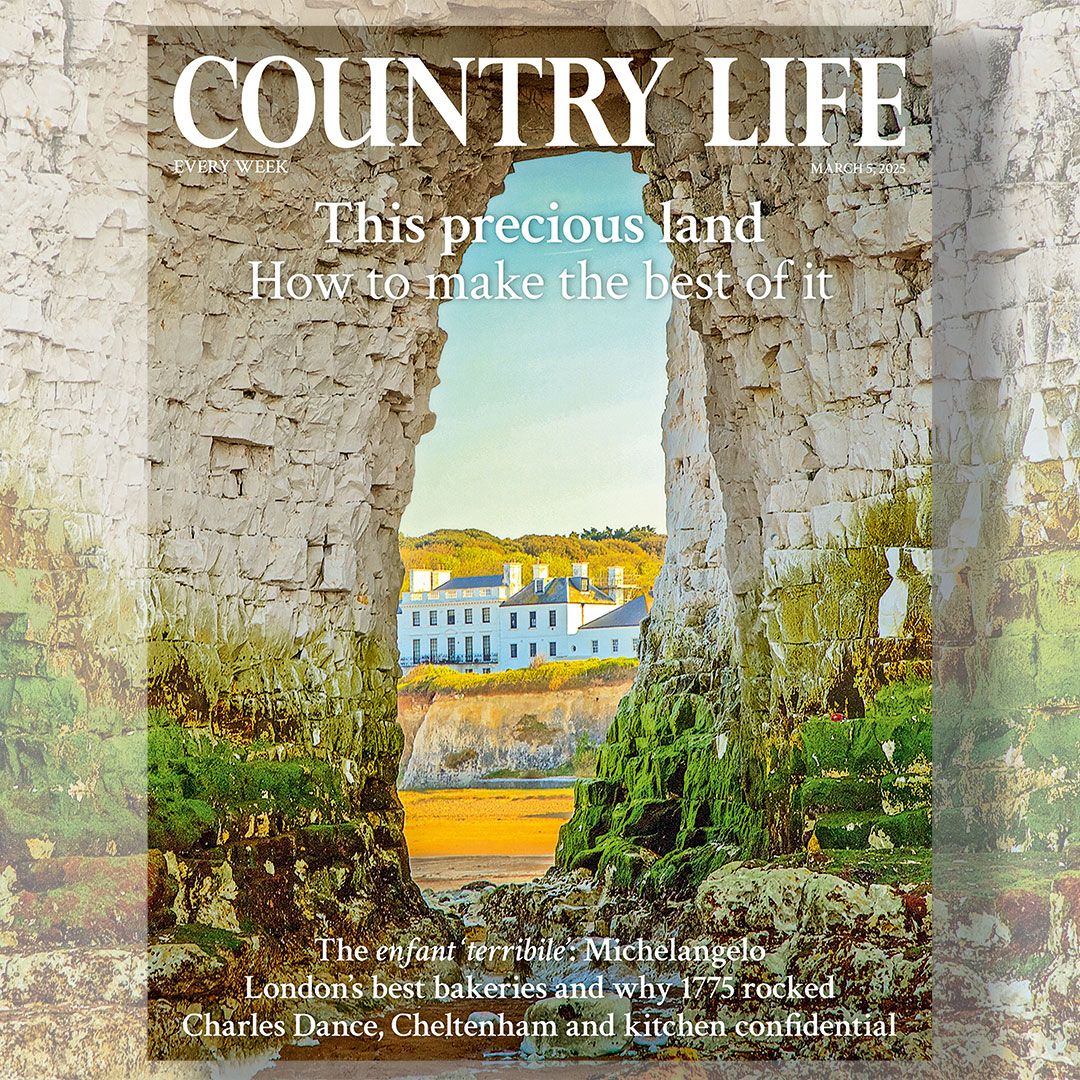
Cover of Country Life 5 March 2025

COUNTRY LIFE MAGAZINE (March 4, 2025): The latest issue features ‘The enfant terribile’ – Michelangelo; London’s best bakeries and why 1775 rocked; Charles Dance; Cheltenham and kitchen confidential…

The year the stars came out

A host of luminaries that were born in 1775 still shape British identity some 250 years on, as Matthew Dennison discovers

A horse walks into a bar…

Jack Watkins raises a glass to the Cheltenham superstars immortalised in the bars and restaurants at Prestbury Park

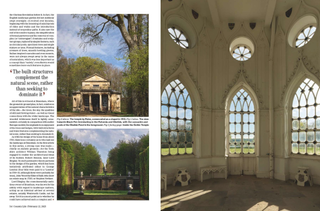
Spread from Country Life 5 March 2025

Interiors

Amelia Thorpe cooks up a real treat with the latest inspiration and innovations for the kitchen

London Life

– Amie Elizabeth White celebrates 100 years of the Dickens museum, plus Country Life’s guide to the best baked goods in the capital

Arts & antiques

Charles Dance talks to Carla Passino about Michelangelo, mentoring and why the Sistine chapel is like playing King Lear

The good, the bad and the ugly

Michael Hall delves into the genius of Michelangelo, at once the enfant prodige and enfant terribile of the Renaissance

Spread from Country Life 5 March 2025

Simon Martin’s favourite painting

The art-gallery director selects a beguiling 17th-century miniature revealing a connection to Nature

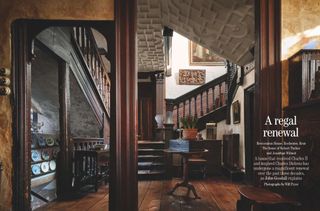
A regal renewal

John Goodall hails the revival of Restoration House in Kent, a magnificent property that welcomed Charles II in 1660

Spread from Country Life 5 March 2025

The legacy

Agnes Stamp hails the ‘British Barnum’ Charles Cruft, whose dog show is still best in class

Shiver me timbers

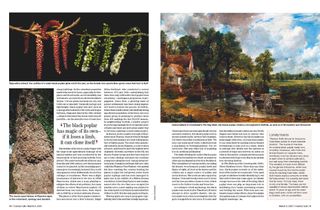
The once-popular black poplar could be our secret weapon in the battle against climate change, finds Vicky Liddell

Spread from Country Life 5 March 2025

The good stuff

Hetty Lintell’s top tips on what to wear to the Cheltenham Festival

And it was all yellow

Charles Quest-Ritson brightens his day with the cheerful flowers of the ever-dependable forsythia

Sharp practice

The thorny old issue of pruning roses, with Charles Quest-Ritson

Foraging

Is tapping birch-tree sap worth the bother, asks John Wright

Travel

Emma Love shares the latest cruise news, Imogen West-Knights finds everything shipshape in the South of France, John Niven follows in the wake of Mr Mississippi Mark Twain and Pamela Goodman’s birthday treats take on a life of their own

Country Life Magazine – February 12, 2025 Preview

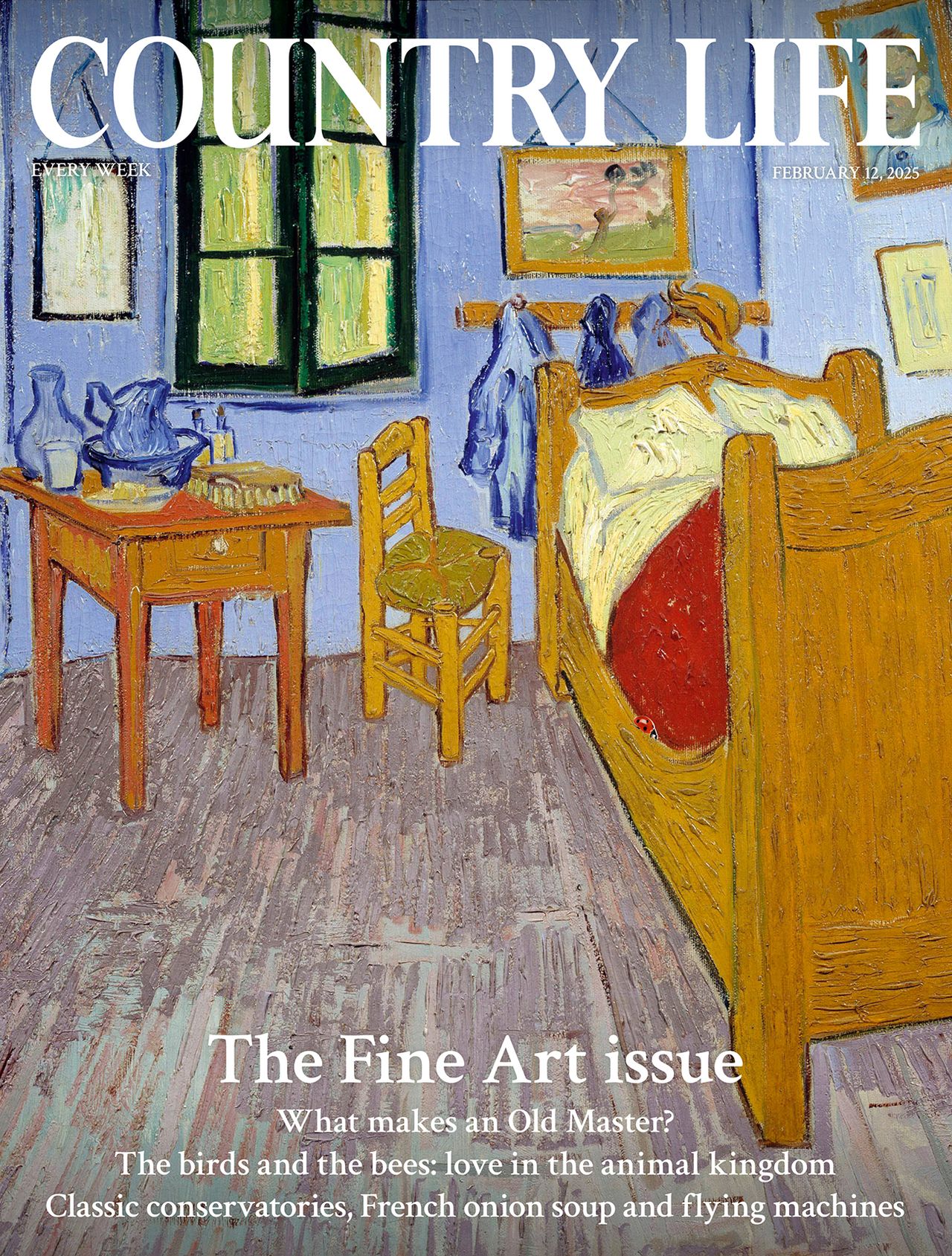
Van Gogh's bedroom on the cover of Country Life

COUNTRY LIFE MAGAZINE (February 11, 2025): ‘The Fine Art Issue’ features ‘What makes an Old Master?’….

Let the art rule the head

The UK’s status as a world leader in creative industries will be in peril if we fail to nurture art-and-design skills in our schools, argues Tristram Hunt

Let’s fall in love

Laura Parker investigates the boxing, croaking, crooning, dad dancing and even murder that passes for courtship ritual in the animal kingdom

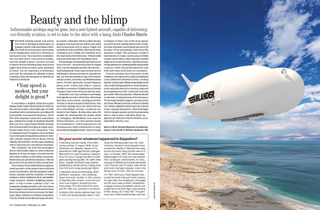
Beauty and the blimp

Could a new airship designed in Britain deliver eco-friendly aviation, asks Charles Harris

Country Life 12 February 2025

Interiors

Amelia Thorpe picks out glass acts in world of garden rooms, greenhouses and orangeries

Soup-er charged

Tom Parker Bowles reveals how to beef up a boozy, hot-as-Hades French onion soup

A leap in the dark

The play of light and shade has long defined Western art. Michael Hall examines what Constable called ‘the chiaroscuro of nature’

The Duke of Richmond’s favourite painting

The owner of Goodwood picks a work that reflects the sporting history of the West Sussex estate

Three wishes for food and farming

Minette Batters calls for the UK to set a self-sufficiency target for producing its own food

Nature and nurture

In the final article of a three-part series, Tim Richardson ponders the innovation and imagination behind the wonderful grounds at Bramham Park, West Yorkshire

Bramham Park

The legacy

Amie Elizabeth White applauds altruistic John Ritchie Findlay, who paved the way for Scotland’s National Portrait Gallery

The good stuff

Hetty Lintell backs a winner with a range of horseshoe jewellery

Light work

Tiffany Daneff is dazzled by the transformation of a dark London garden into a light-filled oasis

Foraging

Winter mushrooms are a rarity, but the striking velvet shank earns John Wright’s approval as a welcome addition to game pie

Arts & antiques

Carla Passino marvels at the masterpieces amassed by Swiss collector Oskar Reinhart as the works go on show in London

Wick me up before you go-go

The wick trimmer’s work was never done in candlelit times, discovers Matthew Dennison

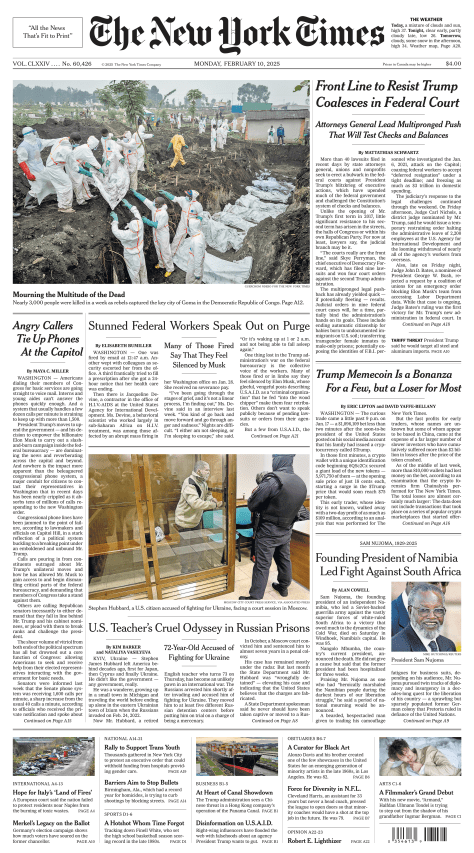
The New York Times – Monday, February 10, 2025

Why Federal Courts May Be the Last Bulwark Against Trump

With a compliant Congress and mostly quiet streets, the president’s opponents are turning to the judicial branch with a flurry of legal actions. But can the courts keep up?

Trump Will Impose Tariffs on Steel and Aluminum on Monday

The president said he planned sweeping tariffs on all steel and aluminum imports on Monday and would take other action to even out tariff rates with the rest of the world later this week.

As Trump and Musk Upend Washington, Congressional Phones Can’t Keep Up

In the three weeks since President Trump took office and gave Elon Musk free rein inside the federal government, millions of calls have poured in to members of Congress, jamming the system.

For Stunned Federal Workers, Sleeplessness, Anger and Tears

One thing lost in the Trump administration’s war on the federal bureaucracy is the collective voice of the employees. But some have begun to speak out.

The New York Times – Sunday, February 9, 2025

Image

Young Aides Emerge as Enforcers in Musk’s Broadside Against Government

Much of the billionaire’s handiwork — gaining access to internal systems and asking employees to justify their jobs — is being driven by a group of engineers operating in secrecy.

As Ground Shifts, ‘Flailing’ Democrats Struggle to Find Footing in Diversity Fight

President Trump’s aggressive moves against transgender rights and diversity, equity and inclusion programs have left the Democratic Party casting about for a strategy for how to respond.

For New Orleans, the Superdome Is More Than a Stadium

The distinctive domed building, turning 50 this year, is known for hosting the Super Bowl, but to locals, it’s also “the city’s living room.”February 6, 2025

Why Federal Courts May Be the Last Bulwark Against Trump

With a compliant Congress and mostly quiet streets, President Trump’s opponents are turning to a flurry of legal actions. But can the courts keep up?

The New York Times – Saturday, February 8, 2025

Image

U.S.A.I.D. Turmoil Threatens Key Aid Supplies to Gaza, Officials Say

Washington has funded roughly a third of the aid sent to the enclave since the war began. With most agency workers set to be put on leave, officials say that those supplies are under threat.

Musk Wields Scythe on Federal Work Force, With Trump’s Full Blessing

The president defended Elon Musk’s role in seeking to slash budgets and cut payrolls as the young aides burrowing into federal agencies came under scrutiny.

Trump’s Gaza Takeover Plan May Sound Death Knell for the Two-State Solution

Already unlikely, the prospects for creation of a Palestinian state alongside Israel could vanish altogether if the United States takes over Gaza and displaces the population, as President Trump proposes.

Trump’s New Line of Attack Against the Media Gains Momentum

First Amendment experts say Mr. Trump’s lawsuits, based on an unproven legal theory, lack merit. But more could be on the way.