Tag Archives: Wilderness

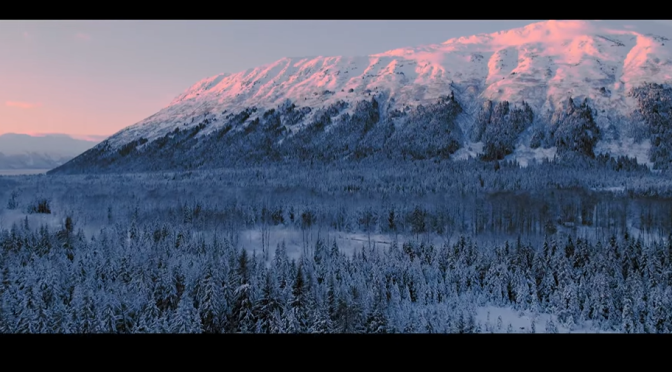
Cinematic Travel Films: ‘Lost In Alaska’ (2022)

A short film by Sam Newton.

Alaskaconstituent state of the United States of America. It was admitted to the union as the 49th state on January 3, 1959.

Alaska lies at the extreme northwest of the North American continent, and the Alaska Peninsula is the largest peninsula in the Western Hemisphere. Because the 180th meridian passes through the state’s Aleutian Islands, Alaska’s westernmost portion is in the Eastern Hemisphere. Thus, technically, Alaska is in both hemispheres.

Alaska is bounded by the Beaufort Sea and the Arctic Ocean to the north, Canada’s Yukon territory and British Columbia province to the east, the Gulf of Alaska and the Pacific Ocean to the south, the Bering Strait and the Bering Sea to the west, and the Chukchi Sea to the northwest. The capital is Juneau, which lies in the southeast, in the panhandle region.
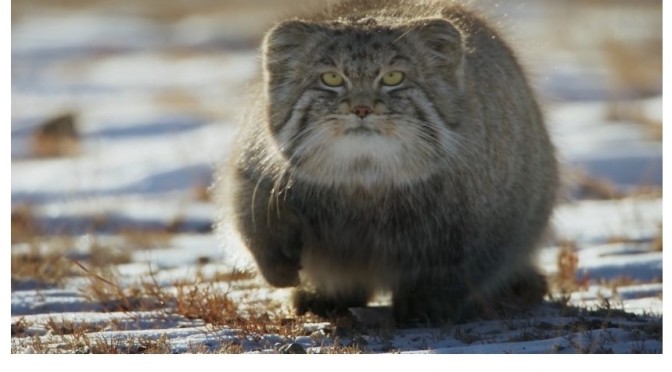
Wildlife: A Pallas’s Cat In The Steppes Of Mongolia

Dinnertime is a gamble for Pallas’s cats, and this one’s hangry. Relative to their body size, they have the shortest legs of any cat, which makes attacking prey in a timely fashion somewhat tricky…

The Pallas’s cat, also known as the manul, is a small wild cat with long and dense light grey fur. Its rounded ears are set low on the sides of the head. Its head-and-body length ranges from 46 to 65 cm with a 21 to 31 cm long bushy tail. 

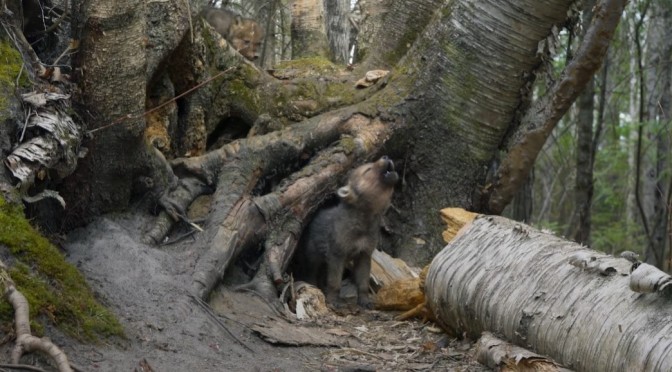
Wildlife Views: Filming Wolf Pups In Voyageurs National Park, Minnesota

In a race against time, the crew works to microchip a pack of wolf pups and return the pups to their den as quickly as possible—all while setting up their cameras in time to capture some truly heart-melting shots. Witness the wildlife of North America as you’ve never seen it before on #AmericaTheBeautifulSeries, narrated by Michael B. Jordan.

Filmed in Voyageurs National Park, Minnesota. Voyageurs National Park is in northern Minnesota, near the Canadian border. It covers a vast area and is known for its forests, waterways and huge, island-dotted Rainy, Kabetogama and Namakan lakes. The Ellsworth Rock Gardens, created by artist Jack Ellsworth, are a series of abstract sculptures on a terraced outcrop. The remote Kettle Falls area has a dam and a red-roofed hotel, both from the early 20th century. 

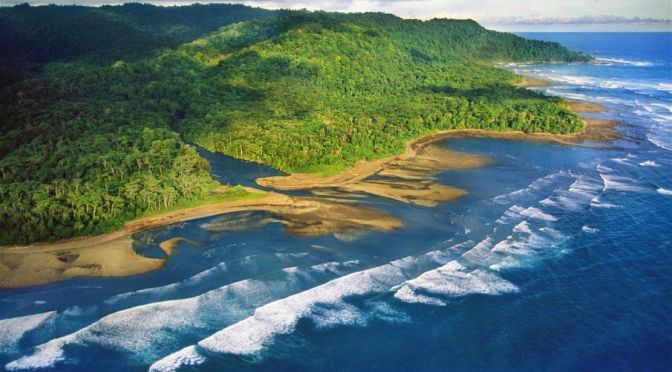
Costa Rica Views: Hiking In Corcovado National Park

Corcovado National Park in Costa Rica is the backpacking experience of a lifetime. It encompasses the only remaining old growth wet forests on the Pacific coast of Central America, and 13 major ecosystems including lowland rain forest, highland cloud forest, jolillo palm forest, and mangrove swamps, as well as coastal marine and beach habitats.

There is a good chance of spotting some of Costa Rica’s shyest and most endangered inhabitants here; Baird’s Tapirs, Jaguars, Scarlet Macaws, Harpy Eagles, Red-backed squirrel monkeys and White-lipped Peccaries. It is wet, remote and rugged, but the trails are relatively good, and the camping areas near the ranger stations are grassy and well drained.

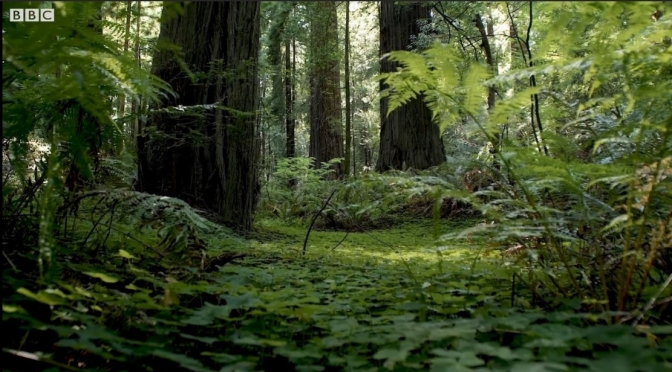
Soundscapes: California’s Giant Redwood Forests

Redwood National and State Parks are a string of protected forests, beaches and grasslands along Northern California’s coast. Jedediah Smith Redwoods State Park has trails through dense old-growth woods. Prairie Creek Redwoods State Park is home to Fern Canyon, with its high, plant-covered walls. Roosevelt elk frequent nearby Elk Prairie. Giant redwood clusters include Redwood National Park’s Lady Bird Johnson Grove.

An #OurGreenPlanet co-production with The Listening Planet, in association with The Moondance Foundation.

Nature: The Wildlife And Landscapes Of Costa Rica

Costa Rica is a rugged, rainforested Central American country with coastlines on the Caribbean and Pacific. Though its capital, San Jose, is home to cultural institutions like the Pre-Columbian Gold Museum, Costa Rica is known for its beaches, volcanoes, and biodiversity. Roughly a quarter of its area is made up of protected jungle, teeming with wildlife including spider monkeys and quetzal birds.


Video timeline: 0:00
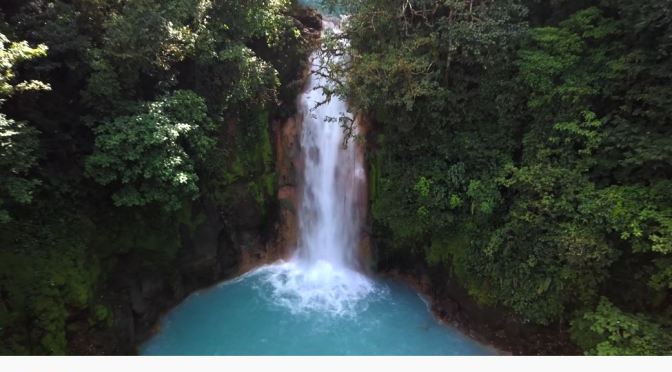
intro of costa rica 0:03 Yellow snake curled 0:06 Aerial view of irazu volcano 0:08 Snake python 0:11 Cinematic view of oak tree 0:16 Close up view of iguana 0:22 skydiving in Costa Rica 0:26 nauyaca waterfalls 0:31 galloping horse 0:39 Aerial view of pavon bay 0:46 waterfall rio celeste 0:50 Close up iguana 0:53 Drone view of palm oil 0:58 tree frog 1:01 Trachycephalus 1:04 Montezuma Beach 1:09 Oka tree 1:13 naped snake 1:18 Blue Yellow Macaw 1:23 Green Python 1:28 Rio celeste waterfall 1:35 meanders river 1:45 Bilobatum 1:49 punta banco Beach 1:57 irazu volcano 2:05 Close up view of butterfly 2:08 Corcovado 2:13 Playa Zancudo 2:21 manuel antonio 2:32 Green iguana 2:46 tortoiseshell 2:59 Costa Rica rainforest 3:05 quetzal Bird 3:11 Sloth 3:16 Irazu volcano 3:22 paragliding 3:29 skydiving 3:34 la paz waterfall 3:43 whales 3:50 Coto river Aerial view 4:02 Aerial costarica 4:10 Beautiful parrots 4:18 Forest Frog 4:25 Rain forest 4:29 iguana 4:35 Wild lizard 4:40 flamingos 4:47 capucinus 4:55 Rain forest 5:02 capuchin 5:09 Violetear

Views: The Waterfalls & Landscapes Of Yosemite

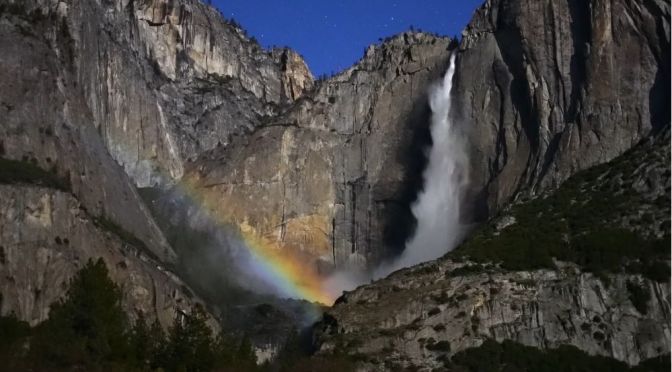
First protected in 1864, Yosemite National Park is best known for its waterfalls, but within its nearly 1,200 square miles, you can find deep valleys, grand meadows, ancient giant sequoias, a vast wilderness area, and much more.

Chapters: 0:00 Intro 0:27 Yosemite Falls 1:48 Yosemite Firefall 2:31 Yosemite Valley 4:18 Yosemite Stars View 5:05 Vernal Falls 7:06 Tenaya Lake 8:57 Rafting in Merced River 10:48 Glacier Point Yosemite 12:14 Half Dome 14:36 El Capitan 15:18 Bridalveil Fall 16:35 Mariposa Grove 17:25 Tunnel View 18:04 Taft Point 18:39 Tuolumne Meadows

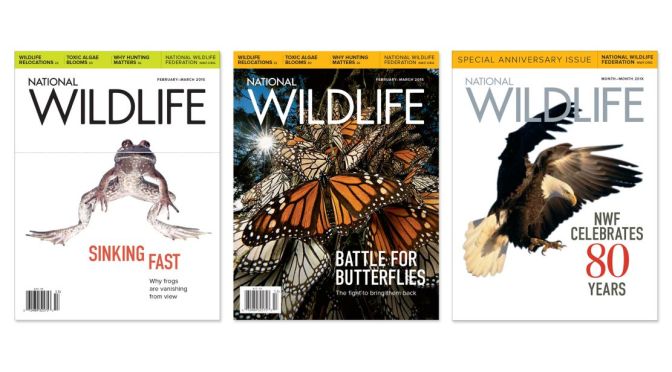
Cover: National Wildlife Magazine – Aug/Sep 2022

Surrounded by golden light, a mule deer stands in grasslands.

National Wildlife Magazine – August/September 2022

Burning Up

Heat, drought and wildfires are ravaging western wildlife while conservationists try to help ecosystems adapt

By Brianna Randall – Conservation, Aug 02, 2022

Dead mussels lie along the Pacific shore of Vancouver, British Columbia, during 2021’s summer heat wave. Scientists estimate that the record-breaking heat killed more than 1 billion marine animals off the coasts of British Columbia and Washington state.
(Photo by Christopher Harley/University of British Columbia)

GASPING SALMON WITH INFECTED LESIONS. Emaciated deer searching sagebrush flats for water. Clams and mussels boiled to death in their shells. Last summer, temperatures in the Northwest soared to record highs in the triple digits, killing more than 1 billion marine animals in the Salish Sea and stressing wildlife from the Pacific to the Rocky Mountains. Simultaneously, ongoing drought in the Southwest—which began in 2000 and is the region’s driest 22-year period in 1,200 years—is causing plants to wither, springs to dry up and wildfires to engulf entire landscapes.

Nature: ‘The Glen Beyond’ – A Canoe Journey Into The Scottish Highlands

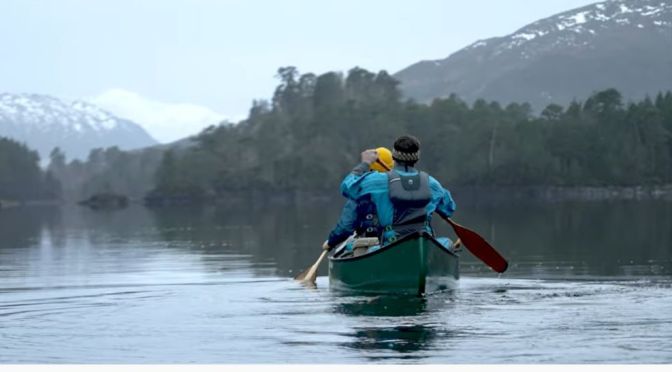
In February 2022, the British Isles were hit by three consecutive storms, some of the strongest seen in decades. In the days before the storms arrived, we decided to change the plan for our canoeing expedition whilst we were already on our way to Scotland. Instead of paddling the exposed lochs along the west coast, we opted for a more sheltered location. A glen tucked away right in the heart of the highlands. This film showcases the highlights of our journey.

Read the full article written by Ian Finch here: https://www.sidetracked.com/the-glen-…