
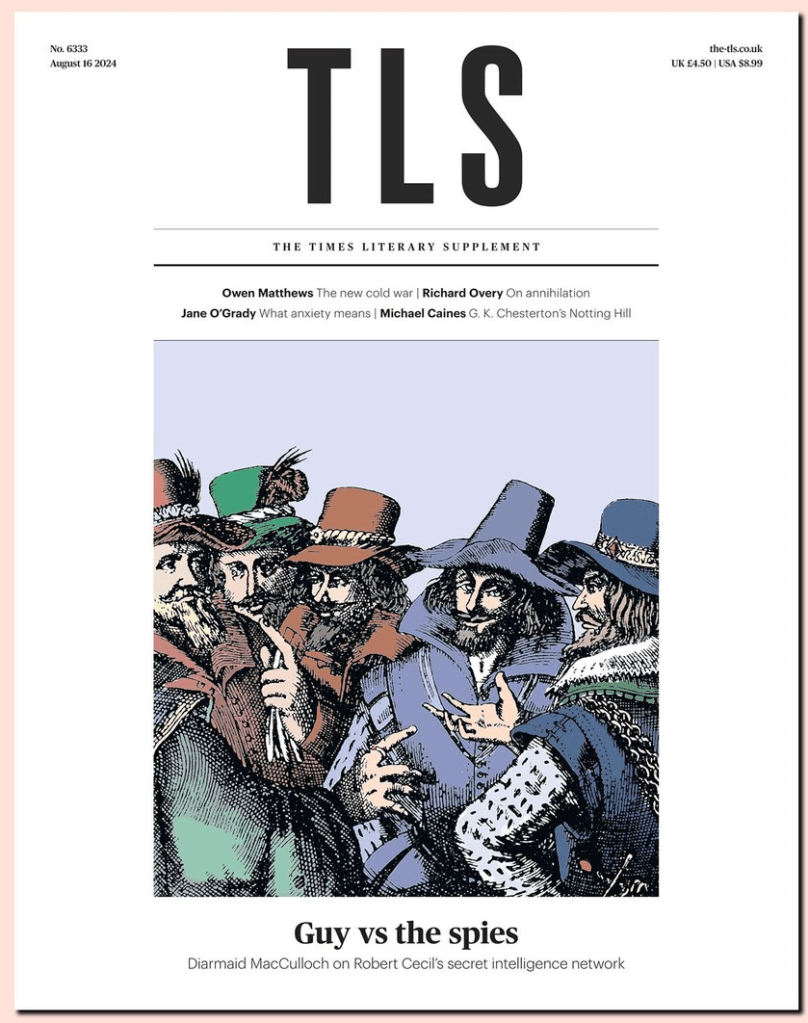
Times Literary Supplement (August 14, 2024): The latest issue features ‘Guy vs the Spies’ – Robert Cecil’s secret intelligence network; The new Cold War; On annihilation; What anxiety means; G.K. Chesterton’s Notting Hill…

Times Literary Supplement (August 14, 2024): The latest issue features ‘Guy vs the Spies’ – Robert Cecil’s secret intelligence network; The new Cold War; On annihilation; What anxiety means; G.K. Chesterton’s Notting Hill…
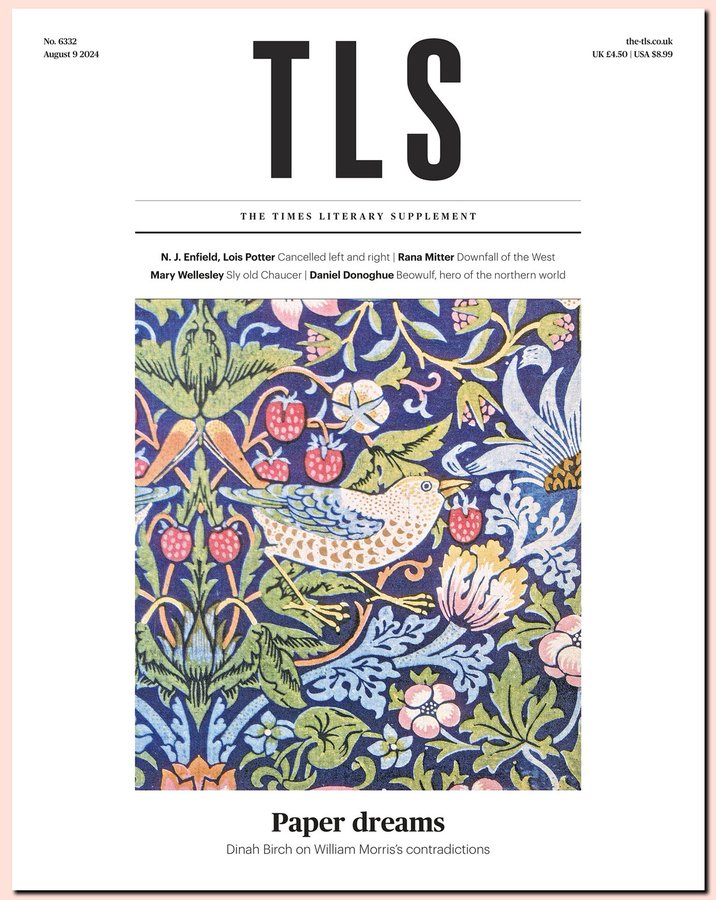
Times Literary Supplement (August 7, 2024): The latest issue features ‘Paper Dreams’ – Dinah Birch on William Morris’s contradictions; Cancelled left and right; Downfall of the West; Sly old Chaucer; Beowulf, hero of the Northern World….

Times Literary Supplement (July 24, 2024): The latest issue features ‘Generation Anxious’ – Jonathan Haidt’s bleak vision of modern childhood; Rebuilding broken Britain; The woman who stalked the world; German Expressionism at Tate Modern and Twisters..

Times Literary Supplement (July 17, 2024): The latest issue features ‘World at War’ – Humanity’s appetite for organized violence; Should we have babies; Posture panic; The boy on the burning deck and Wales…
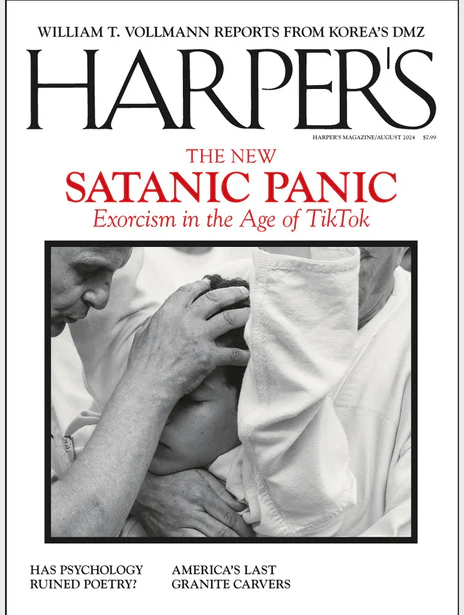

The new age of American exorcisms by Sam Kestenbaum
The pastor is pacing back and forth, a cordless microphone in one hand, the other extended before him. He says, “This is the awakening the American church has been waiting on,” and keeps pacing. He has readied himself before taking the elevated stage, donning a paisley shirt, top button undone, and speaks now from the wood pulpit of his revival tent.
Seamus Heaney and the end of the poetic career
The Letters of Seamus Heaney, edited by Christopher Reid. Farrar, Straus and Giroux. 848 pages. $45.
This buoyant anvil of a book has brought me to the edge of a nervous breakdown. Night after night I’m waking with Seamus Heaney sizzling through—not me, exactly, but the me I was thirty-four years ago when I first read him, in a one-windowed, mold-walled studio in Seattle, when night after night I woke with another current (is it another current?) sizzling through my circuits: ambition. Not ambition to succeed on the world’s terms (though that asserted its own maddening static) but ambition to find forms for the seethe of rage, remembrance, and wild vitality that seemed, unaccountably, like sound inside me, demanding language but prelinguistic, somehow. I felt imprisoned by these vague but stabbing haunt-songs that were, I sensed, my only means of freedom.
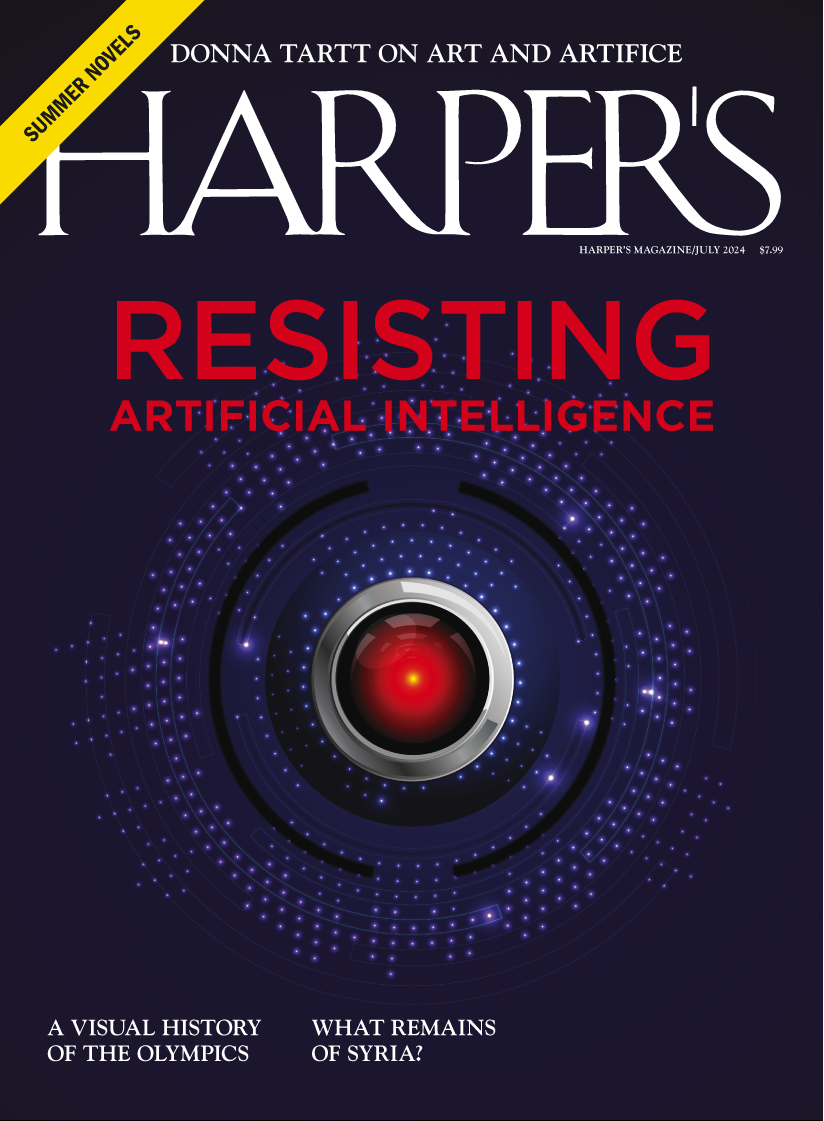

Before and after artificial intelligence
We will never know how many died during the Butlerian Jihad. Was it millions? Billions? Trillions, perhaps? It was a fantastic rage, a great revolt that spread like wildfire, consuming everything in its path, a chaos that engulfed generations in an orgy of destruction lasting almost a hundred years. A war with a death toll so high that it left a permanent scar on humanity’s soul. But we will never know the names of those who fought and died in it, or the immense suffering and destruction it caused, because the Butlerian Jihad, abominable and devastating as it was,…
Can AI think creatively? Can we?
“Far as the east from even, / Dim as the border star, / Life is the little creature / That carries the great cigar.” So wrote Emily Dickinson, with some unfortunate help from a computer. As I read that stanza in February 2022, I was more than six months into a scientific experiment I was conducting with my friend and colleague Morten Christiansen, a cognitive psychologist at Cornell, where he and I are professors. In 2021, two years before ChatGPT would become a household name, Christiansen had been impressed by the initial technical descriptions of GPT-3, the recently released version of the generative large language…
In search of the new world order in Munich
Naturally, I too will be staying at the Bayerischer Hof.
—Franz Kafka
The Hotel Bayerischer Hof in Munich is an indestructible fortress of Mitteleuropean culture where tour guides like to pause. Richard Wagner repaired to the Hof for tea after his opera performances in Munich; Sigmund Freud fell out with Carl Jung in the Hof over the status of the libido; Kafka stayed at the Hof when he gave his second, and final, public reading to a hostile audience. A decade later, Hitler learned to crack crabs at the Hof under the supervision of a society hostess, and Joseph Goebbels counted on its rooms for a good night’s rest. The Hof weathered the revolutions of 1848; it withstood the revolution of 1918–19, in which the socialist leader Kurt Eisner was assassinated in front of the hotel and Bavaria briefly became a workers’-council republic; it rebuffed the Nazis’ attempts to buy it in the Thirties; and, after it was nearly destroyed by an Allied bombing raid in 1944, it was reconstructed with beaverlike industry. Today its wide façade of three hundred and thirty-seven rooms imposes itself over the small Promenadeplatz like a slice of meringue cake too large for its plate. Every February, hundreds of diplomats, politicians, academics, and arms dealers convene here for the Munich Security Conference.
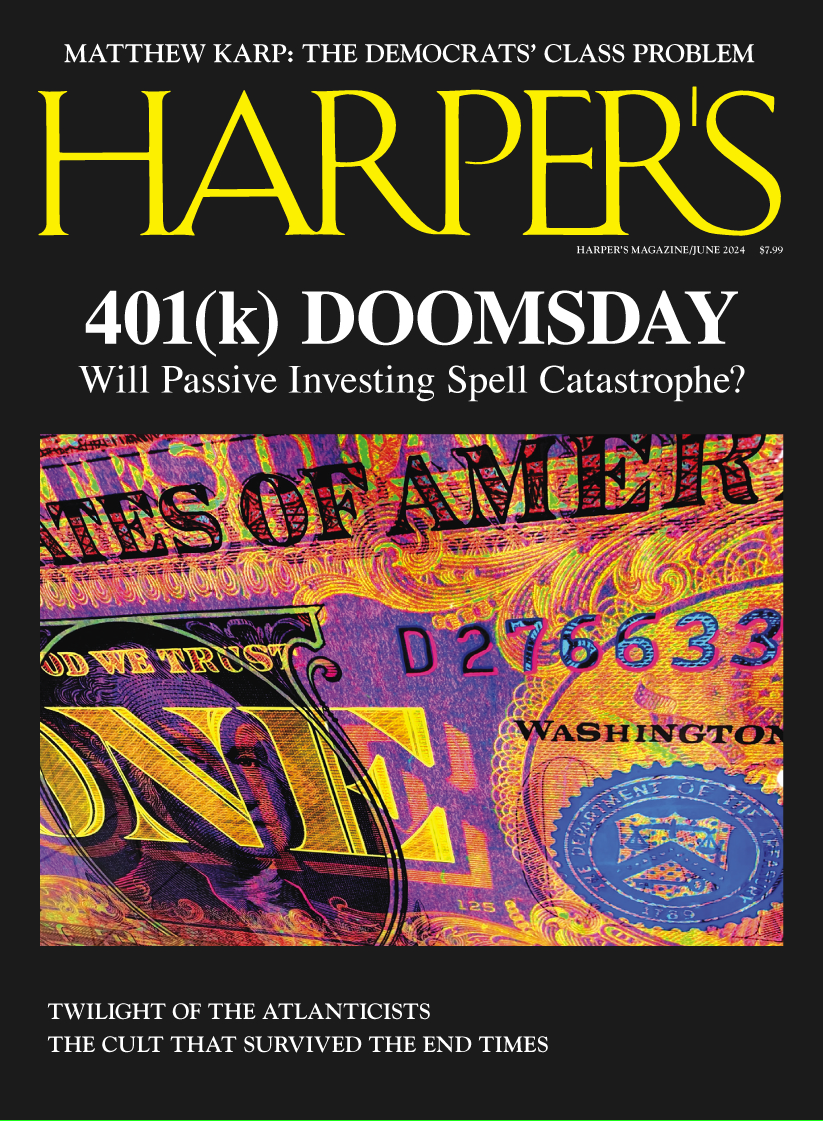
Does the rise of index funds spell catastrophe?
Money—where it comes from, where it goes—was on my mind as I drove from Brooklyn to Philadelphia last fall, a Friday the thirteenth. I spent most of the trip on a Zoom call with my wife and our doula, discussing what combination of night nurses, babysitters, and nannies we’d need come the birth of our twins, our second and third sons. Nary a dollar figure was uttered, seemingly out of respect, just as those attending a funeral avoid naming the actual cause of death.

Video timeline: 0:00 ‘Axis of Resistance’ 0:37 Iran’s allies 1:44 Iran’s history 3:22 U.S. in the Middle East 4:14 Attacks since Oct. 7
WSJ explains what to know about the alliance that includes Hamas in Gaza, Hezbollah in Lebanon and the Houthis in Yemen.

Video timeline: 00:00 – The origins of Hizbullah 01:06 – Its political rise 02:00 – How big a threat is it?
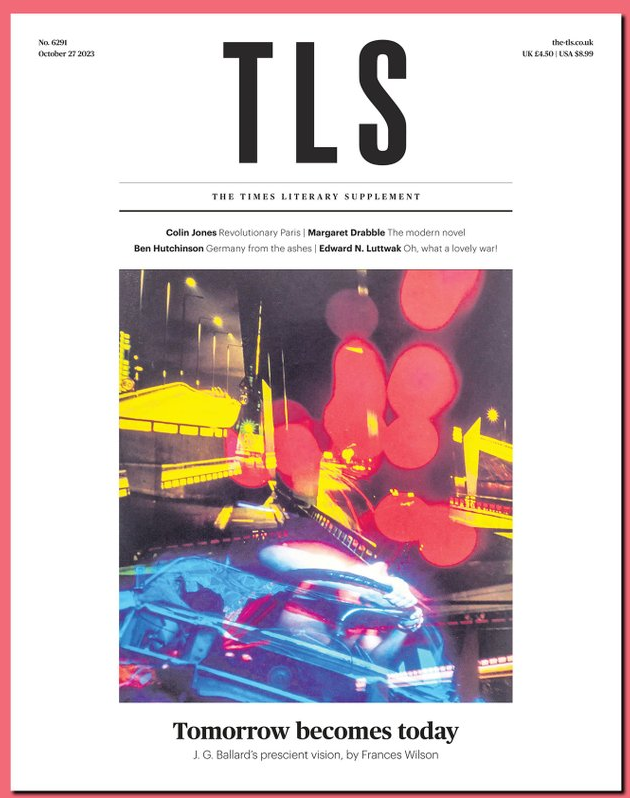

Times Literary Supplement (October27, 2023): The new issue features ‘Tomorrow becomes today’ – J.G. Ballard’s prescient vision; Revolutionary Paris; The modern novel; Germany from the ashes and Oh, what a lovely war!….


 Boomers Daily