

Barcelona, the cosmopolitan capital of Spain’s Catalonia region, is known for its art and architecture. The fantastical Sagrada Família church and other modernist landmarks designed by Antoni Gaudí dot the city. Museu Picasso and Fundació Joan Miró feature modern art by their namesakes. City history museum MUHBA, includes several Roman archaeological sites.
Tag Archives: Videos
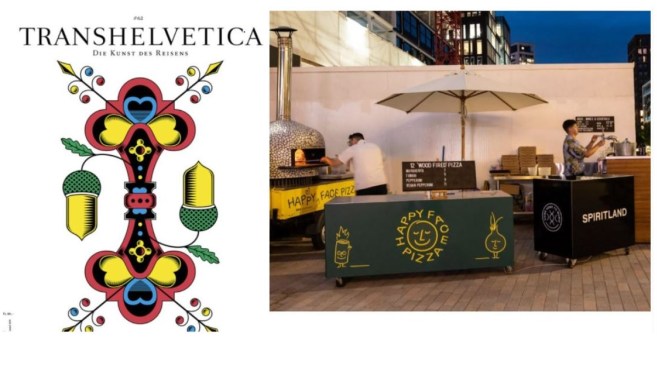
Media: Swiss Magazine ‘Transhelvetica’ And London’s ‘Spiritland’
We visit two bold companies finding canny ways to pivot their product for changing audiences. Transhelvetica, a Swiss magazine, and Spiritland, a London-based hospitality and audio venture, are each shaping the media landscape for the better. To discover more about Monocle magazine head to http://www.monocle.com

Online Shopping: ‘Digital Coupon Codes’ – Making Curators Millions (Video)
Promo code sites have become big business, with digital coupons surpassing paper for the first time in 2020. Major deal sites make millions based almost entirely on commissions from each sale. They don’t sell shopper data and it’s not a scam. In fact, big companies like PayPal and Rakuten are buying up deal sites for billions.
From Honey to Slickdeals, Rakuten Rewards to Brad’s Deals, CNBC asked the major sites what it takes to find deals that are real and why the business model works. With the huge boost in online shopping during the pandemic, deal-finding sites have become a major business. In 2020, Inmar Intelligence found that digital coupons surpassed printed coupons for the first time ever. Also in recent years, behemoths like Goldman Sachs and PayPal have paid hundreds of millions – or even billions – for sites like Slickdeals and Honey that automatically curate coupon codes or offer shoppers cash back for making purchases through their sites.
Even banks like Capital One are getting into the game. The business model is not a scam. All major deal sites say they don’t sell shopper data. Instead, each sale generates a commission for the deal site and for the middleman known as the affiliate marketer – a company that connects the vast world of retailers with deal sites. With nearly 2,000 businesses in the daily deal site space, it’s a crowded industry filled with legitimate businesses as well as plenty of sites that are riddled with ads and expired coupon codes. That’s because regardless of whether a coupon code works, the site that provided the code will get commission for that sale. When the deals are legitimate, however, it can mean big money for shoppers, retailers, and the deal sites.
From Honey to Slickdeals, Rakuten Rewards to Brad’s Deals, CNBC asked the major deal sites, and shoppers, what it takes to find deals that are real and why the business model works. Watch the video to learn how saving consumers’ money makes big bucks for companies in the vast world of online deal hunting.

City Views: ‘Vigevano – Northern Italy’ (4K)
Vigevano is a town near Milan, in northern Italy. It’s known for the portico-lined Piazza Ducale, dating from 1492. A staircase under the Torre del Bramante tower gives access to the courtyard of Castello Sforzesco. The vast castle houses several museums, including the Leonardiana, with reproductions of works by Leonardo da Vinci. The town’s renowned shoemaking history is highlighted at the Museo della Calzatura.

Aerial Views: ‘Columbia – Landscapes & Waterways’
Colombia, officially the Republic of Colombia, is a country in South America with territories in North America. Colombia is bounded on the north by the Caribbean Sea, the northwest by Panama, the south by Ecuador and Peru, the east by Venezuela, the southeast by Brazil, and the west by the Pacific Ocean.

Cryptocurrencies: ‘What Coinbase’s Listing Means’
The listing of Coinbase, the largest bitcoin exchange in the U.S., introduces a new way to invest in cryptocurrencies. WSJ explains how Coinbase is trying to distance itself from the risks of bitcoin to succeed on Wall Street. Photo illustration: George Downs
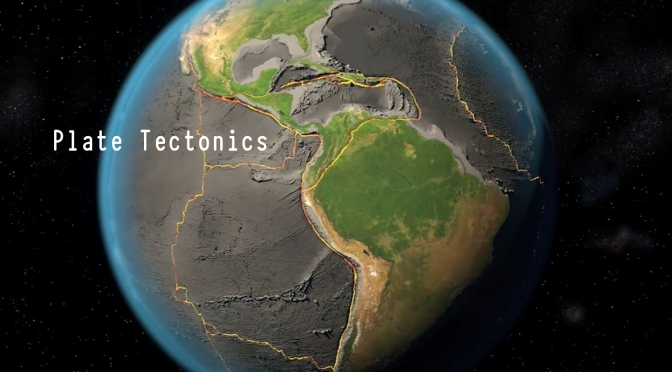
Views: ‘Plate Tectonics – Keys To Geologic History’
Plate tectonics is the narrative arc that ties every episode in Earth’s geologic history together. Thanks to the magnetic compasses hidden in volcanic rocks, scientists know where each tectonic jigsaw piece has been over eons of time. They can replicate the plates’ odysseys in beautiful and precise simulations that reveal the destruction and creation of Earth’s many faces. Lucía Pérez-Díaz, a geologist at Oxford, studies our planet’s stunning ability to constantly change its face.

Covid-19: Why ‘Johnson & Johnson Vaccine’ Was ‘Paused’ In U.S. & Europe
The rollout of the Johnson & Johnson vaccine has been paused in the US, Europe and South Africa after reports of rare blood clotting in a very small number of people. Health authorities said they were halting the use of the shot while they investigate the cases — and that they were doing this out of “an abundance of caution.” The Astra Zeneca jab was also recently temporarily suspended in some countries after being linked to rare blood clots. Authorities are calling it a short “pause.” The US’s Johnson and Johnson vaccine has hit the same stumbling block as the UK’s AstraZeneca jab did last month: a likely link to a rare and deadly blood clot. Use of Johnson and Johnson’s Janssen vaccine has now been halted across the US, Europe and South Africa, with health authorities investigating six incidents of clotting in younger women, one of them fatal. The US-developed vaccine uses an adenovirus to trigger immunity – the same mechanism as the UK’s AstraZeneca vaccine. It accounts for roughly 5 percent of vaccines delivered so far in the US. This is a setback to Europe, too. Johnson and Johnson announced it will delay it’s rollout on the continent. The company had already started processing an order from the EU of 200 million doses. The Janssen jab has been partially rolled out in Africa, where a majority of countries don’t have enough vaccines even for their healthcare workers. The African Union signed a deal for 220 million doses this year. But US authorities remain hopeful. They’re saying it could only be a matter of days before the rollout resumes.

Megaprojects: Norway’s ‘Stad Ship Tunnel’ (Video)
Norway’s grand plan to build the world’s first full-scale ship tunnel is finally going ahead. This is how it’ll be done.
It’s been talked about for years, but now the Stad Ship Tunnel has finally been approved and work will start in 2022. Costing over USD $300M and taking three-to-four years to complete, the project will see a new mile-long shipping route carved under the Stadhavet peninsula at its narrowest point.
Now, we’ve built tunnels for boats before – like on the Canal du Midi in France, but the Norway project takes things to a whole different level – after all there’s a pretty big difference between a small tourist boat and a cruise ship.
Measuring 37 metres high by 26.5 metres wide, and with a depth of 12 metres, the tunnel will be big enough for ships up to 16,000 tonnes to pass through.
This crazy project is the answer to a problem that’s existed for more than a thousand years. Quite literally since the time of the Vikings, traversing the Stadhavet Sea has meant a treacherous journey for boats.

News: Five Top Stories – April 13, 2021 (Video)
Five stories to know for April 13: Protests continue after Minneapolis shooting, Knoxville school shooting, Japan nuclear waste water, Derek Chauvin trial and Russia warns U.S. on Crimea.
1. Minnesota police released body camera footage that shows police officer Kim Potter apparently drawing her gun by mistake, instead of her Taser, when she shot a young Black man, Daunte Wright, to death during a traffic stop. Protests continued overnight in Minneapolis following the incident.
2. A Knoxville school shooting ends with a student shot and killed by police and one officer wounded. Police said the high school student opened fire on them in a campus bathroom, wounding an officer.
3. Prosecutors neared the end of their case in the Derek Chauvin trial. George Floyd’s younger brother Philonise Floyd gave emotional testimony about how his sibling grew up obsessed with basketball and doting on his mother.
4. Japan will release more than 1 million tons of contaminated water from the destroyed Fukushima nuclear plant into the sea, the government said, a move China called “extremely irresponsible,” while South Korea summoned Tokyo’s ambassador in Seoul to protest.
5. Russia warned the United States to ensure its warships stayed well away from Crimea “for their own good,” calling their deployment in the Black Sea a provocation designed to test Russian nerves.
 Boomers Daily