Tag Archives: Travel

Top Cultural Road Trips: Seville To Ronda In Spain

First, the fizz. Part of Seville’s exuberance is because the city is preparing for two festivals: Semana Santa, over Holy Week, and the April Fair (actually in May). The first involves processions of elaborately trussed religious statues sitting on decorative floats held aloft by men in cream-coloured cloaks and cone-shaped headdresses, a vision that surprised me when I attended, by chance, while interrailing around Europe decades ago. The April Fair is equally flamboyant, although with more frills — Sevillanas in every shade of flamenco dress. Everyone learns flamenco at school, so there’s no excuse for poor footwork. And, naturally, getting a new dress, of slightly different design, is the done thing each year.

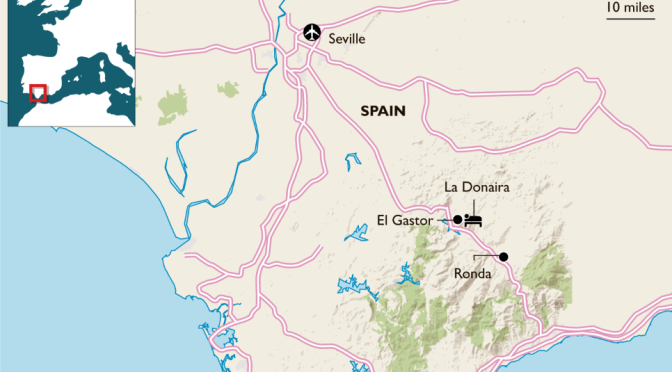
After all that, arriving at La Donaira via the white mountain village of El Gastor is a change of pace. Not least because the views are lurking under cloud (the calima again), so I am inclined to make the most of the hotel’s cosiness rather than head out for a grey hike.

What was once a private house, converted into a hotel in 2015, strives to maintain that homely feeling. It’s working — guests wear athleisure at dinner, pad around in socks and Crocs, and children jump on the giant sofa by the living-room fire. The vibe here is so relaxed, we leave our bedroom door open at night to listen to the rain and feel the cool mountain air. The living room is a big, open space — a former barn, with picture windows over the courtyard, a library and plenty of lounging spots.
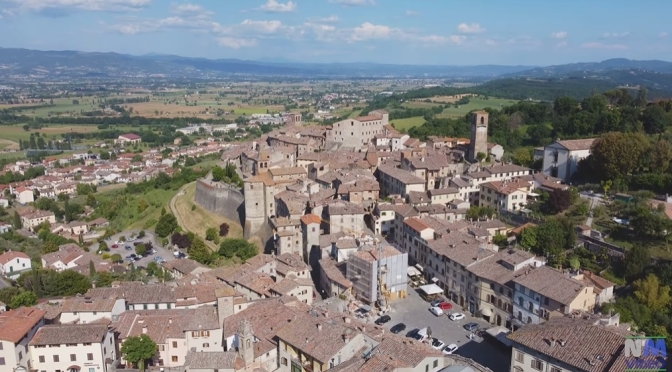
Village Walks: Anghiari In Arezzo, Tuscany, Italy (4K)

Anghiari is a town in the province of Arezzo in Tuscany and is one of the most beautiful villages in Italy. On 29 June 1440 the plain in front of Anghiari was the scene of a famous battle, which went down in history precisely as the battle of Anghiari between the Florentine army, an ally of the Holy See and commanded by Giovanni Paolo Orsini, and that of the Duke of Milan, led by Niccolò Piccinino. The battle lasted one day and was won by the Florentines, who thus consolidated their dominions in Tuscany and was later painted by Leonardo da Vinci.

Video Timeline: – 00:00 – AERIAL VIEW OF ANGHIARI – 04:11 – BALDACCIO SQUARE – 05:37 – PORTA DEL CATORCIO – 07:20 – PIAZZA DEL POPOLO – 07:42 – PALAZZO PRETORIO – 09:57 – BADIA DI SAN BARTOLOMEO – 14:33 – CHURCH OF SANT’AGOSTINO – 22:32 – VIA DELLA TORRE – 23:04 – CLOCK TOWER – 23:29 – CHURCH OF SANTA MARIA DELLE GRAZIE – 24:18 – “LAST SUPPER”, CANVAS BY GIOVANNI ANTONIO SOGLIANI – 25.10 – “FOOT WASH”, CANVAS BY GIOVANNI ANTONIO SOGLIANI – 25:27 – “DEPOSITION FROM THE CROSS”, CANVAS BY DOMENICO UBALDINI – 26:34 – “OUR LADY OF MERCY”, GLAZED TERRACOTTA BY ANDREA DELLA ROBBIA – 27:47 – ACADEMY OF THE RECOMPOSED THEATER

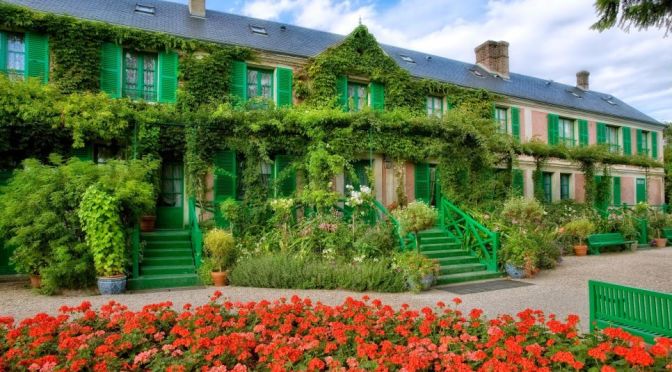
France Views: Monet’s House & Garden In Giverny

Giverny is a village in the region of Normandy in northern France. Impressionist painter Claude Monet lived and worked here from 1883 until his death in 1926. The artist’s former home and elaborate gardens, where he produced his famed water lily series, are now the Fondation Claude Monet museum. Nearby, the Musée des impressionnismes Giverny highlights the Impressionist art movement. 

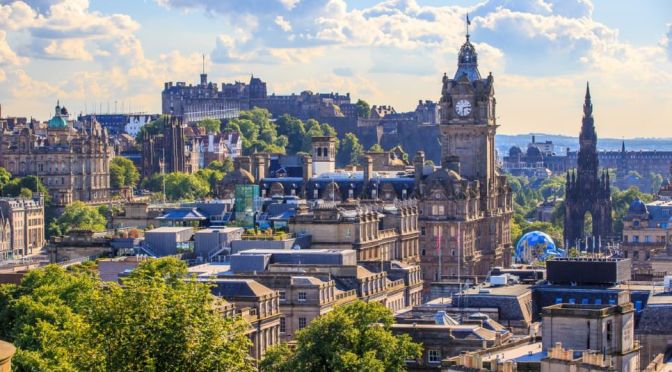
Scotland View: Edinburgh – Old Town & City Center

Edinburgh is Scotland’s compact, hilly capital. It has a medieval Old Town and elegant Georgian New Town with gardens and neoclassical buildings. Looming over the city is Edinburgh Castle, home to Scotland’s crown jewels and the Stone of Destiny, used in the coronation of Scottish rulers. Arthur’s Seat is an imposing peak in Holyrood Park with sweeping views, and Calton Hill is topped with monuments and memorials. 

Video Timeline: 00:00 Waterloo Pl 02:13 The Balmoral 04:30 Princes St 05:55 Edinburgh Waverley Station 09:00 Scott Monument 13:33 The Royal Scottish Academy 14:00 Princes Street Gardens 14:32 Scottish National Gallery 15:30 The Mound 17:05 New College, The University of Edinburgh 21:12 Tolbooth Kirk 21:50 The Royal Mile – Castlehill – Scottish Great Highland Bagpipe 25:05 Edinburgh Castle 29:07 The Royal Mile 33:30 George IV Bridge and National Library of Scotland 34:40 Victoria St 38:30 Grassmarket 41:46 Edinburgh Castle 46:00 Candlemaker Row 49:43 Greyfriars Kirkyard 53:04 Chambers St 57:32 South Bridge 01:01:40 Cockburn St 01:06:00 St Giles’ Cathedral 01:12:42 The Royal Mile – High St 01:18:25 The Royal Mile – Canongate 01:23:00 Thomson’s Land, The University of Edinburgh 01:26:10 Canongate Kirk 01:28:00 The Royal Mile – Canongate 01:33:55 Palace of Holyroodhouse 01:35:30 Scottish Parliament Building

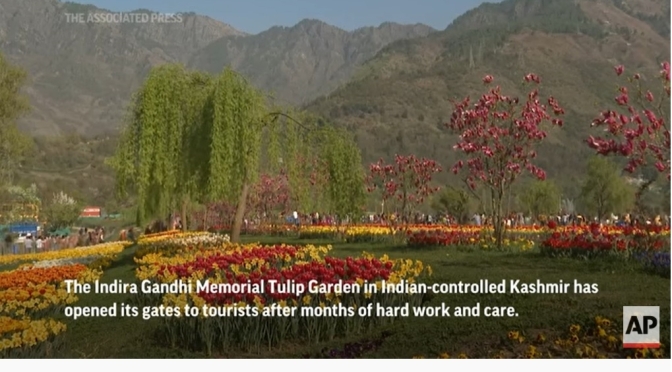
Views: Tulip Festival In Srinagar, Kashmir (2022)

It’s bloom season at one of Asia’s largest tulip gardens in Indian-administered Kashmir. Due to sustained low numbers of COVID-19 cases in India, thousands of tourists are visiting the garden where more than 1.5 million tulips, hyacinths and daffodils are on display. (April 1)

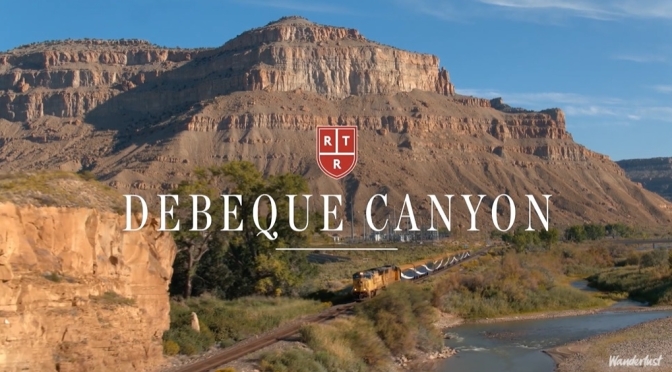
Views: Rocky Mountaineer Train – Colorado To Utah

Rocky Mountaineer from Denver in Colorado to Moab in Utah. During the train journey you will explore the Colorado Rockies, see landscapes that have been transformed over millennium, you’ll pass the Big 10 Curve, the Moffat Tunnel, Byers Canyon, Glenwood Springs, Debeque Canyon, Mount Garfield, Ruby Canyon before finishing in Moab.

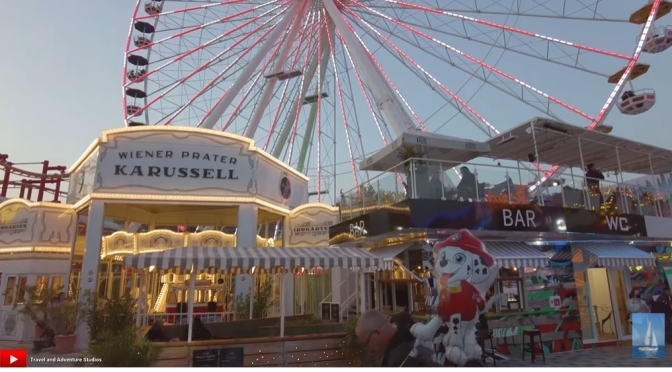
City Views: Prater Park In Vienna, East Austria (4K)

The Prater is a large public park in LeopoldstadtVienna, Austria. The Wurstelprater, an amusement park that is often simply called “Prater”, lies in one corner of the Wiener Prater and includes the Wiener Riesenrad Ferris wheel.

The area that makes up the modern Prater was first mentioned in 1162, when Emperor Friedrich I gave the land to a noble family called de Prato. The word “Prater” was first used in 1403, originally referring to a small island in the Danube north of Freudenau, but was gradually extended to mean the neighbouring areas as well. The land changed hands frequently until it was bought by Emperor Maximilian II in 1560 to be a hunting ground.

To deal with the problem of poachers, Emperor Rudolf II forbade entry to the Prater. On 7 April 1766, Emperor Joseph II declared the Prater to be free for public enjoyment, and allowed the establishment of coffee-houses and cafés, which led to the beginnings of the Wurstelprater. Throughout this time, hunting continued to take place in the Prater, ending only in 1920.

In 1873, a World Exhibition was held in the Prater, for which a large area of land was set aside, centered on the Rotunda, which burnt down in 1937. This land now houses the Messegelände (exhibition centre).

On the grounds of modern-day Kaiserwiese, an attraction called “Venice in Vienna” was established in 1895 by Gabor Steiner. The area included an artificial lagoon to simulate the canals of Venice, Italy.

Views: The Wilderness & Wildlife Of Wyoming (4K)

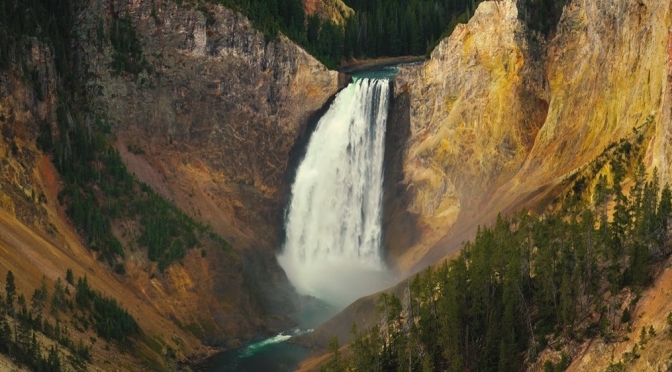
Wyoming is a state in the Mountain West subregion of the Western United States. The 10th largest state by area, it is also the least populous and least densely populated state in the contiguous United States. Wikipedia