
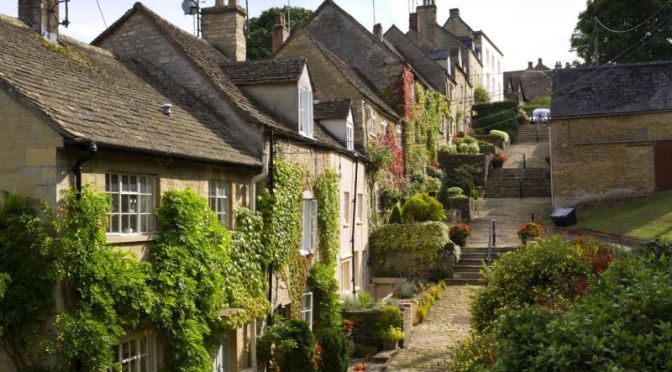
Tetbury is another historic wool town in the Cotswolds, England. It sits on the site of an ancient hill fort, where an Anglo-Saxon monastery was built. It has various royal connections and is well worth a visit to any Cotswold traveller.
Tag Archives: Travel & History
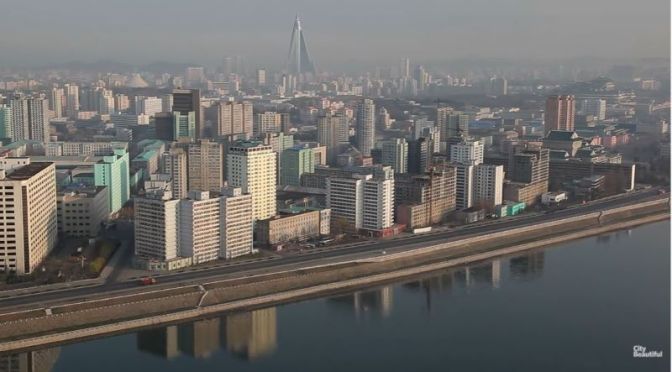
Travel & History: North Korea Capital ‘Pyongyang’
Pyongyang is the capital and largest city of North Korea. Pyongyang is located on the Taedong River about 109 kilometers upstream from its mouth on the Yellow Sea. According to the 2008 population census, it has a population of 3,255,288.
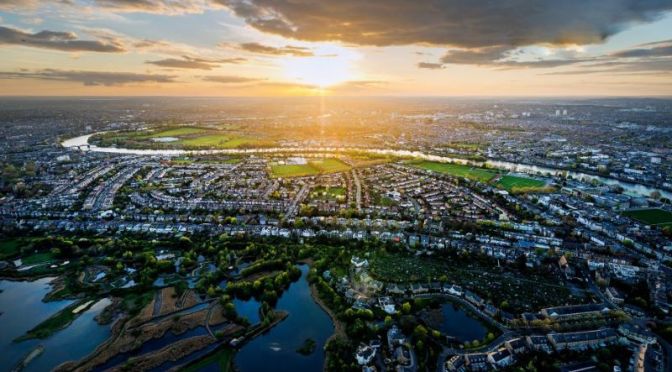
Historic Villages: ‘Barnes – Richmond Upon Thames’ In Southwest London, UK
Barnes played a role in everything from the invention of football to the execution of Mary, Queen of Scots. Carla Passino takes a closer look.
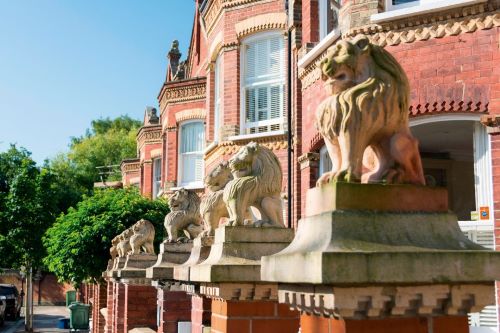



Until an army of 19th-century engineers descended on Barnes to build bridges and railways, this was a world apart, a rural idyll preserved intact by the Thames that bounds it on three sides.
Mentioned in the Domesday Book, the village had made history even earlier, when it was granted by King Æthelstan to the canons of St Paul in the 900s. The link between Barnes and St Paul’s persists more than 1,000 years on, as the Dean and Chapter owns one of the local gems: 122-acre Barnes Common.
Today, its woodland and acid grass-land are an oasis for hedgehogs, bats, butterflies and Nature-starved Londoners, but, for many centuries, they were home to grazing cattle. The livestock even became embroiled in a dispute between Barnes and neighbouring Putney in 1589, when ‘the men of Barnes refused to allow the men of Putney to use the Common and impounded their cattle,’ reports A History of the County of Surrey.
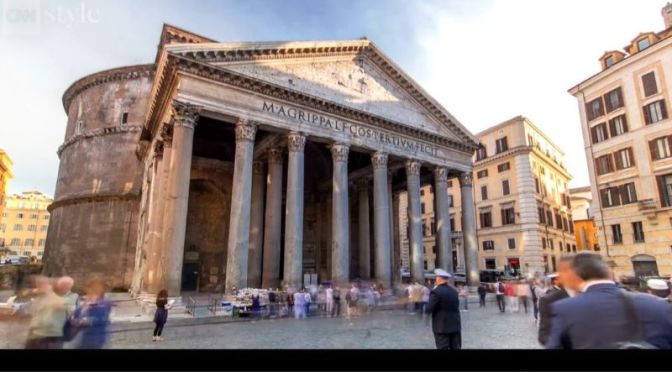
Landmarks & History: ‘The Pantheon – Rome’ (Video)
“Anyone who steps inside the Pantheon immediately feels the crushing weight of human history, but also the incredible lightness of human creativity,”
If Rome is the Eternal City, the Pantheon is its eternal building, still in use after 2,000 years and attracting six million visitors a year.
The Pantheon is a former Roman temple, now a Catholic church, in Rome, Italy, on the site of an earlier temple commissioned by Marcus Agrippa during the reign of Augustus. It was rebuilt by the emperor Hadrian and probably dedicated about 126 AD.
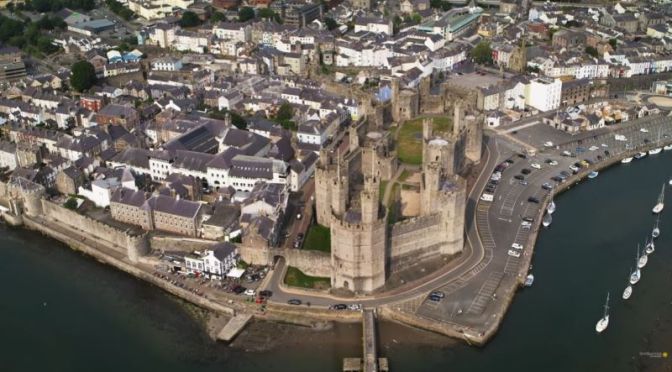
Aerial Travel & History: The ‘Medieval Castles Of Wales’ (Smithsonian Video)
Wales has no shortage of magnificent castles – from the impenetrable stronghold of Harlech Castle, to the fierce fortifications of Carnarvon. Wales boasts a series of castles known as the Iron Ring, built as part of Edward I’s determination to stamp his authority over the tribes of Wales.
Aerial Britain: Scotland https://bit.ly/31x9olp

Travel & History: Source Of Water For ‘Kakigori’ Shaved Ice In Japan (Video)
A geologist travels deep into Saitama Prefecture to investigate why whale fossils are being found so far from the nearest ocean and why the shaved ice there is so delicious.
The dessert is kakigori, a traditional Japanese shaved-ice specialty that has quickly become the dessert of choice at some of America’s most high-profile restaurants, and continues to grow in popularity. In its home country, however, kakigori has been popular for literal centuries: The idea dates back to the 11th century, when frozen blocks of ice from lakes would be preserved in the winter, only to be finely shaved and served with sweet syrup to Japan’s elite class in the summers. In the 19th century, when ice became more widely available, the public was able to try it, and now — thanks to electric refrigeration — kakigori is ubiquitous during warmer months.

TRAVEL IN THE COTSWOLDS: ‘HISTORY OF MALMESBURY’
Malmesbury is another classic Cotswold destination – located in Wiltshire, England, famous for its large abbey and beautiful surrounding countryside.
Travel & History: ‘Inverary Castle’ In Scotland (Video)
Inveraray Castle is home to one of the most important private collections of historical archives in all of Britain – a collection of records, documents and diaries, dating back to the 13th century. The restoration of the private archival documents is a gradual, painstaking and expensive process. In fact, a single damaged page can cost up to a hundred pounds to repair.
Inveraray Castle is a country house near Inveraray in the county of Argyll, in western Scotland, on the shore of Loch Fyne, Scotland’s longest sea loch. It is one of the earliest examples of Gothic Revival architecture. It has been the seat of the Dukes of Argyll, chiefs of Clan Campbell, since the 18th century.

Travel & History Videos: “The Han Dynasty’s Great Wall” In China (NatGeo)
1500 years before the construction of the Ming Dynasty wall was constructed, the Han Dynasty defended the borders of China from invaders with a Great Wall of their own.
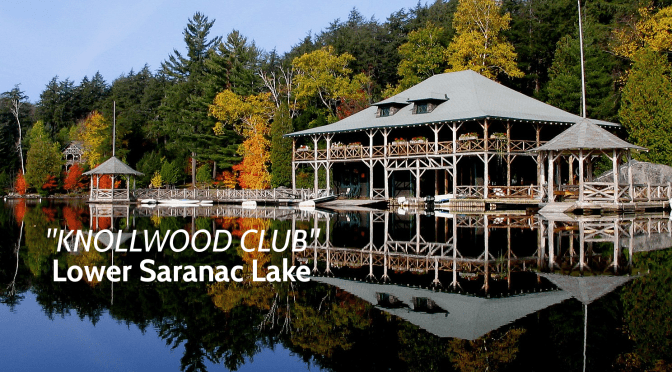
Travel & History Books: “Great Camps Of The Adirondacks” – Gorgeous Updated 2nd Edition (2020)
The foremost guide to the historic camps of the Adirondacks―a unique vernacular style of rustic architecture designed to complement the land. Now available in a  second and enlarged edition, here is the foremost guide to the historic camps within America’s spectacular forest preserve, the six million acre Adirondack Park.
When first published in 1982, Great Camps of the Adirondacks launched a campaign for the preservation of these architectural treasures while also sparking a trend in great camp-inspired home design, a cohesive approach to building that author Harvey H. Kaiser named Adirondack Rustic Style.

In this second edition, preservationists will find a success story. Designers and builders will discover page after page of inspiration. All readers will see the history of a region unfold as Americans from the mid-1870s to the late-1930s, including the very wealthiest New Yorkers, sought out the wilderness. The camps they built as private seasonal retreats are distinguished both as architectural responses to the Adirondack environment in the use of logs and stone, and as successful examples of buildings blended into the forest and the natural contours of the mountains and lakes―homes built to serve as beautiful complements to the land itself.
Harvey H. Kaiser served as the Senior Vice President for Facilities Administration and University Architect at Syracuse University between 1972 and 1995. His 1982 book Great Camps of the Adirondacks popularized the term “Great Camps” to refer to the grand summer residences that wealthy families built in the Adirondack Mountains in the nineteenth century, and revitalized interest in these sites. Several studies on western national park architecture culminated in his 2008 book The National Park Architecture Sourcebook.
Steven Engelhart is the executive director of Adirondack Architectural Heritage (AARCH) located in Keeseville, New York. AARCH is a private, nonprofit. historic preservation organization for New York State’s Adirondack Park, whose mission is to promote better public understanding, appreciation, and stewardship of the region’s architecture, communities, and historic sites.
 Boomers Daily