The Guardian Weekly (November 28, 2024): The new issue features last week’s escalation of Nato ballistic missile activity, in which UK and US-made missiles were launched into Russia for the first time, brought a predictably cold response from Vladimir Putin – who loosened Moscow’s nuclear doctrines and promised more attacks with a new, experimental ballistic missile.
1
Spotlight | Does lame duck Biden have time to Trump-proof democracy? The outgoing US president may only have weeks left in the White House, but activists say he can secure civil liberties, accelerate spending on climate and healthcare, and spare death row prisoners. David Smith reports
2
Science | My weird, emotional week with an AI pet Casio says Moflin can develop its own personality and build a rapport with its owner – and it doesn’t need food, exercise or a litter tray. But is it essentially comforting or alienating? Justin McCurry finds out
3
Feature | Are we right to strive to save the world’s tiniest babies? Doctors are pushing the limits of science and human biology to save more extremely premature babies than ever before. But when so few survive, are we putting them through needless suffering? By Sophie McBain
4
Opinion | A social media ban is in everyone’s interests – not just kids under 16 Van Badham on why she resents being excluded from protection against monetised fear, anger and toxicity
5
Culture | A road trip like no other: an epic drive on the Autobahn Fifty years after electronic pioneers Kraftwerk released a 23-minute song about a road – and changed pop music for ever – Tim Jonze hits the highways of Düsseldorf and Hamburg in search of its futuristic brilliance
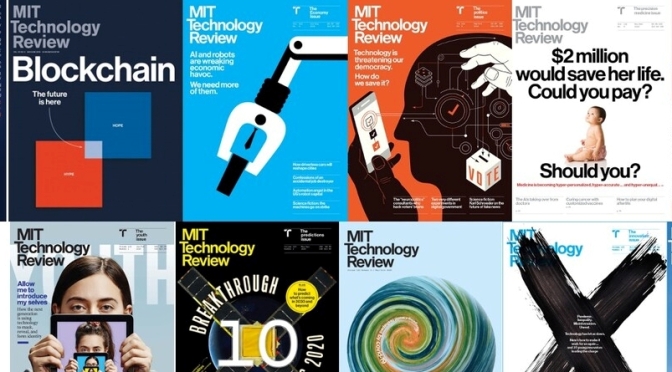
MIT Technology Review (Novemer 24, 2024): This week’s round up includes Google DeepMind has a new way to look inside an AI’s “mind”. Inside Clear’s ambitions to manage your identity beyond the airport. Who’s to blame for climate change? And more.
How this grassroots effort could make AI voices more diverse A massive volunteer-led effort to collect training data in more languages, from people of more ages and genders, could help make the next generation of voice AI more inclusive and less exploitative.
The rise of Bluesky, and the splintering of social You may have read that it was a big week for Bluesky. If you’re not familiar, Bluesky is, essentially, a Twitter clone that publishes short-form status updates.
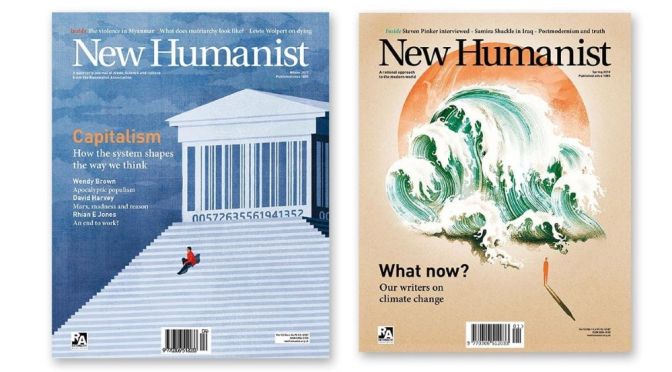
NEW HUMANIST MAGAZINE – WINTER 2024/2025 ISSUE: The new issue features ‘Our Cyborg Future?’
The new age of the cyborg?
Neurobiologist and journalist Moheb Costandi explores the rapidly-developing world of brain-computer interfaces. For some people, these devices are already transforming lives – but the technology is quickly overtaking the ethics.
A dangerous calculation
Peter Ward unpicks the dark philosophy of the tech billionaires and how it is infiltrating some of our most powerful organisations.
There’s a product for that
A recent film, The Substance, explored the growing pressure on all of us – particularly women – to modify our bodies, not only through make-up and cosmetic procedures but also through digital filters. Clare Chambers, professor of political philosophy at the University of Cambridge, talks to us about the power of resistance and allowing our bodies to be “good enough”.
New life in the veins
Peter Salmon recounts the bizarre history of blood transfusion – and why the super-rich remain fascinated by its possibilities.
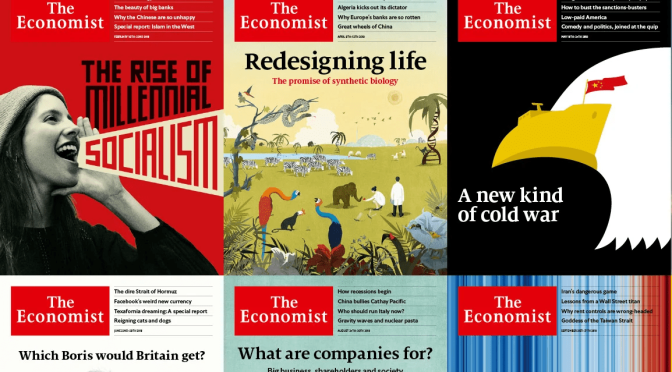
The Economist (November 21, 2024): AI is driving a transformation across all fields of science, from developing drugs for incurable diseases and improving the understanding of animal communication to self-driving labs.
Video timeline: 00:00 – How AI is revolutionising science 02:53 – Drug discovery 04:31 – AlphaFold 05:30 – Adoption of AI in science 07:08 – Animal communication 09:26 – Scientific fraud 11:03 – Self-driving labs 14:36 – Future of AI in science
Could this prompt a new golden age of discovery? Video supported by @mishcon_de_reya
Existentialist crises might more commonly be associated with some who seek out religion, rather than with those religions themselves, but that’s where the Church of England has found itself in recent days.
The resignation of Justin Welby, the archbishop of Canterbury, followed a damning report into the church’s shameful failures over the serial child abuser John Smyth, which detailed even more disturbing details of cover-ups by some senior clergy.
1
Spotlight | Trump’s shock-and-awe team A flurry of controversial and extremist picks for Trump’s administration has provoked criticism and made heads spin. David Smith reports from Washington
2
Science | The inverse link between cancer and dementia Scientists have long been aware of a curious connection between these common and feared diseases. At last, a clearer picture is emerging, writes Theres Lüthi
3
Feature | Kernels of hope During the siege of Leningrad, botanists in charge of an irreplaceable seed collection, the first of its kind, had to protect it from fire, rodents – and hunger. By Simon Parkin
4
Opinion | Seven lessons from a long-serving economics editor From Thatcher to Trump and Brexit, the Guardian’s outgoing economics editor, Larry Elliott, reflects on his 28 years in the role.
5
Culture | Faking history Film and TV have a slippery relationship with the truth when it comes to historical epics. Simon Usborne meets the experts whose advice goes unheeded
Ben Zhao remembers well the moment he officially jumped into the fight between artists and generative AI: when one artist asked for AI bananas.
MIT Technology Review (Novemer 17, 2024): This week’s round up includes Generative AI taught a robot dog to scramble around a new environment; The AI lab waging a guerrilla war over exploitative AI; Life-seeking, ice-melting robots could punch through and Europa’s icy shell.
The tools Glaze and Nightshade are giving artists hope that they can fight back against AI that hoovers internet data to train. Are they enough?
Generative AI taught a robot dog to scramble around a new environment
A new system could help train robots entirely in generated worlds.
Why AI could eat quantum computing’s lunch
Rapid advances in applying artificial intelligence to simulations in physics and chemistry have some people questioning whether we will even need quantum computers at all.
AI search could break the web
Life-seeking, ice-melting robots could punch through Europa’s icy shell
Researchers are working on technology that could follow NASA’s Europa Clipper mission and hunt for life in the ocean of Jupiter’s moon.
0:15 AI robot zaps weeds while saving crops – It’s called Concentrated Light Autonomous Weeding and Scouting or CLAWS for short. CLAWS uses AI-powered image processing to identify the crops, then targets weeds around the crop with blasts of concentrated light. This gets rid of unwanted intruders without damaging either crops or soil.
1:52 5 ways bioeconomy affects daily living – The bioeconomy uses renewable resources from land or sea to produce food, energy, and other resources. It focuses on leveraging nature’s processes and products to create sustainable economic outputs. The bioeconomy is already a part of our daily lives, influencing various sectors and industries.
6:08 Iceland sees benefit of a 4-day work week – The Nordic nation of 380,000 is rolling out a new way of working. Between 2020 and 2022, 51% of Iceland’s workers accepted an offer of shorter hours, such as a 4-day week for no loss of pay. The shift has had a positive impact on work-life balance and personal stress, new research shows.
8:17 Restored Amazon ecosystems beat logging – Amazon Sacred Headwaters Alliance is fighting to safeguard 35 million hectares of rainforest through a collaboration between 30 Indigenous nations of the Amazon basin. There’s an economic case for protecting the Amazon, says Atossa Soltani, Director of Global Strategy, Amazon Sacred Headwaters Alliance.

















 Boomers Daily