Tag Archives: Technology Videos

Tech: ‘2021 Toyota Mirai’ – Enhanced Hydrogen Fuel Cell Electric Car (Video)

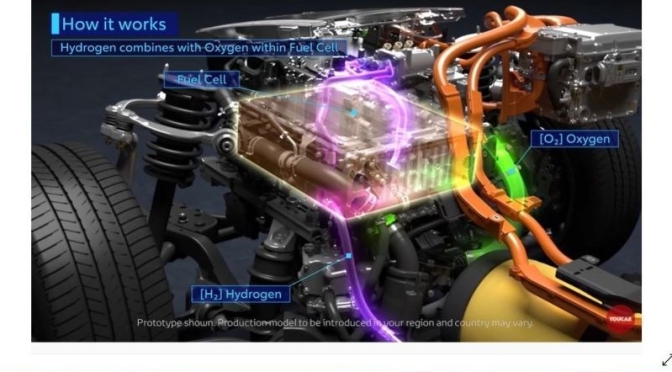
The 2021 Toyota Mirai is the second generation of zero emission hydrogen fuel cell electric sedan.

One of the principal aims for the new 2021 Mirai has been to give the car a stronger emotional appeal, making it a car that people will be attracted to by its looks and the way it drives, as well its eco-performance. The new GA-L platform and Toyota’s advances in FCEV technologies have made this possible. Toyota’s new fuel cell stack and fuel cell power converter (FCPC) have been developed specifically for use with the GA-L platform.

The designers have been able to bring all the elements together in the stack frame (including the water pumps, intercooler, air conditioning and air compressors and the hydrogen recirculation pump) with each part made smaller and lighter, while at the same time improving performance. The stack case itself has been made smaller by using Friction Stir Welding, reducing the gap between the fuel cell and casing.

The new Mirai is equipped with lithium-ion high-voltage battery in place of the current model’s nickel-metal hydride unit. Although smaller in size, it is more energy-dense, giving higher output and superior environmental performance. Containing 84 cells, it has a 310.8 rated voltage compared to 244.8, and a 4.0 Ah capacity, versus 6.5 Ah. Overall weight has been reduced from 46.9 to 44.6 kg. The output has improved from 25.5 kW x 10 seconds to 31.5 kW x 10 seconds.

The battery’s smaller dimensions have allowed it to be positioned behind the rear seats, avoiding intrusion in the load compartment. An optimised air-cooling path has been designed, with discreet inlets either side of the rear seats. The environmental benefit of driving the Toyota Mirai go beyond zero emissions to “negative emissions” – the car effectively cleans the air as it moves. A Toyota innovation, a catalyst-type filter is incorporated in the air intake.

As air is drawn into the vehicle to supply the fuel cell, an electric charge on the non-woven fabric filter element captures microscopic particles of pollutants, including sulphur dioxide (SO2), nitrous oxides (NOx) and PM 2.5 particulates. The system is effective in removing 90 to 100% of particles between 0 and 2.5 microns in diameter from the air as it passes into the fuel cell system.

Smart Technology: ‘The Internet Of Bodies’ (IoB)

Internet-connected “smart” devices are increasingly available in the marketplace, promising consumers and businesses improved convenience and efficiency. Within this broader Internet of Things (IoT) lies a growing industry of devices that monitor the human body and transmit the data collected via the internet.

This development, which some have called the Internet of Bodies (IoB), includes an expanding array of devices that combine software, hardware, and communication capabilities to track personal health data, provide vital medical treatment, or enhance bodily comfort, function, health, or well-being. However, these devices also complicate a field already fraught with legal, regulatory, and ethical risks. In this video,

RAND mathematician Mary Lee examines this emerging collection of human body–centric and internet-connected technologies; explores their benefits, security and privacy risks, and ethical implications; surveys the nascent regulatory landscape for these devices and the data they collect; and makes recommendations to balance IoB risks and rewards.

Read more about the Internet of Bodies here: https://www.rand.org/pubs/research_re…

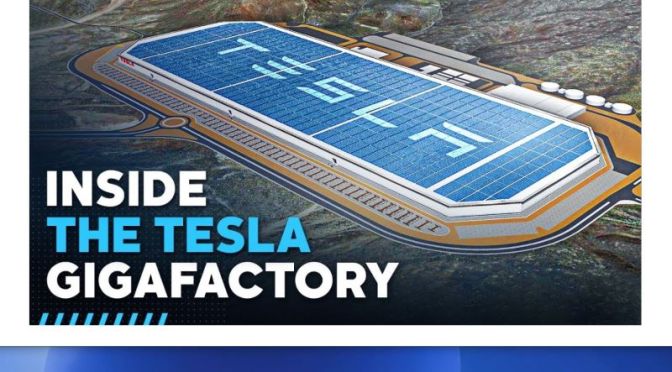
Electric Vehicles: ‘Inside Tesla Gigafactory’ (Video)

Tesla is by far one of the most successful companies in modern history. They popularized fully electric cars and created a massive demand among the public. With a market cap of around 380 billion dollars, Tesla is growing by the day.

But to keep up with orders Tesla built a futuristic facility called the Gigafactory. Today we’re taking a look inside the Tesla Gigafactory. Tesla currently produces about 350,000 cars a year—far fewer than the public demands. But they have ambitions to ramp up production to more than 20 million cars a year.

This bold strategy will require numerous advances in their current chain of production, including several larger factories, which are currently being built all over the world. But the bedrock of Tesla’s production line is their Gigafactory in Sparks, Nevada. The company’s first fully built factory will serve as the model for what eventually could be a dozen massive Tesla factories globally.

Technology: “How Apple Became Most Valuable Company In The World”

Apple reached a staggering $2 trillion market valuation in August, despite years of doubt from critics over whether the tech giant could continue to succeed after the death of Steve Jobs. Here’s a look at Apple’s rise to the very top.

Illustration: Jacob Reynolds/WSJ

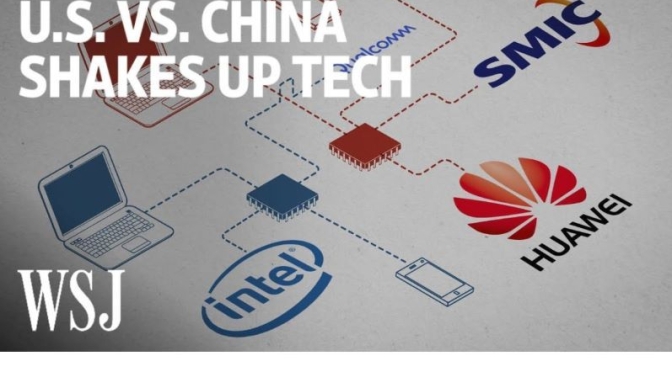
World Business: “The U.S. And China Battle Over Technology” (WSJ Video)

The tech battle between the U.S. and China has battered TikTok and Huawei and startled American companies that produce and sell in China. WSJ explains how Beijing is pouring money into high-tech chips as it wants to become self-sufficient.

Video/Illustration: George Downs/The Wall Street Journal

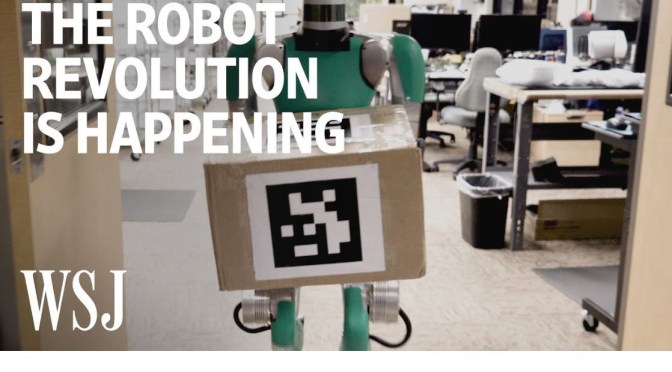
Technology: “The Robot Revolution Is Happening”

Nearly every company across every industry is looking for new ways to minimize human contact, cut costs and address the labor crunch in repetitive and dangerous jobs. WSJ explores why many are looking to robots as the solution for all three.

Photo: FedEx

Tech Videos: “Impact Through Disruptive Innovation” (Harvard)

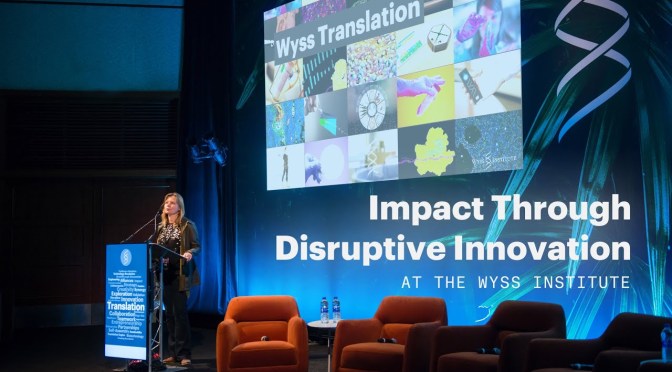
At the Wyss Institute, we leverage insights into how Nature builds, controls and manufactures to develop disruptive technology solutions for healthcare and the environment. Our innovations make an impact in the world through commercialization by new startups and corporate alliances.

Learn more about technology translation at the Wyss Institute