Tag Archives: Sun

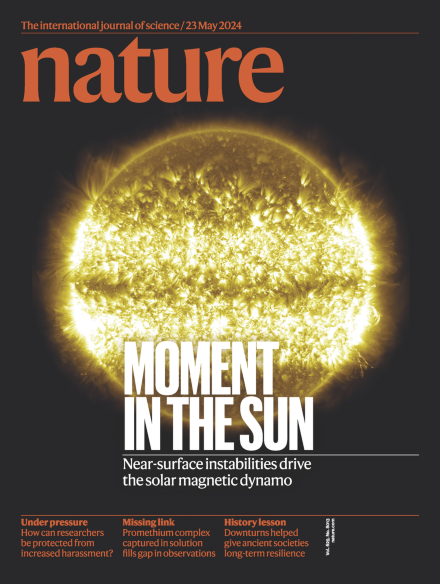
Research Preview: Nature Magazine – May 23, 2024

Volume 629 Issue 8013

Nature Magazine – May 22, 2024: The latest issue cover features ‘Moment In The Sun’ – Near-surface instabilities drive the solar magnetic dynamo…

How cheesemaking could cook up an antidote for alcohol excess

A gel made from a milk protein reduces alcohol levels in the blood of intoxicated mice.

Organoids merge to model the blood–brain barrier

Combining a brain organoid with a blood-vessel organoid yields a system similar to a protective mesh in the brain.

Africa’s lush tropical forests face a surprising threat: fire

Climate change and deforestation have increased the frequency of blazes in the humid forests of West and Central Africa.

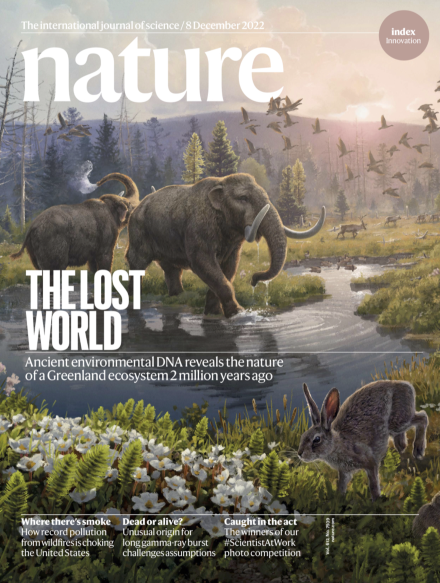
Research Preview: Nature Magazine – Dec 8, 2022

Volume 612 Issue 7939

nature – December 8, 2022 issue:

Oil-palm farms that spare rainforests menace grasslands instead

Programmes to avoid deforestation could have unintentional impacts on a variety of ecosystems.

Fruit-fly inspired robots hold steady in a gust of wind

Flying devices weighing only 10 milligrams could be controlled by an unconventional set of instruments.

‘Prisoner’s dilemma’ pinpoints plants that cooperate

Game theory helps to identify genetic variants that give plants the ability to thrive in crowded conditions.

The search for new physics gets a new partner: the Sun

A fifth fundamental force predicted by some alternative theories of gravity has not been seen in the solar interior

Molten rock lurks not far below Yellowstone tourists’ feet

The magma chamber of an enormous volcano lies closer to Earth’s surface than previously estimated.

Opinion: Ukrainians Who Fled To Russia, Notions Of The Sun, Economic Magic

A selection of three essential articles read aloud from the latest issue of The Economist. This week, what happened to the Ukrainians who fled to Russia, how the sun is both our creator and destroyer (27:56), and how magicians won the attention economy (34:32).

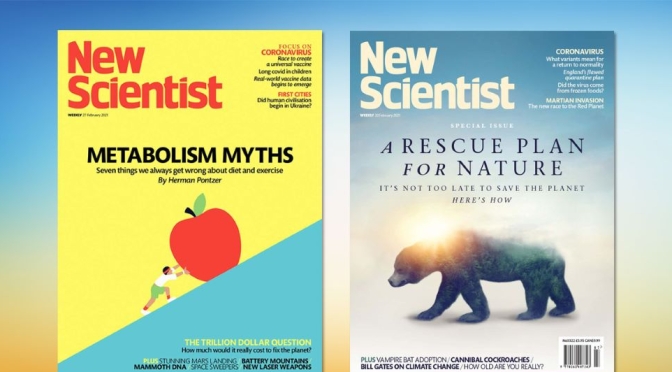
Previews: New Scientist Magazine – May 21, 2022

COVER STORIES

  • CULTURE Regenesis review: Farming is killing the planet but we can stop it
  • FEATURES Why the next big solar storm might hit Earth without warning
  • FEATURES The female body is misunderstood and this is why, says Rachel E. Gross
  • FEATURES How the massive dogs bred to protect livestock could save wolves too

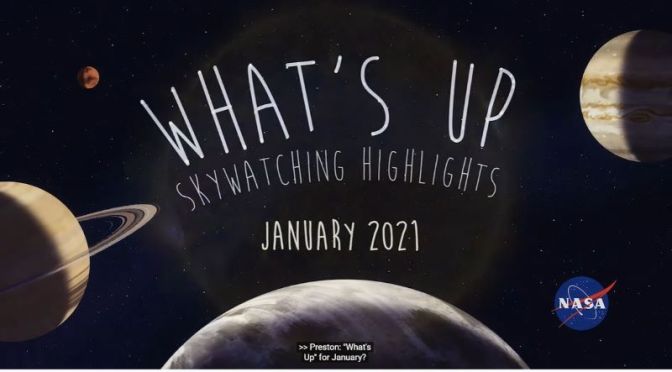
Astronomy: ‘Skywatching Tips – January 2021’ (Video)

What are some skywatching highlights in January 2021? Mark Earth’s closest approach to the Sun for the year, called perihelion, at the start of the month, then spot a couple of elusive planets: Uranus on Jan. 20th and Mercury throughout the second half of the month. Additional information about topics covered in this episode of What’s Up, along with still images from the video, and the video transcript, are available at https://solarsystem.nasa.gov/whats-up….

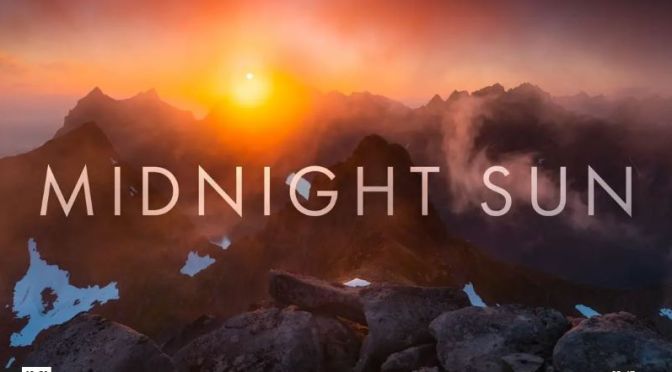
Timelapse Travel Videos: ‘Midnight Sun’ Above The Arctic Circle (2020)

Filmed and Edited by: Morten Rustad

During summertime, the sun never sets above the arctic circle. This time-lapse video aims to show the special light that appears during the midnight hours when the sun nearly touches the horizon. All in glorious 8K resolution.

Website

Health: “The Science Of The Sun And Skin Cancer”

Melanoma may account for a small percentage of skin cancers, yet it causes an estimated 75 to 80 percent of skin cancer deaths. Caught early, it has a 99 percent five-year survival rate, but if it slips patients’ and clinicians’ notice, digs deeper into the skin and spreads beyond the lymph nodes, that rate can drop to 25 percent, according to the National Cancer Institute. The ACS predicts there will be 6,850 deaths in the United States from melanoma this year.

Although more skin pigment provides more protection, melanin itself has a sun protection factor, or SPF, of less than 5, says Fisher, suggesting that it functions physiologically as more than mere sunblock. He and others have clarified how different types of melanin raise or lower melanoma risk, and they’ve shown that any minimal benefit provided by tanning, such as the production of vitamin D, doesn’t outweigh the DNA damage caused by UV exposure.

Skin cancers are far and away the most common cancers in the United States. Basal and squamous cell carcinomas make up the vast majority, with somewhere between 1 million and 5.4 million new instances diagnosed each year. However, because these two malignancies don’t have to be reported to cancer registries, precise numbers aren’t known: The cancer officially ranked as the most common in this country is breast cancer, with 270,000 new cases each year. Melanoma is ranked fifth, with about 100,000 new diagnoses expected in 2020, reports the American Cancer Society (ACS).

Read more

Top New Science Podcasts: Blood Tests For Multiple Cancers, Our Quiet Sun

science-magazine-podcastsStaff Writer Jocelyn Kaiser joins Sarah to talk about a recent Science paper describing the results of a large study on a blood test for multiple types of cancer. The trial’s results suggest such a blood test combined with follow-up scans may help detect cancers early, but there is a danger of too many false positives. 
And postdoctoral researcher Timo Reinhold of the Max Planck Institute for Solar System Research joins Sarah to talk about his paper on how the Sun is a lot less variable in its magnetic activity compared with similar stars—what does it mean that our Sun is a little bit boring?

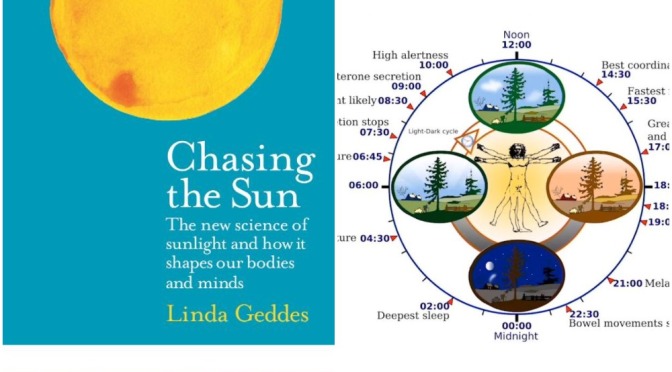
Health: “Chasing The Sun – How Light And Dark Shape Our Bodies And Minds”

Human biology is tuned to a 24-hour light-dark cycle but modern lifestyles are disrupting it with unhealthy consequences, says Linda Geddes