Tag Archives: Spain

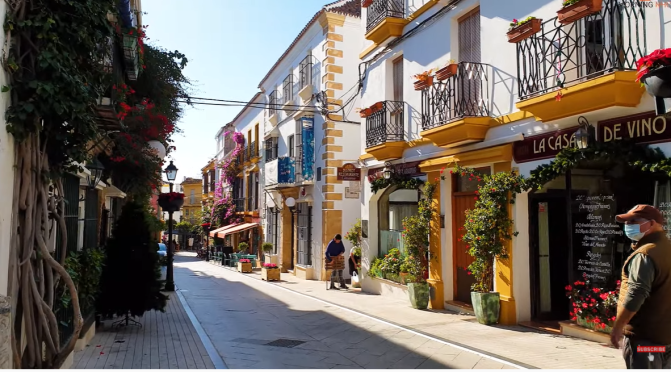
Walking Tours: ‘Marbella – Southern Spain’ (Video)

Marbella, in the south of Spain is a vibrant coastal town with a large number of sandy beaches, a charming old town. The old town is full of character with the whitewashed buildings, narrow streets, colorful churches, little chapels, lively squares, fragrant orange trees and of course many restaurants and shops. The beaches with its fine sand and the Mediterranean with its clean water are the main attractions of Marbella. A variety of activities, both on land and sea are available, as is shopping, eating and nightlife.

Video Timeline: 14:01 – Plaza de los Naranjos 31:24 – Paseo Maritimo de Marbella

Marbella is a city and resort area on southern Spain’s Costa del Sol, part of the Andalusia region. The Sierra Blanca Mountains are the backdrop to 27 km of sandy Mediterranean beaches, villas, hotels, and golf courses. West of Marbella town, the Golden Mile of prestigious nightclubs and coastal estates leads to Puerto Banús marina, filled with luxury yachts, and surrounded by upmarket boutiques and bars.

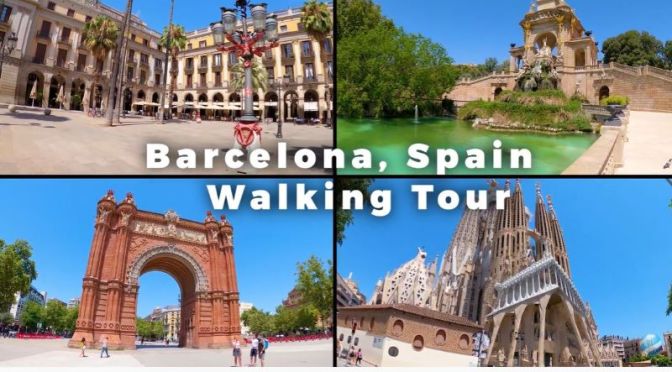
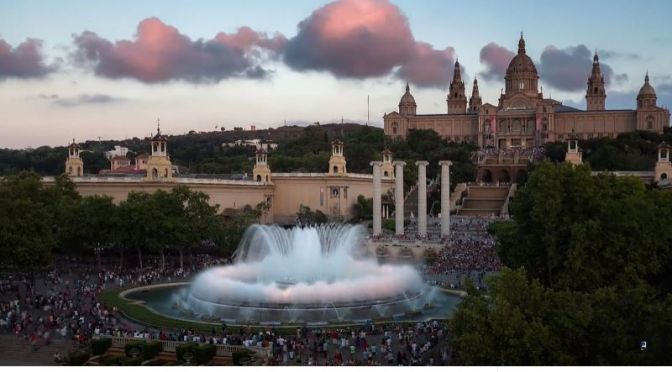
Walking Tour: ‘Barcelona’ – Northeast Spain (Video)

Barcelona, the cosmopolitan capital of Spain’s Catalonia region, is known for its art and architecture. The fantastical Sagrada Família church and other modernist landmarks designed by Antoni Gaudí dot the city. Museu Picasso and Fundació Joan Miró feature modern art by their namesakes. City history museum MUHBA, includes several Roman archaeological sites.

Recorded on July 2020.

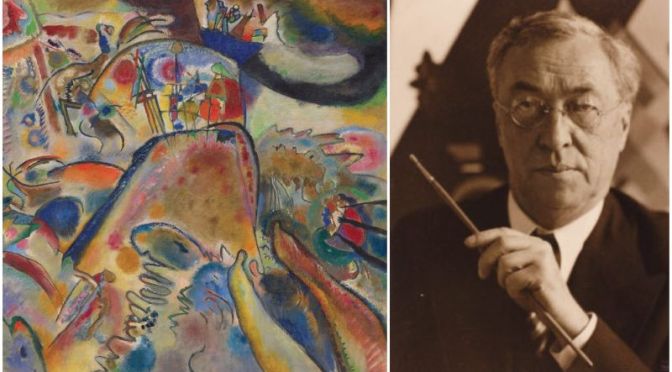
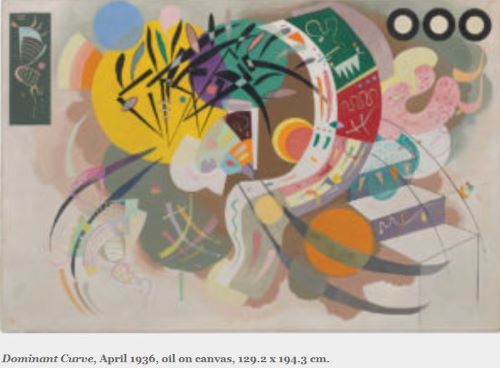
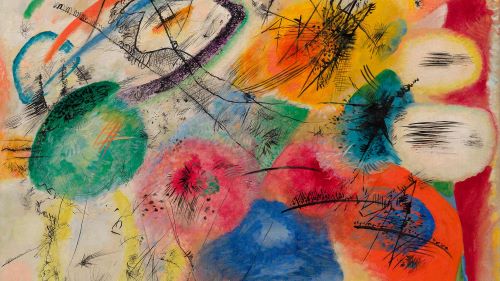
Exhibitions: ‘Kandinsky’ At The Guggenheim Bilbao In Spain (Nov ’20 To May ’21)

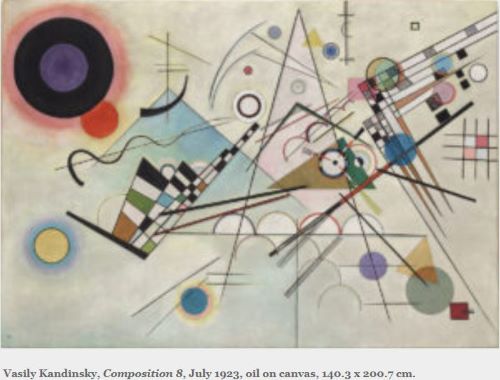
As a pioneer of abstraction and a renowned aesthetic theorist, Vasily Kandinsky (b. 1866, Moscow; d. 1944, Neuilly-sur-Seine, France) is among the foremost artistic innovators of the early twentieth century.

In his endeavor to free painting from its ties to the natural world, Kandinsky discovered a new subject matter based solely on the artist’s “inner necessity” that would remain his lifelong concern.

In Munich in the 1900s and early 1910s, Kandinsky began exploring the expressive possibilities of color and composition, but he was abruptly forced to leave Germany with the outbreak of World War I, in 1914. The artist eventually returned to his native Moscow, and there his pictorial vocabulary started to reflect the utopian experiments of the Russian avant-garde, who emphasized geometric shapes in an effort to establish a universal aesthetic language. Kandinsky subsequently joined the faculty of the Bauhaus, a German school of art and applied design that shared his belief in art’s ability to transform self and society. Compelled to abandon Germany again when the Bauhaus closed under Nazi pressure in 1933, he settled outside Paris, where Surrealism and the natural sciences influenced Kandinsky’s biomorphic imagery.

More so than any other artist, Kandinsky is intertwined with the history of the Solomon R. Guggenheim Foundation, established in New York in 1937. Industrialist and museum founder Solomon R. Guggenheim began collecting Kandinsky’s work in 1929 and met him at the Dessau Bauhaus the following year. This exhibition draws from the foundation’s extensive holdings to illustrate the full arc of Kandinsky’s seminal career.

Curator: Megan Fontanella

Organized by The Solomon R. Guggenheim Foundation, New York

Wassily Wassilyevich Kandinsky was a Russian painter and art theorist. Kandinsky is generally credited as the pioneer of abstract art. Born in Moscow, Kandinsky spent his childhood in Odessa, where he graduated at Grekov Odessa Art school. He enrolled at the University of Moscow, studying law and economics.

Website

Timelapse Travel: ‘Tiempo’ – Barcelona, Spain (Video)

Filmed and Edited by: Jordi de Temple

Barcelona, the cosmopolitan capital of Spain’s Catalonia region, is known for its art and architecture. The fantastical Sagrada Família church and other modernist landmarks designed by Antoni Gaudí dot the city. Museu Picasso and Fundació Joan Miró feature modern art by their namesakes. City history museum MUHBA, includes several Roman archaeological sites.

More than 6 years have passed since I published “Into the Night”. Since then I have had the opportunity to capture hundreds of landscapes, both urban and natural, using the timelapse technique.

With “Temps” I wanted to show some of these urban landscapes of the city of Barcelona, ​​to represent through images, the passage of time and the ephemeral and fragile of human life.

Travel Video: ’48 Hours In Villages North Of Madrid’

North of Madrid lies the Sierra de Guadarrama, part of the larger Sistema Central, the chain of mountains snaking down the centre of Spain. With their close proximity to Madrid, the mountains are a popular spot for a day trip, whether you like sports, nature or exploring historic towns and villages.

Walking Tours: ‘Playa de Las Teresitas’ in Tenerife, Canary Islands, Spain

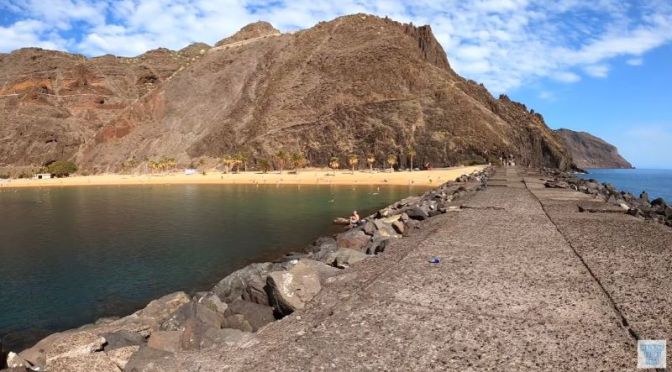
The Playa de Las Teresitas is an artificial, white sand, tourist beach located north of the village of San Andrés, Santa Cruz de Tenerife in Tenerife, Spain. 

Tenerife is the largest of Spain’s Canary Islands, off West Africa. It’s dominated by Mt. Teide, a dormant volcano that is Spain’s tallest peak. Tenerife may be best known for its Carnaval de Santa Cruz, a huge pre-Lent festival with parades, music, dancing and colorful costumes. The island has many beaches (with sands from yellow to black) and resort areas, including Los Cristianos and Playa de las Américas. 

Aerial Travel: ‘Gran Canaria, Spain’ (Video)

Gran Canaria is one of Spain’s Canary Islands, off northwestern Africa. It’s known for its black lava and white sand beaches. Its southern beaches include bustling Playa del Inglés and Puerto Rico as well as quieter Puerto de Mogán and San Agustín. In the north, capital city Las Palmas is a major stop for cruise ships and duty-free shopping. The island’s interior is rural and mountainous. 

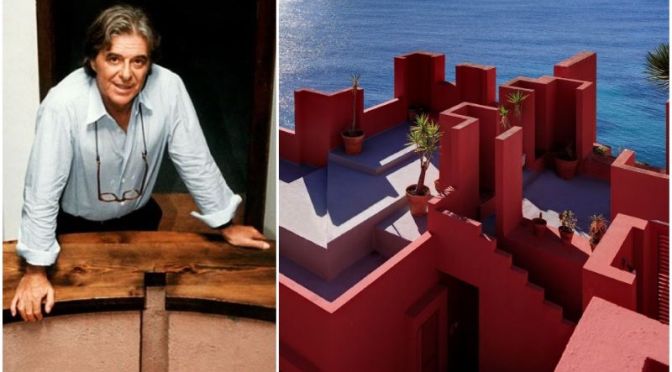
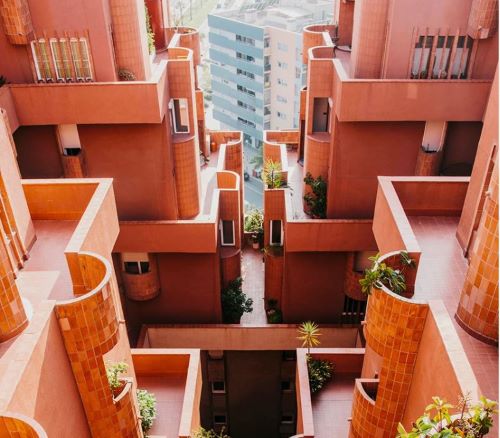
Profile: Spanish Architect & Designer Ricardo Bofill – ‘Dreamer Of Modernity’

December 2, 2020

What Bofill creates with exceptional mastery are spaces or the sense of space. He describes this ability, probably jokingly, as being an escape from the claustrophobia of his childhood in Barcelona, living in bourgeois apartments crammed floor to ceiling with decorative objects.

Postmodernity in the work of Bofill does not have to be the abolishing of rules or the death of history. In his own words, postmodernity “breaks with cultural hegemony to adapt models to different cultures, considering the place and its history.” It is more of a reaction against the uniformity of modern architecture.

Ricardo Bofill was born on December 5, 1939, in Barcelona. The son of a contractor, in the dullest hours of the Franco regime. As he explains himself, the feeling of being, not in the middle of the world but the outskirts, in a periphery—a Catalonia that was not just physically isolated from the cultural capitals but also far from national, political decision-making—sparked dreams of freedom and faraway lands, and was probably what later inspired his nomadic lifestyle. The importance of the vernacular, it’s engagement with classicism, Bofill’s sense of atemporal elegance—all find their roots in this early period.

Read more