
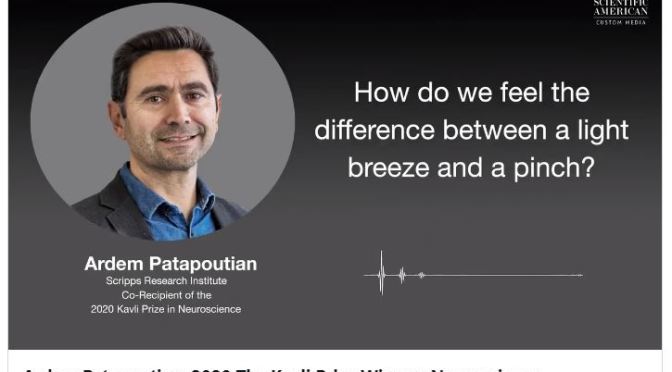
Just how does our sense of touch work? Listen to Ardem Patapoutian (@ardemp), one of the winners of the 2020 The Kavli Prize in Neuroscience, discuss how physical sensations are translated into cellular signals [Sponsored by @KavliPrize] pic.twitter.com/Q5VxRbzDQR
— Scientific American (@sciam) July 29, 2021
Tag Archives: Scientific American
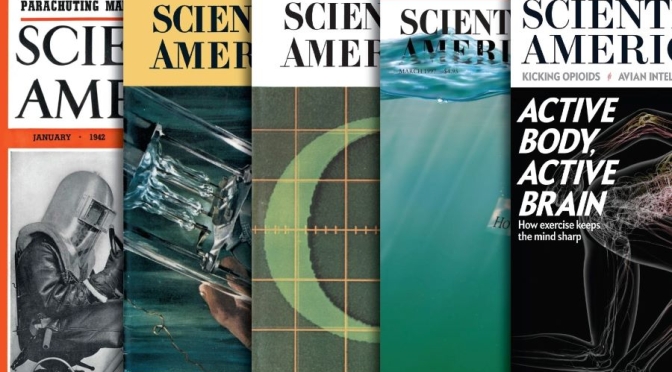
Front Covers: Scientific American – August 2021
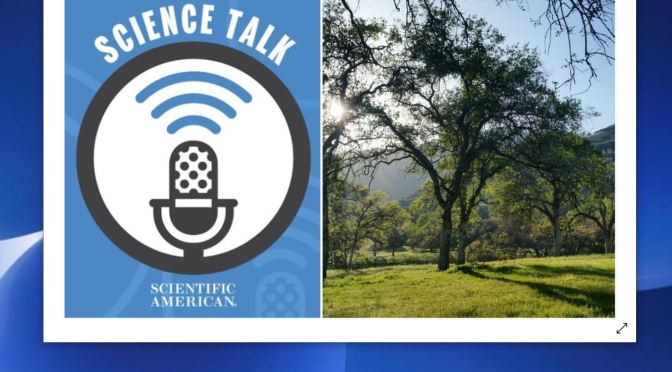
Environments: Blue Oak Woodlands Of Sequoia National Park (Podcast)
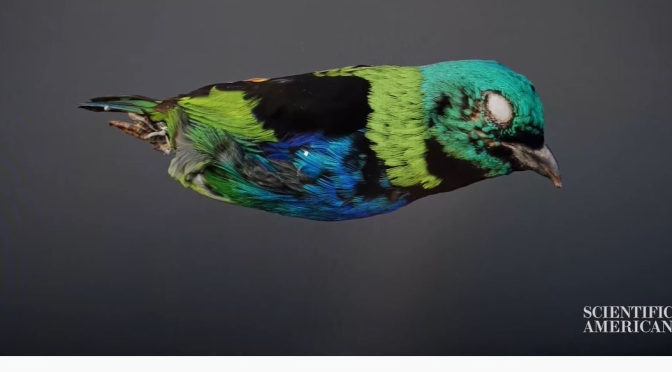
Collections: Viewing Rare Birds In Digital 3-D (Video)
How close have you ever gotten to a wild bird? Can you remember the details of its plumage or the curvature of its beak? Did it sit in one place long enough for you to really study all of its colors and other characteristics? Probably not—at least if it was alive. The avid birders among us sometimes search their whole life for a glimpse of a particularly rare species. But if you are just a casual observer of the winged creatures around us, the ones you do see likely come and go as flashes of color and sound. For ornithologists, the elusive nature of birds is just part of the job. Beyond fieldwork, though, access to rare or extinct species or those with a limited range can be especially difficult to get. If you were, say, hoping to study the green-headed tanager (a riotously multicolored songbird native to South America) and unable to travel to the northeastern region of the continent where it can be found, you would have to ask a museum to send you a specimen in the mail. Access to rare specimens, such as those of extinct birds, can be especially difficult to get.

Science: What Is CRISPR And How Does It Work?
This revolutionary gene-editing system has taken science by storm. CRISPR is the basis of a revolutionary gene editing system. One day, it could make it possible to do everything from resurrect extinct species to develop cures for chronic disease.
CRISPR is a family of DNA sequences found in the genomes of prokaryotic organisms such as bacteria and archaea. These sequences are derived from DNA fragments of bacteriophages that had previously infected the prokaryote. They are used to detect and destroy DNA from similar bacteriophages during subsequent infections.
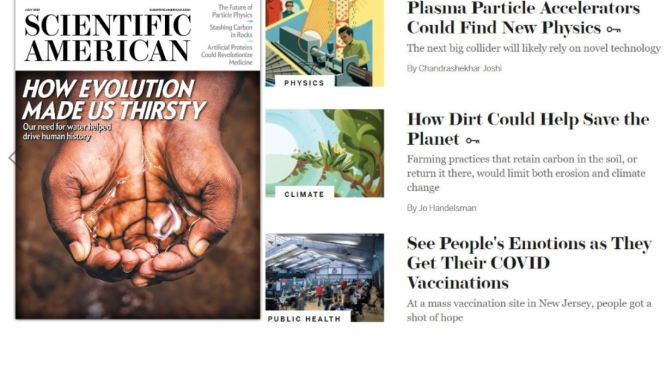
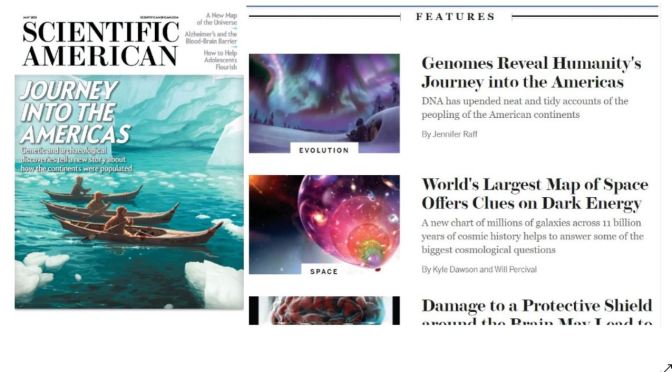
Magazines: Scientific American – July 2021

Wildlife: Yellowstone Bison and Marsh Birds
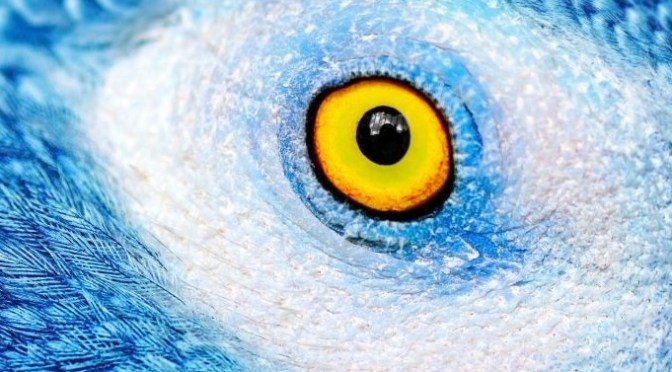
Views: The Beautiful And Bizarre ‘Eyes” Of Animals
“The cornea, which in fish is simply a transparent protective cover for the eye, became an image-forming structure in its own right,” wrote the late Michael Land, a biologist at the University of Sussex in England, in a 2005 study in the journal Current Biology, “because it now had air on one side and water on the other.”
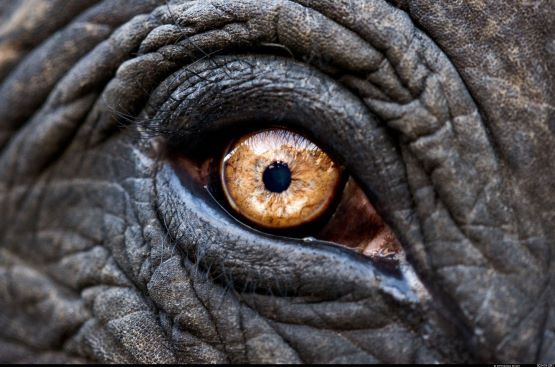
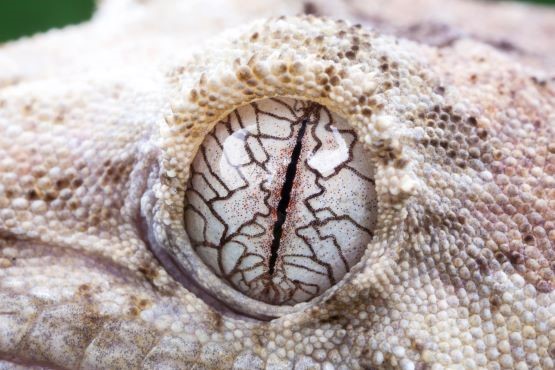
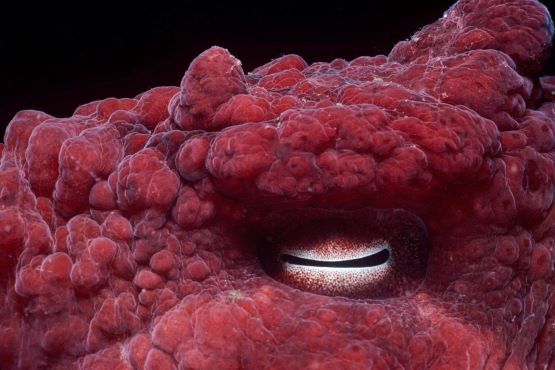
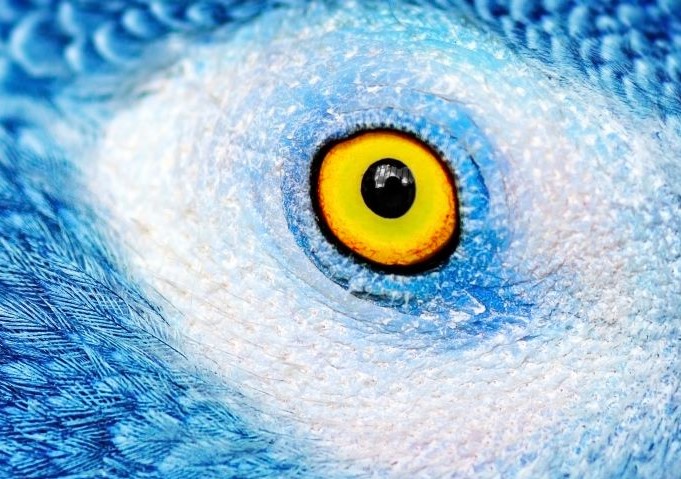
Some organisms have kept basic structures—flatworms and mollusks still have their simple pit eyes—while others sprouted mirrored components, elaborate pupil dynamics and arrangements that let their owner see above and below a waterline simultaneously. Even in animals that rely primarily on sensations besides sight, incredible eye features persist.
Medicine: ‘How Vaccines Actually Work’ (Video)
Vaccines are medicines that train the body to defend itself against future disease, and they have been saving human lives for hundreds of years. Vaccines are medicines that train the body to defend itself against future disease.



 Boomers Daily