


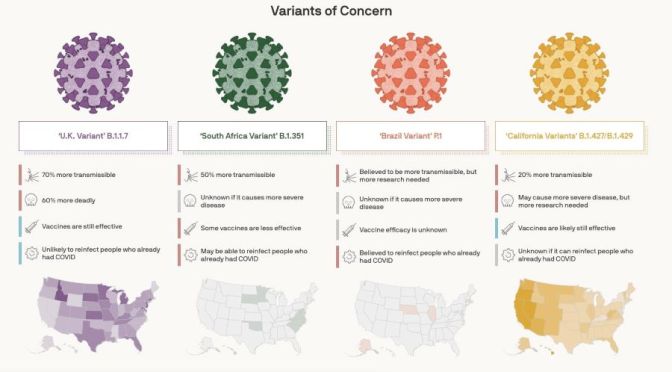
The risk of dying from COVID is much higher than getting a blood clot from a vaccine. But even more concerning is a new report from Oxford University that shows catching the coronavirus puts you at even more risk of a deadly blood clot. Each delay puts more lives at risk, as the coronavirus spreads. It’s a balancing act between speed and caution in the fight against COVID-19.
The lack of adequate sanitation in parts of the rural US, and physicists reassess muons’ magnetism.
In this episode:
00:45 How failing sanitation infrastructure is causing a US public health crisis
In the US, huge numbers of people live without access to adequate sanitation. Environmental-health advocate Catherine Coleman Flowers tells us about her new book looking at the roots and consequences of this crisis, focusing on Lowndes County, Alabama, an area inhabited largely by poor Black people, where an estimated 90% of households have failing or inadequate waste-water systems.
Book review: Toilets – what will it take to fix them?
07:56 Research Highlights
Why adding new members to the team can spark ideas, and how manta rays remember the best spots for pampering.
Research Highlight: Want fresh results? Analysis of thousands of papers suggests trying new teammates
Research Highlight: What manta rays remember: the best spots to get spruced up
10:13 Reassessing muons’ magnetic moment
A decade ago, physicists measured the ‘magnetic moment’ of the subatomic muon, and found their value did not match what theory suggested. This puzzled researchers, and hinted at the existence of new physics. Now, a team has used a different method to recalculate the theoretical result and see if this discrepancy remains.
Research Article: Fodor et al.
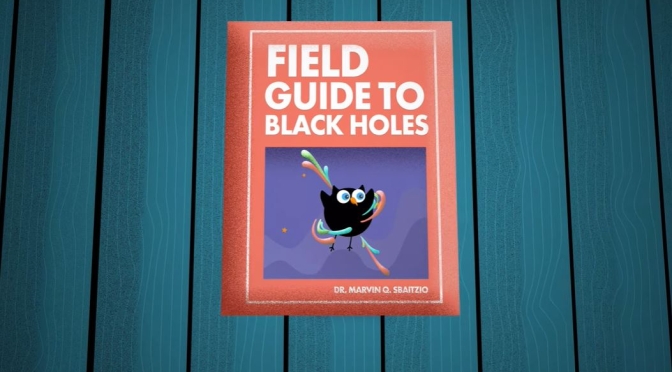
If you’re looking to find some black holes, it’s always helpful to know exactly what you’re looking for!
To get started on your black hole hunt, first watch this handy video to learn the basics about these strange cosmic objects.
Music: “Perfect Little Monsters” from Universal Production Music Video credit: NASA’s Goddard Space Flight Center Chris Smith (USRA): Lead Producer Chris Smith (USRA): Lead Animator Chris Smith (USRA): Lead Writer Jeanette Kazmierczak (University of Maryland College Park): Lead Science Writer Scott Noble (NASA/GSFC): Scientist John G. Baker (NASA/GSFC): Scientist Bernard J. Kelly (UMBC): Scientist
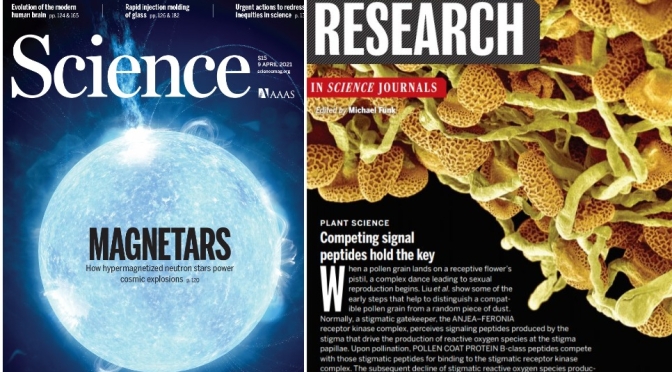
Host Sarah Crespi talks with Contributing Correspondent Joshua Sokol about magnetars—highly magnetized neutron stars. A recent intense outburst of gamma rays from a nearby galaxy has given astronomers a whole new view on these mysterious magnetic monsters.
Also on this week’s show, Christoph Zollikofer, a professor of anthropology at the University of Zurich, talks about the evolution of humanlike brains. His team’s work with brain-case fossils suggests the complex brains we carry around today were not present in the early hominins to leave Africa, but later developed in the cousins they left behind.
Podcast Producer Meagan Cantwell talks with Pamela Soltis, a professor and curator with the Florida Museum of Natural History at the University of Florida and the director of the University of Florida Biodiversity Institute, about how natural collections at museums can be a valuable resource for understanding future disease outbreaks.
Read the National Academies of Sciences, Engineering, and Medicine report Biological Collections: Ensuring Critical Research and Education for the 21st Century. This segment is part of our coverage of the 2021 AAAS Annual Meeting.
Also on this week’s show, Katharina Schmack, a research associate at Cold Spring Harbor Laboratory, joins producer Joel Goldberg to talk about giving mice a quiz that makes them hallucinate. Observing the mice in this state helps researchers make connections between dopamine, hallucinations, and mental illness.







 Boomers Daily