
The National Institu tes of Health’s largest loan repayment program was conceived to help scientists pay off school debts without relying on industry funding. But a close examination of the program by investigative correspondent Charles Piller has revealed that many participants are taking money from the government to repay their loans, while at the same time taking payments from pharmaceutical companies. Piller joins Host Sarah Crespi to talk about the steps he took to uncover this double dipping and why ethicists say this a conflict of interest.
Sarah also talks with Nate Lindsey, a Ph.D. candidate at the University of California, Berkeley, about turning a 50-meter undersea fiber optic cable designed to move data into a sensor for activity in the ocean and the land underneath. During a 4-day test in Monterey Bay, California, the cable detected earthquakes, faults, waves, and even ocean-going storms.
For this month’s books segment, Kiki Sandford talks with Dan Hooper about his book At the Edge of Time: Exploring the Mysteries of Our Universe’s First Seconds.
 Listen to the latest science updated, brought to you by Nick Howe and Shamini Bundell. This week, delving into the results of the latest graduate student survey, and assessing ageism in science fiction literature.


 Who among us hasn’t wished we could read someone else’s mind, know exactly what they’re thinking? Well that’s impossible, of course, since our thoughts are, more than anything else, our own. Private, personal, unreachable. Or at least that’s what we’ve always, well, thought.
  You may have seen the aftermath of a landslide, driving along a twisty mountain road—a scattering of rocks and scree impinging on the pavement. And up until now, that’s pretty much how scientists have tracked landslides—roadside observations and spotty satellite images. Now, researchers are hoping to track landslides systematically by instrumenting an entire
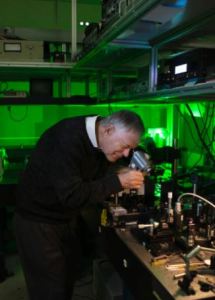 Byer also helped develop the quietest, most stable laser in the world, called the diode-pumped YAG laser. YAG lasers are today found in everything from communications satellites to green handheld laser pointers, which Byer co-developed with two of his graduate students and cites as one of his favorite inventions (he had joined Stanford in 1969). YAG lasers also form the main beams of the gravitational wave-detecting instrument, LIGO, which in 2015 achieved the most precise measurement ever made by humans when its antenna detected the tenuous spacetime fluctuations generated by two colliding black holes 1.3 billion light-years away.
 One summer morning in 1964, Byer drove the hour from Berkeley down to Mountain View for a job interview at a California company called Spectra Physics. He walked in to find an empty lobby but could hear clapping and cheering in the back of the building. After politely waiting for several minutes, he followed the commotion to a darkened room filled with men whose jubilant faces were illuminated by a rod of red-orange light that seemed to float above an instrument-strewn table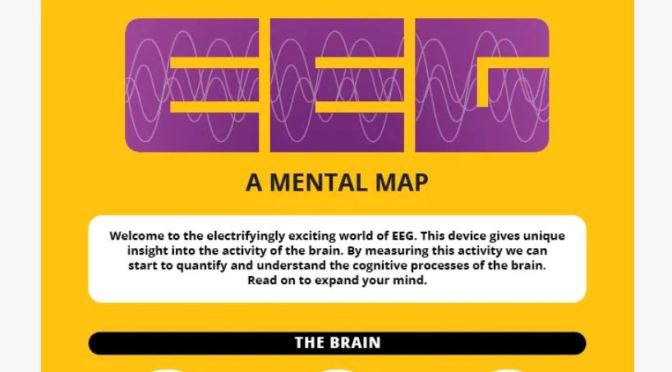

 Benjamin Thompson brings you the latest science news. This week, an antibiotic that targets difficult to treat bacteria, and a roundup of the latest science news.
 Boomers Daily