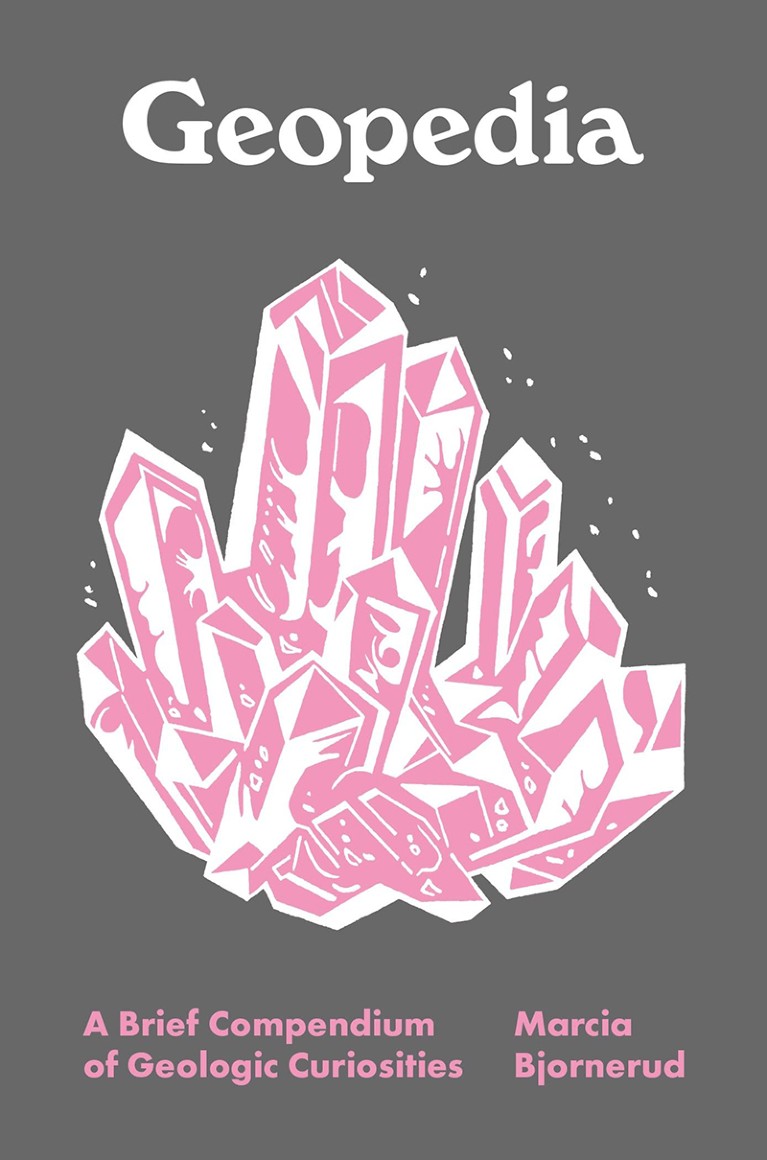
This is a garnet of a geology book: rooted in the planet, jewel-like and multicoloured. “To geoscientists, rocks are not nouns but verbs — far more than inert curios, they are evidence of Earth’s ebullient creativity,” writes geoscientist Marcia Bjornerud. Her brief A–Z ranges idiosyncratically through landforms, rocks and minerals, geologists, geological terms and time periods, including the Anthropocene, the epoch of human influence. Oddly, it omits the Gaia hypothesis that the planet is a self-regulating system.
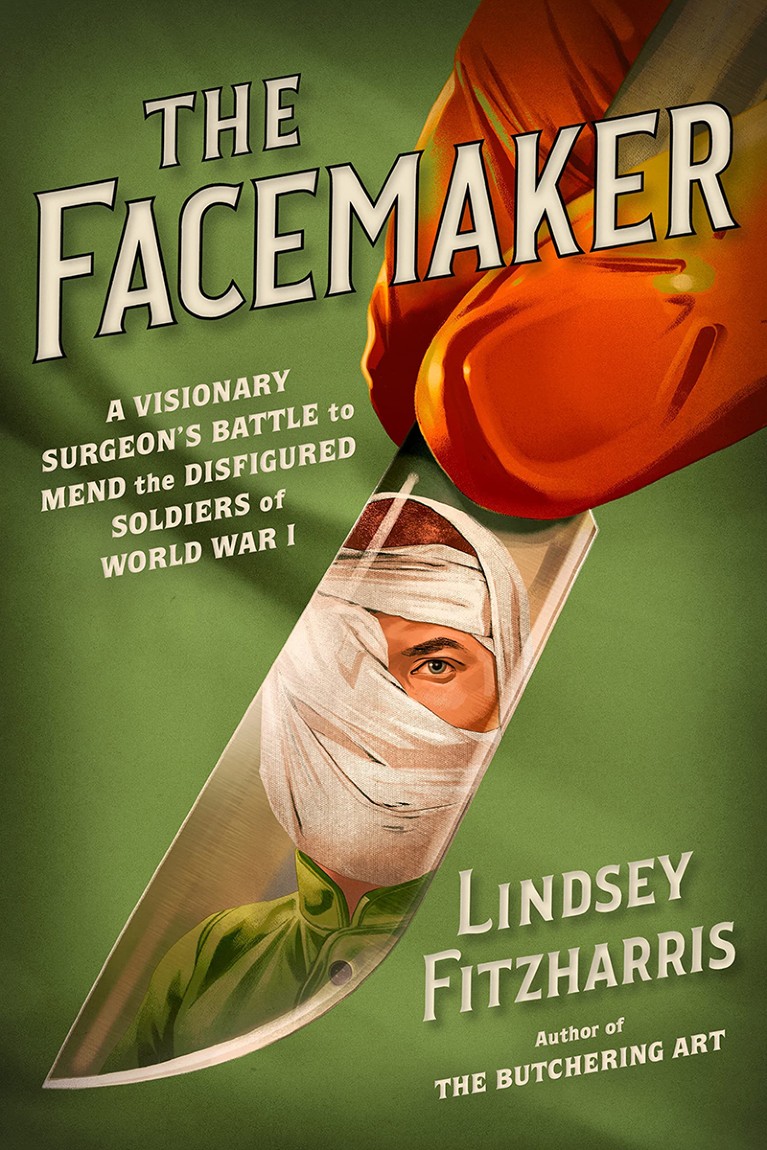
The Facemaker
Lindsey Fitzharris Farrar, Straus and Giroux (2022)
Following her award-winning 2017 biography of surgeon Joseph Lister, medical historian Lindsey Fitzharris tackles Harold Gillies, a pioneer of plastic surgery. She focuses on his First World War attempts to reconstruct the bullet-butchered faces of British soldiers who had become “strangers even to themselves”. From French battlefields, Fitzharris’s vividly thrilling account moves to the Queen’s Hospital in Sidcup, UK, which Gillies founded in 1917. An epilogue notes that he was knighted only in 1930, long after the war’s military generals.
Security and Conservation
Rosaleen Duffy Yale Univ. Press (2022)
The military, intelligence services and tech companies were barely visible at the 2014 London Conference on the Illegal Wildlife Trade, recalls scholar of international politics Rosaleen Duffy. By the 2018 conference, they were prominent. This “security turn” in conservation — since intensified by the COVID-19 pandemic’s links to a Chinese wildlife market — drives her timely analysis of a complex phenomenon. A violent approach to tackling poaching might boost elephant numbers, for example, but could also cause human-rights abuses.
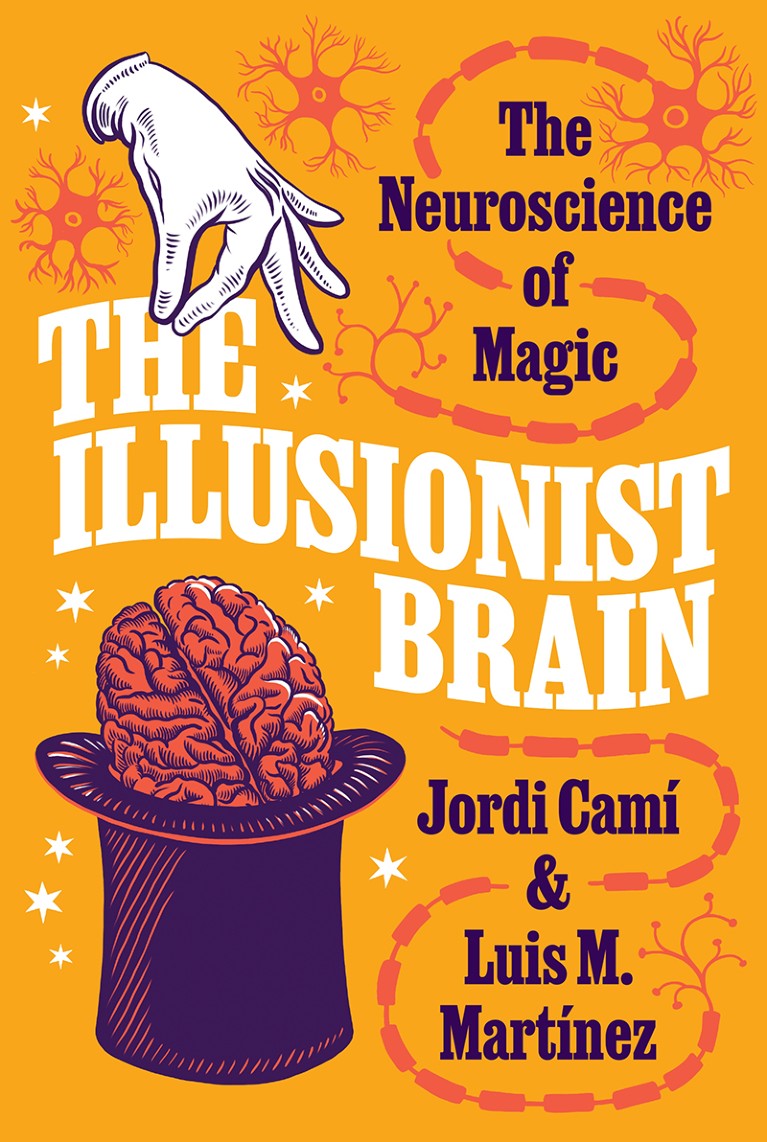
The Illusionist Brain
Jordi Camí & Luis M. Martínez (transl. Eduardo Aparcico) Princeton Univ. Press (2022)
The science behind audience perception of magic tricks intrigued late-nineteenth-century researchers. But since then, there have been fewer than 100 research papers on the subject, note pharmacologist Jordi Camí and neuroscientist Luis Martínez in their tantalizing study. Rather than using the brain to explain conjuring tricks, they focus on using illusions to elucidate the brain and behaviour. “When magicians trick us, they are interfering with all of the brain’s strategies for inferring reality.”
Plantation Crisis
Jayaseelan Raj UCL Press (2022)
Kerala in India has a reputation for egalitarianism, literacy and high life expectancy. Yet Tamil-speaking Dalit communities are oppressed and marginalized on tea plantations in the state, following a 1990s collapse in the international price of the crop. Jayaseelan Raj, who works in development studies, was born and raised in a Tamil Dalit plantation household. Plantation workers share with him “stories of poverty that they would not share even with their close relatives or neighbours”, as described in his academic study.
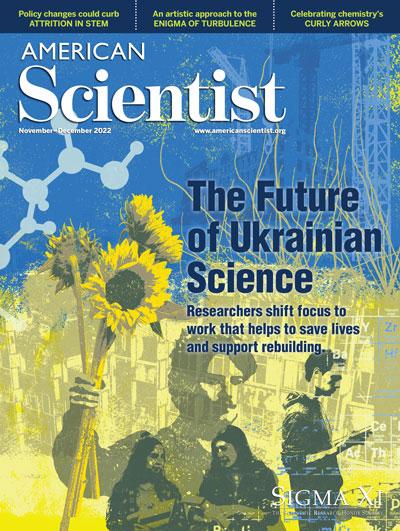
Following Russia’s invasion on February 24, the lives of scientists in Ukraine, like those of everyone else in the country, were upended. Russia has targeted educational and research institutions, destroying 285 buildings and damaging 2,528, according to the Ministry of Education and Science of Ukraine.
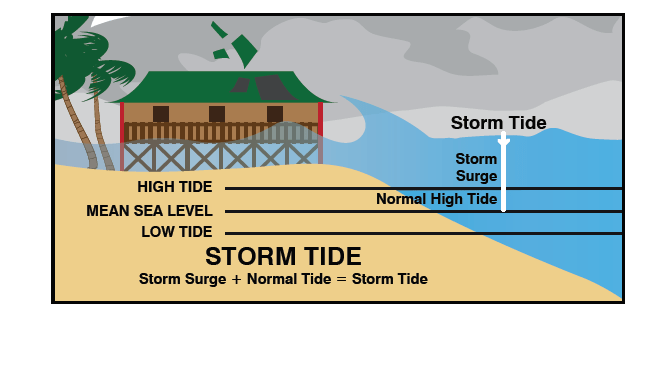
Storm surge is the deadliest part of a hurricane. Discover what causes this effect, and which regions are most at risk.
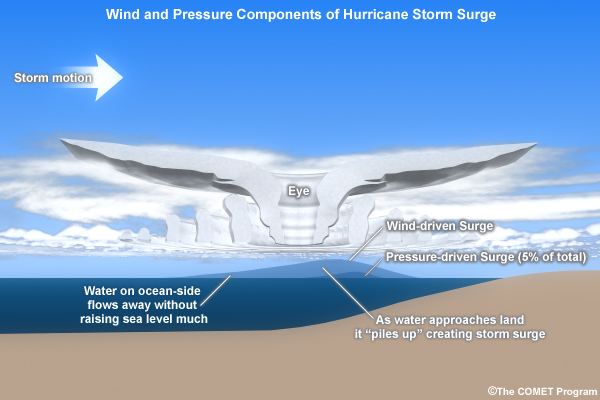
Storm surge is produced by water being pushed toward the shore by the force of the winds moving cyclonically around the storm. The impact on surge of the low pressure associated with intense storms is minimal in comparison to the water being forced toward the shore by the wind. Wind and Pressure Components of Hurricane Storm Surge
The maximum potential storm surge for a particular location depends on a number of different factors. Storm surge is a very complex phenomenon because it is sensitive to the slightest changes in storm intensity, forward speed, size (radius of maximum winds-RMW), angle of approach to the coast, central pressure (minimal contribution in comparison to the wind), and the shape and characteristics of coastal features such as bays and estuaries.
Take an animated look inside the neuron, and learn how scientists are addressing brain disease. With approximately 86 billion neurons in the brain, humans contain the most complex communications network imaginable. To address diseases of brain development and degeneration, neuroscientists are investigating how and why this network breaks down, and what can be done to repair it.
One area of study is dendrites, which are the tree-like structures of neurons, that receive electrical impulses. Researchers are carefully mapping out brain circuits and uncovering how connectivity changes can result in defects of the visual system or behavioral problems. The core section of the neuron is the cell body. Genetic engineering tools are revealing how mutations impact brain development and contribute to autism spectrum disorder or rare, inherited forms of neurological disease.
The transmission of nerve impulses occurs along the axon, which is insulated, much like an electrical wire, by a fatty layer called the myelin sheath. Scientists have invented a medicine to stop the immune system from mistakenly attacking this layer, which occurs during multiple sclerosis. Other molecules currently in development instruct the body to regenerate the sheath and repair damage. The axon also transports valuable cellular cargo, such as neurotransmitters, along tracks from one end of the neuron to the other.
Researchers are testing drug candidates for their ability to remove molecular traffic jams when this transport system fails, as often occurs in Parkinson’s and Alzheimer’s disease. The axon terminals make connections called synapses with other cells, using neurotransmitters as signals. Some scientists are evaluating how finely tuning the receptors for these chemicals could ease depression and anxiety.
Others are finding ways to promote the regrowth of lost synapses, which could halt neurodegeneration. From genetics to behavior, neuroscience is accelerating new interventions for the most challenging disorders of the nervous system.










 Boomers Daily