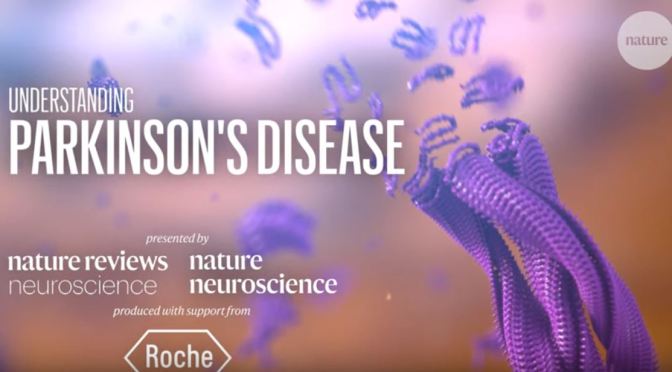
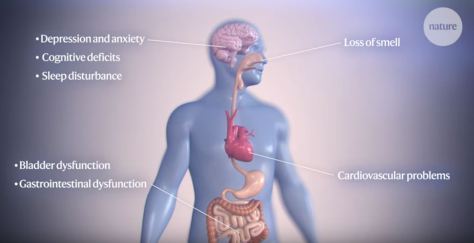
Parkinson’s disease is a neurological condition that affects the brain and other parts of the nervous system. The gradual loss of nerve cells leads to a suite of characteristic motor and non-motor symptoms.
What causes these cells to die and how the pathology develops in the nervous system are not yet clear but multiple lines of investigation are being pursued to answer these questions. In this animation, we explore some of the latest in Parkinson’s disease research.
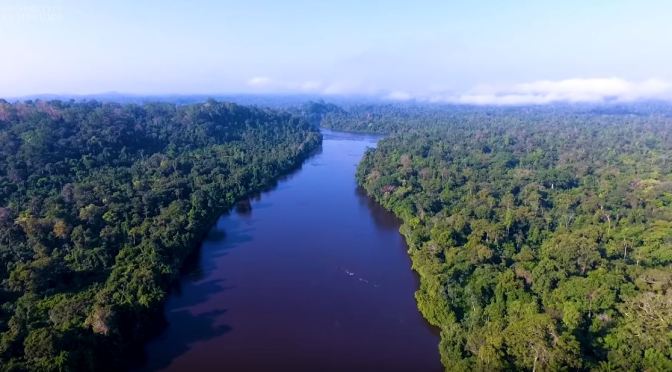
Research has discovered the tallest known tree in the Amazon, towering above the previous record holder at a whopping 88.5 metres. This giant could store as much carbon as an entire hectare of rainforest elsewhere in the Amazon. Toby Jackson, a plant scientist in the University of Cambridge, took part in an expedition to find the tree in a remote region of northern Brazil, and validate its height the old-fashioned way – by climbing it.
About one-third of people with epilepsy are treatment resistant. Up until now, epilepsy treatments have focused on taming seizures rather than the source of the disease and for good reason—so many roads lead to epilepsy: traumatic brain injury, extreme fever and infection, and genetic disorders, to name a few. Staff Writer Jennifer Couzin-Frankel talks with host Sarah Crespi about researchers that are turning back the pages on epilepsy, trying to get to the beginning of the story where new treatments might work.
And Sarah also talks with Torsten Neurbert at the Technical University of Denmark’s National Space Institute in Kongens Lyngby about capturing high-altitude “transient luminous events” from the International Space Station (ISS). These lightning-induced bursts of light, color, and occasionally gamma rays were first reported in the 1990s but had only been recorded from the ground or aircraft. With new measurements from the ISS come new insights into the anatomy of lightning.
Listen to the latest from the world of science, brought to you by Benjamin Thompson and Nick Howe. This week, the embattled field of social priming, and the latest sounds from a big acoustic meeting.
Our lives have been transformed by the information age. But what’s coming next is likely to be more profound, call it the genetic information age. We have mapped the human genome and in just the last few years we have learned to read and write DNA like software. And you’re about to see a few breakthroughs-in-waiting that would transform human health. For a preview of this revolution in evolution we met George Church, a world leading geneticist, whose own DNA harbors many eccentricities and a few genes for genius.
On 13 December, Amazon Prime will air the fourth season of The Expanse, a hardboiled space drama renowned for its working-class characters and real-world space physics. Showrunner Naren Shankar is part of the reason the science checks out. The veteran writer and producer for programs such as Star Trek: The Next Generation, Farscape, and the police procedural CSI: Crime Scene Investigation, has a doctorate in applied physics and electrical engineering.
When I got the script for the The Expanse, the pilot, I was, like, “Wow, this is a very different kind of a show.” Because they embraced all of the things that most science fiction shows run away from: the fact that you don’t have weight unless your ship is accelerating, the fact that communication in space is not instantaneous.
Shankar chatted with Science about why he feels it’s important to have a realistic sci-fi show, and how television work is like the scientific peer-review process.
Mining minerals found 15,000 feet below sea level could help secure a low-carbon future, but at what cost? Researchers including Thomas Peacock, professor of mechanical engineering at MIT, are racing to understand the environmental impact of deep-sea mining.
After their life as research subjects, what happens to lab monkeys? Some are euthanized to complete the research, others switch to new research projects, and some retire from lab life. Should they retire in place—in the same lab under the care of the same custodians—or should they be sent to retirement home–like sanctuaries? Online News Editor David Grimm joins host Sarah Crespi to discuss recently penned legislation that pushes for monkey retirements and a new collaboration between universities and sanctuaries to create a retirement pipeline for these primates.
Sarah also talks with Dante Lauretta, principal investigator for NASA’s Origins, Spectral Interpretation, Resource Identification, Security, Regolith Explorer (OSIRIS-REx) and a professor at the University of Arizona in Tucson, about the latest news from the asteroid Bennu. Within 1 week of beginning its orbit of the asteroid, OSIRIS-REx was able to send back surprising images of the asteroid ejecting material. It’s extremely rocky surface also took researchers by surprise and forced a recalculation of the sample return portion of the craft’s mission.
Hear the latest science news, brought to you by Benjamin Thompson and Shamini Bundell. This week, exploring two very differentissues surrounding genomic sequencing, and the latest results from NASA’s Parker Solar Probe.
In this episode:
00:45 The GenomeAsia 100k project
Researchers have released the first data from an ambitious project to sequence the genomes of 100,000 people from populations across Asia. Research Article: GenomeAsia100K Consortium
Researchers are using artificial intelligence techniques to invent medicines and materials—but in the process are they upending the scientific method itself? The AI approach is a form of trial-and-error at scale, or “radical empiricism”. But does AI-driven science uncover new answers that humans cannot understand? Host Kenneth Cukier finds out with James Field of LabGenius…


 About one-third of people with epilepsy are treatment resistant. Up until now, epilepsy treatments have focused on taming seizures rather than the source of the disease and for good reason—so many roads lead to epilepsy: traumatic brain injury, extreme fever and infection, and genetic disorders, to name a few. Staff Writer Jennifer Couzin-Frankel talks with host Sarah Crespi about researchers that are
 Listen to the latest from the world of science, brought to you by Benjamin Thompson and Nick Howe. This week, the embattled field of social priming, and the latest sounds from a big acoustic meeting.
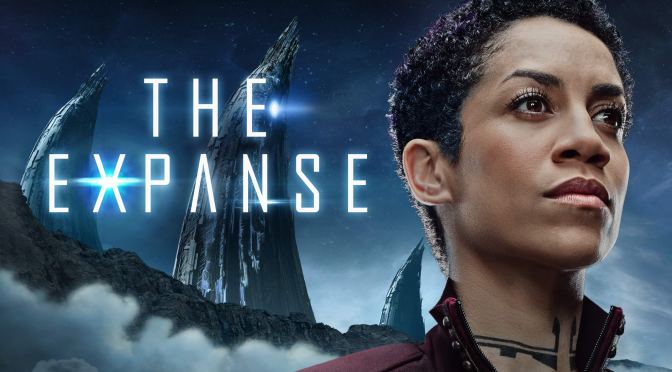
 On 13 December, Amazon Prime will air the fourth season of The Expanse, a hardboiled space drama renowned for its working-class characters and real-world space physics. Showrunner Naren Shankar is part of the reason the science checks out. The veteran writer and producer for programs such as Star Trek: The Next Generation, Farscape, and the police procedural CSI: Crime Scene Investigation, has a doctorate in applied physics and electrical engineering.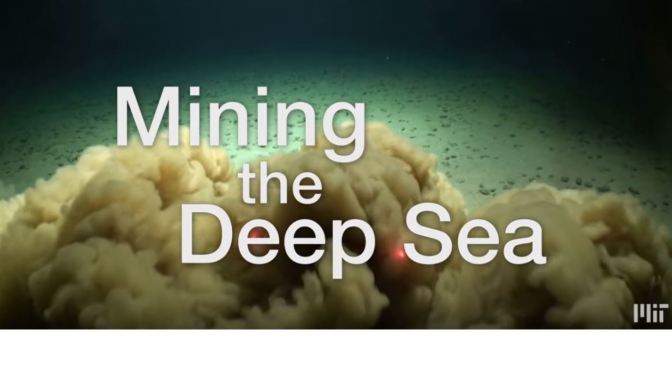
 After their life as research subjects, what happens to lab monkeys? Some are euthanized to complete the research, others switch to new research projects, and some retire from lab life. Should they retire in place—in the same lab under the care of the same custodians—or should they be sent to retirement home–like sanctuaries? Online News Editor David Grimm joins host Sarah Crespi to discuss recently penned legislation that
  Hear the latest science news, brought to you by Benjamin Thompson and Shamini Bundell. This week, exploring two very different issues surrounding genomic sequencing, and the latest results from NASA’s Parker Solar Probe.
 Researchers are using artificial intelligence techniques to invent medicines and materials—but in the process are they upending the scientific method itself? The AI approach is a form of trial-and-error at scale, or “radical empiricism”. But does AI-driven science uncover new answers that humans cannot understand? Host Kenneth Cukier finds out with James Field of LabGenius…
 Boomers Daily