Tag Archives: Reviews

Science Books: Top New Picks – Nature Magazine

Andrew Robinson reviews five of the week’s best science picks.

Spark

Timothy J. Jorgensen Princeton Univ. Press (2022)

The use of electricity in medicine has long been controversial, notes health physicist Timothy Jorgensen. Eighteenth-century polymath Benjamin Franklin applied shocks to paralysed muscles with temporary success. In the 1930s, neurologist Ugo Cerletti pioneered painful but effective electroconvulsive therapy for schizophrenia and depression. Yet even today, “no one is sure exactly how ECT works”, says Jorgensen in his brilliant book. Now, business magnate Elon Musk plans to implant computer chips to treat brain disorders.

Book cover

The New Fire

Ben Buchanan & Andrew Imbrie MIT Press (2022)

Artificial intelligence (AI) is not like electricity, but like fire, say Ben Buchanan and Andrew Imbrie — academic specialists in emerging technology — in their authoritative, coruscating analysis of its current and future significance. Its potential impact ranges from illuminating to catastrophic, according to three rival and sometimes overlapping views from observers whom they label “evangelists, warriors and Cassandras”. “Three sparks ignite the new fire,” say the authors: data, algorithms and computing power.

Book cover

Tomorrow’s People

Paul Morland Picador (2022)

“To most of us, the influence of demography on our future is far from obvious,” writes demographer Paul Morland. City dwellers tend to have low fertility, thereby creating an older population and eventually population decline, which could prompt migration and ethnic change, as in today’s United Kingdom — or might not, as in Japan. Morland’s careful book discusses ten indicators, one per chapter: infant mortality, population growth, urbanization, fertility, ageing, old age, population decline, ethnic change, education and food.

Book cover

Restarting the Future

Jonathan Haskel & Stian Westlake Princeton Univ. Press (2022)

In the past few decades, growth has stagnated in advanced economies. This is odd, given low interest rates, high business profits and a wide belief that we live with “dizzying technological progress”, write economists Jonathan Haskel and Stian Westlake. They argue that the old economic model based on material production fails when it comes to intangible assets — such as software, data, design and business processes — that hinge on ideas, knowledge and relationships. Financial and state institutions must update to cope.

Book cover

Inequality

Carles Lalueza-Fox MIT Press (2022)

Inequality and its origins will always preoccupy humans. In 2014, biologist Carles Lalueza-Fox led the retrieval of a genome from a European forager’s skeleton more than 7,000 years old; his later studies revealed genetic evidence of “inequality and discrimination in different times and periods”, as he describes in this significant book, written during the pandemic. He concludes by observing that COVID‑19 has had an enhanced impact on poor people, which he anticipates will feature in future genetic studies.

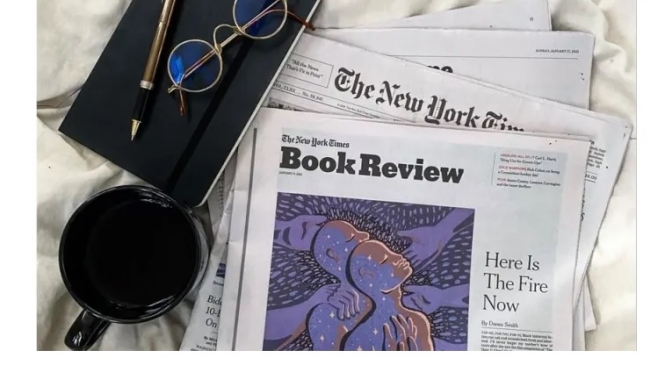
Preview: New York Times Book Review – April 24

Read more

Reviews: ‘The Week In Art’

A Venice Biennale special: we give you a flavour of the 59th edition of the Biennale which, as ever, brings a deluge of contemporary art to the historic Italian city. 

We talk to four artists in the national pavilions – Francis Alÿs in the Belgian Pavilion, Sonia Boyce in the British pavilion, Shubigi Rao in the Singapore pavilion and Na Chainkua Reindorf in the Ghana pavilion – about their presentations and how, if at all, they relate to the idea of nationhood. Louisa Buck and Jane Morris join host Ben Luke to review the main exhibition, The Milk of Dreams, curated by Cecilia Alemani, and pick their highlights of the Biennale so far. And while most visitors to Venice this week are immersed in contemporary art, for this episode’s Work of the Week, we take a look at a masterpiece that remains exactly where it was intended to hang. The art historian Ben Street joins Ben Luke in San Giovanni Crisostomo, a church near Venice’s Rialto bridge, to look at Saints Christopher, Jerome and Louis of Toulouse, a late painting by the Venetian Renaissance artist Giovanni Bellini.

Venice Biennale, 23 April-27 November.

Cover Preview: Science Magazine – April 22, 2022

Preview: New York Review Of Books – May 12, 2022


May 12, 2022 issue cover

Painting Herself

From the beginning, female self-portraitists have chosen to show themselves at work, as if to demonstrate that they could handle a brush as well as male artists.

The Mirror and the Palette: Rebellion, Revolution, and Resilience: Five Hundred Years of Women’s Self Portraits

by Jennifer Higgie

The Self-Portrait

by Natalie Rudd


Preview: New Scientist Magazine – April 23, 2022

New Scientist Default Image
  • COVER STORIES
  • FEATURES What psychology is revealing about ‘ghosting’ and the pain it causes
  • FEATURES How four big industries are driving the exploitation of our oceans
  • NEWS MS reversed by transplanted immune cells that fight Epstein-Barr virus
  • NEWS Blind Mexican cave fish are developing cave-specific accents
  • NEWS Rediscovered orchid was presumed extinct for almost a century
  • NEWS Tiny structures in rock may be fossils of earliest known life on Earth

Science: Global Warming Pledges, Energy Storage, Leeches And Biodiversity

What COP26 promises will do for climate

At COP26 countries made a host of promises and commitments to tackle global warming. Now, a new analysis suggests these pledges could limit warming to below 2˚C — if countries stick to them.

03:48 Efficiency boost for energy storage solution

Storing excess energy is a key obstacle preventing wider adoption of renewable power. One potential solution has been to store this energy as heat before converting it back into electricity, but to date this process has been inefficient. Last week, a team reported the development of a new type of ‘photothermovoltaic’ that increases the efficiency of converting stored heat back into electricity, potentially making the process economically viable.

Science: ‘Thermal batteries’ could efficiently store wind and solar power in a renewable grid

07:56 Leeches’ lunches help ecologists count wildlife

Blood ingested by leeches may be a way to track wildlife, suggests new research. Using DNA from the blood, researchers were able to detect 86 different species in China’s Ailaoshan Nature Reserve. Their results also suggest that biodiversity was highest in the high-altitude interior of the reserve, suggesting that human activity had pushed wildlife away from other areas.

ScienceNews: Leeches expose wildlife’s whereabouts and may aid conservation efforts

11:05 How communication evolved in underground cave fish

Research has revealed that Mexican tetra fish are very chatty, and capable of making six distinct sounds. They also showed that fish populations living in underground caves in north-eastern Mexico have distinct accents.

New Scientist: Blind Mexican cave fish are developing cave-specific accents

14:36 Declassified data hints at interstellar meteorite strike

In 2014 a meteorite hit the Earth’s atmosphere that may have come from far outside the solar system, making it the first interstellar object to be detected. However, as some of the data needed to confirm this was classified by the US Government, the study wasn never published. Now the United States Space Command have confirmed the researchers’ findings, although the work has yet to be peer reviewed.

LiveScience: An interstellar object exploded over Earth in 2014, declassified government data reveal

Vice: 

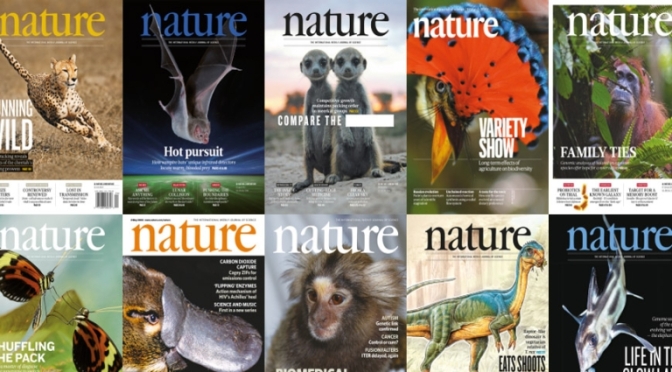
Cover Preview: Nature Magazine – April 21, 2022

Life speed

Cells acquire mutations throughout life, a process that is known to give rise to cancer and has been proposed to contribute to ageing. There is little knowledge, however, about the rate at which mutations accumulate in species other than humans, and whether this rate is influenced by biological traits such as lifespan or body size. In this week’s issue, Alex Cagan, Adrian Baez-Ortega and colleagues address these questions. The researchers studied the speed at which mutations accumulate during life in 16 mammalian species and found that the number of mutations increases by a roughly constant amount each year. They also observed that the molecular processes causing mutations are broadly similar across species. Crucially, the team identified a strong anticorrelation between lifespan and mutation rate: longer-lived species accrue mutations at a slower pace than shorter-lived ones, such that different species have roughly the same number of mutations by the end of their respective lifespans.

Science: Climate Change Hits Desert Soil, Mayan Calendars In Guatemala

On this week’s show: Climate change is killing critical soil organisms in arid regions, and early evidence for the Maya calendar from a site in Guatemala.

Staff Writer Elizabeth Pennisi joins host Sarah Crespi to discuss how climate change is affecting “biocrust,” a thin layer of fungi, lichens, and other microbes that sits on top of desert soil, helping retain water and create nutrients for rest of the ecosystem. Recent measurements in Utah suggest the warming climate is causing a decline in the lichen component of biocrust, which is important for adding nitrogen into soils.

Next, Sarah talks with Skidmore College anthropologist Heather Hurst, who directs Guatemala’s San Bartolo-Xultun Regional Archaeological Project, and David Stuart, a professor of art history and director of the Mesoamerica Center at the University of Texas, Austin, about their new Science Advances paper. The study used radiocarbon dating to pin down the age of one of the earliest pieces of the Maya calendar. Found in an archaeological dig in San Bartolo, Guatemala, the character known as “seven deer” (which represents a day in the Maya calendar), was dated to 300 B.C.E. That early appearance challenges what researchers know about the age and origins of the Maya dating system.

Reviews: ‘The Week In Art’

This week: Tom Seymour talks to the photographer Edward Burtynsky as he is recognised for his Outstanding Contribution to his medium in the Sony World Photography Awards. He discusses the Russian invasion and his Ukrainian heritage. 

In this episode’s Work of the Week, we look at Winslow Homer’s most famous work, The Gulf Stream (1899, reworked by 1906), which is at the heart of a new show at the Metropolitan Museum of Art in New York. Sylvia Yount and Stephanie Herdrich, the curators of the exhibition, discuss the making, reception and legacy of the painting. And we talk to Lisa Movius about the decision by the Nord regional government in France to suspend plans for the exhibition Matisse by Matisse—a collaboration between Musée Matisse le Cateau-Cambrésis and the private Beijing museum UCCA—over China’s supposedly neutral position on Russia’s invasion. Will other Western authorities or arts organisations follow suit?

Sony World Photography Awards Exhibition 2022, Somerset House, London, until 2 May. Edward Burtynsky’s multimedia project In the Wake of Progress is at the Luminato Festival, Toronto, 11-12 June.

Winslow Homer: Crosscurrents, Metropolitan Museum of Art, New York, until 31 July. Winslow Homer: Force of Nature, National Gallery, London, 10 September-8 January 2023.