
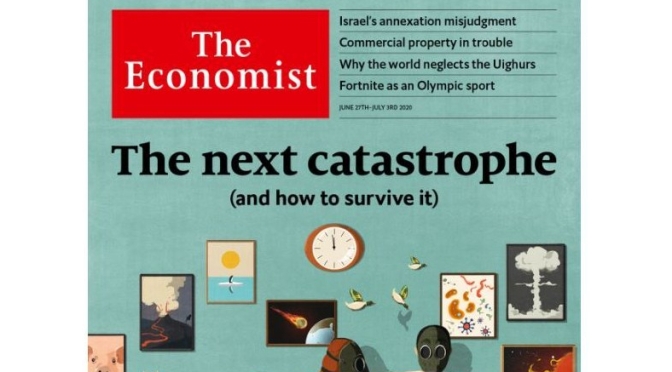
 A selection of three essential articles read aloud from the latest issue of The Economist. This week, the next catastrophe and how to survive it; (9:40) the risks of annexation for Israel; (21:50) and the Wirecard scandal.
Tag Archives: Podcasts
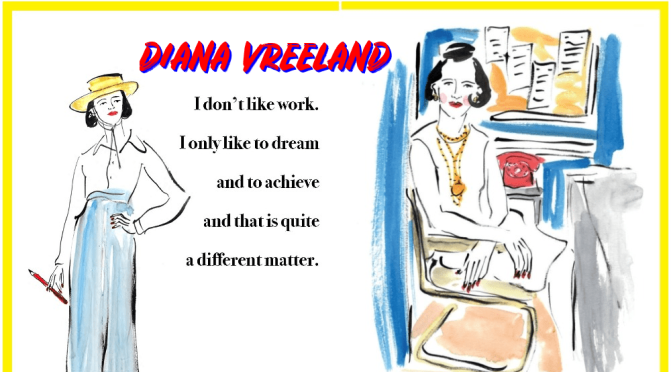
Podcast Interviews: Alexander Vreeland On His Fashion Journalist Grandmother “Diana”
 Alexander Vreeland, grandson of fashion journalist Diana Vreeland, tells us about his new book, ‘Bon Mots: Words of Wisdom from the Empress of Fashion’.
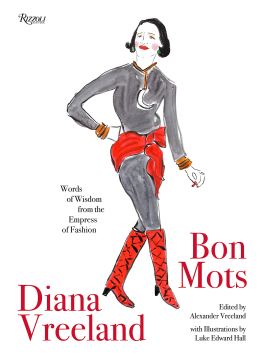 Diana Vreeland’s insightful edicts and evocative aphorisms remain her strongest legacy. She looked at life as a romantic and lived through dreams and imagination. Showing leadership, vision, and timeless wit, this book celebrates her visionary words that not only transformed the world of fashion, but also gave us sage advice to live by.
Sourced and edited by her grandson Alexander, Diana Vreeland: Bon Mots covers Vreeland’s incisive views of subjects such as allure, fashion, and style (“I mean, a new dress doesn’t get you anywhere; it’s the life you’re living in the dress”); beauty (“The neck is the beginning and end of looking like anybody”); age (“The quickest way to show your age is to try to look young”); color (“Black is the hardest color to get right–except for gray”); and her powerfully creative way of thinking (“I’m looking for the suggestion of something I’ve never seen”) Brought to life by illustrator Luke Edward Hall, Bon Mots vividly displays Mrs. Vreeland’s original thought and speech, which is equally as inspiring and relevant now as it was then.
About the Author
Diana Vreeland (1903-1989) joined Harper’s Bazaar as fashion editor in 1936; was the editor in chief of Vogue from 1962 to 1971; and later oversaw the Costume Institute at the Metropolitan Museum of Art. Alexander Vreeland has had an extensive career in fashion and beauty and is the president of the Diana Vreeland Estate and the author of Diana Vreeland Memos (Rizzoli, 2013) and Diana Vreeland: The Modern Woman (Rizzoli, 2015). Luke Edward Hall is a London-based artist and designer.

Interviews: Richard Haass – “The World – A Brief Introduction” (Podcast)
 “The whole lesson of this pandemic, and the whole lesson of 9/11, is we can’t ignore the world, or if we do ignore the world, it’s at our peril,” Haass says. “These oceans that surround us are not moats. We’ve got to pay attention to the world and we’ve got to fix things here at home.”
The ambition of Richard Haass’s new book is clear from its title: “The World: A Brief Introduction.” In just 400 pages, Haass, who has been the president of the nonpartisan Council on Foreign Relations since 2003, offers a primer on world affairs. On this week’s podcast, Haass talks about why he wrote it. (Read more)
Richard Nathan Haass is an American diplomat. He has been president of the Council on Foreign Relations since July 2003, prior to which he was Director of Policy Planning for the United States Department of State and a close advisor to Secretary of State Colin Powell.

Top New Science Podcasts: Coronavirus Masks, Sled Dogs And Humankind
 Kimberly Prather, an atmospheric chemist at the University of California, San Diego, who studies how ocean waves disperse virus-laden aerosols, joins host Sarah Crespi to talk about how she became an outspoken advocate for using masks to prevent coronavirus transmission. A related insight she wrote for Science has been downloaded more than 1 million times.
Mikkel Sinding, a postdoctoral fellow at Trinity College Dublin, talks sled dog genes with Sarah. After comparing the genomes of modern dogs, Greenland sled dogs, and an ancient dog jaw bone found on a remote Siberian island where dogs may have pulled sleds some 9500 years ago, they found that modern Greenland dogs—which are still used to pull sleds today—have much in common with this ancient Siberian ancestor. Those similarities include genes related to eating high-fat diets and cold-sensing genes previously identified in woolly mammoths. In this month’s book segment, Kiki Sanford talks with Rutger Bregman about his book, Humankind: A Hopeful History, which outlines a shift in the thinking of many social scientists to a view of humans as more peaceful than warlike.

Top Daily News Podcast: Economic Recovery, Covid-19 Surge & Virtual Democratic Convention
 The consensus among economists is that the U.S. recovery will most likely be something in between a V and a W — a sharp drop, a relatively small bounce back, and then a long period of slow growth.
- Time to pay attention again: The coronavirus surge is real, and it’s everywhere in the United States.
- And Axios co-founder Mike Allen tells us what to expect at the virtual Democratic National Convention in Milwaukee.
Guests: Axios’ Felix Salmon, Sam Baker, and Mike Allen.
New History Books: “The Year 1000” By Valerie Hansen (Getty Podcast)
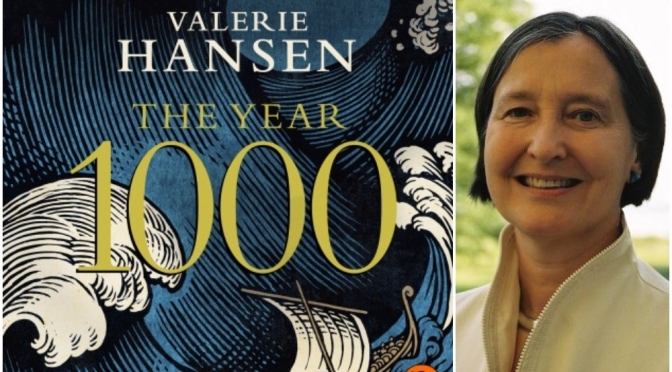
 Valerie Hansen explores these early economic and cultural exchanges and their long-term impact in her new book “The Year 1000: When Explorers Connected the World―and Globalization Began”, which originated as a college course co-taught with Mary Miller, director of the Getty Research Institute. In this episode, Hansen and Miller discuss the state of the world around the year 1000.
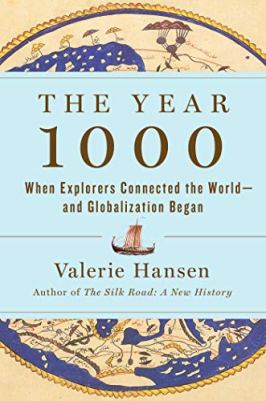 From celebrated Yale professor Valerie Hansen, a groundbreaking work of history showing that bold explorations and daring trade missions connected all of the world’s great societies for the first time at the end of the first millennium.
People often believe that the years immediately prior to AD 1000 were, with just a few exceptions, lacking in any major cultural developments or geopolitical encounters, that the Europeans hadn’t yet reached North America, and that the farthest feat of sea travel was the Vikings’ invasion of Britain. But how, then, to explain the presence of blonde-haired people in Maya temple murals at Chichén Itzá, Mexico? Could it be possible that the Vikings had found their way to the Americas during the height of the Maya empire?
Valerie Hansen, an award-winning historian, argues that the year 1000 was the world’s first point of major cultural exchange and exploration. Drawing on nearly thirty years of research, she presents a compelling account of first encounters between disparate societies, which sparked conflict and collaboration eerily reminiscent of our contemporary moment.
For readers of Jared Diamond’s Guns, Germs, and Steel and Yuval Noah Harari’s Sapiens, The Year 1000 is an intellectually daring, provocative account that will make you rethink everything you thought you knew about how the modern world came to be. It will also hold up a mirror to the hopes and fears we experience today.

Top New Science Podcasts: Poker’s Life Lessons, Peer Reviews & Mars’ Greenness
 On this week’s podcast, life lessons from poker, keeping things civil during peer review, a sweaty synthetic skin that can exude useful compounds, and Mars’s green atmosphere.
In this episode:
00:44 Deciding to play poker
When writer Maria Konnikova wanted to better understand the human decision making process, she took a rather unusual step: becoming a professional poker player. We delve into her journey and find out how poker could help people make better decisions. Books and Arts: What the world needs now: lessons from a poker player
09:12 Research Highlights
A sweaty synthetic skin that can exude useful compounds, and Mars’s green atmosphere. Research Highlight: An artificial skin oozes ‘sweat’ through tiny pores; Research Highlight: The red planet has a green glow
11:21 Developing dialogues
The peer-review process is an integral part of scientific discourse, however, sometimes interactions between authors and reviews can be less than civil. How do we tread the fine line between critique and rudeness? Editorial: Peer review should be an honest, but collegial, conversation
18:47 Briefing Chat
We take a look at some highlights from the Nature Briefing. This time we talk about research into racism, and a possible hint of dark matter. Nature News: What the data say about police brutality and racial bias — and which reforms might work; Nature News: Mathematicians urge colleagues to boycott police work in wake of killings; Quanta: Dark Matter Experiment Finds Unexplained Signal
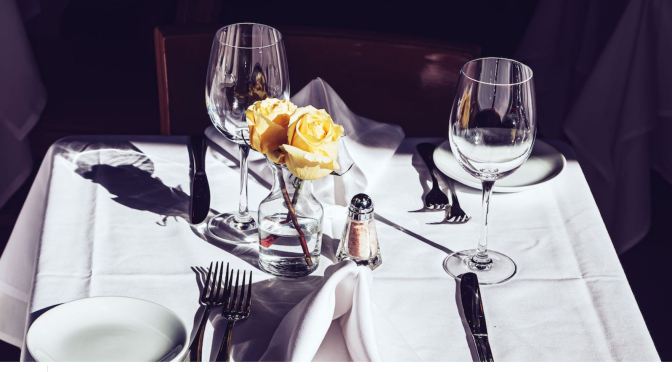
Podcasts: The Many Difficulties Ahead For Restaurant Patio Dining
 Public health experts think Covid-19 risk is lower outside, and restaurateurs want to fill tables. It’s an easy solution—except for all the hard parts.
“In a restaurant operating on the typical dining model of table service, I have not yet seen a case where outdoor seating would make up for the amount of lost indoor seating due to distancing,” Boor says. “Even the ones that come close require some pretty big assumptions about making that outdoor seating usable, like building something like wind screens and heating elements.” Few cities in the US have year-round pleasant weather in the evenings, whether that’s because of heat, humidity, cold, or rain. So restaurants trying to expand their borders are going to have to build some kind of nimbus of infrastructure to minimize the picnic-in-the-rain vibe. Of course, the more enclosed an outdoor space is, the more it is like an indoor space—with all the concomitant risks.
Top New Daily Podcasts: “Axios Today” Features Political & Media Insights
 In the past few weeks, best seller lists and streaming platforms have been full of books, shows, and songs about racism in America. Demand for this type of content is growing, streaming companies are featuring more prominently and it could have a lasting impact.
New Travel Podcast: Ljubljana Castle In Slovenia (Monocle 24)
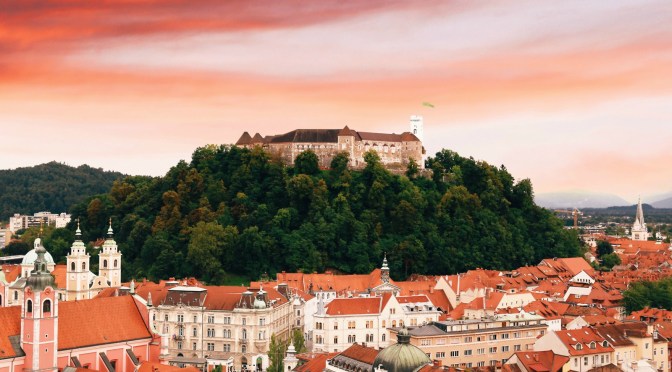
 Monocle 24’s “Tall Stories” visits Ljubljana Castle, a former medieval fortress that’s now at the heart of city life in the Slovenian capital. It hosts everything from award-winning restaurants to a diverse collection of cultural venues.
Slovenia, a country in Central Europe, is known for its mountains, ski resorts and lakes. On Lake Bled, a glacial lake fed by hot springs, the town of Bled contains a church-topped islet and a cliffside medieval castle. In Ljubljana, Slovenia’s capital, baroque facades mix with the 20th-century architecture of native Jože Plečnik, whose iconic Tromostovje (Triple Bridge) spans the tightly curving Ljubljanica River.
 Boomers Daily