

Kamala Harris and Mike Pence hit the debate floor last night, Hurricane Delta restrengthens to Category 2, and family’s cat found 23 months after Camp Fire disappearance.

Kamala Harris and Mike Pence hit the debate floor last night, Hurricane Delta restrengthens to Category 2, and family’s cat found 23 months after Camp Fire disappearance.

A conversation about the US election and the possible fallout for science, Covid-19, black hole mergers and are maternal behaviours learned or innate?
In this episode:
00:46 US election
In the United States the presidential race is underway, and Nature is closely watching to see what might happen for science. We speak to two of our US based reporters to get their insight on the election and what to look out for. News Feature: A four-year timeline of Trump’s impact on science; News Feature: How Trump damaged science — and why it could take decades to recover; News: What a Joe Biden presidency would mean for five key science issues
12:36 Coronapod
With news of the US President Donald Trump contracting coronavirus, the Coronapod team discuss the treatments he has received and what this might mean for the US government. News: Contact tracing Trump’s travels would require ‘massive’ effort
25:33 Research Highlights
How binary stars could become black hole mergers, and a prehistoric massacre. Research Highlight: The odd couple: how a pair of mismatched black holes formed; Research Highlight: A bustling town’s annihilation is frozen in time
27:36 Are parental behaviours innate?
Nature versus nurture is a debate as old as science itself,and in a new paper maternal behaviours are innate or learned, by looking at the neurological responses of adult mice to distress calls from mice pups. Research Article: Schiavo et al.
33:03 Briefing Chat
This week sees the announcement of the Nobel Prizes, so we chat about the winners and their accomplishments. Nature News: Physicists who unravelled mysteries of black holes win Nobel prize; Nature News: Virologists who discovered hepatitis C win medicine Nobel
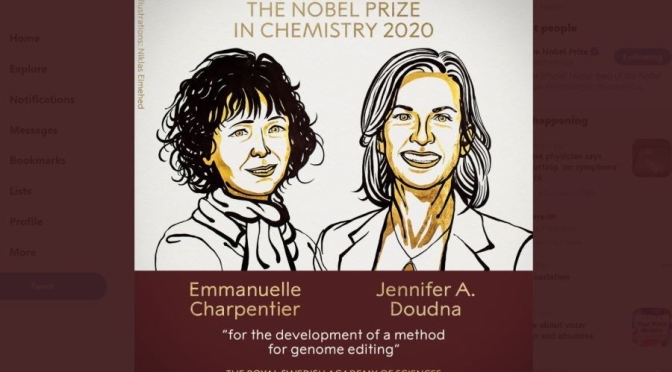
“We had a sense that we were onto something big,” says Jennifer Doudna, as she recalls the start of her “curiosity-driven” research into CRISPR and reflects on the pace of the field today, in this short conversation with Adam Smith. Speaking from her patio in the early morning in Palo Alto, Doudna describes how she was woken by a call from a journalist: “I assumed she was calling me to ask me to comment on somebody else winning the Nobel Prize!” The award of the prize to her and Emmanuelle Charpentier will, she hopes, be an encouragement to other women. “Sometimes,” she comments, “there’s a sense that no matter what they do, their work will not be recognised in the way it would be if they were a man.”
In this interview recorded shortly after news broke of her Nobel Prize in Chemistry, Emmanuelle Charpentier tells Adam Smith of her surprise at receiving the call from Stockholm, despite considerable speculation that it might be coming her way. She speaks of the “explosion of knowledge and publications” that the CRISPR field has generated, the motivations behind her “brief but intense” collaboration with her co-Laureate Jennifer Doudna, the need for societal involvement in the conversation about the applications of technology and the importance of studying the microbiological world.

NPR News Now reports: Vice President Debate tonight, Stimulus Bill update, health care needs in rural America, and other top news.

White House press secretary and two aides have tested positive for coronavirus, U.S. faces shortage of up to 8 billion meals in next 12 months, and Georgia pastor shocks pregnant Waffle House waitress with $12G tip.

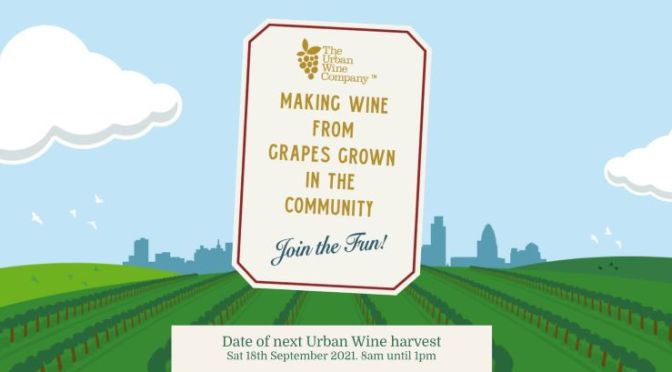
Monocle’s Georgina Godwin heads to southwest London to visit The Urban Wine Company, that harvests its bounty from vines across the city.
The Urban Wine Company™ was born out of an idea a few years back. Neighbours Richard and Paul were relaxing underneath a vine enjoying a glass of wine that had been flown half-way across the world. Realising they were sat in an urban garden of Eden surrounded by grape vines, they asked the impossible…
“Would it be possible to make a wine made from London grapes?”

So, in September 2009 they set about harvesting grapes grown in gardens, allotments, behind supermarkets and even at the side of railways. They teamed up with winemaking experts to produce the very first batch of ‘Chateau Tooting’. Pleasantly surprised, if not a little amazed by its ‘Drinkability’ The Urban Wine Company™ was formed. Not only had a fantastic tasting wine been created using grapes grown in a city centre, something unique had also been born.
NPR News Now: Trump Covid-19 condition, Supreme Court convenes, Senate Judiciary Committee, and other top news.

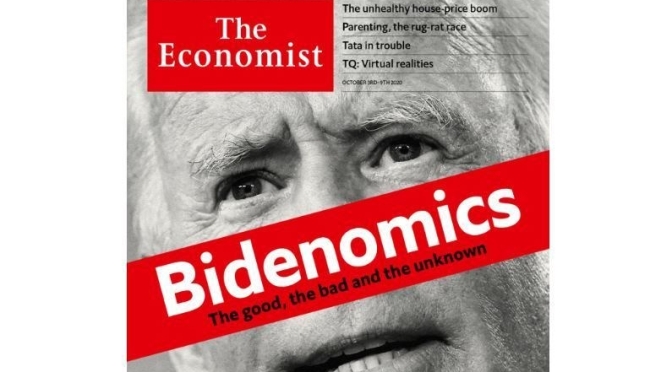
A selection of three essential articles read aloud from the latest issue of The Economist. This week: Bidenomics, Chinese officials want to erase many villages (12:00) and ethnic minorities in Britain (19:10).

Monocle’s Emma Nelson speaks to Vincent McAviney and Rob Cox, plus we hear from The Saturday Paper’s Karen Middleton, and check in with Tokyo and Ljubljana.

Radio News 24/7 | Deutsche Welle reports: President Trump transferred to Walter Reed Medical Center, Germany marks 30th year of reunification, and other top world news.

 Boomers Daily