
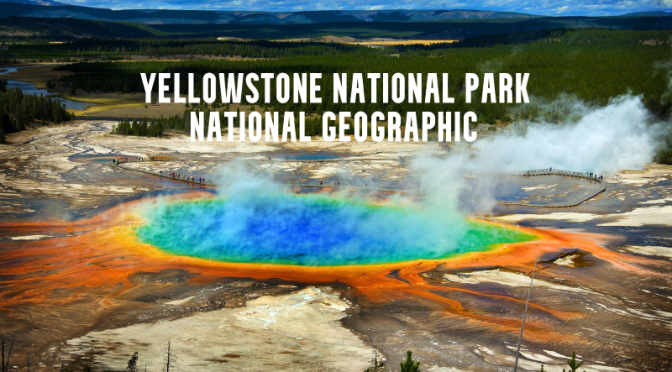
Few places are as special and unique as Yellowstone National Park – the world’s first national park. A wilderness jewel of vast forests and wide-open valleys, home to large bison herds, wolf packs, and grizzly bears. It sits atop one of the world’s largest super volcanoes, giving rise to such iconic geothermal features as Old Faithful geyser and the Grand Prismatic Spring.
Tag Archives: National Geographic
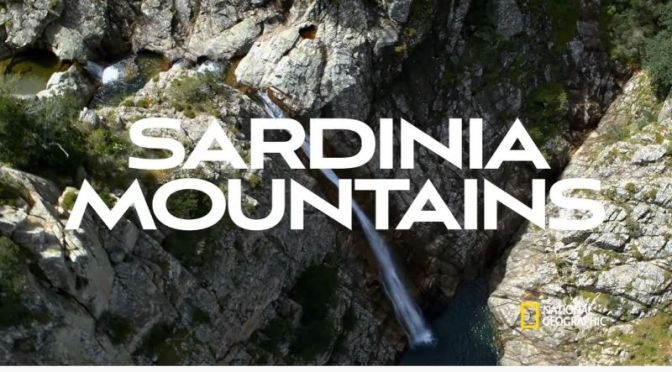
Travel & Adventure: Cara Delevingne & Bear Grylls In Sardinia, Italy (Video)
Cara Delevingne realizes a dream of accompanying Bear Grylls on an adventure. Sweeping Cara off her scooter and into a helicopter, Bear leads Cara up the mountains of Sardinia. At nearly a mile high in elevation, Bear shows Cara how to brave several heart-stopping obstacles, including pulling herself across a horizontal line suspended 200 feet in the air and rappelling down a dangerous waterfall.
Sardinia is a large Italian island in the Mediterranean Sea. It has nearly 2,000km of coastline, sandy beaches and a mountainous interior crossed with hiking trails. Its rugged landscape is dotted with thousands of nuraghi – mysterious Bronze Age stone ruins shaped like beehives. One of the largest and oldest nuraghi is Su Nuraxi in Barumini, dating to 1500 B.C.

Aircraft: ‘Science Of How Helicopters Fly’ (Video)
The science required for a helicopter to achieve flight is a lot more complicated than it might seem.
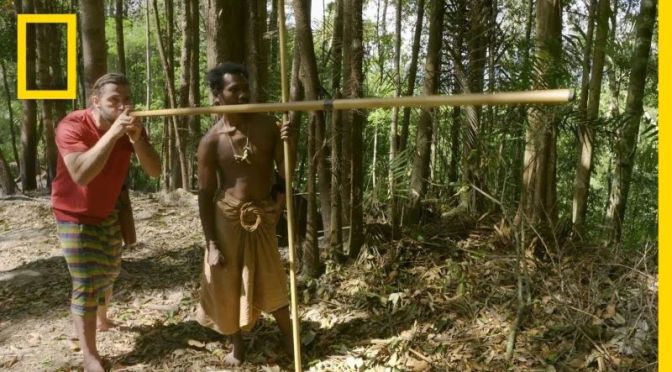
Thailand: ‘Blowguns Of The Mani Tribe’ (Video)
Hazen travels to the Malay Peninsula and meets with members of the Mani tribe, a group of hunter-gathers who have lived for the land for centuries. Hazen learns how to use their trademark tool for hunting, the blowgun.
The Maniq or Mani are an ethnic group of Thailand. They are more widely known in Thailand as the Sakai (Thai: ซาไก), a controversial derogatory term meaning ‘slave’ or ‘barbarism’.[2] They are the only Negrito group in Thailand and speak a variety of related Aslian languages, primarily Kensiu and Ten’edn. The Lisu have their own language, culture, and no alphabet.[3]
In Thailand, the Maniq minority live in the southern provinces of Yala, Narathiwat, Phatthalung, Trang, and Satun.[2]
The Maniq are a hunting and gathering society. They build temporary huts of bamboo with roofs made of banana leaves. They hunt many types of animals and consume many different kinds of vegetables and fruits. They wear simple clothes made of materials such as bamboo leaves. They are familiar with many different species of medicinal herbs.[4]
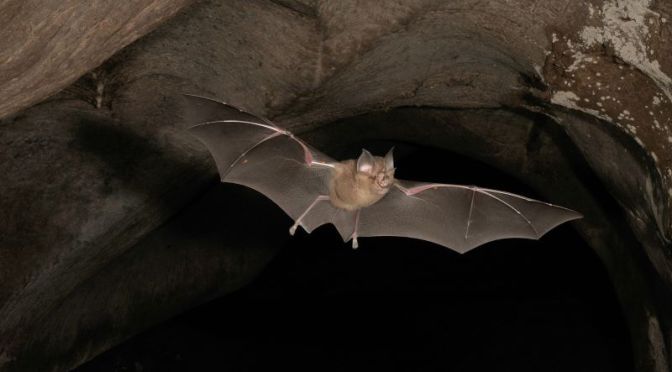
Health & Nature: ‘How Bats Can Transmit Viruses’
When it comes to viruses jumping from animals to humans, bats hold a unique place in the transmission chain. Christopher Golden and James Longman investigate an abandoned mine for signs of poaching or viruses impacting the bat population.

Extreme Sports: ‘Dangers Of Kite Surfing’ (Video)
Kite Surfing may look easy on the outset, but without knowing the science behind it you may see a lot more failure than success.

Mountain Science: ‘Mount Everest Weather – Data Is In The Clouds’ (Video)
In 2019, members of the National Geographic and Rolex Perpetual Planet Everest Expedition set out to install five new weather stations on Mt. Everest, including the highest weather station on Earth. Follow along as the team climbs into the mountain’s “death zone” to complete the network of weather stations in order to improve our understanding of climate change.

Travel & Science Videos: ‘Everest Glaciology – Truth In The Ice’ (NatGeo)
As part of the National Geographic and Rolex Perpetual Planet Everest Expedition, a team of scientists and Sherpa guides sets out to collect information about glacial change in the Himalayas. By extracting ice cores from the highest glacier in the world, the team has begun to uncover details about climate change that have – until now – been hidden in this hard-to-reach ice. The National Geographic Society uses the power of science, exploration, education, and storytelling to illuminate and protect the wonder of our world.
Learn more at http://www.natgeo.org
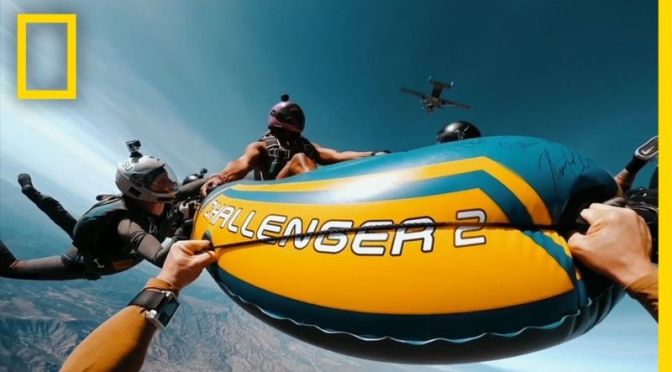
Extreme Sports: ‘The Art Of Skydiving’ (Video)
Skydiving is one of the most dangerous extreme sports someone can participate in. Here is some of the science behind doing it successfully.
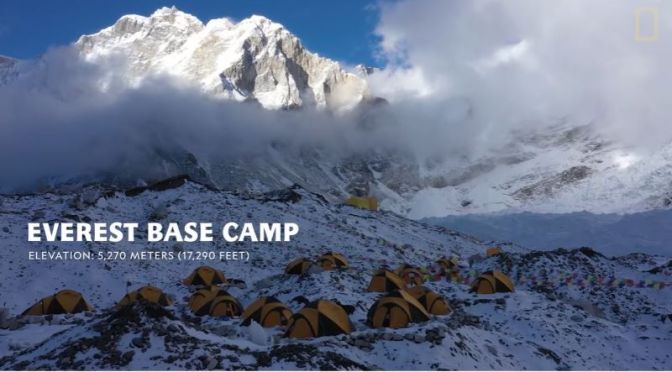
Science & Exploration: ‘High Altitude Biology On Mount Everest’ (Video)
“Even near the highest peak in the world, life manages to thrive. Follow a global team of scientists on the National Geographic and Rolex Perpetual Planet Everest Expedition as they measure the biodiversity in Nepal’s Khumbu Valley and investigate how high alpine species are adapting to global climate change.”
 Boomers Daily