Tag Archives: Morgan Library & Museum

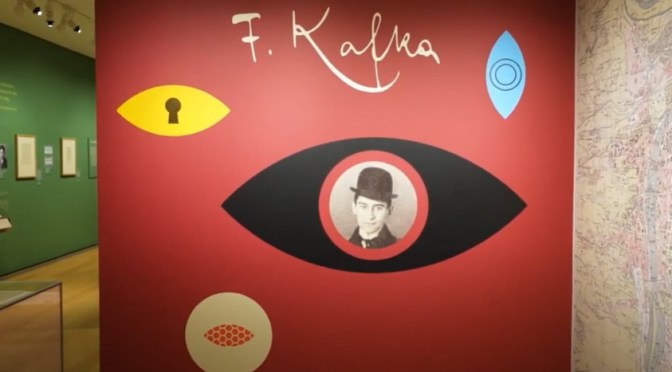
Exhibitions: ‘Franz Kafka’ At The Morgan Library

MORGAN LIBRARY (January 28, 2025): Our curator Sal Robinson discusses the importance of the Bible in the history of literature in “Franz Kafka.” Few could have predicted the influence Kafka’s relatively small body of work would have on every realm of thought and creative endeavor over the course of the 20th century and into the 21st.

This exhibition will present, for the first time in the United States, the Bodleian Library’s extraordinary holdings of literary manuscripts, correspondence, diaries, and photographs related to Kafka, including the original manuscript of his novella The Metamorphosis.

Other highlights include the manuscripts of his novels Amerika and The Castle; letters and postcards addressed to his favorite sister, Ottla; his personal diaries, in which he also composed fiction, including his literary breakthrough, the 1912 story “The Judgment”; and unique items such as his drawings, the notebooks he used when studying Hebrew, and family photographs. In addition to presenting unique literary and biographical material, the exhibition examines Kafka’s afterlife, from the complex journeys of his manuscripts, to the posthumous creation of a literary icon whose very name has become an adjective, to his immense influence on the worlds of literature, theater, dance, film, and the visual arts.

Drawing on institutional holdings and private collections in the United States and Europe, the Morgan will show a selection of key works, among them Andy Warhol’s portrait of Kafka, part of his 1980 series Ten Portraits of Jews of the Twentieth Century.

“Franz Kafka” is open to the public November 22, 2024 through April 13, 2025.

Art: Spirit and Invention – Drawings by Giambattista and Domenico Tiepolo

The Morgan Library & Museum (November 27, 2023) – The Morgan is home to one of the world’s largest and most important collections of drawings by Giambattista Tiepolo (1696–1770) and his eldest son Domenico (1727–1804), with more than 300 representative examples of their lively invention and masterful techniques.

Spirit and Invention: Drawings by Giambattista and Domenico Tiepolo

October 27, 2023 through January 28, 2024

Combining highlights from the Morgan’s collection with carefully selected loans, this exhibition will provide a comprehensive look at the Tiepolos’ work as draftsmen, focusing on the role of drawing in their creative process and the distinct physical and stylistic properties of their graphic work. At the core of the collection and exhibition are substantial groups of Giambattista’s drawings that relate to major ceiling fresco projects of the 1740s and 1750s.

A fresh look at the style, function, and material properties of these working drawings has yielded new insights into their purposes. Most significantly, the exhibition presents for the first time extremely rare pen studies for Tiepolo’s magnum opus, the ceiling fresco above the staircase of the Würzburg Residenz of 1752, and a group of bold sketches newly connected with his ceiling fresco of 1754 at the Venetian church of Santa Maria della Pietà.

Other sections of the exhibition highlight the introduction of Domenico to the family workshop, the exchanges between father and son, and the great series drawings by both: Giambattista’s fantastic heads and figures seen di sotto in su, and Domenico’s drawings of animals, biblical scenes, and contemporary life.

The exhibition will end with a wall including striking examples from Domenico’s late Punchinello series. October 27, 2023 through January 28, 2024

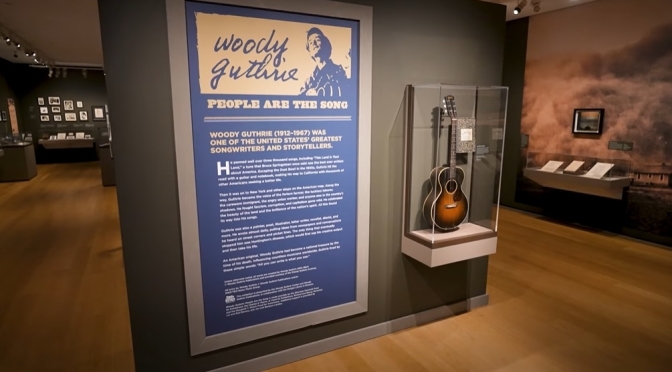
Exhibits: ‘Woody Guthrie – People Are The Song’ At The Morgan Library, NYC

The author of more than three thousand folk songs, Woody Guthrie (1912–1967) is one of the most influential songwriters and recording artists in American history. He is an icon of the Depression era and wrote the world’s most famous protest song, “This Land Is Your Land.”

But he was not only a songwriter, and his subject matter extended well beyond labor politics. The full corpus of his creativity—including lyrics, poetry, artwork, and largely unpublished prose writings—encompassed topics such as the environment, love, sex, spirituality, family, and racial justice. Guthrie created a personal philosophy that has impacted generations of Americans and inspired musician-activists from Pete Seeger and Bruce Springsteen to Ani DiFranco and Chuck D. As Bob Dylan noted of Guthrie, “You could listen to his songs and actually learn how to live.”

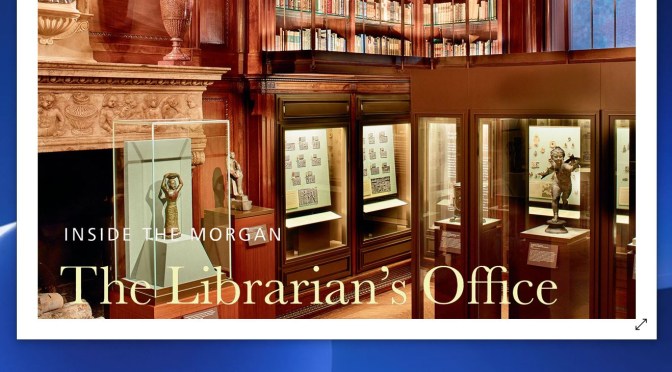
Books: “Inside The Morgan – The Librarian’s Office”

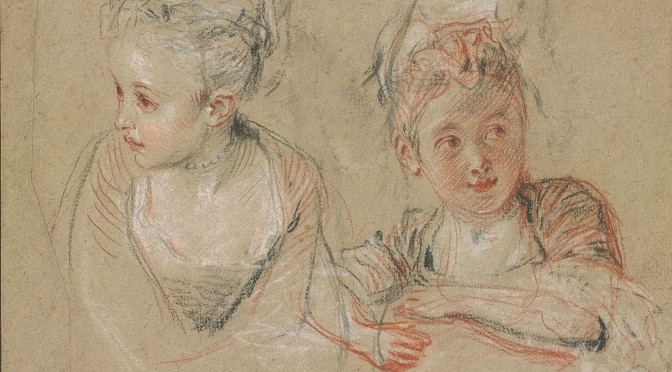
Artist Profiles: French Painter Jean-Antoine Watteau (1684-1721)

Director Colin B. Bailey takes a close look at three drawings by Jean-Antoine Watteau (1684–1721), considered some of the finest drawings in the Morgan’s collection: Seated Young Woman (ca. 1716), Young Woman Wearing a Chemise (ca. 1718), and Two Studies of the Head and Shoulders of a Little Girl.

Arts & Literature: ‘The Morgan Library & Museum’

The Morgan Library & Museum, formerly the Pierpont Morgan Library, is a museum and research library in the Murray Hill neighborhood of Manhattan, New York City. It is situated at 225 Madison Avenue, between 36th Street to the south and 37th Street to the north. 

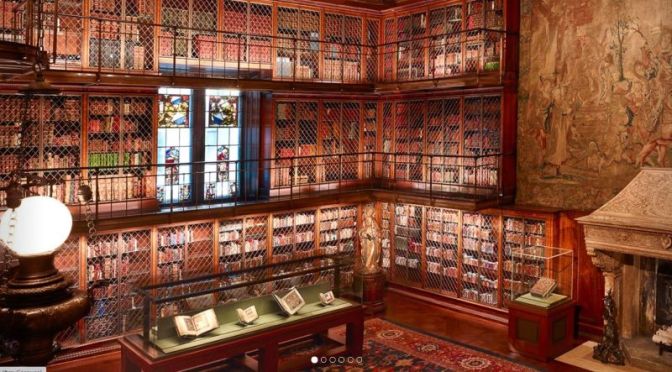
A complex of buildings in the heart of New York City, The Morgan Library & Museum began as the private library of financier Pierpont Morgan (1837–1913), one of the preeminent collectors and cultural benefactors in the United States. As early as 1890 Morgan had begun to assemble a collection of illuminated, literary, and historical manuscripts, early printed books, and old master drawings and prints.

Mr. Morgan’s library, as it was known in his lifetime, was built between 1902 and 1906 adjacent to his New York residence at Madison Avenue and 36th Street. Designed by Charles McKim of the architectural firm McKim, Mead & White, the library was intended as something more than a repository of rare materials. Majestic in appearance yet intimate in scale, the structure was to reflect the nature and stature of its holdings. The result was an Italian Renaissance-style palazzo with three magnificent rooms epitomizing America’s Age of Elegance. Completed three years before McKim’s death, it is considered by many to be his masterpiece. In 1924, eleven years after Pierpont Morgan’s death, his son, J. P. Morgan, Jr. (1867–1943), known as Jack, realized that the library had become too important to remain in private hands. In what constituted one of the most momentous cultural gifts in U.S. history, he fulfilled his father’s dream of making the library and its treasures available to scholars and the public alike by transforming it into a public institution.

Over the years—through purchases and generous gifts—The Morgan Library & Museum has continued to acquire rare materials as well as important music manuscripts, early children’s books, Americana, and materials from the twentieth century. Without losing its decidedly domestic feeling, the Morgan also has expanded its physical space considerably.

In 1928, the Annex building was erected on the corner of Madison Avenue and 36th Street, replacing Pierpont Morgan’s residence. The Annex connected to the original McKim library by means of a gallery. In 1988, Jack Morgan’s former residence—a mid-nineteenth century brownstone on Madison Avenue and 37th Street—also was added to the complex. The 1991 garden court was constructed as a means to unite the various elements of the Morgan campus.

The largest expansion in the Morgan’s history, adding 75,000 square feet to the campus, was completed in 2006. Designed by Pritzker Prize–winning architect Renzo Piano, the project increases exhibition space by more than fifty percent and adds important visitor amenities, including a new performance hall, a welcoming entrance on Madison Avenue, a new café and a new restaurant, a shop, a new reading room, and collections storage. Piano’s design integrates the Morgan’s three historical buildings with three new modestly scaled steel-and-glass pavilions. A soaring central court connects the buildings and serves as a gathering place for visitors in the spirit of an Italian piazza.