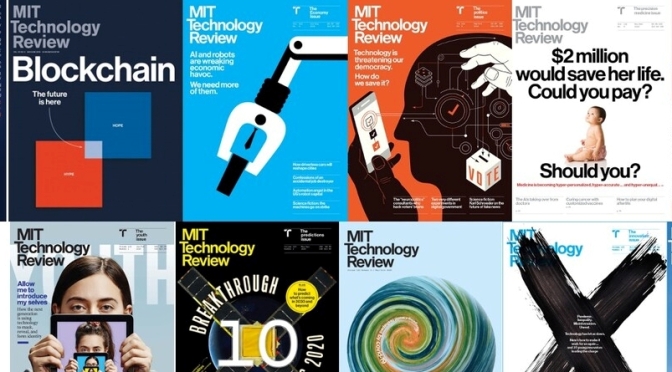
MIT TECHNOLOGY REVIEW: The Nature issue features Technology remade the world. Now what? As we work to understand how much our own ingenuity has created an increasingly unnatural world, we’re also confronting tough choices about what to preserve—and how. Plus: Killer microbes from the mirror universe and fresh fiction from Jeff VanderMeer.
The red wolf has long been a contentious species. The debate over its preservation got even messier last year, when Colossal said it had cloned the animal.
The idea that modern humans inherited DNA from Neanderthal ancestors is one of the 21st century’s most celebrated discoveries in evolution. It may not be that simple.
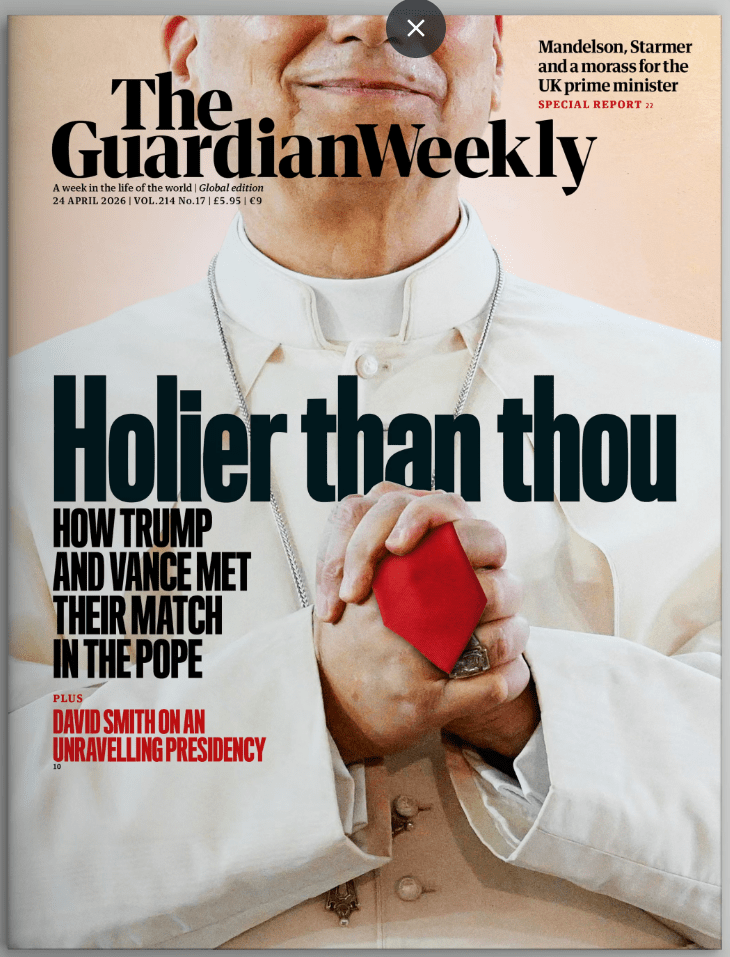
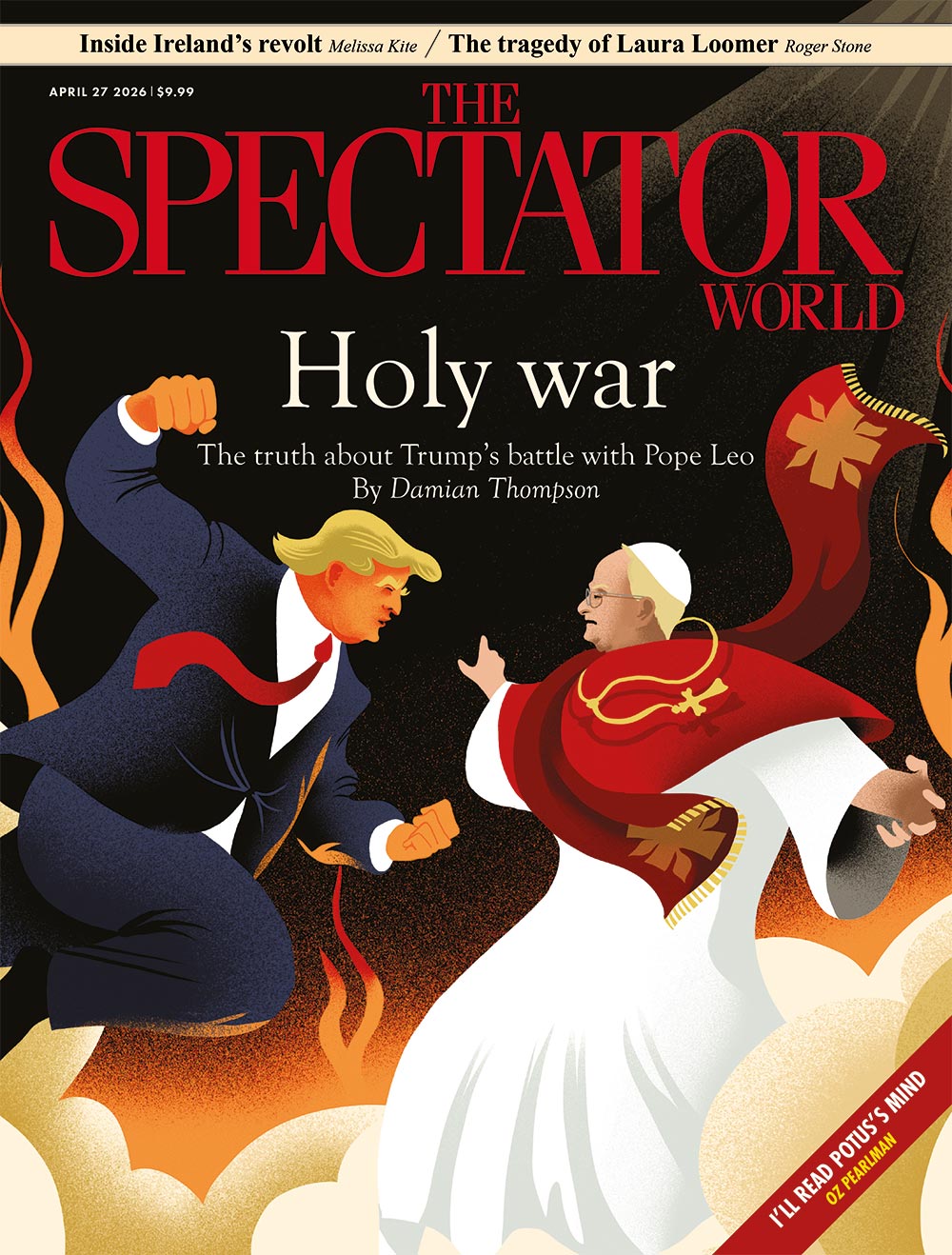
The Trump administration’s efforts to validate their incoherent war on Iran with some sort of Christian moral authority have led to a few, shall we say, interesting moments recently.
After bizarrely berating Pope Leo XIV as “WEAK on Crime, and terrible for Foreign Policy”, Donald Trump posted (and later deleted) a meme of himself as a Christ-like figure healing the sick. The self-styled “secretary of war” Pete Hegseth then confused what he evidently thought was a biblical passage with a bastardised version of a speech from the Quentin Tarantino movie Pulp Fiction.
Perhaps most damagingly of all, the vice-president, JD Vance, took Leo’s carefully considered thoughts on the concept of the “just war” as an opportunity to lecture the pope on theology.
Spotlight | Starmer and the scandal of Mandelson’s vetting The British prime minister came under huge pressure to resign this week over what he knew about Peter Mandelson’s appointment as UK ambassador to the US, even though he had failed Foreign Office security vetting. Pippa Crerar, Jessica Elgot, Paul Lewis and Kiran Stacey spearhead our coverage
Science | The magic of mushrooms Fungi play a key role in ecosystems and storing carbon, so African scientists are championing the preservation of “funga” as much as flora and fauna, writes Whitney Bauck
Feature | When older relatives lurch to the far right It starts with a “back in my day” nostalgic meme – then suddenly your elders are sharing AI-generated “boomerslop” and repeating conspiracy theories … Simon Usborne speaks to families dealing with rightwing political rifts
Opinion | Our governments are woefully underprepared for the AI revolution Every wave of new tech has come with a doomsday scenario. But governments just aren’t planning a human response on the scale required, warns Larry Elliott
Culture | How the female gaze caught the attention of film, TV and fiction From passionate romantasy novels to premium television dramas, culture is bringing the agency, desires and interior lives of women to the fore. It’s proving good for business, but is this a permanent revolution, asks Deborah Linton
Donald Trump’s latest clash with the Catholic Church stunned even the most hardened veterans of culture-war X. According to the President of the United States, the Chicago-born Pope Leo XIV, the conspicuously holy spiritual leader of 1.3 billion people, is “WEAK on crime and terrible on foreign policy.” He also claimed that, “If I wasn’t in the White House, Leo wouldn’t be in the Vatican.”
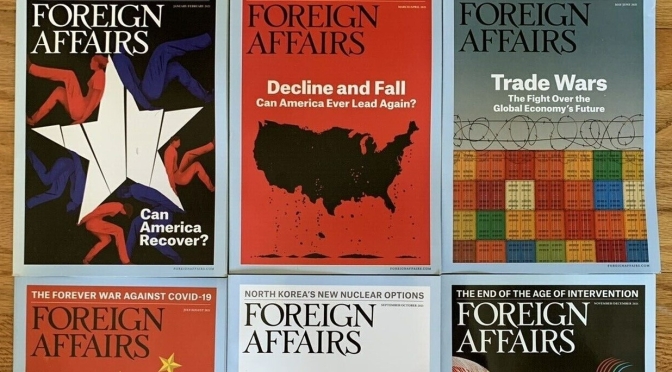
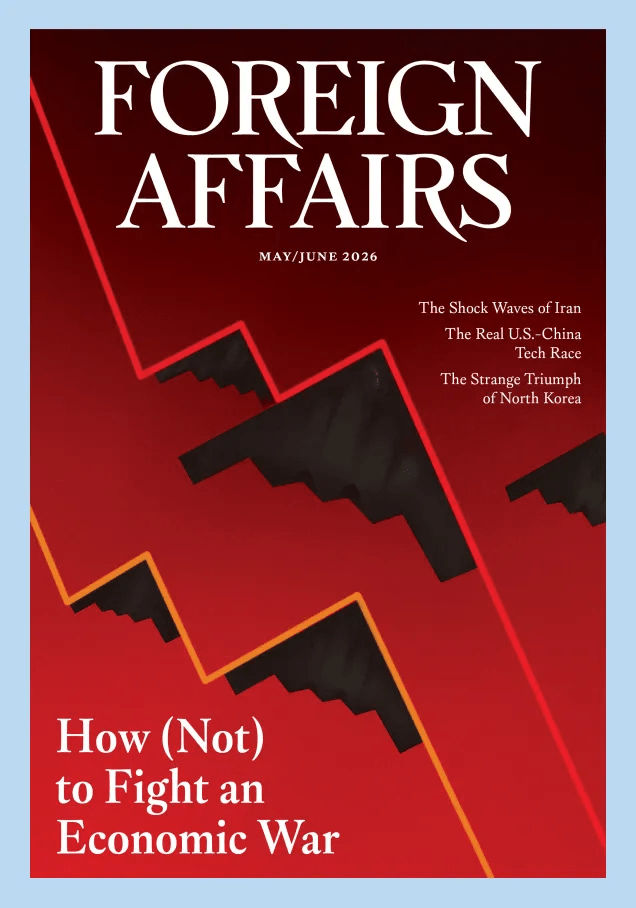
Geostrategists used to fret over the “Eastern Question” or the Maginot Line or the Missile Gap. Today there is no doubt that the overriding geostrategic question of our day is whether the President of the United States is playing with a full deck. With the US-Israeli war on Iran failing, and depleting much of both
It wasn’t the first time that Trump had debased someone who serves him. It wasn’t even the first time that Vance had had to downplay a blasphemy-themed A.I. image. By Amy Davidson Sorkin
When Your Digital Life Vanishes
A broken phone or corrupted drive can mean the loss of work, evidence, art, or the last traces of the dead. But sometimes data-recovery experts can summon lost files from the void. By Julian Lucas
How Professional Wrestling Prepared Linda McMahon for Trump’s Cabinet
The Education Secretary ran the W.W.E. for years with her husband, Vince, an unstable man who, like her new boss, has a genius for inflaming the crowd. By Zach Helfand
Was Raphael the Runt of the Renaissance?
Many have called him boring, a peddler of simpleminded beauty. At the Met, a blockbuster exhibition restores his standing. By Zachary Fine
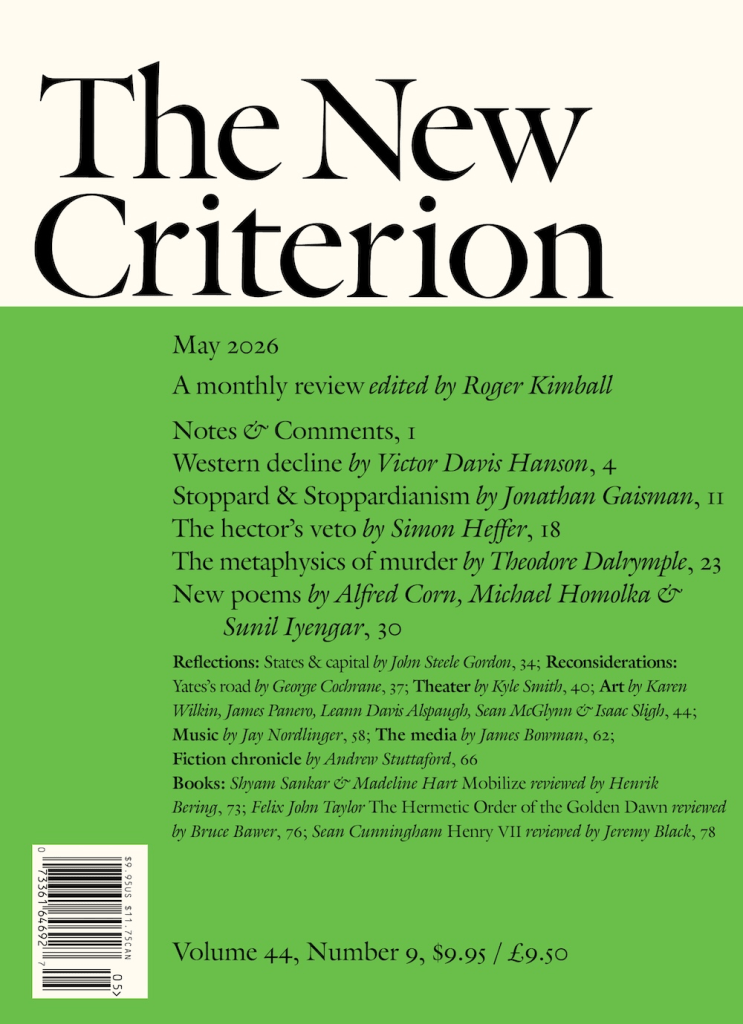
THE NEW CRITERION: The latest issue features ‘ Western Decline’ by Victor Davis Hanson; Stoppard & Stopparianism by Jonathan Gaisman; The hector’s veto by Simon Heffer; The metaphysics of murder by Theodore Dalrypmple and New poems by Alfred Corn, Michael Homolka and Sunil Iyengar…
On the social internet, our fascination with analyzing the hidden messages in our culture has been flattened into one word. By Dan Brooks
We Don’t Really Know How A.I. Works. That’s a Problem.
For us to trust it on certain subjects, researchers in the growing field of interpretability might need to learn how to open the black box of its brain.
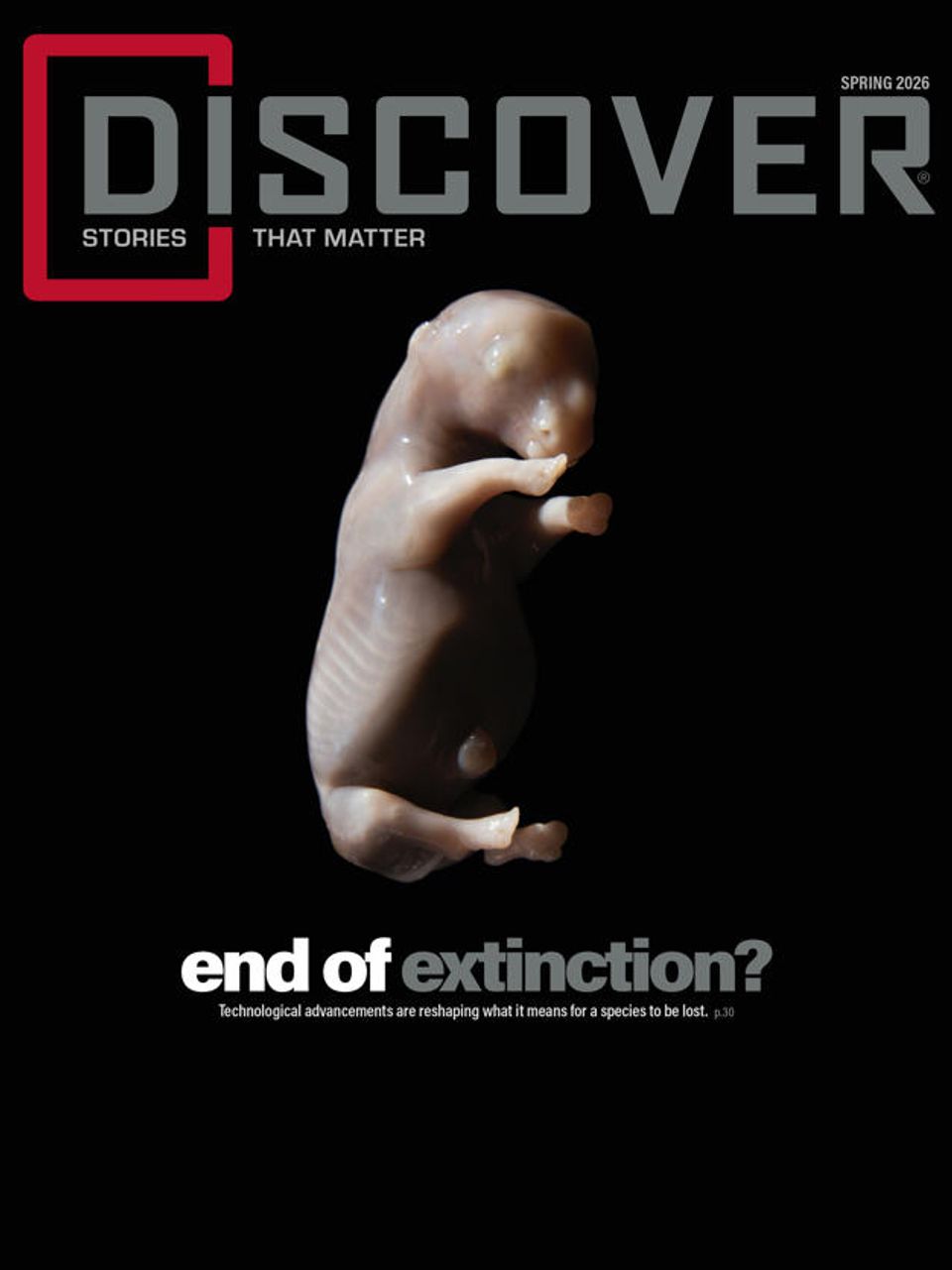
This feature dives into the ethics and technology behind “resurrection biology.” It tracks the progress of teams working on the Woolly Mammoth and the Thylacine (Tasmanian Tiger). Rather than just “cloning,” the article explains how researchers are using CRISPR to edit the genomes of living relatives to recreate extinct traits, questioning whether these hybrids truly represent the lost species or are simply “proxies” for a vanished world.
2. Ancient DNA and the Human Speed-Up
Drawing from a groundbreaking study, this piece explores how human evolution didn’t slow down after the dawn of agriculture—it accelerated. By analyzing 2,000-year-old genetic samples, researchers found that the transition to farming and dense city living forced our immune systems and metabolisms to evolve faster in a few millennia than they had in the previous 50,000 years.
3. The “Headless Wonder”: The Death of Comet MAPS
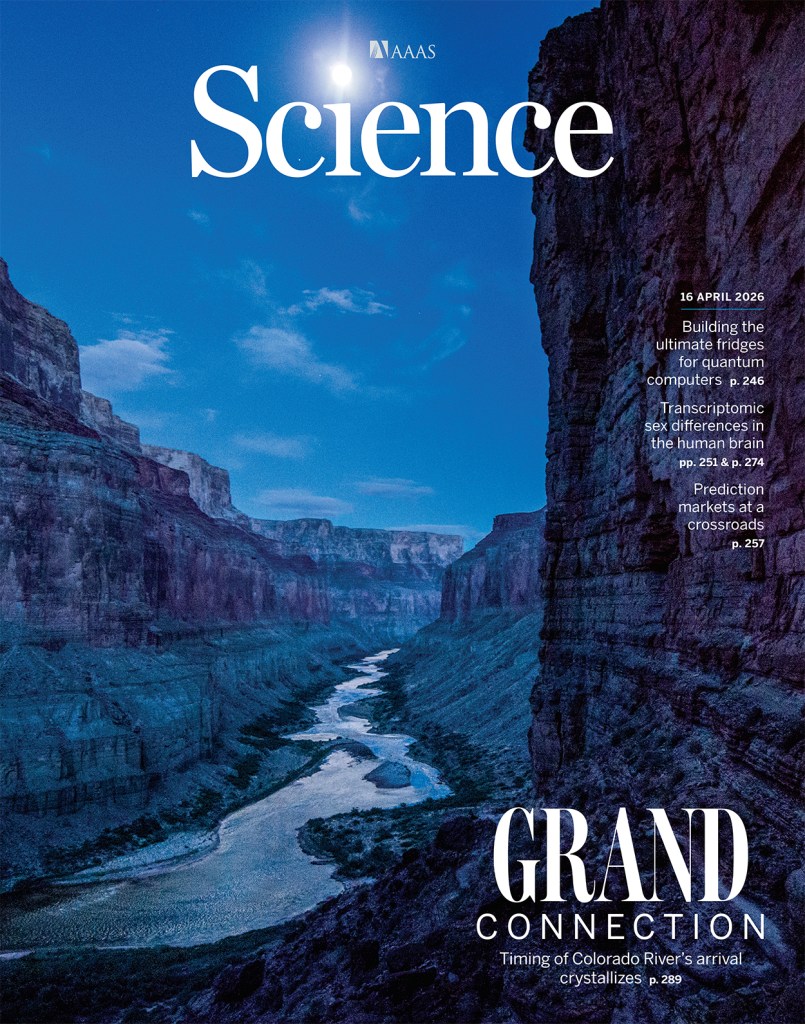
A standout in the space section, this article chronicles the dramatic disintegration of Comet C/2026 A1 (MAPS). Discovered only in early 2026, the comet skimmed the sun on April 4th and lost its nucleus entirely. Astronomers explain the “headless wonder” phenomenon—where a comet’s tail continues to drift through space without its head—and what its fragile structure reveals about the early solar system.
4. Starquakes: The Archaeology of Red Giants
Using data from “stellar archaeology,” this article describes how vibrations inside stars—known as starquakes—are allowing scientists to see hidden magnetic fields. By linking the magnetism of modern white dwarfs to their earlier lives as red giants, researchers have created a “fossil record” of a star’s evolution, offering a preview of what might happen to our own Sun in several billion years.
5. Artemis II: The Far Side and Beyond
Following the safe return of the Artemis II crew, this long-form report provides the first detailed look at the data gathered during their moon flyby. It highlights the crew’s record-breaking distance from Earth and their observations of the “Grand Canyon of the Moon”—the South Pole-Aitken basin. The article shifts focus to the upcoming Artemis III mission, discussing the challenges of establishing a long-term lunar base.
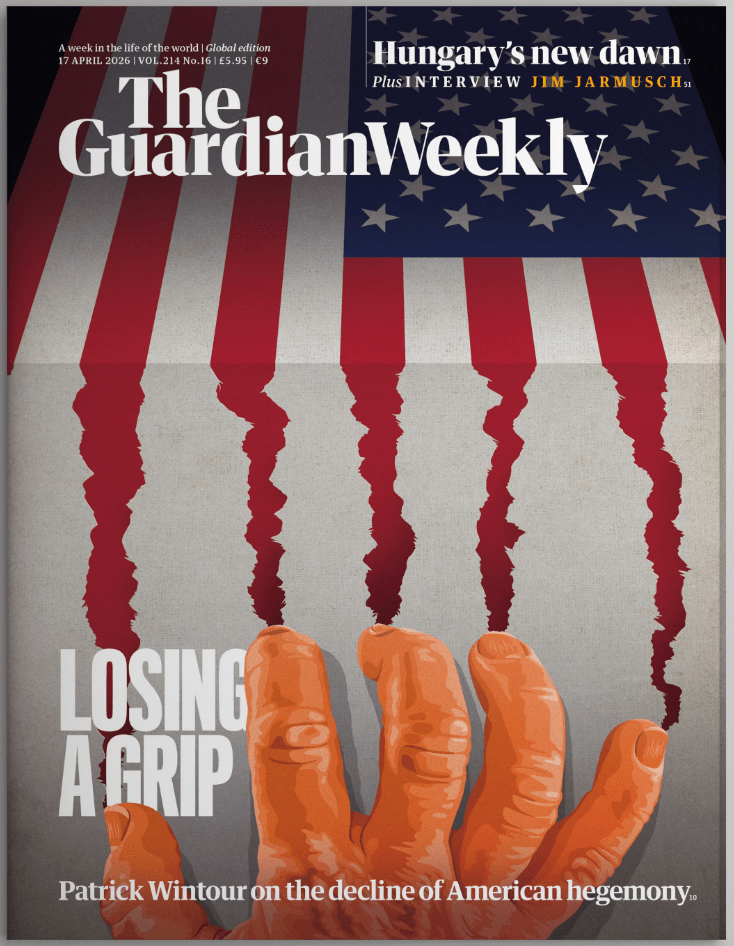
At the end of 2025, Patrick Wintour wrote a compelling essay for Guardian Weekly in which he described an interregnum in global history, where the rules-based order had been eroded and great powers once again jostled for control and influence.
This week’s edition sees Patrick return to a key aspect of that theme, the deteriorating global standing of the United States after a period of high-stakes brinkmanship with Iran. Donald Trump’s aborted threat that Iranian civilisation would “die … never to be brought back” unless it ceded to his demands exposed the limits of his apocalyptic foreign policy. It also pointed to the wider decline of American influence in a world where the US appears untrustworthy and strategically isolated.
Spotlight | Hungary’s new dawn After 16 years, Viktor Orbán’s populist grip on the country’s politics is over. But will his successor Péter Magyar be much different? Ashifa Kassam and Flora Garamvolgyi report amid jubilant scenes in Budapest
Science | The man who was bitten by snakes 200 times – on purpose Tim Friede put his “ass on the line” to help stop snakebite deaths – whose numbers appear to be rising amid the climate crisis. Oliver Milman met him
Feature | The brutal reality of life as a foreign student in the UK Universities in Britain rely on overseas applicants paying full fees, which has given rise to some unscrupulous recruiters and left many hopefuls and their families deep in debt. Samira Shackle investigates
Opinion | Netanyahu-ism has achieved nothing for Israelis It is the voting public in Israel that will settle their PM’s fate later this year. But, argues Jonathan Freedland, all they have heard are promises of “total victory” that prove to be hollow
Culture | Jim Jarmusch, the darling of indie cinema The 73-year-old has been at the cutting edge of US independent movies since the 1980s. As Father Mother Sister Brother opens in the UK, he tells Amy Raphael about grief, greed and “doing crazy shit” with Steve Coogan
News, Views and Reviews For The Intellectually Curious







 Boomers Daily